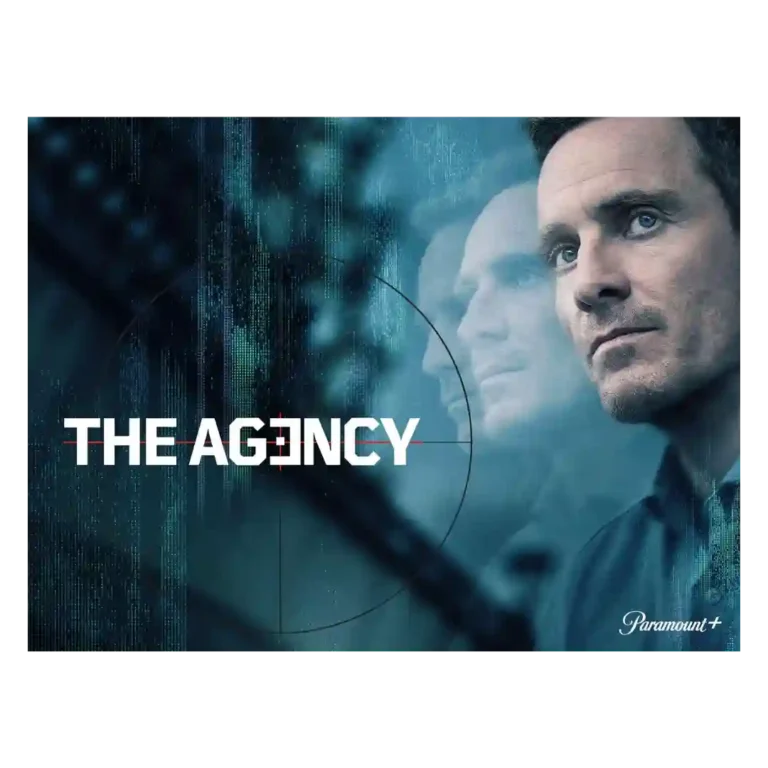
Choose The Agency Season 2 for adult spy drama with superb acting, tense intrigue, and a stronger pace. Skip it if you want simple plotting, constant action, or a Fassbender-only showcase.
Best for
Best for viewers who like grown-up espionage built around paranoia, office politics, moral compromise, and actors quietly raising the stakes. It especially suits fans who enjoy dense serialized storytelling and patient payoffs.
Not for
Not for viewers who want constant action, easy-to-follow plotting, or a season centered almost entirely on Michael Fassbender. Several critics warn that the show still asks for focus and patience.
Verdict
Critics largely see The Agency Season 2 as a sharper, more urgent continuation that deepens its spycraft, ensemble drama, and emotional stakes. Michael Fassbender remains a major draw, but many reviewers also praise Jeffrey Wright, John Magaro, Katherine Waterston, Richard Gere, Saura Lightfoot-Leon, and Ambreen Razia for making office briefings and field missions feel loaded with danger. The main reservations are real: some early episodes meander, the plotting can be dense, Jodie Turner-Smith is considered underused by several reviewers, and one critic argues the season drifts too far from Fassbender. Still, the dominant reaction is that the season rewards attention with tense character work, strong finales, and binge-worthy momentum.
Direction is praised when action and suspense emphasize consequence over empty spectacle. The show’s visual control and handling of tense set pieces help quieter scenes carry thriller energy.
The acting is one of the safest bets here: critics repeatedly call the cast superb, impeccable, magnetic, or phenomenal. Even when story complaints appear, reviewers often say the performers keep the material engaging.
Bingeability is a major plus: multiple critics say the all-at-once release makes the season hard to stop watching. The show is addictive for attentive viewers, though its density may make it a demanding binge.
Reviewers repeatedly point to the show’s deeper ideas about loyalty, identity, sacrifice, and the psychological cost of undercover life. The theme work gives the season more weight than a simple mission-of-the-week spy thriller.
Suspense is a core strength, with critics praising interrogations, paranoia, mole hunts, and ordinary conversations that simmer with unease. Even reviews that question the season’s focus acknowledge strong moments of tension.
Fassbender receives repeated praise for anchoring Martian with intensity, control, vulnerability, and danger. Even mixed reviews tend to treat his performance as one of the season’s most valuable assets.
Spy-thriller fans are the clearest audience: critics call the season adult, smart, believable, and highly satisfying within the genre. It is less suited to viewers who expect nonstop spectacle or simple action thrills.
Character work is one of the season’s biggest strengths, especially as the show spreads emotional and professional consequences across the ensemble. The dissenting view is that some development pushes Martian toward larger-than-life heroism or leaves Samia too passive.
The final stretch is a clear strength, with reviewers praising how secrets ignite and plot pieces come together. Even when the ending is judged slightly below Season 1’s, the payoff is still considered worthwhile.
Reviewers repeatedly want more, with several explicitly hoping for or looking ahead to Season 3. The cliffhanger and character arcs leave the story feeling unfinished in a productive way.
The finale earns strong marks for impact, surprise, and cliffhanger energy. Several critics say it leaves the next chapter feeling necessary rather than merely optional.
Visual craft is mentioned positively but less often than acting and writing. Reviewers who discuss it praise the genre-fitting look, stylish locations, and purposeful framing of London and far-flung spy settings.
The season’s visual style is described as moody, stylish, and polished, especially in how it distinguishes offices from global field locations. It supports the adult thriller tone without becoming the main attraction.
The strongest emotional notes come from Martian’s love for Samia, the psychological toll of deceit, and the human cost of spy work. A few critics wish Samia had more active material, but her presence still gives the season a personal pulse.
The season keeps many reviewers guessing, and its late twists or reversals are often praised. One review notes that some twists are easier to anticipate, so the surprise factor is good but not flawless.
The drama works best when personal loyalty, institutional duty, and emotional cost collide. Reviews describe it as adult, satisfying, and thoughtful, though not always as propulsive as more action-forward thrillers.
Chemistry is praised both in the Martian-Samia romance and in the ensemble’s working rhythm. Reviewers highlight how briefings, interrogations, and shared scenes feel charged because the actors play off one another so well.
One review specifically values the season’s broader international lens, saying it avoids simple American-exceptionalist framing. The praise is limited but concrete around how the series treats global politics and non-American operatives.
The dialogue is often framed as smart, sharp, and central to the show’s appeal, especially in interrogation and office scenes. The caveat is that the dialogue-heavy style may be too dense for viewers looking for lighter spy entertainment.
Critics think the show deserves more attention than it has received, especially from viewers who like prestige spy drama. Its appeal is narrower for casual audiences because it favors dense, adult suspense over easy spectacle.
cliffhanger effectiveness: 4.3, based on 3 reviews
The cliffhanger lands well for critics who want the story to continue. Multiple reviews say the season closes by opening the door to a darker, more dangerous next chapter.
The spy world feels broad and interconnected, stretching across London, Iran, Sudan, Ukraine, Africa, and rival agencies. Critics like the global scope most when it feeds character pressure instead of becoming exposition.
Most critics say Season 2 moves faster and with more urgency than the first season, helped by connected plotlines and a binge release. Several still flag slow or slack stretches, especially early in the season or during setup-heavy passages.
supporting cast performance: 4.2, based on 10 reviews
The supporting ensemble is a major selling point, with Wright, Gere, Magaro, Waterston, Lightfoot-Leon, Razia, and others repeatedly singled out. Some critics still feel certain characters, especially Samia or some villains, are underused or underwritten.
Entertainment value is generally strong, especially for viewers who enjoy tense, intelligent spy drama. One more lukewarm review still finds it entertaining enough, while the most positive critics call it must-watch television.
The writing is praised for consistency, intelligence, and bringing multiple spy threads together without losing the show’s adult tone. A few reviewers point to exposition, predictable villains, or overextended subplots as the weaker side of that ambition.
Several critics admire the grounded approach to spy work, especially its emphasis on bureaucracy, consequences, and believable office tension. A few plot developments are called contrived or outrageous, but realism remains a repeated strength.
Season 2 is praised for picking up unresolved threads and connecting storylines that previously felt too separate. The flip side is that several reviewers recommend starting from the beginning to fully track the web of loyalties.
The story is widely described as stronger, deeper, and more compelling this season, with global spy plots that increasingly connect. The main pushback is that some side missions feel less gripping when Martian is not central.
The season juggles many simultaneous missions, and several critics think the cutting between storylines keeps the show moving. Others note that the structure sometimes leads to exposition or scenes where characters catch up to what viewers already know.
The season is dense, but its mysteries are generally described as followable when viewers pay attention. It is not positioned as effortless casual viewing, and one review stresses that it demands focus.
Reviewers like that the season avoids feeling overly generic, though one critic notes some familiar spy elements and predictable villain material. Its strongest originality comes from office tension, personal compromise, and spy bureaucracy rather than spectacle.
Most reviewers find the character behavior grounded in the spy world’s suspicion and moral pressure. One critic objects that Season 2’s treatment of Martian and Samia feels like a regression from the first season.
Individual episodes often work as tense, dialogue-heavy chess matches, but not every hour lands equally smoothly. Some reviewers found the first stretch slow or overloaded before the payoffs arrived.
The screenplay’s best moments come through tense interrogations, precise character work, and scenes that turn bureaucracy into drama. Its weaker moments involve dull villains or predictable mission beats.
Compared With Category Average
Compared with other TV Shows, this product is above average in season pacing, finale satisfaction, dialogue quality, near average in entertainment value, story quality.
Summary
35 compared features
Above average0.4+ pts higher
24(69%)
Same as averagewithin 0.3 pts
11(31%)
Largest category differences
Attribute
This product
Category average
Difference
season pacing
4.2
3.1
+1.1
finale satisfaction
4.5
3.4
+1.0
dialogue quality
4.3
3.4
+0.9
plot clarity
4.0
3.1
+0.9
character development
4.5
3.7
+0.8
writing quality
4.2
3.4
+0.8
theme depth
4.7
3.9
+0.8
realism
4.2
3.5
+0.8
Consider This Instead
If you want better supporting cast performance
Choose The Pitt, Season 2. It scores 4.9 vs 4.2 for supporting cast performance, with a 4.7 overall score.
Products reviewers directly compared with this model, grouped into quick takeaways.
Black Doves
Worse: overall spy-show qualityThe review says The Agency wins against Black Doves on nearly every metric.
Citadel
Compared: spy-series spectacle versus character-driven thrillsThe review says The Agency uses explosive moments effectively while other spy series lean more on spectacle.
Lioness
Worse: overall spy-show qualityThe review says The Agency outperforms Lioness on nearly every metric.
FAQ
Is The Agency Season 2 better than Season 1?
Most reviewers say yes, citing stronger momentum, deeper character work, and a more connected set of spy plots. A few still prefer parts of Season 1 or feel Season 2 loses focus.
Is Michael Fassbender still the main reason to watch?
He remains a major highlight, with multiple critics praising his controlled, intense performance as Martian. However, the season gives more weight to the ensemble, which some loved and one critic disliked.
Is the season action-heavy?
No. Reviews describe some action, violence, and explosive beats, but the stronger emphasis is on interrogations, office tension, spycraft, and character-driven suspense.
Is it easy to binge?
Several reviewers found it very bingeable, especially because all ten episodes release together and the season’s plots build momentum. The density may still make it a demanding binge for casual viewing.
Does Season 2 have a satisfying ending?
Most critics praise the late-season payoff, finale, or cliffhanger, though one reviewer says the ending is slightly below Season 1’s. The season clearly leaves reviewers interested in another chapter.
Should new viewers start with Season 2?
A few reviews say the character motivations are accessible enough, but others stress that the second season depends on ongoing threads from Season 1. Starting at the beginning is the safer path.
Sample Expert Reviews We Analyzed
These are a few of the reviews included in our analysis.
Choose The Pitt Season 2 for a gripping, realistic medical drama with superb acting and emotional depth. Skip it if graphic procedures, unresolved arcs, or slower character-driven pacing bother you.
Choose Kylie for a heartfelt, candid music documentary with rich archives, sharp editing, and big emotional payoff. Skip it if you need a fully exhaustive career chronology or dislike authorized...
Best for heartfelt family drama, strong performances, natural faith themes, and an easy binge. Skip it if you need fast pacing, strict doctrinal portrayals, or a satisfying romantic resolution.
Choose Dark Winds Season 4 for moody noir suspense, excellent acting, and richer Native-centered themes. Skip it if uneven pacing, thin conspiracy plotting, or a stranger L.A. detour would frustrate...