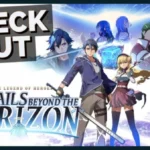
- Better: story accessibility and engagement The reviewer found it less suitable as a follow-up to Trails in the Sky 1st Chapter for an understandable story.
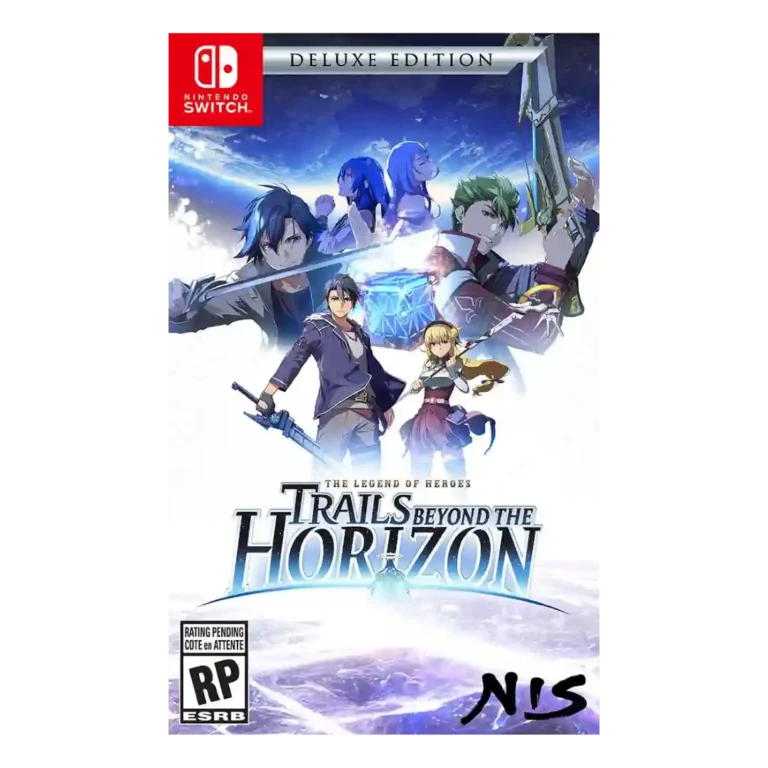
The Legend of Heroes: Trails beyond the Horizon Review
Bottom Line
Choose it if you’re a Trails veteran who wants deep combat, big lore reveals, and a massive cast. Skip it if you need a clean starting point, tight pacing, or dislike long filler-heavy JRPG structures.
Best for committed Trails fans who already know the Calvard, Cold Steel, Sky, and Reverie context and want deep combat plus major lore payoffs. It also suits players who enjoy long JRPGs with many side activities and character scenes.
Not for newcomers looking for a clean starting point or players who dislike slow pacing, crowded systems, or mandatory-feeling side content. Platform-sensitive players should also note the mixed technical reports.
The reviews frame Trails Beyond the Horizon as a strong late-series payoff built around refined hybrid combat, major lore revelations, and a huge returning cast. Praise is especially consistent for the battle systems, voice acting, soundtrack, character moments, and Switch 2 presentation. The tradeoff is that the same density that excites veterans makes the game unusually hard to enter cold: several reviewers call out heavy prior-story dependence, crowded systems, and pacing that stalls through side quests, Grim Garten runs, or early-route buildup. Technical impressions vary by platform, with strong Switch 2 reports alongside crashes, softlocks, UI clutter, and some performance complaints elsewhere. Overall, the evidence points to a rewarding but demanding JRPG whose best moments land hardest for players already invested in Zemuria.
Compared in Reviews
Products reviewers directly compared with this model, grouped into quick takeaways.
Daybreak 2
- Worse: musical score The reviewer found the score stronger than Daybreak 2’s music.
- Similar: game structure The reviewer said the game was very similar to Daybreak 2 in structure.
- Worse: three-route story structure The reviewer felt the route structure worked better than Daybreak 2’s reliving-days gimmick.
Cold Steel 3
- Similar: ending impact The ending is placed in the same high-impact tier as Cold Steel 3.
Feature Scorecards
Summary
66 reviewed features- Very positive 4.5-5.0 27% 18 features
- Positive 3.5-4.4 32% 21 features
- Neutral 2.5-3.4 24% 16 features
- Negative 1.5-2.4 17% 11 features
- Very negative below 1.5 0% 0 features
Pros
-
Atmosphere was strongly praised for thriller tension and a sustained sense of anxiety around the launch.
-
Polish was strongly praised by some reviewers as a best-crafted or highly consistent RPG, despite separate bug and pacing caveats.
-
Facial animations received focused praise for subtle eye movements during dialogue scenes.
-
Animation quality was a major strength, from smooth animations to improved cutscene direction and fully animated event scenes.
-
Emotional impact was strong when reviewers discussed shocking events, compelling connection events, and standout emotional scenes.
-
Platform-specific support was praised for the Switch 2 version, which reviewers called solid or excellent.
-
World-building was strongly praised for a detailed setting and revelations that shook reviewers’ understanding of the series.
-
Performance optimization was generally praised, especially on Switch 2 and Switch 1 improvements, though individual frame-rate issues appear under frame stability.
-
Reviewers praised the refined mechanics as deep, accessible for returning players, and mechanically dense, with one summary calling the systems easy to pick up after earlier Daybreak games.
-
Art direction received positive evidence for gorgeous character art and cutscene direction.
-
The 4SPG-centered loop was directly praised as possibly the best it has been, especially for players who enjoy combing through side content.
-
Exploration quality received focused praise from one reviewer who found Calvard a wonderful location to revisit and explore.
-
Handheld suitability was praised on Switch due to smooth handheld frame rate.
-
Lore depth was praised for references and details that made the world feel more alive.
-
Mission variety received positive evidence from one review calling the Calvard side-activity lineup the most balanced of the arc.
-
Side character depth received positive evidence where returning side characters were given needed depth and narrative purpose.
-
The upgrade system earned strong praise for a meaningfully improved Craft upgrading system.
-
Visual effects quality received positive Switch 2 evidence, with effects described as cleaner and more defined.
-
Graphics quality was usually praised, especially on Switch 2 and for character models, though some platform-specific texture issues were noted separately.
-
Battle mode quality was highly praised overall for improved field and command battle options, despite one reviewer still preferring command battles.
-
Faithfulness to franchise was strong, with reviewers praising context-heavy payoffs while stressing it is not a goodbye or standalone entry.
-
Combat was the most consistently praised system, with many reviewers calling it deep, refined, fun, and stronger than earlier Calvard entries, though a few found field combat or balance too easy.
-
The soundtrack was consistently praised as solid, memorable, or excellent, though one critic felt it was weaker than past series highs.
-
Voice acting was widely praised as excellent or spot-on, although some reviewers criticized half-voiced or unexpectedly unvoiced scenes.
-
Character development was mostly praised for strong connection events and character growth, though one review felt parts of the cast had become stagnant.
-
Narrative quality was broadly praised for wild twists, major reveals, and strong payoffs, but some reviewers were confused, underwhelmed, or less sold on the plot.
-
Controls were described as easy to learn and fluid despite added complexity from new field-battle functions.
-
Accessibility options received limited positive evidence around quality-of-life difficulty options for separate battle types.
-
One newcomer-oriented review found the intimidating systems introduced clearly enough to avoid feeling lost.
-
Van’s protagonist appeal received positive evidence from a newcomer who called him a strong lead.
-
Puzzle design received limited but positive evidence, especially for the hacking maze puzzle minigame being called particularly fun.
-
Replay value received positive evidence from the Grim Garten being called a fun twist that adds replayability.
-
Save reliability received positive evidence from autosave preventing too much lost progress despite crashes.
-
Sound design received limited but positive evidence from a Switch performance review that called the audio strong.
-
World interactivity was praised in one review for a world rich with interactivity and unlockables.
-
Content variety was generally strong due to activities, minigames, side modes, and collectibles, though some reviewers felt parts of the content became filler or hit-or-miss.
-
Fun factor was mostly positive, with several reviewers calling it fun or addictive, though one found it less enjoyable than hoped.
-
Dungeon and level design drew mixed evidence: some praised memorable layouts and new gimmicks, while one reviewer disliked a Grim Garten objective enough to sour the experience.
-
Innovation was mixed: reviewers praised refinement and evolution but also noted underused mechanics rather than bold reinvention.
Cons
-
Quest design was divisive: some reviewers praised side quest writing, discussion topics, and bonding events, while others called quests boring or filler.
-
Difficulty balance ranged from rewarding on higher difficulties to too easy or low-stakes, with several reviewers noting overpowered tools.
-
Writing quality was mixed, with some praise for good writing and localization-scale polish, but criticism for eye-roll dialogue.
-
Character roster was divisive: some loved the returning cast, while others felt the roster sometimes leaned into fanservice.
-
HUD clarity was mixed: the combat UI could be small and busy, while the in-game glossary was described as helpful.
-
Load times were platform-dependent: one Switch 2 review reported lengthy loads, while another praised faster loading on Switch 2.
-
Bug frequency varied widely, from no bugs encountered to freezes and repeated softlocks on some platforms.
-
Frame-rate stability was mixed by platform, with Switch 1 stuttering criticism and PS5 framerate dips offset by stronger Switch 2 reports elsewhere.
-
Map and navigation design drew mixed evidence because Grim Garten still had limited map and objective variety.
-
Value for money was mixed in one Switch review that questioned the Switch 2 price bump despite the long JRPG runtime.
-
Resource balance was mixed: one review praised Shard Command tradeoffs, while others felt overpowered tools and centralizing systems made balance too easy to break.
-
Dialogue quality was mixed to negative, with reviewers objecting to grating slang, long dialogue stretches, and scenes dragged out by too many speakers.
-
Pacing was the biggest recurring complaint, with reviewers citing slow starts, filler, route bloat, and reliance on the series formula even in otherwise positive reviews.
-
Endgame content drew negative evidence where the lack of post-credits Grim Garten continuation was called a downgrade.
-
Immersion had negative evidence from one reviewer noting voice and soundtrack issues could break immersion.
-
Menu usability was criticized by one reviewer who stumbled through the large menu collection and forgot mechanics.
-
Onboarding was consistently poor, with many reviewers warning that the game is not newcomer-friendly and requires heavy prior Trails context.
-
Mission design skewed negative where reviewers criticized recycled ideas, weak movie activities, or hidden critical lore that undermined the flow.
-
Progression-system evidence was negative around morality/progression choices that reviewers felt had regressed or become pointless.
-
Boss design drew negative evidence from one critic who felt Shard Command interactions made boss fights binary.
-
Crash stability was a notable concern in one PS5 review that reported multiple crashes, including during the finale.
-
Environmental detail had negative evidence from a Switch 2 review that found severe texture issues in one area.
-
Loot-system evidence was negative where randomized rewards were criticized as weak and not especially earned.
-
Originality received negative evidence from a reviewer who found many ideas recycled or stale.
-
Stealth mechanics received negative evidence from one review that could have done without the stealth minigame.
-
User interface design drew negative evidence for a noisy, cluttered UI with too many systems.
-
Grind level was sharply criticized by one reviewer who felt too much time was spent on filler and grinding.
Compared With Category Average
Compared with other Video Games, this product is below average in environmental detail, onboarding experience, progression system.
Summary
8 compared features- Above average 0.4+ pts higher 0% 0 features
- Same as average within 0.3 pts 0% 0 features
- Below average 0.4+ pts lower 100% 8 features
| Attribute | This product | Category average | Difference |
|---|---|---|---|
| environmental detail | 2.0 | 4.4 | -2.4 |
| onboarding experience | 2.0 | 3.9 | -1.9 |
| progression system | 2.0 | 3.9 | -1.9 |
| originality | 2.0 | 3.9 | -1.9 |
| boss design | 2.0 | 3.8 | -1.8 |
| immersion | 2.5 | 4.2 | -1.7 |
| loot system | 2.0 | 3.6 | -1.6 |
| grind level | 1.5 | 3.1 | -1.6 |
FAQ
Is Trails Beyond the Horizon a good first Trails game?
No. Reviewers repeatedly say it is not newcomer-friendly and depends heavily on earlier Daybreak, Cold Steel, Sky, Reverie, and broader Trails context.
What do reviewers like most?
The most consistent praise goes to the refined hybrid combat, major lore reveals, returning cast moments, voice acting, soundtrack, and Switch 2 presentation.
How is the combat system?
Most reviewers find it deeper and more engaging than before, with improved field battles, command battles, ZOC, Awakening, and Shard Commands. A few critics felt the added tools can make combat too easy or overpowered.
Does the story pay off?
For invested fans, many reviewers describe major twists, emotional moments, and series-shaking reveals. The tradeoff is a cliffhanger and pacing that some found bloated or filler-heavy.
How does it run on Switch 2?
Switch 2 impressions are mostly positive, with reviewers praising smooth performance, strong visuals, and handheld play. Some concerns remain around load times, draw distance, or platform-specific texture issues.
Are there bugs or crashes?
Technical evidence is mixed. Some reviewers encountered no bugs, while others reported PS5 crashes, a voiced-scene freeze, or PC softlocks.
What is the biggest drawback?
The biggest repeated drawback is pacing, followed by newcomer barriers, menu or UI clutter, and occasional technical issues depending on platform.
Consider This Instead
If you want better onboarding experience
Choose The Alters. It scores 5.0 vs 2.0 for onboarding experience, with a 4.0 overall score.
If you want better grind level
Choose Trails in the Sky 1st Chapter. It scores 4.7 vs 1.5 for grind level, with a 4.3 overall score.
If you want better mission design
Choose Absolum. It scores 5.0 vs 2.0 for mission design, with a 4.3 overall score.
If you want better environmental detail
Choose Donkey Kong Bananza. It scores 5.0 vs 2.0 for environmental detail, with a 4.4 overall score.
Overall Top Video Games Alternatives
Good if you want fast, tactical roguelite combat with huge progression depth, striking art, and standout music. Skip it if repetition, resource micromanagement, or a less emotionally satisfying sequel story...
Pros: skill tree depth, dialogue quality
Cons: emotional impact, economy and resource balance
Best for joyful destruction, dense exploration, and a charming DK-Pauline adventure. Skip it if camera quirks, frame-rate dips, easy bosses, or premium Switch 2 pricing are dealbreakers.
Pros: gameplay mechanics, world interactivity
Cons: economy and resource balance, enemy variety
Best for tense Grace-led horror, slick Leon action, and lavish franchise callbacks. Skip it if you want a bolder reinvention, evenly mixed pacing, or substantial post-game modes.
Pros: driving mechanics, protagonist appeal
Cons: platform-specific feature support, checkpoint system
Choose Death Stranding 2 if you want a gorgeous, stranger, more action-friendly delivery epic with powerful performances. Skip it if fetch quests, Kojima exposition, reduced tension, or easier traversal undercut...
Pros: animation quality, facial animations
Cons: quest design, AI behavior