Best for Amplifier power requirements
Bluesound Pulse Cinema Soundbar
4.8 feature score
Highest scored product for this feature based on supporting review evidence.
Highest scored product for this feature based on supporting review evidence.
Balances feature score, supporting reviews, and overall product strength.
Has the broadest review evidence for this feature.
Strongest overall product among items with scored evidence for this feature.
Showing Sound Bars only. Switch back to all Speakers anytime.
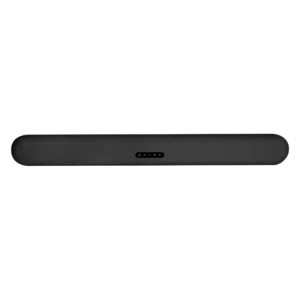
The Pulse Cinema’s 500-watt amplification is repeatedly tied to headroom, dynamics, and room-filling output.
Pros: Dialogue clarity (for TV/soundbar use), Detail retrieval
Cons: Chromecast compatibility, Google
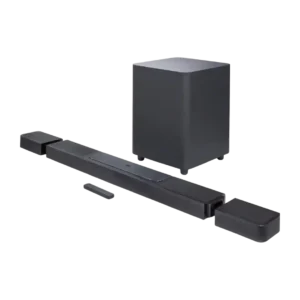
Multiple reviews emphasized the very high claimed power, usually 1,170 watts, as part of the system's cinematic scale.
Pros: Amplifier power requirements, HDMI ARC)
Cons: HDMI 2.1 gaming, Gaming HDMI passthrough
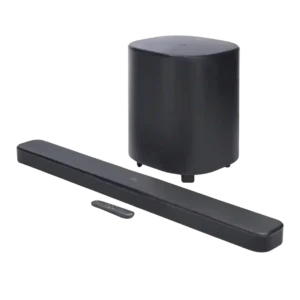
One reviewer highlights 750 W total system power, supporting the impression that the bar-sub package has substantial output for home theater use.
Pros: AirPlay compatibility, Chromecast compatibility
Cons: HDMI 2.1 gaming, Gaming HDMI passthrough
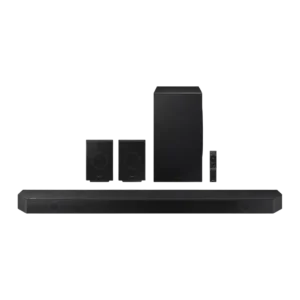
Reviewers cite the system's high total amplification, supporting its large-room home-theater ambitions.
Pros: AirPlay compatibility, HDMI ARC)
Cons: Status indicators, Weight convenience

Internal amplification is treated as a self-contained benefit: reviewers note built-in Class D amplifiers and no need for a receiver.
Pros: Setup simplicity, Distortion at high volume
Cons: Bluetooth codec support, Video passthrough support
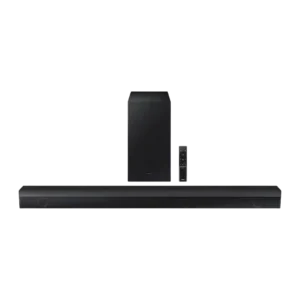
Amplifier power evidence is strong for the class, with a 250W subwoofer amplifier and 430W output mentioned.
Pros: Setup simplicity, Dialogue clarity (for TV/soundbar use)
Cons: AirPlay compatibility, Chromecast compatibility

Multiple reviews cite the 120-watt output, which supports the bar's adequate loudness for everyday rooms.
Pros: Distortion at high volume, Setup simplicity
Cons: Wi-Fi streaming reliability, Dolby Atmos height effects
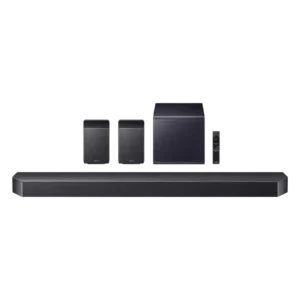
Power is substantial but not cord-free; reviewers cite high system wattage and note every component needs its own power cord.
Pros: Cohesive presentation, Detail retrieval
Cons: Weight convenience, Status indicators
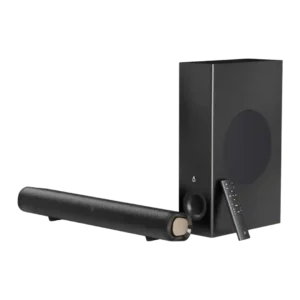
Power is ample for the form factor, with repeated references to 80Wrms/160W peak and enough headroom for small-room listening.
Pros: Setup simplicity, Voice clarity
Cons: Wi-Fi streaming reliability, Spotify Connect reliability

Amplification is not deeply quantified, but reviews confirm Class-D amplification and the same driver/amplifier platform as the original Beam.
Pros: Smart assistant integration (Alexa, Dialogue clarity (for TV/soundbar use)
Cons: Bluetooth codec support, Gaming HDMI passthrough
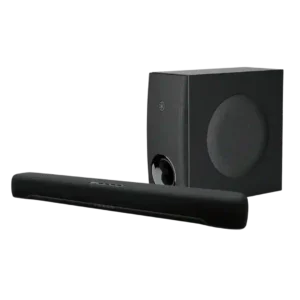
Power is consistently described as modest but adequate for the compact 2.1 design, with 90W total and 20W per bar driver cited.
Pros: Multi-speaker pairing reliability, Inter-speaker connectivity
Cons: Wi-Fi streaming reliability, AirPlay compatibility
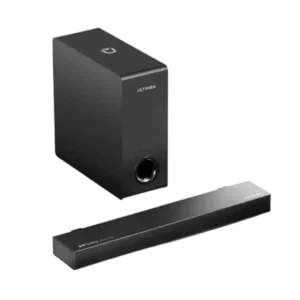
One reviewer gave a rough power note for the subwoofer, but also framed it as something awaiting manufacturer confirmation.
Pros: optical, Weight convenience
Cons: Gaming HDMI passthrough, Smart features