- Better: early reward momentum The reviewer says the game lacks Absolum's early reward momentum.
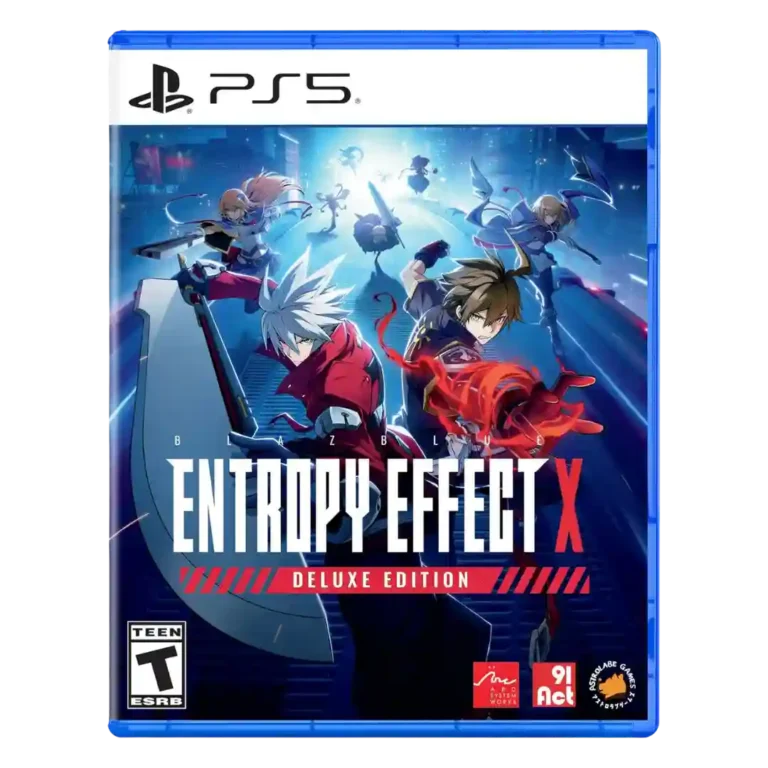
BlazBlue Entropy Effect X Review
Bottom Line
Choose BlazBlue Entropy Effect X for fast, stylish roguelike combat, deep builds, and strong roster variety. Skip it if dense story, repeated rooms, UI clutter, or occasional bugs will outweigh the thrill of another run.
Best for action-roguelike players who care most about fast combat, build crafting, and trying distinct avatars. It also suits BlazBlue fans open to a genre shift rather than a traditional fighter.
Not for players who need a clean, accessible story or dislike repetition, cluttered UI, heavy systems, or occasional technical rough edges. Switch handheld players should be especially cautious based on review evidence.
BlazBlue Entropy Effect X lands as a combat-first roguelike where the best-reviewed pieces are the fluid action, distinct avatars, inheritance systems, and build-changing upgrades. Reviewers repeatedly describe the combat loop as rewarding, replayable, and easy to keep returning to, with strong animation and striking visuals helping each run feel flashy. The tradeoff is that the surrounding structure can be messy: the narrative is often called confusing or padded, early systems can overwhelm newcomers, and repeated rooms or limited enemy variety wear on some players. Platform impressions are also uneven, with smooth PS5/Xbox-style play contrasted by Switch text-size and lag complaints plus reports of bugs and UI clutter. Its strongest identity is not as a story showcase, but as a stylish build-crafting action roguelike.
Compared in Reviews
Products reviewers directly compared with this model, grouped into quick takeaways.
Dead Cells
- Alternative: roguelike audience The reviewer says players who like Dead Cells can have fun with it too.
- Better: longevity The reviewer says it does not offer Dead Cells-level longevity.
- Similar: combat transition The reviewer says the simplified action transition works well for a Dead Cells player.
Hades
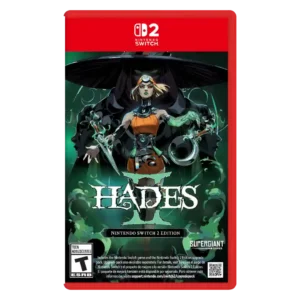
- Similar: difficulty modifier system The reviewer likens the entropy modifiers to Hades' heat system.
- Better: overall genre heights The reviewer says it is polished but does not reach Hades-level heights.
- Similar: scaling system The reviewer says the scaling system feels similar to Hades.
Feature Scorecards
Summary
63 reviewed features- Very positive 4.5-5.0 35% 22 features
- Positive 3.5-4.4 33% 21 features
- Neutral 2.5-3.4 24% 15 features
- Negative 1.5-2.4 8% 5 features
- Very negative below 1.5 0% 0 features
Pros
-
Movement feel is a strength, with reviewers praising speed, acrobatics, quick readability, and fluid movement.
-
Couch co-op has limited evidence, but the one direct reviewer says the couch co-op implementation works really well.
-
Emotional impact is limited but strong in one review, where the game was hard to put down because of its fun factor.
-
Save reliability gets strong evidence from one reviewer whose mid-run progress survived a power outage.
-
Skill depth is praised in one detailed overview for stacking tactics with inherited passives to build stronger characters.
-
Animation is a consistent strength, with reviewers praising superb, beautiful, smooth, expressive, and detailed 2D character work.
-
Fun factor is very strong, with reviewers repeatedly calling the game enjoyable, hard to stop playing, and a standout roguelike.
-
Graphics are a major strength, repeatedly described as appealing, sumptuous, gorgeous, sharp, beautiful, and impressive within the genre.
-
Endgame content is praised for extended zones, stronger rewards, and extreme-mode challenges that keep players engaged.
-
Combat is the clearest consensus strength: reviewers repeatedly call it fun, fluid, satisfying, stylish, and the main reason to keep playing.
-
The upgrade system is a major strength, with Potentials, tactics, elements, inheritance, and build crafting repeatedly praised.
-
The core loop is widely praised as fruitful, hooking, rewarding, pristine, and strong enough to overcome repetition or rough edges.
-
Co-op impressions are positive when tested, with online/local play described as working well and creating a balanced trade-off.
-
Progression is a consistent strength, with permanent upgrades, inheritance, mind systems, and run rewards making attempts feel purposeful.
-
Controls are usually praised as responsive, simple, and precise, although one review finds group hit confirmation less exact than desired.
-
Gameplay mechanics are praised for fluid action, clever roguelike systems, and meaningful changes, despite some bugs in one review.
-
Replay value is very high overall, driven by character variety, builds, modifiers, inheritance, and the urge for another run.
-
Art direction is broadly praised for appealing hand-drawn style, gorgeous environments, sleek presentation, and strong character looks.
-
Enemy behavior is praised for readable signaling that lets players counter attacks, supporting fairer high-pressure encounters.
-
Lore depth gets positive but limited evidence because the story links back through familiar BlazBlue continuity and characters.
-
Multiplayer design is praised in one review because separate co-op builds can complement each other during runs.
-
Quest design has limited positive evidence, especially for character-specific unlock quests described as genuinely cool.
-
Value is viewed favorably through Game Pass, complete console content, reasonable price, and general recommendation, with deluxe value more conditional.
-
Frame-rate evidence is platform-dependent: Switch has odd lag, while PS5/Xbox-style impressions report smooth or lag-free play.
-
Reviewers strongly like the roster’s variety and distinctive playstyles, though some note the pool can feel small or miss fan favorites.
-
Voice acting is mostly praised for strong Japanese performances and cyberpunk atmosphere, though one review finds repeated lines annoying.
-
Dialogue is described as straightforward and engaging where voiced lab conversations and shard scenes move the story along.
-
Content variety is generally strong thanks to systems, characters, and builds, but several reviews still flag repetition in rooms or overall structure.
-
Polish is mostly praised, especially in overviews, but bugs and mechanical rough edges keep it from being uniformly flawless.
-
Faithfulness is mostly positive in X, with reviewers saying it ties closer to BlazBlue and preserves combat identity, though one older review disliked the branding fit.
-
Difficulty is mixed: reviewers value fair modifiers and player tailoring, but some find normal runs too easy or later content awkwardly tuned.
-
Character development evidence centers on the X storyline, where reviewers liked researcher backstories and clearer characterization.
-
Originality is positive but not revolutionary, with reviewers liking the fighter-roguelike blend while noting it does not redefine the genre.
-
Accessibility evidence is limited but positive: one reviewer notes visual settings help address excessive flashiness.
-
Atmosphere has limited but positive evidence, with cyberpunk presentation strengthened by sound and voice work.
-
Platform-specific support has limited positive evidence: one reviewer says the controller implementation works well.
-
Side character depth improves in X, with researchers described as having clearer characterization and individual struggles.
-
Sound design is mixed: some reviewers praise slick effects, while others mention repetitive effects or music buried under combat noise.
-
Boss impressions are mostly positive for challenge and spectacle, though several reviewers criticize predictability, instant kills, or early repetition.
-
Innovation is modestly positive: one overview liked the unusual 2D-fighter roguelike transfer, while another said it is not earth-shattering.
-
Soundtrack opinions are split between fantastic or well-judged music and complaints that tracks fade into the background or disappear.
-
Handheld suitability is split: PS Portal play was recommended, while Switch handheld text and UI size drew criticism.
-
Edition commentary suggests the deluxe bundle makes sense mainly for players who value the extra cosmetics and soundtrack.
Cons
-
Onboarding improves in X for newcomers and hub streamlining, but several reviewers still say systems are poorly explained early on.
-
Environments are praised for distinct looks early on, but extended play exposes repetition and familiar layouts.
-
Learning curve is mixed: the action can be easy to learn, but many systems, terms, and early decisions are unclear or overwhelming.
-
Level design has limited, mixed evidence, with one reviewer criticizing repeated small rooms that look similar.
-
Writing quality is mixed to negative in one review that calls the story the weakest point despite improved presentation.
-
Enemy variety is one of the main weak spots, with several reviewers finding repeated minions or limited enemy pools despite good combat.
-
Narrative quality is the biggest split: some X reviews like its stronger BlazBlue ties, while many others call it confusing, padded, or hard to follow.
-
Grind is mixed to negative: one reviewer finds early repetition tolerable, while another says initial grinding is required before the game blooms.
-
Tutorial quality is split: one review found the brief tutorial useful, while another criticized wordy, jargon-heavy tutorial text.
-
Visual effects are mixed: flashy effects look impressive but can obscure readability and cause players to miss damage.
-
Pacing is mixed: short runs help, but shard gating, story sequencing, and exposition can make progress feel padded.
-
Balance between playable characters is a concern in one review, which found some avatars clearly stronger than others.
-
Immersion evidence is negative in one review, where animated sequences look good but the complex story fails to pull the reviewer in.
-
Mission variety is a weakness in one video review, which wanted objectives to be more varied than repeated combat rooms.
-
World-building is weak in one review because the roguelike action left the reviewer detached from the dialogue and setting.
-
Performance is mixed by platform or stage, with Switch issues and late-stage slowdown offset by some reports of stable play.
-
Bug reports are a recurring concern, from Switch technical issues to overlapping UI and longer-lasting bugs that can disrupt progress.
-
UI design is a repeated weakness, with overlap, clutter, cumbersome potential screens, and unreadable bugged menus mentioned.
-
HUD clarity is a weakness in one review because the missing combo counter makes it harder to read perfect-clear performance.
-
Menu usability is criticized for intrusive between-screen upgrade spaces that slow the action flow.
Compared With Category Average
Compared with other Video Games, this product is above average in save system reliability, AI behavior, below average in performance optimization, world-building, immersion.
Summary
8 compared features- Above average 0.4+ pts higher 25% 2 features
- Same as average within 0.3 pts 0% 0 features
- Below average 0.4+ pts lower 75% 6 features
| Attribute | This product | Category average | Difference |
|---|---|---|---|
| performance optimization | 2.3 | 4.2 | -1.9 |
| world-building | 2.5 | 4.3 | -1.8 |
| save system reliability | 5.0 | 3.2 | +1.8 |
| immersion | 2.5 | 4.2 | -1.7 |
| visual effects quality | 2.8 | 4.3 | -1.6 |
| AI behavior | 4.5 | 3.0 | +1.5 |
| user interface design | 2.1 | 3.5 | -1.4 |
| HUD clarity | 2.0 | 3.4 | -1.4 |
FAQ
Is BlazBlue Entropy Effect X mainly worth playing for combat?
Yes. Across the reviews, combat is the strongest consensus point, with repeated praise for fluid action, distinct characters, responsive controls, and build-changing upgrades.
Is the story easy to follow?
Not consistently. Some reviewers liked the stronger BlazBlue ties in X, but many still found the narrative confusing, dense, padded, or less compelling than the action.
Does the game have good replay value?
Yes. Reviewers repeatedly point to different avatars, inheritance, tactics, modifiers, and run-to-run builds as reasons the game stays replayable.
How does co-op come across in the reviews?
Evidence is limited but positive. Reviewers who discussed it said online/local co-op works well and that separate builds can complement one another.
Are there technical problems?
There are some. Reviews mention Switch lag and handheld text issues, UI overlap or clutter, and specific bugs, while other platform impressions report smooth or flawless play.
Who will struggle with it?
Players who dislike repeated rooms, dense roguelike systems, confusing exposition, or visually busy combat may bounce off before the upgrades and roster depth fully click.
Sample Expert Reviews We Analyzed
These are a few of the reviews included in our analysis.

Video Reviews
- Review score
- 3.5/5
- Review score
- 3.8/5
- Review score
- 4.9/5
- Review score
- 4.7/5
Article Reviews
- Review score
- 4.5/5
- Review score
- 4.9/5
Consider This Instead
If you want better user interface design
Choose Donkey Kong Bananza. It scores 5.0 vs 2.1 for user interface design, with a 4.4 overall score.
If you want better menu usability
Choose Shinobi: Art of Vengeance. It scores 5.0 vs 2.0 for menu usability, with a 4.2 overall score.
If you want better HUD clarity
Choose 007 First Light. It scores 5.0 vs 2.0 for HUD clarity, with a 4.1 overall score.
If you want better bug frequency
Choose Hades II. It scores 5.0 vs 2.2 for bug frequency, with a 4.5 overall score.
Overall Top Video Games Alternatives
Good if you want fast, tactical roguelite combat with huge progression depth, striking art, and standout music. Skip it if repetition, resource micromanagement, or a less emotionally satisfying sequel story...
Pros: skill tree depth, dialogue quality
Cons: emotional impact, economy and resource balance
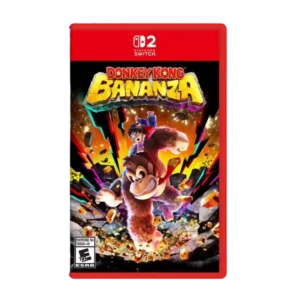
Best for joyful destruction, dense exploration, and a charming DK-Pauline adventure. Skip it if camera quirks, frame-rate dips, easy bosses, or premium Switch 2 pricing are dealbreakers.
Pros: gameplay mechanics, world interactivity
Cons: economy and resource balance, enemy variety
Best for tense Grace-led horror, slick Leon action, and lavish franchise callbacks. Skip it if you want a bolder reinvention, evenly mixed pacing, or substantial post-game modes.
Pros: driving mechanics, protagonist appeal
Cons: platform-specific feature support, checkpoint system
Choose Death Stranding 2 if you want a gorgeous, stranger, more action-friendly delivery epic with powerful performances. Skip it if fetch quests, Kojima exposition, reduced tension, or easier traversal undercut...
Pros: animation quality, facial animations
Cons: quest design, AI behavior