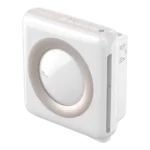
Coway Airmega Mighty AP-1512HH Feature Scores
Explore all 50 feature scores for Coway Airmega Mighty AP-1512HH, organized into pros and cons.
Scores by Feature
Summary
50 reviewed features-
Very positive 4.5-5.012 (24%)
-
Positive 3.5-4.426 (52%)
-
Neutral 2.5-3.47 (14%)
-
Negative 1.5-2.44 (8%)
-
Very negative below 1.51 (2%)
Pros
Sort
-
Reviewers consistently found the AP-1512HH effective at cleaning air, with repeated praise for lab results, home use, and long-term performance; one HouseFresh-style take called it more dated than newer rivals.
-
Value for money is broadly positive because reviewers praise performance, low filter costs, and sale pricing, though several warn newer models may now offer better value.
-
Auto mode is repeatedly praised for hands-free operation and responsive fan changes, though one review cautioned the sensor area must be kept clean.
-
Reliability is a major strength, supported by long-term updates, power-failure recovery, smooth motor operation, and several years without breakdown.
-
Air quality sensor evidence is mostly positive, with reviewers praising sensitivity, responsiveness, PM2.5 detection, and real-world triggers, though one saw cooking trigger a false alarm.
-
Real-time air quality monitoring is a major usability strength across reviews, whether through color indicators, app charts on the smart variant, or instant feedback.
-
Pollen performance is a repeated strength, with reviewers calling it fantastic for pollen/allergens and noting springtime and long-term pollen reduction.
-
Particle-removal evidence is strong, including 70%+ early pollutant reduction, 85% particulate removal in one test, and top-tier box or room performance in several reviews.
-
Design opinions are highly subjective: many liked the compact, quirky, handsome, or gorgeous look, while others disliked the glossy plastic, dated styling, or fingerprints.
-
Allergen reduction is one of the clearest positives, with reviewers connecting the purifier to pollen/allergen capture, sneezing relief, asthma/allergy help, and pet-allergy improvement.
-
Smoke performance is generally strong in tests, with praise for heavy-pollution handling, smoke-box results, and match/incense particle removal.
-
Room coverage is generally viewed as good for medium rooms, bedrooms, offices, and living spaces, though one review noted 361 square feet is not huge.
-
Energy efficiency is sharply split: several reviews praised eco/auto savings and low measured consumption, while others found the unit power-hungry at top speed.
-
Pre-filter quality is praised for being removable, practical, and protective of the HEPA filter, especially in dust, pet hair, and maintenance contexts.
-
Size and footprint are mostly positive for compact placement, though some reviewers called it bulky or too large/loud for small apartments.
-
HEPA filtration receives strong marks, with reviewers emphasizing the all-important HEPA layer, fine-particle capture, and long-term evidence of an effective HEPA filter.
-
Maintenance is mixed: many reviewers found setup, cleaning, and indicators straightforward, but some criticized filter schedules or deeper cleaning as inconvenient.
-
Durability evidence is strong in long-term owner reviews, especially motor consistency and a unit still working after several years.
-
Pet-related particle evidence is positive, especially where reviewers mentioned pet dander, pet hair, or reduced pet-hair allergy symptoms in home use.
-
Filter replacement cost is mostly viewed favorably thanks to low or reasonable OEM/third-party costs, though a few reviewers still found replacements pricey.
-
CADR evidence is favorable for the size and price, with reviewers calling its ratings solid, strong, or impressive for a compact purifier.
-
The multi-stage filtration setup is viewed favorably overall, with reviewers calling it comprehensive, generously sized, or giving the unit an edge.
-
Dust removal is praised in both lab-style and long-term use, with reviewers noting dust was tackled well and floating dust dropped during real-world operation.
-
True HEPA evidence is positive where reviewers described certified True HEPA doing the main cleaning work or saw the filter protect the inside of the unit.
-
Fan-speed options are considered useful, with reviewers praising customization, power-setting flexibility, and the variable fan-speed setup.
-
Noise is the most divided attribute: low settings are often quiet, but high speed is repeatedly described as loud, frustrating, or above several competitors.
-
Build quality evidence is positive but limited, with reviewers describing the plastic and body as sturdy or excellent quality.
-
The washable pre-filter is praised for extending filter life and simplifying upkeep, with reviewers valuing the ability to clean rather than replace it.
-
Portability is mixed: some reviewers found it easy to carry, while others thought moving it between rooms was awkward or heavier than expected.
-
Scheduling evidence is positive where available through the app, with reviewers finding schedule setup useful and editing/deleting schedules easy.
-
Filter life is generally acceptable or good, but reviewers noted schedule complexity because carbon and HEPA filters follow different replacement intervals.
-
Filter availability is mixed: some reviewers praised broad generic or third-party availability, while one noted difficulty tracking replacements down.
-
Handle design is mixed-to-positive, with praise for the deep handle but criticism that the unit can still feel difficult to lug around.
-
Wi-Fi reliability evidence is limited but positive, with the smart-variant review reporting no wireless trouble in testing.
-
Ozone evidence is mixed but generally reassuring: the ionizer can emit ozone, yet reviewers described measured or cited amounts as low or below limits.
-
Mold-spore evidence is limited but positive, appearing where the True HEPA system was credited with trapping mold along with pollen.
-
Air-change evidence is limited but supportive, with one review calling the 4.8 air changes per hour an industry-standard result.
-
Safety-certification evidence is limited to ozone/regulatory discussion, where the reviewer reported the product passed relevant ozone regulation.
Cons
Sort
-
Child lock is a clear weakness because multiple reviewers explicitly criticized the missing child lock.
-
App connectivity is mostly a limitation on the standard model, though reviews of the smart variant praised app control while noting 2.4GHz Wi-Fi setup constraints.
-
The activated carbon filter is the most consistent filtration weakness: reviewers repeatedly noted it is mesh, fabric, or treated carbon rather than higher-performing pelleted carbon.
-
Smart features are mixed by version: the standard AP-1512HH is criticized as basic, while the smart-enabled variant receives praise for connectivity and monitoring.
-
VOC reduction is a weak point in the evidence, tied to reviewers criticizing the treated or impregnated carbon design as less capable than more serious activated-charcoal filters.
-
Voice assistant support is mixed: one smart-variant review found Alexa/Google commands useful but basic, while another standard-model review wished it had that support.
-
Sleep-mode evidence is weak for the standard model, with one review noting it lacks sleep mode even though low speed may be quiet enough for some users.
-
PM2.5 evidence is split: one review praised PM2.5 detection, while a long-term update criticized the standard model for lacking a PM2.5 display.
-
Indicator lights are useful for quick air-quality feedback, but bedroom use creates complaints when lights stay bright or cannot be easily disabled.
-
Odor opinions are mixed: some home tests praised odor removal, but several reviewers criticized the carbon filter as weaker than pelleted-carbon competitors.
-
Display readability is mixed: reviewers liked the simple interface or useful indicator, but others found the indicator hard to see from some angles or lights hard to disable.
-
Power consumption evidence follows the same split, with some tests showing very low auto-mode draw and others criticizing high-speed power use.