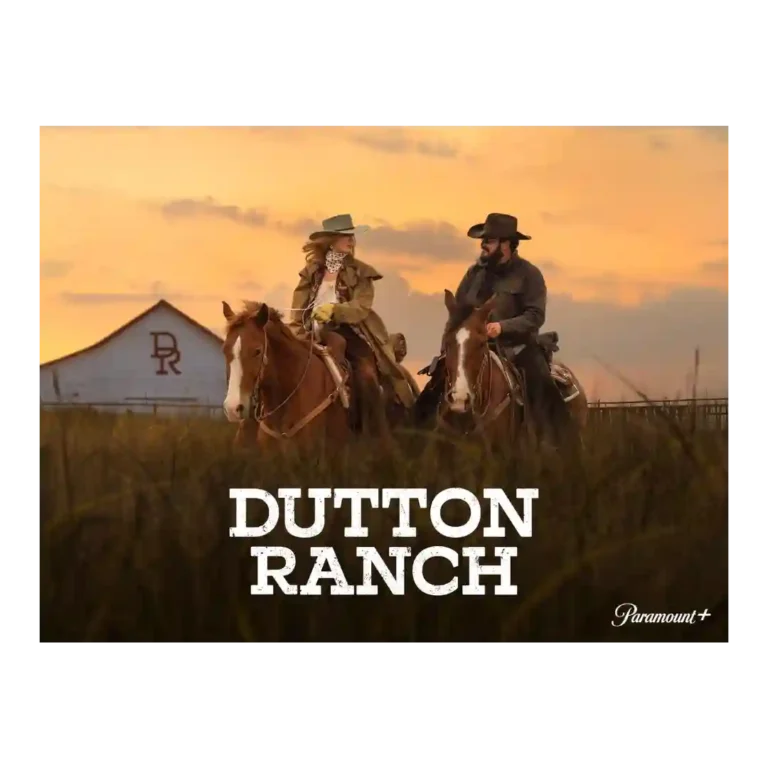
Choose Dutton Ranch if you want Beth and Rip back in a familiar neo-Western fight with strong new cast support. Skip it if slow pacing, recycled Yellowstone conflicts, or Carter’s teen subplot will wear you down.
Best for
Best for Yellowstone fans who mainly want more Beth and Rip, strong ranch-world atmosphere, and a familiar neo-Western power struggle with a few high-profile new performers.
Not for
Not for viewers who want a clean break from Yellowstone, fast pacing from the start, or a spinoff that avoids recycled territorial conflicts and soap-Western melodrama.
Verdict
Dutton Ranch works best as a comfort-watch continuation for viewers who wanted more Beth and Rip after Yellowstone. Critics consistently praise Kelly Reilly, Cole Hauser, Annette Bening, Ed Harris, the charged cast pairings, and the rugged Texas atmosphere. The tradeoff is familiarity: several reviews call the setup a relocation more than a reinvention, with slower early pacing, uneven subplot focus, and a Carter-Oreana thread that draws repeated skepticism. It has enough ranch crises, personal drama, and franchise texture to satisfy many fans, but its ceiling depends on whether the later season turns all that setup into sharper conflict.
Beth and Rip’s chemistry remains one of the safest bets in the series, and several critics also enjoyed the charged Beth-Beulah scenes. The best pairings give the spinoff its strongest sparks.
The acting is broadly praised, with Reilly, Hauser, Bening, and Harris carrying much of the show’s appeal. Even more mixed reviews tend to credit the performers with making familiar material watchable.
Kelly Reilly is repeatedly singled out as the anchor, and critics remain invested in Beth and Rip as leads. Cole Hauser fares well with fans of the duo, though one critic felt Rip registers less strongly beside Beth.
supporting cast performance: 4.4, based on 10 reviews
The new ensemble is a major bright spot, especially Annette Bening and Ed Harris. Reviewers also liked how Azul, Zachariah, Beulah, Everett, and other newcomers give the Texas setting its own texture.
The look of the show gets consistent praise, from cinematic Texas landscapes to sunlit ranch imagery. Reviewers see the scenery as one of the clearest carryovers from Yellowstone’s appeal.
Visual style is a strength even for mixed critics. The Texas heat, dusty ranch spaces, and open landscapes help the spinoff feel tactile, though one review pairs the arresting imagery with sluggish pacing.
Reviewers respond to the animal-crisis scenes and Zachariah’s backstory as the clearest emotional beats. The cattle and horse material often carries more weight than the broader power struggle.
One video reviewer found the setup immediately attention-grabbing. The intrigue around power struggles and Beth-Rip survival gives the show some pull for fans of serialized ranch drama.
The theme music earns a positive mention for keeping the rousing Taylor Sheridan universe feel intact. It supports the familiar neo-Western mood rather than reinventing it.
Audience appeal is strongest for viewers who already miss Beth, Rip, and Yellowstone-style ranch conflict. Some reviews warn that the same familiarity could bore viewers looking for something meaningfully new.
The Texas move gives the series room to build a fresh ranch community around Beth and Rip. Critics like the new frontier and long-term threads, though one review frames the world as a smaller pond than Yellowstone.
For neo-Western fans, the show delivers open-range life, cowboy codes, and muscular ranch drama. It is not subtle, but several reviewers say that familiar genre comfort is part of the appeal.
As a spinoff, Dutton Ranch is widely seen as closer to Yellowstone than Marshals and often more satisfying for franchise fans. The main caveat is that several critics think it repeats the old formula too closely.
Reviewers see the core story as a reliable Beth-and-Rip survival engine with new Texas trouble and several promising branches. The main divide is that some find the pieces intriguing, while others think the subplots do not fully cohere yet.
Beth receives the most attention, with reviewers noticing a softer, more patient version who still keeps her killer instinct. Character work lands best when it deepens Beth, Rip, Carter, or Zachariah; it falters when characters are described as thin.
The ranching life is treated with enough hardship to feel more grounded than pure fantasy. Disease, money trouble, and daily labor give the Texas story a practical edge.
Violence is part of the show’s DNA, from vigilante justice to ranch-world brutality. One critic notes the series’ clear appetite for violent payback on behalf of family.
Writing quality is viewed as sturdy but familiar. Positive reviews like the more grounded drama and character focus, while negative ones see a greatest-hits version of Yellowstone in a new location.
Overall critic appeal is mixed-positive. The sample includes enthusiastic stream-it reactions and solid ratings, but also middling grades and one strongly negative notice.
Suspense works best when the show leans into ranch crises, violent fallout, and Episode 4’s promised payoff. Some critics still felt the stakes stay too low for too long.
The show’s themes land best around animal suffering, stubborn pride, and the cost of survival. Some reviewers find those ideas heartfelt, while others see the characters confusing hostility with strength.
The drama is strongest when it centers on personal conflict, ranch survival, and Beth versus Beulah. More skeptical critics describe it as overwrought soap or not invigorating enough.
Dialogue splits reviewers. Some hear the expected terse Western wisdom and enjoy the combative lines, while others find the writing flat or pseudo-profound.
Franchise connection is unmistakable: reviewers repeatedly frame this as a direct continuation of Yellowstone’s tone, conflicts, and character appeal. That familiarity helps fans re-enter the world but can make the new show feel less necessary.
The show keeps Beth recognizable while slightly tempering her sharper edges. That change reads as a calmer evolution for some viewers rather than a full break from the character.
Entertainment value ranges from enthusiastic to sharply negative. Supporters call it watchable comfort food or a breath of fresh air, while one critic found no good reason to keep watching.
Episode pacing is mixed: a few reviewers liked the breathing room, while others wanted the show to move faster. The common complaint is that several storylines take time to build before the conflict snaps into focus.
The Texas reset gives the old ranch-war formula a useful reversal, with Beth and Rip now positioned as outsiders. Even so, several critics call the premise familiar or plainly recycled rather than truly original.
Early episode structure can feel crowded and unfinished. Critics note that the show juggles ranch business, family drama, murder fallout, and teen romance before those threads clearly connect.
Season pacing draws some frustration because the show starts slower than Yellowstone and spends its early stretch setting pieces in place. That slower approach may pay off later, but critics felt the momentum was muted upfront.
Plot clarity is one of the shakier areas. Reviewers point to vague setup details around the fire and an unclear central conflict in the early episodes.
Editing is a weak spot in one review’s view, especially during montage-like ranching sequences. Those moments are said to feel rushed rather than majestic.
The screenplay stumbles most around Carter and Oreana’s teen-romance material. Reviewers who liked other parts of the show still called that subplot weak, dull, or hard to sit through.
Cultural representation is more limited than Yellowstone’s, with one review specifically missing the Native story material that gave the original added nuance. The Texas reset shifts that focus away from Indigenous land concerns.
Continuity is a minor concern around how the wildfire and move away from Montana connect to the wider franchise. One review specifically questions whether related events will be addressed elsewhere.
Compared With Category Average
Compared with other TV Shows, this product is above average in violence level, story quality, realism, near average in spin-off quality, supporting cast performance, below average in cultural representation, continuity, editing quality.
Products reviewers directly compared with this model, grouped into quick takeaways.
Marshals
Compared: genre and toneVariety contrasts Marshals’ procedural shift with Dutton Ranch keeping the original’s soap-Western tone.
Worse: spinoff promiseTheWrap sees Dutton Ranch as a more promising Yellowstone spinoff than Marshals.
Yellowstone
Worse: overall sequel qualityScreen Rant frames Dutton Ranch as a Yellowstone continuation that may improve on the original formula.
FAQ
Do critics think Dutton Ranch is a good Yellowstone spinoff?
Mostly yes, but with reservations. Several reviews call it the closest or most satisfying continuation, while others say it repeats the old formula too closely.
Are Beth and Rip still the main reason to watch?
Yes. Reviewers repeatedly point to Kelly Reilly, Cole Hauser, and the Beth-Rip relationship as the show’s central appeal.
How is the new cast?
The new cast is one of the best-liked parts. Annette Bening and Ed Harris receive frequent praise, and several reviews say the supporting characters help the Texas setting take shape.
Is the pacing slow?
Often, yes. Some critics appreciate the room to breathe, but several say the early episodes build slowly or take too long to clarify the central conflict.
Does it feel different from Yellowstone?
Only partly. The Texas location and outsider status change the setup, but many reviews say the tone, ranch conflicts, and melodrama remain very familiar.
What is the biggest weakness?
The most common weaknesses are familiar plotting, uneven focus, and the Carter-Oreana teen-romance thread, which multiple critics found weak or distracting.
Sample Expert Reviews We Analyzed
These are a few of the reviews included in our analysis.
Choose The Pitt Season 2 for a gripping, realistic medical drama with superb acting and emotional depth. Skip it if graphic procedures, unresolved arcs, or slower character-driven pacing bother you.
Choose Kylie for a heartfelt, candid music documentary with rich archives, sharp editing, and big emotional payoff. Skip it if you need a fully exhaustive career chronology or dislike authorized...
Best for heartfelt family drama, strong performances, natural faith themes, and an easy binge. Skip it if you need fast pacing, strict doctrinal portrayals, or a satisfying romantic resolution.
Choose Dark Winds Season 4 for moody noir suspense, excellent acting, and richer Native-centered themes. Skip it if uneven pacing, thin conspiracy plotting, or a stranger L.A. detour would frustrate...