Review: Focal Theva N.1 Speakers
Updated: 3 weeks ago
4.2
Based on methodology below
72
Insights analyzed
13
Grouped by key features
8
From expert reviews
Scores below reflect consolidated expert coverage across these features.
Bottom Line
Choose the Theva No.1 for spacious, refined sound and easy amplifier matching. Skip it if you want deep bass without a sub or the last bit of treble sparkle.
Best for
Listeners who want a refined passive bookshelf speaker for music-first stereo or a sub-backed home theater. It especially suits buyers who value imaging, tonal balance, and easy drivability over sheer bass depth.
Not for
Bass-heavy listeners expecting full-range slam from a standmount, or anyone who mostly listens at very low volume. It is also less ideal for buyers chasing the sharpest treble detail or the most rhythmically urgent presentation in the class.
Verdict
Focal’s Theva No.1 lands as a very strong passive bookshelf speaker because it combines wide imaging, convincing dynamics, balanced tonality, and unusually easy amplifier matching for the class. Across the reviews, it sounds grown-up and composed rather than flashy, with enough bass weight to satisfy on its own for many music setups and enough clarity to work well in stereo or surround systems. The tradeoff is that it is not a true full-range box: deep bass, whisper-level listening, and the last word in treble refinement are the areas where competitors or a subwoofer can improve the experience. Get placement right, pair it with competent electronics, and it rewards with confident, room-filling sound.
Pros
-
4.6based on 6 reviewsStereo imaging accuracy: 4.6, based on 6 reviewsImaging is one of the most consistently praised traits, with reviewers highlighting precise center focus, strong layering, and a wide, dimensional soundstage. Off-axis behavior is also widely seen as a strength when the speakers are positioned thoughtfully.
-
4.6based on 6 reviewsDynamic headroom: 4.6, based on 6 reviewsDynamic expression is one of the clearest strengths in the review set, with repeated praise for punch, crescendos, and scale. Several reviewers were impressed by how loudly and confidently the Theva No.1 can play for its size.
-
4.5based on 5 reviewsLoudness / maximum volume: 4.5, based on 5 reviewsThe speakers play louder than expected for a compact standmount and can fill a room without much effort. Bass output is impressive for the size, but true sub-bass weight and physical slam still require a subwoofer.
-
4.5based on 7 reviewsValue for money: 4.5, based on 7 reviewsMost reviewers believe the Theva No.1 earns its asking price through mature sound, strong imaging, and easy system matching. The value case is slightly softened by fierce competition and the need for a subwoofer if deep bass is a priority.
-
4.4based on 5 reviewsCohesive presentation: 4.4, based on 5 reviewsThe Theva No.1 is repeatedly described as fluid, organized, and easy to listen to over long sessions. It keeps complex mixes coherent, though some reviewers wanted more rhythmic snap and outright excitement versus top class leaders.
-
4.4based on 5 reviewsHome theater integration: 4.4, based on 5 reviewsSeveral reviews say the Theva No.1 integrates very well into stereo-plus-sub and surround systems thanks to its dynamics, clarity, and easy amplifier load. For home theater, reviewers strongly favor adding a subwoofer for the lowest effects and fullest impact.
-
4.3based on 6 reviewsAmplifier power requirements: 4.3, based on 6 reviewsReviews consistently describe the Theva No.1 as easy to drive, with above-average sensitivity and a benign impedance load. Better amplification improves articulation and texture, but most decent amps should power it comfortably.
-
4.3based on 7 reviewsFrequency response balance: 4.3, based on 7 reviewsConsensus points to a balanced, full-bodied, slightly smooth presentation with accurate timbre and no major frequency-band exaggeration. The main tonal caveat is that treble can sound a bit exposed, cool, or less refined depending on setup and comparison.
-
4.2based on 7 reviewsDetail retrieval: 4.2, based on 7 reviewsDetail retrieval is strong for the class, especially through vocals, strings, and low-level film effects. Some reviewers still wanted a little more top-end definition and microdetail compared with pricier or best-in-class alternatives.
-
4.1based on 5 reviewsSetup simplicity: 4.1, based on 5 reviewsSet-up is mostly straightforward thanks to easy amplifier matching and manageable placement, but the rear port still wants breathing room. Vertical listening height and toe-in can audibly affect tonal balance, so careful positioning pays off.
-
4.1based on 4 reviewsDistortion at high volume: 4.1, based on 4 reviewsMost reviews say the speakers stay composed at high volume and avoid obvious muddiness or breakup. The main caveats are occasional treble edge on difficult recordings and some bass compression when pushed very hard without a subwoofer.
-
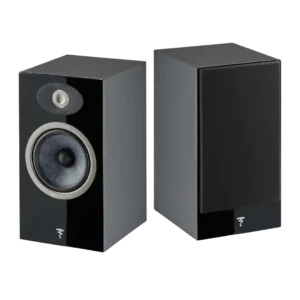
4.1based on 7 reviewsDesign and aesthetics: 4.1, based on 7 reviewsReviewers generally like the compact French-made styling, tasteful finishes, and clean front baffle. A few note that the vinyl wrap and some exterior details feel a bit less premium than the best rivals around this price.
Cons
-
2.8based on 2 reviewsLow-volume performance: 2.8, based on 2 reviewsLow-volume performance is a recurring weakness. More than one review says the tonal balance and engagement diminish when played quietly, even though the speakers remain pleasant overall.
FAQ
Does the Theva No.1 need a subwoofer?
Not always. Many reviewers found the bass satisfying for music on its own, but nearly all agreed a subwoofer improves deep bass, large-room output, and movie impact.
Is the Theva No.1 easy to drive?
Yes. Multiple reviews describe it as amplifier-friendly, with benign impedance behavior and above-average sensitivity, though better electronics can still improve articulation and texture.
Is it good for home theater?
Yes, especially in a surround or 2.1 setup. Reviews praise its dialogue clarity, dynamics, and room-filling sound, but also recommend a subwoofer for full cinematic weight.
How picky is it about placement?
It is fairly forgiving, but not carefree. The rear port benefits from some space behind the speaker, toe-in changes treble balance, and listening height matters more than average on the vertical axis.
Reviews we analyzed
Video Reviews

Article Reviews
Home Theater Review

Audioholics
Best Bookshelf Speakers
#1
4.5
Choose the REN if you want a stylish, plug-and-play stereo alternative to a soundbar with excellent inputs and imaging. Skip it if you...
Pros: Wired input availability, HDMI ARC), Home theater integration, Bluetooth connection stability, Cohesive presentation, Dialogue clarity (for TV/soundbar use), Stereo imaging accuracy
Cons: none
#2
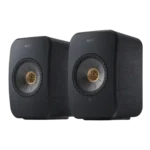
4.4
Choose the LSX II for compact wireless speakers with standout imaging and flexible streaming. Skip if you need deep bass or large-room volume...
Pros: Wired input availability, Latency with TV (lip sync), Setup simplicity, Design and aesthetics, Stereo imaging accuracy, Cohesive presentation, Audio format support
Cons: On-device controls, Remote control usability
#3
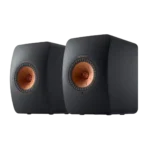
4.3
Choose LS50 Wireless II for reference-level imaging in a sleek all-in-one streamer/TV setup; Skip if you want deep sub-bass without a sub or...
Pros: AirPlay compatibility, Chromecast compatibility, Latency with TV (lip sync), Amplifier power requirements, Audio format support, Voice clarity, Stereo imaging accuracy
Cons: Smart assistant integration (Alexa, Privacy & data, Remote control usability
#4
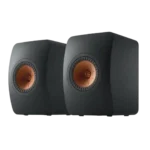
4.2
Choose LS50 Meta for pinpoint imaging and clean, refined vocals in a compact standmount; Skip if you want deep bass or party-level dynamics...
Pros: Stereo imaging accuracy, Dialogue clarity (for TV/soundbar use), Design & aesthetics, Detail retrieval, Low-volume performance, Cohesive presentation, Voice clarity
Cons: None