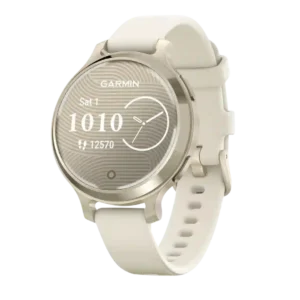
- More expensive: price The Active Max is positioned as much cheaper than the Garmin Vivoactive 6.
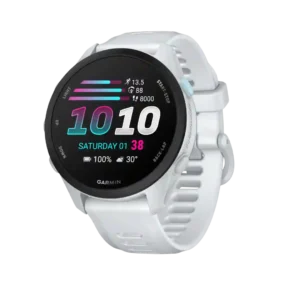
- Alternative: beginner and casual exerciser alternative The Garmin Vivoactive 6 is presented as a close alternative for similar beginner and casual users.
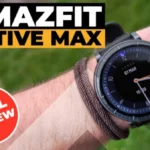
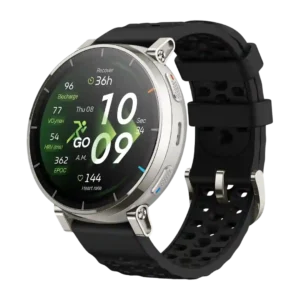
Amazfit Active Max Review
Bottom Line
Choose the Amazfit Active Max for long battery life, a bright AMOLED display, offline maps, and broad fitness tools at a low price. Skip it if you need polished smartwatch apps, dual-band GPS, premium materials, or precise interval-level tracking.
Best for casual exercisers, runners, hikers, and value-focused smartwatch buyers who want long battery life, a bright display, offline maps, and plenty of workout modes without paying flagship prices.
Not for users who need a smaller case, premium materials, polished app ecosystems, streaming music support, dual-band GPS, or highly precise heart-rate tracking for intervals, cycling, and strength work.
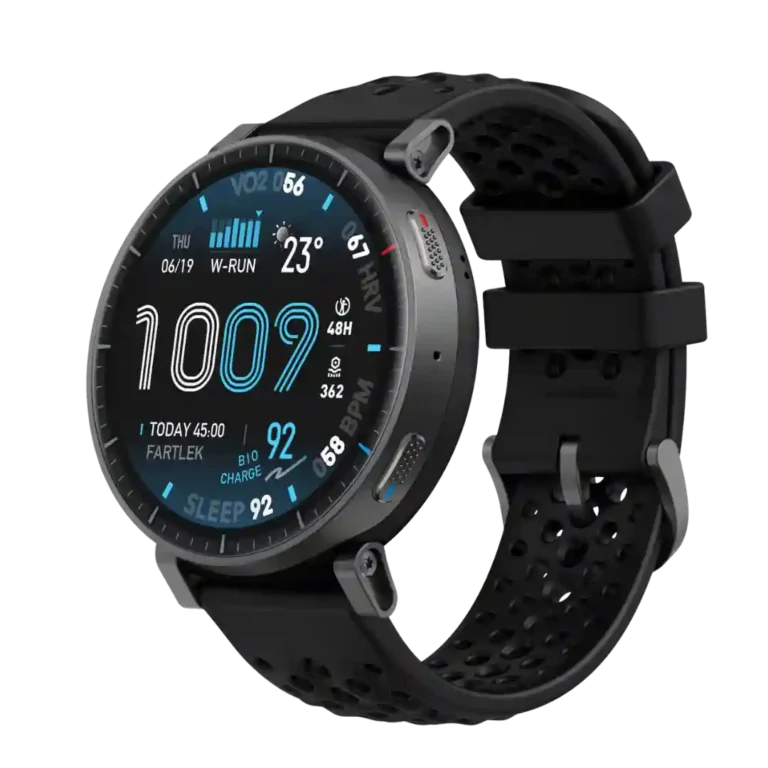
The Amazfit Active Max lands as a high-value fitness smartwatch built around endurance, brightness, and feature depth. Reviewers repeatedly praised its multi-day battery life, bright AMOLED display, broad workout library, offline maps, comfort, and useful beginner-friendly coaching. The tradeoff is polish: Zepp’s app and interface can feel busy, third-party app support is limited, and the design is large and sometimes plain. Accuracy is good enough for many casual runners and fitness users, but GPS lacks dual-band precision and heart-rate tracking can stumble during cycling, intervals, or weights. It works best as a feature-packed budget sports watch rather than a premium smartwatch replacement.
Compared in Reviews
Products reviewers directly compared with this model, grouped into quick takeaways.
- More expensive: price and smart features The Active Max is cheaper than the Apple Watch SE 3, but the reviewer notes the gap is not huge given the Max’s weaker smart features.
- More expensive: price The Active Max is positioned as much cheaper than the Apple Watch Series 11.
Feature Scorecards
Summary
52 reviewed features- Very positive 4.5-5.0 19% 10 features
- Positive 3.5-4.4 54% 28 features
- Neutral 2.5-3.4 21% 11 features
- Negative 1.5-2.4 6% 3 features
- Very negative below 1.5 0% 0 features
Pros
-
Workout variety was a clear strength, with reviewers repeatedly highlighting the unusually broad sports-mode list and niche activity coverage.
-
Outdoor visibility was consistently strong, with reviewers reporting easy readability in direct sunlight and bright conditions.
-
Brightness was one of the strongest attributes, with reviewers repeatedly praising 3,000-nit readability and outdoor clarity.
-
Build quality was praised as solid and well put together, even when reviewers acknowledged it was not a premium-tier construction.
-
Value for money was a dominant strength, with reviewers consistently describing the Active Max as feature-rich and highly competitive for its price.
-
Reliability had limited direct evidence but was supported by a reviewer describing the watch as well-built and reliable.
-
Comfort was widely praised, with reviewers finding the watch light or comfortable despite the larger case.
-
Battery life was the strongest consensus win, with reviewers repeatedly reporting or expecting multi-day to multi-week endurance.
-
Wellness insights were well received, especially PAI, one-tap measuring, sleep/lifestyle guidance, and beginner-friendly explanations.
-
Music controls had limited evidence but were praised as handy for controlling phone audio from the watch.
-
Watch faces were generally praised for quality and variety, though one reviewer noted that many cost extra.
-
Durability was generally good in testing, though one reviewer noted the mineral glass is not as durable as higher-end sapphire-equipped models.
-
Water resistance was positively received for swimming, showering, sweat, and rain, while still not being positioned as extreme water-sport ruggedness.
-
Display quality was a major strength thanks to the large AMOLED panel, though a few reviewers noted oversaturation, drabness, or better screens elsewhere.
-
Band quality was praised for its breathable, practical strap design and good strap feel.
-
Cross-platform compatibility was a strength, with reviewers noting support across Android and iPhone as a practical benefit of Zepp OS.
-
Software smoothness was mostly praised, though one reviewer found scrolling sensitivity inconsistent despite the otherwise smooth interface.
-
Call handling was mostly positive, with reviewers liking Bluetooth calling, call delay controls, and clear watch audio, though one found the speaker only usable rather than loud.
-
Coaching features were generally praised as useful and improving, with Zepp Coach offering adaptive workout guidance that reviewers found helpful for many users.
-
Bluetooth connectivity had limited direct evidence, with Bluetooth calling described positively as a handy helper.
-
Mapping and navigation were a standout for the price, especially offline maps, but reviewers noted limits such as basic detail, preloaded routes, or weaker implementation than Garmin.
-
Fitness tracking was praised as solid for the money, especially for general workouts and rep counting, though more demanding users may notice limitations in accuracy and detail.
-
Fit was good on larger wrists and aided by flexible lugs, but the size could be less suitable for smaller wrists.
-
Charging speed had limited evidence but was rated solid because one reviewer measured a 30-minute charge adding 30%.
-
Customization options had limited evidence but were described as very easy to adjust through the app.
-
General health tracking was viewed as relatively good for the price, with reviewers finding the watch broadly reliable across core health metrics rather than medical-grade.
-
Stress tracking received limited but positive support as part of the watch’s broader tracking set, with one reviewer finding stress and training-load measurements relatively accurate.
-
Button controls were useful and tactile, but reviewers who wanted more buttons or a crown found the two-button setup limiting.
-
GPS accuracy was mostly adequate to good for general use, but reviewers repeatedly noted single-band limitations, corner cutting, and less precision than higher-end dual-band watches.
-
Onboard music storage was useful and easy to manage, but the lack of streaming service support was a common caveat.
-
Style and design were polarizing: some liked the premium-looking or elegant feel, while others called it chunky, drab, or plain.
-
Notification handling was serviceable, with Android replies and modern app icons praised, but iPhone limitations held it back.
-
The voice assistant was useful and sometimes surprisingly capable, but language-output limitations kept it from feeling fully polished.
-
Recovery insights such as BioCharge and training-status data were useful for casual guidance, though reviewers noted they depend on the underlying sensor data and are not always on par with sport-watch rivals.
-
Charging convenience was mixed: reviewers liked quick magnetic charging but disliked the proprietary dock or missing cable.
-
Touchscreen responsiveness was mixed: many found it responsive, but some thought it was too sensitive, especially with sweat or clothing.
-
Smartwatch features were broad for the price but uneven: reviewers liked the range of tools, yet several still described the experience as basic or only good enough.
-
Sleep tracking was generally useful for duration and broad trends, though reviewers found stage detection and some awake-time handling less dependable.
Cons
-
Menu navigation split reviewers: one found it intuitive, while another struggled to find things quickly during use.
-
The companion app was highly divisive: some reviewers found it accessible or simple, while others described it as busy, cluttered, unintuitive, or overwhelming.
-
Heart-rate accuracy was mixed: steady running and everyday readings often looked reliable, but interval work, weight training, cold-weather runs, and outdoor cycling exposed lag or spikes.
-
Contactless payments were useful but not especially slick, according to the one reviewer who evaluated Zepp Pay.
-
The operating system drew mixed reactions: some reviewers found Zepp OS good or smooth, while others wanted more polish and called software a weak point.
-
Materials quality had limited evidence and was judged midrange, with one reviewer clearly feeling the non-premium aluminum/plastic construction.
-
Step counting had limited evidence and was described as slightly imprecise in one detailed review.
-
Activity auto-detection was mixed: one reviewer found it accurate enough for keeping logs in order, while another found it poor in treadmill and strength sessions.
-
Size options were a limitation because the watch comes in one large size and is not ideal for petite wrists.
-
The app ecosystem lagged behind true smartwatch platforms, mainly because reviewers found the store lacking major apps and integrations.
-
The user interface had limited direct scoring evidence and was criticized for making items harder to find quickly.
-
Third-party app support was a recurring limitation, with reviewers noting limited support and missing big-name integrations.
-
Calorie tracking was a weak point, with one reviewer finding the estimates far off the mark.
-
Safety features were weak, with one reviewer pointing to missing fall detection and emergency-oriented features.
Compared With Category Average
Compared with other Smartwatches, this product is above average in value for money, onboard music storage, call handling, below average in safety features, user interface, calorie tracking usefulness.
Summary
8 compared features- Above average 0.4+ pts higher 50% 4 features
- Same as average within 0.3 pts 0% 0 features
- Below average 0.4+ pts lower 50% 4 features
| Attribute | This product | Category average | Difference |
|---|---|---|---|
| safety features | 2.0 | 3.9 | -1.9 |
| user interface | 2.5 | 3.8 | -1.3 |
| calorie tracking usefulness | 2.0 | 3.3 | -1.3 |
| value for money | 4.6 | 3.8 | +0.8 |
| app ecosystem | 2.5 | 3.6 | -1.1 |
| onboard music storage | 3.8 | 2.8 | +1.0 |
| call handling | 4.2 | 3.2 | +1.0 |
| music controls | 4.5 | 3.5 | +1.0 |
FAQ
Is the Amazfit Active Max good value for money?
Yes. Reviewers consistently framed it as a strong value because it combines a bright AMOLED display, long battery life, offline maps, broad workout tracking, and smartwatch tools at a relatively low price.
How good is the battery life?
Battery life was the strongest point across reviews. Several reviewers reported or emphasized roughly week-plus to multi-week use depending on always-on display, GPS use, and monitoring settings.
Is GPS accuracy reliable?
It is generally good enough for casual runs and outdoor tracking, but not class-leading. Reviewers repeatedly noted the lack of dual-band GPS and some deviations, especially compared with higher-end sport watches.
How accurate is the heart-rate tracking?
Heart-rate tracking was acceptable to good during steady runs and everyday use, but more mixed during cycling, intervals, cold conditions, and strength workouts. Several reviewers recommended an external sensor for higher accuracy.
Is it comfortable for small wrists?
Comfort was widely praised, but the large case is not ideal for everyone. Reviewers warned that petite wrists may find the Active Max too big despite its light weight.
Does it work well as a smartwatch?
It handles basics like notifications, calls, music controls, watch faces, payments in supported regions, and voice assistant features. However, reviewers said it cannot match Apple, Google, or Garmin for app polish and third-party ecosystem depth.
Are the offline maps useful?
Yes, especially for the price. Reviewers liked having offline maps and route guidance, but some noted that mapping is still more basic than Garmin-style navigation and often requires preloading routes.
Sample Expert Reviews We Analyzed
These are a few of the reviews included in our analysis.

Video Reviews
- Review score
- 4.5/5
- Review score
- 3.9/5
- Review score
- 3.5/5
Article Reviews
- Review score
- 3.9/5
Consider This Instead
If you want better safety features
Choose Garmin Lily 2 Active. It scores 5.0 vs 2.0 for safety features, with a 4.1 overall score.
If you want better calorie tracking usefulness
Choose Amazfit T-Rex 3 Pro. It scores 5.0 vs 2.0 for calorie tracking usefulness, with a 3.6 overall score.
If you want better third-party app support
Choose Garmin Forerunner 265. It scores 5.0 vs 2.3 for third-party app support, with a 3.8 overall score.
If you want better app ecosystem
Choose Apple Watch Ultra 2. It scores 5.0 vs 2.5 for app ecosystem, with a 4.1 overall score.
Overall Top Smartwatches Alternatives
Best for rugged outdoor training, long battery life, accurate GPS, maps, calls, and a genuinely useful flashlight. Skip it if the high price, tactical extras, proprietary charging cable, or mixed...
Pros: wellness insights, build quality
Cons: LTE connectivity, band quality
Good if you want the best balanced Apple Watch for an older upgrade, stronger battery, comfort, and health tools. Skip it if you own Series 10, need week-long battery, or...
Pros: ECG functionality, app ecosystem
Cons: cross-platform compatibility, recovery insights
Choose it if you want a rugged Garmin hybrid with real hands, a sharp AMOLED display, strong tracking, and a genuinely useful flashlight. Skip it if price, full maps, onboard...
Pros: heart rate accuracy, GPS accuracy
Cons: onboard music storage, mapping and navigation
Best for bright AMOLED visuals, strong battery life, accurate GPS, maps, and standout value. Skip it if you need rich apps, reliable payments, LTE, ECG, or the cleanest companion app.
Pros: step counting accuracy, menu navigation
Cons: voice assistant quality, contactless payments