Keychron Q1 Ultra 8K

Keychron Q1 Ultra 8K Gaming Keyboard Review

Brand: Keychron
Released: April 21, 2026
Updated: 1 hour ago
4.4
Overall review score
261
Review evidence points
50
Scored features
12
Expert reviews

Bottom Line

Choose it for a compact, tank-like 75% board with excellent typing, marathon battery life, and deep customization. Skip it if you need portability, adjustable feet, magnetic-switch features, or cannot risk the stock switch and stabilizer issues one reviewer encountered.

Best for

Desk-bound typists, productivity users, and mechanical-keyboard enthusiasts who want a compact premium board with long battery life, flexible connectivity, and extensive customization.

Not for

Travelers, budget buyers, users who need adjustable feet, or competitive players who require Rapid Trigger and variable actuation should skip it. Buyers sensitive to stock switch feel may also prefer the Red version or plan a switch swap.

Verdict

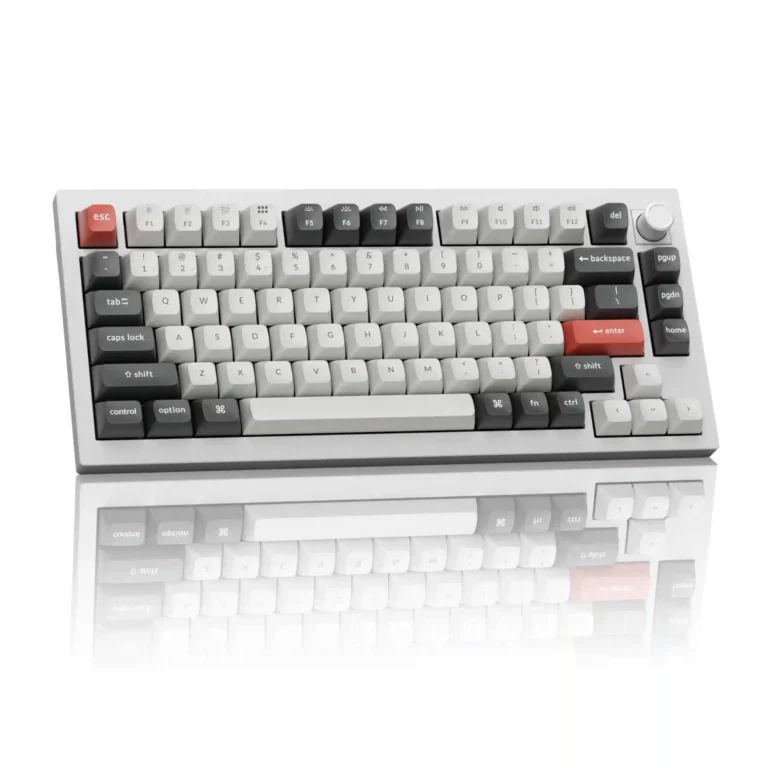
The Keychron Q1 Ultra 8K is a premium 75% keyboard built around an exceptionally rigid aluminum chassis, excellent wireless endurance, and unusually broad customization. Most testers loved its smooth, cushioned typing, refined acoustics, stable 2.4GHz connection, and practical volume knob, while treating 8,000Hz polling as a minor bonus rather than a transformative feature. The main uncertainty is the stock switch and stabilizer execution: most units felt smooth and tightly tuned, but one experienced reviewer reported missed repeated presses, mushy Brown switches, and a space bar that could stick. It is also expensive, very heavy, and lacks adjustable feet, Rapid Trigger, and variable actuation. For desk-bound typists and mechanical-keyboard enthusiasts, the overall package is compelling; competitive players and risk-averse buyers should consider the Red switch version or budget for a switch swap.

Feature Scorecards

Summary

50 reviewed features
  • Very positive 4.5-5.0
    26 (52%)
  • Positive 3.5-4.4
    16 (32%)
  • Neutral 2.5-3.4
    3 (6%)
  • Negative 1.5-2.4
    2 (4%)
  • Very negative below 1.5
    3 (6%)

Pros

  • 5.0
    based on 11 reviews
    build quality: 5.0, based on 11 reviews
    The heavy CNC-machined aluminum chassis is the clearest point of agreement. It feels exceptionally solid, premium, and far more substantial than budget or plastic boards.
  • 5.0
    based on 10 reviews
    materials quality: 5.0, based on 10 reviews
    Aluminum construction, double-shot PBT keycaps, layered foam, and premium fittings give the board a consistently high-end feel.
  • 5.0
    based on 8 reviews
    wireless performance: 5.0, based on 8 reviews
    The 2.4GHz connection is repeatedly described as wired-like and stable, while Bluetooth also works reliably for lower-power everyday use.
  • 5.0
    based on 5 reviews
    connectivity: 5.0, based on 5 reviews
    Wired USB-C, Bluetooth 5.3, and 2.4GHz wireless provide flexible switching across multiple devices and use cases.
  • 5.0
    based on 5 reviews
    RGB customization: 5.0, based on 5 reviews
    Keychron Launcher offers extensive color and pattern control, letting users create understated static looks or elaborate effects.
  • 5.0
    based on 5 reviews
    volume control: 5.0, based on 5 reviews
    The redesigned metal knob is consistently praised as tactile, convenient, and easy to remap.
  • 5.0
    based on 4 reviews
    desk space efficiency: 5.0, based on 4 reviews
    The compact layout frees meaningful mouse space while retaining a full function row, arrows, and a small navigation cluster.
  • 5.0
    based on 4 reviews
    frame rigidity: 5.0, based on 4 reviews
    The dense metal frame has virtually no flex and stays planted during aggressive typing or gaming.
  • 5.0
    based on 4 reviews
    layout options: 5.0, based on 4 reviews
    The compact 75% layout retains function keys, arrows, and navigation controls, while the wider Ultra family offers 80% and full-size alternatives.
  • 5.0
    based on 4 reviews
    per-key lighting control: 5.0, based on 4 reviews
    Each key can be colored independently, making it easy to highlight shortcuts, gaming controls, or custom layers.
  • 5.0
    based on 3 reviews
    legend visibility: 5.0, based on 3 reviews
    The white-on-dark legends are clean, well aligned, and easy to read, and the double-shot construction should prevent them from wearing away.
  • 5.0
    based on 2 reviews
    media controls: 5.0, based on 2 reviews
    Dedicated media functions and Mac shortcuts add convenience without consuming much space.
  • 5.0
    based on 2 reviews
    profile management: 5.0, based on 2 reviews
    Multiple programmable layers let users create alternate layouts and workflow-specific control schemes.
  • 5.0
    based on 1 review
    cable quality: 5.0, based on 1 review
    The flexible braided USB-C cable supports full 8K operation and includes a USB-A adapter for broader compatibility.
  • 4.9
    based on 9 reviews
    battery life: 4.9, based on 9 reviews
    Battery endurance is a standout strength, with claims up to 660 hours and real use ranging from a full week with RGB to roughly a month or more between charges.
  • 4.9
    based on 7 reviews
    customization options: 4.9, based on 7 reviews
    The board is highly modifiable through switch and keycap swaps, internal foam changes, remapping, macros, lighting, layers, and advanced firmware settings.
  • 4.9
    based on 7 reviews
    hot-swappable switches: 4.9, based on 7 reviews
    The universal three- and five-pin hot-swap PCB makes switch experimentation and replacement straightforward without soldering.
  • 4.9
    based on 5 reviews
    size and form factor: 4.9, based on 5 reviews
    The 75% footprint is compact without feeling stripped down, making it a strong fit for smaller desks and users who still need navigation keys.
  • 4.8
    based on 5 reviews
    ease of switch replacement: 4.8, based on 5 reviews
    Included pullers and disassembly tools make switch changes simple, and broad switch compatibility helps users correct or personalize the stock feel.
  • 4.8
    based on 5 reviews
    keycap quality: 4.8, based on 5 reviews
    The double-shot PBT KSA keycaps feel durable, sculpted, and premium, with concave tops that guide the fingers. Their tall profile can require an adjustment period.
  • 4.8
    based on 3 reviews
    durability: 4.8, based on 3 reviews
    The chassis and replaceable components appear built for years of use, and several testers expect it to be a long-term purchase. Formal long-term testing remains limited.
  • 4.7
    based on 8 reviews
    design aesthetics: 4.7, based on 8 reviews
    The restrained retro-futurist styling, accent keys, metal finish, and hidden celestial plate look premium. The underside decoration is attractive but largely invisible during use.
  • 4.6
    based on 4 reviews
    compatibility: 4.6, based on 4 reviews
    Hardware switches and extra keycaps support both macOS and Windows, with wired, Bluetooth, and 2.4GHz options. Some Apple-specific controls, such as external display brightness, may need third-party software.
  • 4.5
    based on 9 reviews
    typing feel: 4.5, based on 9 reviews
    The dominant impression is a smooth, solid, highly satisfying typing experience with substantial keycaps and a planted chassis. One reviewer found the stock Brown configuration mushy and slow enough to return the board.
  • 4.5
    based on 6 reviews
    switch options: 4.5, based on 6 reviews
    Red, Brown, and Banana variants cover gaming, mixed use, and stronger tactility, and the hot-swap design makes alternatives easy. The Brown option drew the harshest criticism.
  • 4.5
    based on 5 reviews
    typing comfort: 4.5, based on 5 reviews
    Concave keycaps and a stable, cushioned feel support long typing sessions, though the tall KSA profile takes time to learn for some users.
  • 4.4
    based on 11 reviews
    overall satisfaction: 4.4, based on 11 reviews
    Most testers strongly recommend the keyboard as a premium typing and productivity board. A single highly negative review reported enough switch and stabilizer problems to return it, so consensus is positive but not unanimous.
  • 4.4
    based on 9 reviews
    acoustics: 4.4, based on 9 reviews
    Most configurations produce a deep, smooth, thocky sound that testers loved, with the Q1 Ultra slightly quieter than its predecessor. One reviewer found it dull, overly muted, and less satisfying than the Q1 Max.
  • 4.4
    based on 6 reviews
    sound dampening: 4.4, based on 6 reviews
    Multiple foam and silicone layers reduce vibration and smooth the sound profile. The tuning appeals to most users but can feel overly damped to those who prefer a sharper, louder board.
  • 4.4
    based on 4 reviews
    RGB lighting quality: 4.4, based on 4 reviews
    Lighting is polished and attractive with smooth effects, but the south-facing LEDs and dark internal dampening can make the glow less even. Full brightness also reduces battery life sharply.
  • 4.3
    based on 8 reviews
    software quality: 4.3, based on 8 reviews
    The browser-based Launcher is powerful and generally easy to use for remapping, lighting, polling, and debounce. ZMK Studio is unsupported, browser compatibility is limited, and macro mouse clicks require manual entry.
  • 4.3
    based on 6 reviews
    key stability: 4.3, based on 6 reviews
    Large keys are generally praised for reduced wobble and tighter movement, and the switches themselves feel stable. One unit had a space bar that stuck and failed to return properly.
  • 4.3
    based on 6 reviews
    stabilizer quality: 4.3, based on 6 reviews
    Most testers found the screw-in stabilizers tighter, quieter, and less wobbly than earlier versions. One unit had excessive resistance and a sticking space bar, creating a serious quality-control concern.
  • 4.2
    based on 3 reviews
    macro customization: 4.2, based on 3 reviews
    Macros are easy to create in Launcher, but mouse clicks are not captured automatically and must be inserted manually.
  • 4.1
    based on 10 reviews
    value for money: 4.1, based on 10 reviews
    The $229 price is steep, but most testers believe the aluminum build, battery life, typing quality, and customization justify it. One reviewer considered the older Q1 Max a clearly better purchase.
  • 4.1
    based on 8 reviews
    latency: 4.1, based on 8 reviews
    Wired and 2.4GHz performance is consistently described as extremely responsive, with no noticeable delay in most tests. One reviewer found large stabilized keys slow to return, creating a serious outlier.
  • 4.1
    based on 4 reviews
    extra gaming features: 4.1, based on 4 reviews
    SOCD, full anti-ghosting, and 8K polling add competitive capability, though casual users may see them as overkill and magnetic-only features remain absent.
  • 4.0
    based on 5 reviews
    gaming performance: 4.0, based on 5 reviews
    With Red switches, low-latency connections, SOCD, and full anti-ghosting, it performs strongly for gaming. The fixed actuation and one report of missed rapid inputs keep it from being a universal competitive recommendation.
  • 4.0
    based on 1 review
    backlight brightness: 4.0, based on 1 review
    The RGB lighting gets fairly bright, though internal dampening absorbs some of the glow and prevents a completely even light cloud.
  • 3.9
    based on 10 reviews
    polling rate: 3.9, based on 10 reviews
    The 8,000Hz mode works over wired and 2.4GHz connections, but most testers could not feel a meaningful difference from 1,000Hz. It is more future-proofing than a daily-use breakthrough.
  • 3.8
    based on 9 reviews
    switch feel: 3.8, based on 9 reviews
    Most testers found the Silk POM switches smooth and satisfying, especially the Red and Banana options. A sharp dissent called the Brown switches mushy, slow, and barely tactile, so switch choice matters.
  • 3.5
    based on 4 reviews
    noise level: 3.5, based on 4 reviews
    It is not silent, but gentle typing and well-lubed stabilizers keep it reasonable for shared spaces. Sound preference is divisive because one tester found the board excessively quiet and subdued.

Cons

  • 3.0
    based on 3 reviews
    ergonomics: 3.0, based on 3 reviews
    The sculpted keycaps and angled case can be comfortable for long sessions, but there are no adjustable feet. Users who need a steeper or flatter angle may find that limitation significant.
  • 3.0
    based on 2 reviews
    reliability: 3.0, based on 2 reviews
    Most testing found dependable wireless and everyday performance, but one unit suffered missed presses and a sticking space bar. That outlier raises a meaningful quality-control concern.
  • 2.5
    based on 2 reviews
    key responsiveness: 2.5, based on 2 reviews
    Most testing found inputs responsive and reliable, but one fast typist reported missed repeated presses with the default debounce and stock Brown switches.
  • 2.0
    based on 1 review
    USB dongle storage: 2.0, based on 1 review
    There is no built-in compartment for the 2.4GHz receiver, making the small dongle easier to misplace when the keyboard is moved.
  • 1.5
    based on 5 reviews
    portability: 1.5, based on 5 reviews
    The compact shape is deceptive: at about 3.8 pounds, this is a stationary desktop keyboard rather than a travel board.
  • 1.0
    based on 1 review
    actuation consistency: 1.0, based on 1 review
    One fast typist experienced missed double presses at the default 50ms debounce setting. Lowering debounce fixed the core issue, but the out-of-box behavior was unacceptable for that user.
  • 1.0
    based on 1 review
    analog input support: 1.0, based on 1 review
    The fixed mechanical actuation point cannot be freely adjusted like a magnetic keyboard. That limits analog-style control and actuation tuning.
  • 1.0
    based on 1 review
    rapid trigger support: 1.0, based on 1 review
    Rapid Trigger is absent because this is a conventional mechanical keyboard rather than a magnetic-switch model. Competitive players who rely on that feature should look elsewhere.

Compared With Category Average

Compared with other Gaming Keyboards, this product is above average in hot-swappable switches, legend visibility, switch options, near average in design aesthetics, sound dampening, below average in actuation consistency, rapid trigger support, analog input support.

Summary

48 compared features
  • Above average 0.4+ pts higher
    27 (56%)
  • Same as average within 0.3 pts
    11 (23%)
  • Below average 0.4+ pts lower
    10 (21%)

Largest category differences

Attribute This product Category average Difference
actuation consistency 1.0 4.2 -3.2
rapid trigger support 1.0 3.7 -2.7
analog input support 1.0 3.3 -2.3
key responsiveness 2.5 4.6 -2.1
portability 1.5 3.4 -1.9
hot-swappable switches 4.9 3.4 +1.4
legend visibility 5.0 3.5 +1.5
switch options 4.5 3.1 +1.4

Consider This Instead

If you want better actuation consistency

Choose Epomaker P65. It scores 4.6 vs 1.0 for actuation consistency, with a 4.4 overall score.

Compare

If you want better rapid trigger support

Choose Keychron Q1 HE. It scores 4.9 vs 1.0 for rapid trigger support, with a 4.2 overall score.

Compare

If you want better key responsiveness

Choose ASUS ROG Azoth X. It scores 4.6 vs 2.5 for key responsiveness, with a 4.2 overall score.

Compare

If you want better noise level

Choose Keychron Q3 HE. It scores 4.6 vs 3.5 for noise level, with a 4.3 overall score.

Compare

Compared in Reviews

Products reviewers directly compared with this model, grouped into quick takeaways.

  • Alternative: gaming controls and switch technology The Corsair is a larger gaming-focused alternative with Hall Effect switches, 8K polling, more controls, and a wrist rest.

Q1 Max

  • Better: stock switch quality and overall typing experience The reviewer strongly preferred the older Q1 Max and advised buying it instead.
  • Worse: acoustics The Q1 Ultra is slightly quieter and smoother than the Q1 Max.
  • Older model: battery life and 8K polling The Ultra is a worthwhile upgrade over the Q1 Max, especially for battery life, though current owners need not rush.

Keychron V6 Max

  • Alternative: full-size layout The V6 Max is suggested for buyers wanting the Q1's strengths in a full-size layout.

FAQ

Is the Keychron Q1 Ultra 8K good for typing?

Yes. Most testers praised its solid, cushioned feel, sculpted PBT keycaps, and deep acoustics, although one reviewer strongly disliked the stock Brown switches and reported a sticking space bar.

Can most users feel the 8,000Hz polling rate?

Probably not. Several testers found the keyboard very responsive but noticed little or no practical difference between 1,000Hz and 8,000Hz.

How long does the battery last?

Keychron claims up to 660 hours with the backlight off. Testers reported a week of heavy RGB use without charging, roughly a month with lighting, and the potential for several months with lighting disabled.

Is it good for competitive gaming?

It performs well over wired or 2.4GHz and includes SOCD and full anti-ghosting. Red switches are the safest gaming choice, but it lacks Rapid Trigger and adjustable actuation found on magnetic keyboards.

Can the switches be replaced?

Yes. The PCB supports three- and five-pin mechanical switches, and the box includes switch and keycap pullers plus tools for deeper modifications.

Is it portable?

No. The 75% footprint is compact, but the aluminum board weighs about 3.8 pounds and is repeatedly described as a stationary desk keyboard.

Does it work with Mac and Windows?

Yes. It includes an operating-system switch and alternate Windows keycaps, though some Apple-specific controls such as external display brightness may require third-party software.

Sample Expert Reviews We Analyzed

These are a few of the reviews included in our analysis.
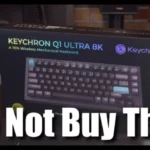
Video Reviews

Article Reviews

Top Gaming Keyboards to Consider

#1 Keychron Q5 HE
4.5

Good if you want a premium 96% Hall Effect keyboard for work and gaming with excellent build, sound, and customization. Skip it if you need cheaper esports-first speed, 8,000Hz polling,...

Pros: cable quality, typing comfort

Cons: portability, switch options
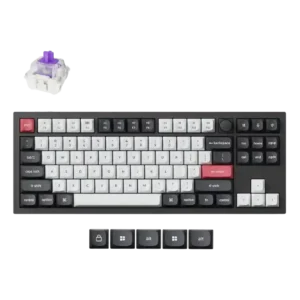
#2 Keychron Q6 HE
4.4

Good if you want a premium full-size Hall Effect keyboard with smooth switches, quiet sound, and deep customization. Skip it if you need a portable, budget-friendly board or broad switch...

Pros: key stability, frame rigidity

Cons: portability, switch options
#3 Epomaker P65
4.4

Choose the P65 for premium aluminum construction, excellent thocky typing, flexible wireless modes and deep VIA customization at a strong price. Skip it for travel, adjustable ergonomics, silent offices or...

Pros: frame rigidity, acoustics

Cons: rapid trigger support, analog input support

#4 Epomaker G84 HE
4.4

Good if you want a compact Hall Effect keyboard with smooth typing, strong gaming response, bright RGB, and good value. Skip it if you need polished software, quiet heavy presses,...

Pros: desk space efficiency, layout options

Cons: compatibility