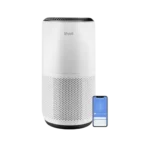
Levoit Core 400S Feature Scores
Explore all 51 feature scores for Levoit Core 400S, organized into pros and cons.
Scores by Feature
Summary
51 reviewed features-
Very positive 4.5-5.011 (22%)
-
Positive 3.5-4.435 (69%)
-
Neutral 2.5-3.42 (4%)
-
Negative 1.5-2.43 (6%)
Pros
Sort
-
Most reviewers found the Core 400S powerful and effective for everyday air cleaning, with only isolated concern that filtration was not as impressive as expected in an extreme smoke visualization.
-
Sleep mode was widely praised for quiet operation and dimmed lights, with several reviewers calling it bedroom-friendly or nearly silent.
-
Smart features were a major strength, covering app control, Smart Scenes, automation, scheduling and connected-home convenience.
-
Real-time monitoring was a consistent strength, with reviewers valuing live air-quality readings on the display and in the app.
-
Particle removal evidence was very strong overall, with multiple measured tests showing high PM and particulate reductions; one reviewer saw some smoke pass through in an extreme demo.
-
Design was usually praised as sleek, modern and compact for its capacity, though some reviewers found the unit large or linked the cylindrical design to tradeoffs.
-
Smoke removal was generally strong in tests and real homes, but reviewers distinguished light or short-burst smoke cleanup from heavy sustained smoke or cigarette-smoke needs.
-
Value was one of the strongest themes, with reviewers repeatedly calling it affordable, high-performing for the price, or worth buying despite some competitor tradeoffs.
-
Scheduling was broadly praised as useful through VeSync, although one reviewer wanted more automation triggers tied to air quality thresholds.
-
PM2.5 detection was broadly useful, with reviewers liking real-time PM2.5 readings, external-meter alignment and app-based monitoring.
-
Auto mode was usually viewed as useful and hands-off, but sensor limitations meant a few reviewers found its reactions slower or less accurate than ideal.
-
The display and controls were generally easy to read and navigate, with reviewers liking PM2.5 readouts, color indicators, and the ability to reduce distracting lights.
-
Energy efficiency was a major strength, with reviewers repeatedly praising low wattage, strong CADR-per-watt performance, and efficient long-running use.
-
Child lock was consistently treated as useful, especially for families and bedrooms, with one reviewer calling it a game-changer.
-
App control was widely praised for remote access, graphs, schedules and settings, though multiple reviewers complained about ads, crashes or uneven reliability.
-
Ozone-free evidence was strongly positive, with reviewers appreciating effective air cleaning without an ionizer or ozone emissions.
-
CADR and airflow evidence was strong overall, with reviewers praising high airflow and value-class CADR, while one noted airflow was paired with less-than-perfect filtration in a smoke visualization.
-
Power consumption evidence was strong, with reviewers praising low wattage and favorable CFM-to-watt ratios.
-
Odor reduction was useful for cooking, pets, trash and light smoke, but reviewers repeatedly warned that deep odor or cigarette-smoke control requires more carbon or ventilation.
-
Sensor feedback was broadly useful and often responsive, but reviewers split on precision, with several saying it was basic or not as accurate as newer or external meters.
-
Fan speed flexibility was widely appreciated, with reviewers liking multiple manual speeds, sleep mode and turbo, while noting high speed can be loud.
-
Noise was one of the most discussed tradeoffs: low and sleep settings were often praised as quiet, while high or turbo speeds drew complaints in some reviews.
-
Room coverage evidence was positive for medium and moderately large rooms, but reviewers cautioned against relying on oversized headline coverage or very large open plans.
-
Portability was mostly praised due to light weight and side handles, though one ASR review only gave limited support based on size/weight comparison.
-
Reviewers generally liked the pelleted carbon approach and optional higher-carbon filters for odors, VOCs and fumes, but several noted the original carbon layer is limited for heavy odor work.
-
Voice assistant support was useful and convenient for many reviewers, though one found voice commands merely OK and less capable than the app.
-
Indicator-light evidence was positive because reviewers valued lights-off controls, color-coded air quality indicators and bedroom-friendly display control.
-
Maintenance was split: filter replacement and setup were often simple, but bonded pre-filter cleaning required flipping the unit or removing the full filter.
-
Filter-stage evidence was mostly positive for the 3-stage cartridge and quality filters, but one long-term review wanted a different filter design.
-
Dust-removal comments were positive, with reviewers and quoted users reporting less dust, better cleaning, and effective capture of dust-related particles.
-
Pet dander evidence was positive where mentioned, especially in customer/reviewer observations about pet dander, dog-related air quality and pet odors.
-
Handles helped portability in several reviews, but one reviewer found the handles too shallow to be very useful.
-
Size and footprint were mixed: many liked the compact cylinder for a mid-sized purifier, while others felt it was big, bulky or not ideal for small rooms.
-
Reliability evidence was positive but limited, focused on general reliability in one review and long-term performance stability in another.
-
Filter life was mixed: some praised durable or 12-month filters, while one long-term reviewer said filters can need replacement sooner in dusty environments.
-
HEPA filtration evidence was positive where reviewers focused on particle filtration quality and H13/HEPA-style effectiveness.
-
Filter cost drew mixed-to-positive evidence: some called OEM or replacement filters fair and competitive, while others considered them pricey or expensive.
-
Wi-Fi reliability evidence was positive but limited, with one reviewer connecting without troubleshooting and another saying the unit remains reliable even with weak Wi-Fi.
-
Reviewer evidence was positive but limited, linking the purifier to more breathable air for allergy users and allergen-focused cleaning in one video review.
-
Safety-certification evidence was positive but limited, with reviewers noting Energy Star, FCC, and reassurance from efficiency certification.
-
VOC reduction evidence was mixed: carbon was credited with VOC and smell reduction, but reviewers said the unit is not specialized for chemical-heavy environments.
-
Pollen evidence was limited but positive, with reviewers expecting or reporting usefulness for pollen-heavy rooms and hay fever season.
-
Build quality evidence was positive in the main scored review, which described the device as stylish, modern and well built.
-
Filter availability was only scored in one review, which said replacement filters were very easy to find.
-
The only scored ACH discussion favored realistic medium-room placement, where reviewers said the purifier can maintain more consistent air turnover than headline 1-ACH coverage claims imply.
-
Long-term durability evidence was mixed: one long-term review praised the motor, while another worried about the thin plastic base.
Cons
Sort
-
VOC sensor evidence was weak because reviewers noted the lack of VOC sensing or chemical-pollutant detection.
-
Pre-filter quality was a recurring weakness, especially because the mesh pre-filter is bonded or considered lower quality than competitors' removable or external designs.
-
Aromatherapy was only raised as a missing wish-list feature, with one reviewer wanting diffuser-style essential oil functionality added.
-
Washable pre-filter evidence was negative and limited, with one long-term reviewer specifically saying the lack of a washable pre-filter makes cleaning harder.
-
True HEPA evidence was mixed: some reviewers praised True HEPA claims, while others highlighted the HEPA H13 marketing controversy and lack of certification clarity.