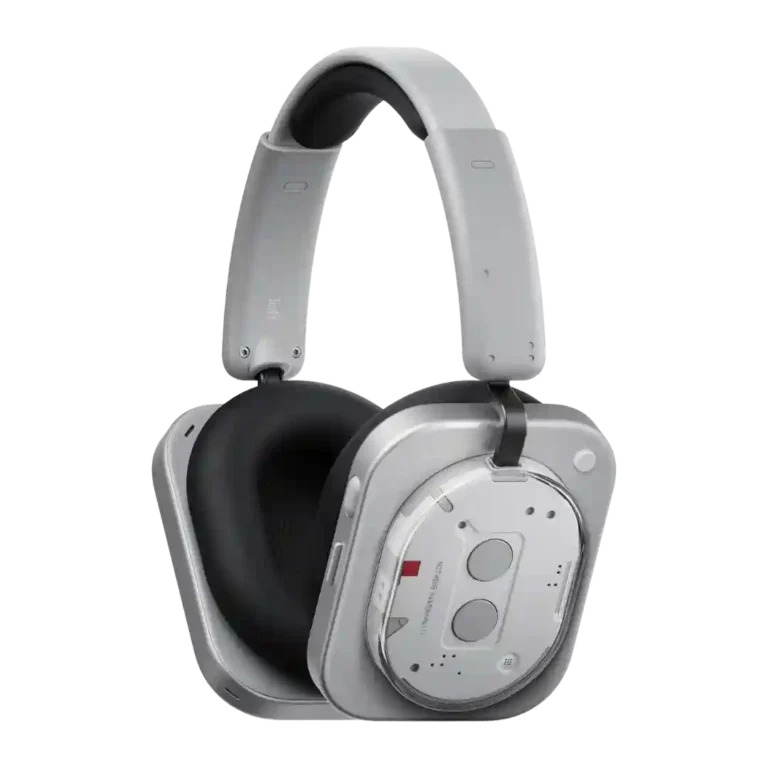
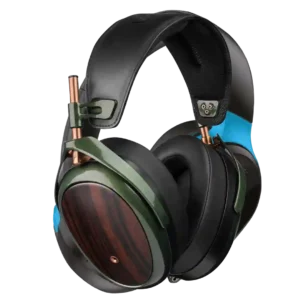
- Better: comfort CNET remained slightly more partial to Sony WH-1000XM6 for comfort.
- Better: ANC strength The reviewer says Nothing's ANC is not as powerful as Sony WH-1000XM6.
Nothing Headphone (1) Review
Bottom Line
Choose the Nothing Headphone (1) for bold design, tactile controls, long battery life, strong app EQ, and good value. Skip it if you want class-leading sound, ANC, comfort, or a compact travel case.
Best for listeners who want a bold-looking over-ear headphone with tactile controls, long battery life, strong connectivity, and a powerful EQ app. It also suits people willing to tune the sound rather than rely on the default profile.
Not for buyers who want the best sound, ANC, or transparency mode straight out of the box. It is also less ideal for travelers who need a compact folding design or users sensitive to weight and headband pressure.
The Nothing Headphone (1) lands as a strong first over-ear effort because reviewers repeatedly praised its distinctive build, tactile controls, long battery life, useful wired options, and unusually powerful Nothing X app. The tradeoff is sound: several reviewers liked the balance or improved it dramatically with EQ, but many criticized the default tuning as dark, flat, narrow, or compressed for the price. ANC and transparency are good enough for daily use, yet not consistently at Sony, Bose, or Apple levels. Comfort is also context-dependent, with many finding them wearable for hours and others noticing weight, heat, headband pressure, or pad issues.
Compared in Reviews
Products reviewers directly compared with this model, grouped into quick takeaways.
- Better: sound breadth and detail TechRadar preferred the breadth and detail of Sony WH-1000XM5.
AirPods Max
- Worse: value CNET says Nothing has a case as a better value than AirPods Max.
- Better: ANC strength The reviewer says Nothing's ANC is not as powerful as AirPods Max.
- Better: overall sound, comfort, and ANC Tom's Guide says the Nothing is outclassed by Airpods Max where sound, comfort, and ANC matter.
Feature Scorecards
Summary
79 reviewed features- Very positive 4.5-5.0 14% 11 features
- Positive 3.5-4.4 49% 39 features
- Neutral 2.5-3.4 29% 23 features
- Negative 1.5-2.4 8% 6 features
- Very negative below 1.5 0% 0 features
Pros
-
Smart Pause performance was praised by TechRadar, which said wear detection and multipoint both worked perfectly once enabled.
-
The app was one of the product’s strongest points, with reviewers praising its layout, speed, settings, and unusually deep EQ tools.
-
EQ customization was a standout feature, repeatedly described as powerful, granular, and sometimes essential for fixing the stock tuning.
-
Connectivity was a major strength, with reviewers praising the mix of USB-C, 3.5mm, multipoint, and app/device support.
-
Charging was praised, especially the fast-charge claims and real-world usefulness before trips or commutes.
-
USB-C was praised as a useful wired audio and charging option, especially for modern devices and lossless playback.
-
Reviewers consistently praised the broad feature set, especially customization, spatial options, ANC controls, and app-driven extras.
-
Setup and software simplicity were praised through Google Fast Pair, an easy app, and automatic pairing behavior.
-
The six-month review praised the app for working on both iOS and Android, supporting strong Android usability.
-
Maximum-volume clarity was positive in CNET’s testing, with almost no distortion even at high volumes.
-
Battery life was one of the clearest strengths, repeatedly praised for 35+ hours with ANC and exceptional longevity without ANC.
-
One reviewer specifically liked the slim profile because the headphones sit close to the head despite their bold styling.
-
Bluetooth reliability was supported by positive connectivity evidence, including Bluetooth 5.3 range and dual-device support.
-
Multi-platform use was praised in long-term testing because the app works across iOS and Android with most features available on both.
-
LDAC support was consistently treated as a positive, especially for Android/high-res wireless listening.
-
Premium feel was widely praised, with reviewers saying the headphones feel expensive, solid, and better than expected at the price.
-
Design was one of the most discussed strengths, repeatedly praised as distinctive, premium, and eye-catching, though also polarizing.
-
Build quality was broadly praised as solid, premium, and better than expected, though one reviewer worried about long-term headband durability.
-
Passive isolation was a clear strength, with the ear pads and seal repeatedly helping noise reduction even before ANC.
-
Codec support was treated positively, with SBC/AAC/LDAC and high-res support helping the value proposition.
-
Physical controls were a standout strength, widely praised for tactility and usability, although a few reviewers found the layout or paddle/roller behavior finicky.
-
Fit stability was praised where reviewers described a secure fit without excessive tightness.
-
Multipoint reliability was treated positively, with reviewers highlighting quick switching and two-device connection.
-
Wear/on-head detection was praised in early reviews as useful and working well, though related long-term Mac behavior was criticized elsewhere.
-
Microphone noise reduction was generally strong, with reviewers praising background suppression, though one noted echo/reverb issues.
-
Reviewers liked that wired listening is covered with a 3.5mm jack, often alongside USB-C, making the headphones more flexible for planes and wired sources.
-
Bluetooth 5.3 was described as up to date, giving the headphones a modern wireless baseline.
-
Launch features were viewed positively because the headphones offered several differentiating features beyond visual design.
-
Smart listening features were positively supported by Personal Sound, which was described as a useful way to personalize tuning.
-
Value was generally positive because the headphones undercut major rivals while offering strong build, controls, battery, ANC, and EQ, though weak default sound hurt value for some.
-
Comfort was usually positive over hours of use, but weight, heat, piercings, glasses, and headband pressure made it less universal.
-
Wired hi-res and USB-C digital playback were viewed as useful extras, with reviewers noting clearer or lossless wired listening.
-
Ear cup padding was mostly praised for soft memory foam and a good seal, though a few reviewers felt pressure or heat.
-
Water/sweat resistance was praised as rare for premium over-ears, though PCMag cautioned that IP52 is still limited.
-
Low-latency mode was treated positively as a useful gaming/video feature for reducing delay.
-
Firmware support looked promising because a later Nothing X update added Personal Sound support.
-
Sensor evidence was positive but limited, with one reviewer identifying proximity sensing as useful hardware.
-
Voice assistant integration was positively supported through the customizable button and Gemini/assistant access.
-
Headband adjustability drew mixed but mostly positive feedback, with smooth adjustment praised and one top-mounted mechanism criticized.
-
Ecosystem perks were useful for Nothing Phone users, but some exclusive features limited broader appeal.
-
ANC was generally viewed as strong for the price and effective in everyday noise, though several reviewers said Sony, Bose, or AirPods Max still outperform it.
-
Overall recommendations were mixed-positive: many reviewers liked the value and debut effort, but sound tuning and comfort kept it from universal praise.
-
Clamping force was generally secure and comfortable, but PCMag found it tighter than preferred.
-
Transparency mode was generally usable and often natural enough for conversations, but several reviewers found it less natural than Apple, Bose, or Sony.
-
Call mic quality was mixed-to-positive: several reviewers heard clear calls, while others described the mic as merely fine, tinny, or robotic.
-
Case feedback was mixed: some praised protection and compactness, while others found it too large, cheap-feeling, or annoying to zip.
-
Background-noise reduction was mixed: lab-style and street testing praised attenuation, while some reviewers noted weaker handling of voices or sudden sounds.
-
Bass impressions were split: some heard controlled punch and texture, while others described muddy bass or weak low-frequency precision before EQ.
-
Instrument separation ranged from crowded and unclear in negative reviews to solid detail and separation in more positive listening impressions.
-
Sound quality was the most divisive area: some loved the tuned or EQ-adjusted sound, while many criticized the default tuning as dark, flat, or compressed.
Cons
-
Frequency-response evidence was mixed: some heard balanced tuning, while others found the default curve dark, uneven, or treble-recessed.
-
Spatial audio was mixed: some found it useful for movies and broad device support, while others called it weak, limp, or harmful to music.
-
Headband padding was mixed: SoundGuys liked weight distribution, while The Guardian found the padding too thin after hours.
-
Weight comfort was mixed: reviewers often found them wearable, but their 329g weight was repeatedly noticed against lighter Sony/Bose options.
-
Portability was mixed: the headphones lie flat and can pack neatly in some cases, but they do not fold up and remain large.
-
Preset EQ feedback was mixed, with some finding treble/bass presets useful and others saying presets were not enough or should be skipped.
-
Find My support was considered useful but basic, with reviewers noting it mainly plays a sound rather than offering smarter tracking.
-
Midrange clarity was polarizing, with some praising vocals while others heard too much lower-mid darkness or underemphasized midrange.
-
Wind handling was mixed: some mic suppression impressed reviewers, while ANC or voice noise gating struggled in wind.
-
Soundstage was often criticized as narrow or compressed, though a few reviewers heard decent width after tuning or in positive listening sessions.
-
Travel friendliness was mixed-to-negative because battery life is good but the case is bulky and the headphones do not fold up.
-
Treble clarity was a common weakness in negative sound reviews, with several reviewers hearing recessed, dull, or less crisp highs.
-
One review found ANC changed the sound signature negatively, narrowing and muting more complex tracks.
-
One review said audio sounded best with ANC off because switching ANC on narrowed and muted the presentation.
-
Long-term durability evidence was limited, but one reviewer worried about cosmetic dings from the rectangular cups.
-
Repairability evidence was mixed-to-negative: The Guardian noted replacement cushions, but a long-term reviewer criticized the soldered battery.
-
Voice prompts and feedback split reviewers sharply: one loved the mode sounds, while others found cues uncomfortable, awful, loud, or jarring.
-
Volume output was criticized by reviewers who wanted more headroom or found the roller caused accidental loud jumps.
-
Smudge resistance was a weakness because the finish visibly picked up oil even if it wiped off easily.
-
Streaming-service integration was criticized in long-term use because Channel Hop/favorites behavior felt confusing.
-
Auracast was a weakness only by absence, with TechRadar saying the lack of LE Audio and Auracast keeps them from feeling fully future-proof.
-
LE Audio readiness was marked down because TechRadar noted the lack of Bluetooth LE Audio and Auracast.
-
Replaceable earpad evidence was weak-to-negative, with uncertainty around replacements and a long-term reviewer noting Nothing still did not sell them.
-
Cable quality was criticized because the included 3.5mm cable was only three-pole and could not carry microphone audio.
-
Immersive audio was weak in TechRadar’s testing, where spatial effects added little and sometimes harmed movie or podcast playback.
-
Auto power/sleep behavior drew criticism in long-term use, especially when connected to a Mac.
-
Sustainability materials were a weakness because The Guardian said the headphones were not made with recycled materials.
-
Wear detection auto-pause was criticized in long-term Mac use, where the reviewer said over-ear detection was god-awful.
-
Wear detection performance was poor in one long-term Mac test, where it reportedly never worked.
Compared With Category Average
Compared with other Over-Ear Headphones, this product is above average in Water/sweat resistance rating, LDAC, below average in Sustainability materials, Immersive audio quality, Wear detection auto-pause.
Summary
8 compared features- Above average 0.4+ pts higher 25% 2 features
- Same as average within 0.3 pts 0% 0 features
- Below average 0.4+ pts lower 75% 6 features
| Attribute | This product | Category average | Difference |
|---|---|---|---|
| Water/sweat resistance rating | 4.0 | 1.9 | +2.1 |
| Sustainability materials | 2.0 | 4.0 | -2.0 |
| Immersive audio quality | 2.4 | 4.2 | -1.8 |
| Wear detection auto-pause | 1.5 | 3.3 | -1.8 |
| Wear detection performance | 1.5 | 3.2 | -1.7 |
| Auto on/off reliability | 2.0 | 3.6 | -1.6 |
| LDAC | 4.4 | 3.0 | +1.4 |
| Replaceable earpads | 2.5 | 3.9 | -1.4 |
FAQ
Do the Nothing Headphone (1) sound good out of the box?
Reviewers were split. Some liked the balance, but many said the default sound is dark, flat, narrow, or compressed and benefits heavily from EQ.
How good is the active noise cancellation?
The ANC is generally good for daily noise, commuting, offices, and public transport. Reviewers repeatedly said it trails the strongest Sony, Bose, and AirPods Max options.
Is the Nothing X app useful?
Yes. The app was one of the most praised parts because it offers deep EQ controls, presets, ANC settings, button customization, and later Personal Sound support.
Are the controls better than touch controls?
Most reviewers preferred the tactile roller, paddle, and buttons over touch surfaces. A few found the controls busy, finicky, or prone to accidental volume jumps.
Are they comfortable for long listening sessions?
Often yes, but not for everyone. Several reviewers wore them for hours, while others noticed weight, heat, thin headband padding, clamping pressure, or earpad pressure.
How is battery life?
Battery life was a strong point. Reviewers cited roughly 35 hours with ANC on, longer results in some tests, and useful fast charging.
Sample Expert Reviews We Analyzed
These are a few of the reviews included in our analysis.

Video Reviews
- Review score
- 4.4/5
Article Reviews
- Review score
- 3.5/5
- Review score
- 3.7/5
Consider This Instead
If you want better Wear detection performance
Choose SONY WH-1000XM6 Headphones. It scores 5.0 vs 1.5 for Wear detection performance, with a 3.9 overall score.
If you want better Wear detection auto-pause
Choose Soundcore Space 2. It scores 4.8 vs 1.5 for Wear detection auto-pause, with a 4.0 overall score.
If you want better Auto on/off reliability
Choose Sony WH-1000XM5 Premium Noise Canceling Headphones. It scores 4.7 vs 2.0 for Auto on/off reliability, with a 4.1 overall score.
If you want better Sustainability materials
Choose Cambridge Audio Melomania P100 Headphones. It scores 4.6 vs 2.0 for Sustainability materials, with a 4.1 overall score.
Overall Top Over-Ear Headphones Alternatives
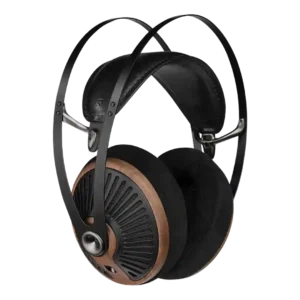
Choose the 105 Silva for premium comfort, repairable build, musical mids, and immersive home listening. Skip it if you need ANC, Bluetooth, strong isolation, or the most neutral sound at...
Pros: Sustainability and repairability, Replaceable pads/headband
Cons: Noise isolation (passive), Travel friendliness
Choose the Px7 S3 if sound quality, premium build, and a slim stylish design matter most. Skip it if you need the strongest ANC, fold-flat travel compactness, LDAC, or feature-heavy...
Pros: Frequency response accuracy, Multipoint connectivity reliability
Cons: LDAC, Wear detection performance
Choose the P100 SE for huge battery life, strong sound, useful EQ, and standout value. Skip it if you need class-leading ANC, the lightest comfort, spatial audio, or a compact...
Pros: Codec support, aptX
Cons: LDAC, Water/sweat resistance rating
Choose the WH950NB Gen 2 for strong value, long battery life, comfortable padding, useful app control and effective everyday ANC. Skip it if heavy-bass clarity, simple onboard controls or guaranteed...
Pros: Instrument separation, USB-C
Cons: Button control usability, Maximum volume clarity