If you want better sleep tracking accuracy
Choose Garmin Instinct Crossover AMOLED. It scores 4.8 vs 2.5 for sleep tracking accuracy, with a 4.2 overall score.
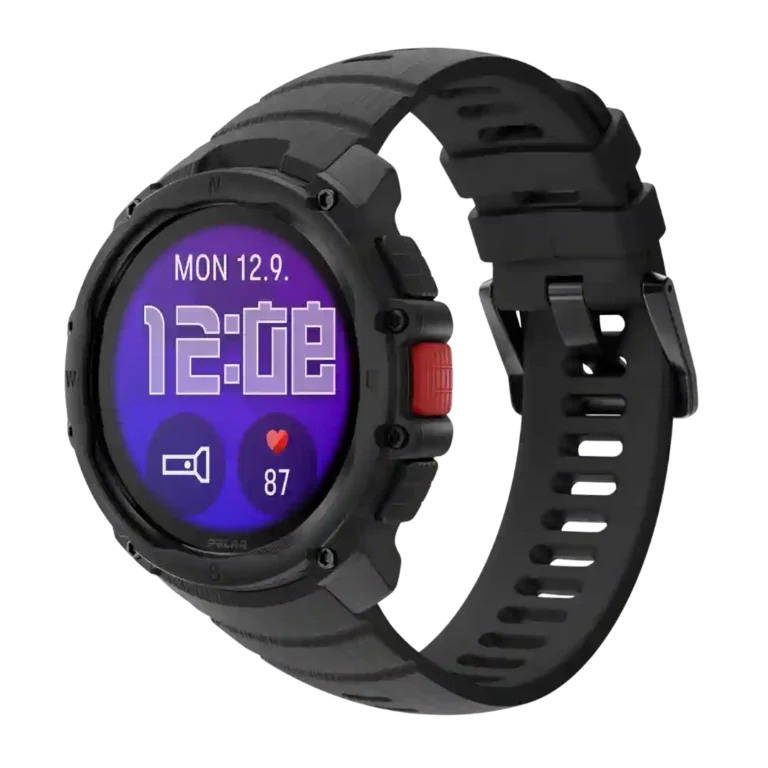
Choose the Polar Street X for strong value, long battery, rugged-light comfort, and a genuinely useful flashlight. Skip it if you need polished app analytics, full maps, ECG, SpO2, or top-tier sleep-stage confidence.
Best for budget-conscious runners, gym users, and urban athletes who want rugged daily wear, strong battery life, Polar training tools, and a flashlight without paying flagship prices.
Not for buyers who need full maps, ECG, SpO2, a polished app ecosystem, class-leading sleep-stage tracking, or the deepest smartwatch integrations.
Reviewers frame the Polar Street X as a strong-value urban sports watch rather than a flagship replacement. The clearest praise clusters around the price-to-feature ratio, durable lightweight build, readable AMOLED display, long battery life, and flashlight, which multiple reviewers describe as useful for low-light routines. The tradeoff is that Polar keeps the experience simpler: breadcrumb-style navigation instead of full maps, no ECG or SpO2, older-looking app design, and mixed confidence around sleep stages and wrist heart-rate performance depending on activity. The strongest hands-on review still found very good GPS, good heart-rate results, and excellent battery behavior, so the overall picture is positive for everyday training, but less convincing for buyers expecting premium health sensors or a highly polished ecosystem.
Compared with other Smartwatches, this product is above average in flashlight usefulness, value for money, data privacy, near average in wellness insights, fit, below average in blood oxygen tracking, companion app quality, sleep tracking accuracy.
| Attribute | This product | Category average | Difference |
|---|---|---|---|
| blood oxygen tracking | 1.5 | 3.4 | -1.9 |
| companion app quality | 2.3 | 3.8 | -1.5 |
| sleep tracking accuracy | 2.5 | 3.7 | -1.2 |
| ECG functionality | 1.5 | 2.6 | -1.1 |
| software smoothness | 3.0 | 4.0 | -1.0 |
| flashlight usefulness | 4.6 | 3.8 | +0.8 |
| materials quality | 3.0 | 4.0 | -1.0 |
| brightness | 3.3 | 4.2 | -0.9 |
Choose Garmin Instinct Crossover AMOLED. It scores 4.8 vs 2.5 for sleep tracking accuracy, with a 4.2 overall score.
Choose Garmin Forerunner 970. It scores 5.0 vs 3.8 for outdoor visibility, with a 4.0 overall score.
Choose Garmin Forerunner 170 Music. It scores 4.7 vs 3.0 for software smoothness, with a 4.3 overall score.
Choose Samsung Galaxy Watch Ultra (2025). It scores 4.8 vs 3.0 for materials quality, with a 3.9 overall score.
Products reviewers directly compared with this model, grouped into quick takeaways.
Yes. Reviewers repeatedly praised the price-to-feature ratio, with the strongest hands-on verdict calling it a compelling package among sports watches under $300 or $250.
Battery life was one of the strongest points. Reviewers cited up to 10 days in smartwatch mode and 43 hours of GPS training, while one hands-on reviewer saw around 7 to 8 days with intensive use.
Yes. Multiple reviewers treated the LED flashlight as a practical highlight for low-light runs, walking in dark areas, and everyday use, not just a novelty.
No. Reviewers specifically noted the lack of ECG and SpO2 as downsides, especially for users who prioritize those health metrics.
The strongest hands-on review found GPS very good overall with a few minor exceptions, and heart-rate accuracy good across tested sports. Another reviewer was more cautious based on prior Polar sensor testing.
No. Reviewers described breadcrumb or route navigation rather than full topographic maps; one found it sufficient for urban use but limiting for mountains, trails, or off-path activity.
The companion app and interface were the main software complaints. Reviewers called the app outdated, a bit sluggish, and harder than competitors for quick health and fitness overviews.
These are a few of the reviews included in our analysis.


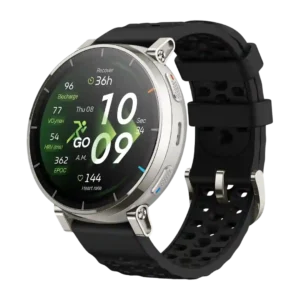
Good if you want premium running features, long battery life, and maps for under $200. Skip it if you need flawless heart-rate data, multiband GPS, LTE, or richer app support.
Pros: pairing reliability, brightness
Cons: Wi-Fi connectivity, Bluetooth connectivity
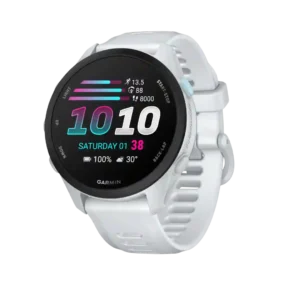
Best for accurate running metrics, excellent coaching tools, a bright AMOLED display, and dependable battery life. Skip it if you need offline maps, music storage, contactless payments, multi-band GPS, or...
Pros: step counting accuracy, app ecosystem
Cons: Bluetooth connectivity, pairing reliability
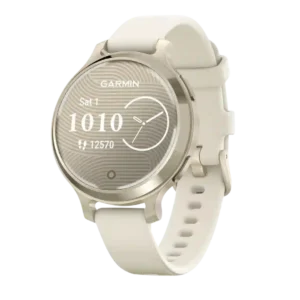
Good if you want a compact, stylish Garmin with strong GPS, comfort, and week-plus battery life. Skip it if you need richer smartwatch apps, onboard music, bright always-on display, or...
Pros: health tracking accuracy, blood oxygen tracking
Cons: ECG functionality, onboard music storage
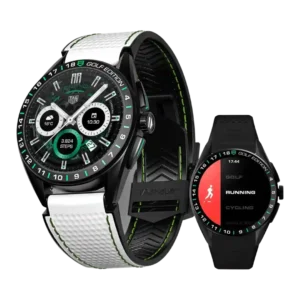
Best for luxury-watch styling, vivid TAG faces, solid build, and casual smartwatch use. Skip it if you need top fitness accuracy, call handling, LTE, or strong value.
Pros: contactless payments, pairing reliability
Cons: LTE connectivity, call handling