- Review score
- 3.9
Garmin Forerunner 170 Music Review
Bottom Line
Choose it for accurate training, excellent coaching, easy controls, and phone-free Spotify runs. Skip it if you need Apple Music, offline maps, maximum battery life, or the best pure-running value.
Best for regular runners training toward a 5K, half marathon, or marathon who want structured Garmin coaching, reliable tracking, and phone-free Spotify or Amazon Music.
Skip it if you depend on Apple Music, need full offline maps or multi-day endurance, prefer a larger case, or mainly want the lowest-cost route to Garmin’s training metrics.
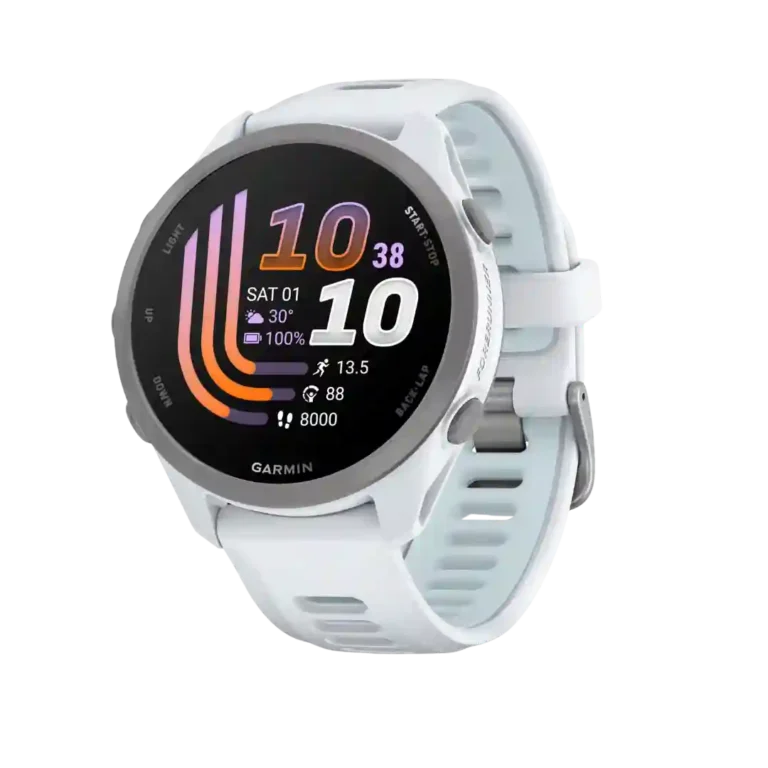
The Forerunner 170 Music brings Garmin’s strongest training software into a compact, comfortable watch with accurate GPS, responsive AMOLED controls, Garmin Pay, and useful offline audio. Its coaching, readiness, recovery, and activity tools make it a genuine step up for runners moving beyond basic pace and distance. The compromises are meaningful: real battery life can fall below the 10-day claim, Apple Music remains unsupported, full offline maps are absent, and the cheaper Forerunner 70 delivers nearly the same training experience with longer endurance. It is a compelling all-round running smartwatch, but the Music edition makes the most sense only when phone-free audio and payments are features you will regularly use.
Feature Scorecards
Summary
49 reviewed features- Very positive 4.5-5.0 61% 30 features
- Positive 3.5-4.4 22% 11 features
- Neutral 2.5-3.4 14% 7 features
- Negative 1.5-2.4 2% 1 feature
- Very negative below 1.5 0% 0 features
Pros
-
Garmin Connect provides nearly the same experience on iPhone and Android, making the watch a strong option for users who may switch phone platforms.
-
Data screens can be tailored to show exactly what matters during a run, and watch faces offer additional visual personalization.
-
The updated menus move quickly and physical-button navigation is easy during workouts. A few controls, including the start action, can still feel ambiguous.
-
The responsive touchscreen makes browsing and controlling music much easier than button-only operation.
-
GPS acquisition and Strava syncing are fast, with run uploads happening almost instantly compared with older Forerunners.
-
Garmin Coach, adaptive plans, Daily Suggested Workouts, and Quick Workout provide unusually strong structure at this price. The tools work well for beginners building consistency and experienced runners training for races.
-
Training Readiness, Training Status, load, HRV, and recovery-time guidance are among the watch’s strongest features. The recommendations feel closely tied to recent sleep, stress, and training history.
-
Five physical buttons are a major strength during runs, especially with sweaty hands or gloves. Nearly every function can be controlled without relying on touch.
-
Workout data remains easy to read in bright sunlight. Physical buttons also preserve usability when glare, sweat, or gloves make touch less convenient.
-
The compact case sits comfortably on smaller wrists and should suit a broad range of wrist sizes without feeling cumbersome.
-
Distance, pace, swimming, and indoor workout tracking were consistently reliable across testing. The watch performs close to more expensive sports watches for most common activities.
-
More than 80 sport profiles cover running, cycling, swimming, strength work, winter sports, and many niche activities. The breadth is unusually strong for an entry-to-midrange Forerunner.
-
GPS locks quickly and stayed reliable in real-world running, swimming, and city testing. Single-band GNSS is a technical limitation, but most testers saw little practical loss outside very difficult terrain.
-
The AMOLED display is bright and vivid enough for outdoor runs. It is not Garmin’s brightest panel, but readability remained strong in sunshine.
-
The updated interface feels faster and smoother than older entry-level Garmins, and activity syncing is notably quick.
-
The 1.2-inch AMOLED touchscreen is colorful, sharp, and attractive. It trails flagship Apple, Samsung, and premium Garmin panels in fluidity and peak brightness, but remains excellent for training.
-
Swipes and taps register quickly without feeling overly sensitive. Touch works well for menus and music, while buttons remain available for workouts.
-
The compact, lightweight case is easy to forget during runs, sleep, and daily wear. One report of skin irritation from the plastic back is the main caveat.
-
Garmin’s latest interface looks more polished, colorful, and modern while bringing sports and smartwatch tools into one place. It also positions the watch well for future updates.
-
Core tracking and everyday functions proved dependable across running, swimming, and gym use, even though the hardware is not Garmin’s newest.
-
Garmin Pay, notifications, apps, and offline music make the watch useful beyond training. It still prioritizes sports over the richer app and communication features of mainstream smartwatches.
-
The silicone band feels soft and stretchy, with the 170 models adding nicer metal hardware and subtle two-tone styling.
-
Pulse Ox support is a meaningful upgrade over the previous entry-level generation and broadens overnight and wellness monitoring.
-
A full recharge takes just over an hour, which helps offset the need to charge more often than the headline estimate suggests.
-
Wrist-based running power and dynamics bring advanced training data to a lower-priced watch without requiring an external sensor.
-
Sleep duration, bedtime, and major sleep stages generally aligned with the Oura Ring in side-by-side use, showing meaningful improvement over older Garmin sleep tracking.
-
Stress data feeds into readiness and recovery guidance, helping the watch suggest when to push harder or back off.
-
Connect IQ adds downloadable apps and watch faces, while services such as WhatsApp, Spotify, and Deezer broaden everyday usefulness.
-
Customizable watch faces and clean data layouts make the screen attractive while keeping essential running information easy to scan.
-
Sleep, HRV, Body Battery, stress, and daily reports create a broad picture of recovery and energy rather than focusing only on workouts.
-
Fresh colors, a polished band treatment, and a compact sporty shape make the watch more appealing than older budget Forerunners. It still looks clearly fitness-focused rather than dressy.
-
The 5ATM rating handles showers, pool swims, and open-water sessions confidently. Swim tracking also performed well in testing.
-
The lightweight polymer construction feels better finished than older entry-level Forerunners. The screwed-on back and small metal details help it feel less cheap.
-
Garmin Pay is convenient for phone-free coffee, water, or emergency purchases. Its value depends heavily on local bank support and whether the extra model cost feels justified.
-
The on-watch experience is generally simple, polished, and easy to live with. Some features are buried in settings, so learning the full menu structure takes time.
-
LiveTrack is useful for solo runners because contacts can follow an activity in progress. It is not independent safety coverage, since the feature relies on a connected phone.
-
Offline Spotify, Amazon Music, Deezer, and other supported services make phone-free running easy. Apple Music remains unsupported, and the Music edition’s premium may not suit runners who always carry a phone.
-
Heart-rate tracking is strong for running and indoor cycling, but weight training and some outdoor cycling can expose the limits of the older Gen 4 sensor. An external strap remains best for precision.
-
Garmin’s polished software and Connect IQ support add useful widgets and apps, but the music ecosystem still excludes Apple Music.
-
The compact 42–43mm design works for many wrists, but there is no larger case option for buyers who prefer a bigger display or more substantial watch.
-
The feature set is impressive for runners who want advanced coaching, music, and payments in one compact watch. Value becomes less convincing beside the cheaper Forerunner 70, discounted Forerunner 265, and running-focused rivals.
Cons
-
Battery life is adequate for several days of training, but real-world results often fall below Garmin’s 10-day claim. Always-on display, GPS, and music can cut endurance sharply, and the cheaper Forerunner 70 lasts longer.
-
Breadcrumb routes and synced courses are useful for planned runs, but full offline maps are missing. Trail, mountain, and ultra users may find this limitation significant.
-
Garmin Connect syncs quickly and works well for logging and data review, but its design can feel cluttered and overdue for a redesign.
-
The polymer body keeps weight low and generally feels well assembled. The plastic back may irritate sensitive skin during continuous wear.
-
Skin-temperature tracking is missing because the watch does not use Garmin’s newer Gen 5 sensor. That feature remains reserved for pricier models.
-
ECG is not available on this model because it uses Garmin’s older Gen 4 sensor. Buyers who want on-demand ECG readings need a higher-end Garmin.
-
Garmin’s proprietary cable is less convenient than magnetic or wireless alternatives and can shift out of place on the watch.
-
There is no built-in cellular connection. LiveTrack and location sharing therefore require carrying a paired phone.
Compared With Category Average
Compared with other Smartwatches, this product is above average in contactless payments, music controls, cross-platform compatibility.
Summary
8 compared features- Above average 0.4+ pts higher 100% 8 features
- Same as average within 0.3 pts 0% 0 features
- Below average 0.4+ pts lower 0% 0 features
| Attribute | This product | Category average | Difference |
|---|---|---|---|
| contactless payments | 4.2 | 2.7 | +1.5 |
| music controls | 5.0 | 3.5 | +1.5 |
| cross-platform compatibility | 5.0 | 3.5 | +1.5 |
| onboard music storage | 4.1 | 2.8 | +1.3 |
| third-party app support | 4.5 | 3.2 | +1.3 |
| menu navigation | 5.0 | 3.8 | +1.2 |
| blood oxygen tracking | 4.5 | 3.4 | +1.1 |
| recovery insights | 4.8 | 3.9 | +0.9 |
FAQ
Is the Forerunner 170 Music worth the extra cost?
It is most worthwhile for runners who will regularly use offline music and Garmin Pay. The cheaper Forerunner 70 offers nearly the same training tools and longer rated battery life.
Does it support Apple Music?
No. Offline playback supports services such as Spotify, Amazon Music, and Deezer, but Apple Music remains unavailable.
How accurate are the GPS and heart-rate sensors?
GPS was consistently quick and reliable, often comparing well with pricier dual-band watches. Heart rate is strong for running and indoor cycling, though an external strap is preferable for weight training or maximum precision.
Does it have offline maps?
No full offline maps are included. It supports synced courses and breadcrumb navigation, which is useful for planned routes but less capable for mountain, trail, and ultra use.
How long does the battery last in real use?
Garmin rates it for up to 10 days, but several testers saw less than a week or roughly three to four days with always-on display and frequent training. Music and GPS reduce endurance further.
Sample Expert Reviews We Analyzed
These are a few of the reviews included in our analysis.
Video Reviews
- Review score
- 4.1
Article Reviews
Article by Michael Ellenberger Garmin Forerunner 170 Music (Forerunner 170: $300, Forerunner 170 Music: $350) Pros Excellent AMOLED display...
The Garmin Forerunner 170 Music can analyse your readiness, adapt training plans, help you recover, and soundtrack your fitness sessions.
- Review score
- 4.4
These two watches reintroduce budget-friendly, high-quality options to the Garmin lineup
- Review score
- 4.7
The Garmin Forerunner 170 Music combines advanced training features with everyday usability in a colourful, runner-friendly package.
- Review score
- 4.7
The Forerunner 170 Music combines offline music, robust training analytics, and dependable battery life in a watch that feels more expensive...
- Review score
- 4.2
Compared in Reviews
Products reviewers directly compared with this model, grouped into quick takeaways.
- Older model: software features The 170 adds a more polished software experience and additional training features over the 165.
- Older model: training and recovery features The 170 adds several training, recovery, payment, and music features missing from the 165.
- More expensive: price and software feature parity The 170 Music originally undercuts the Forerunner 265 while matching most software features.
- Similar: urban GPS accuracy City and bridge testing found no meaningful GPS difference from the dual-band Forerunner 265.
- Compared: overall value The cheaper 70 is also considered a superb option and offers nearly the same core experience.
- Better: battery life The cheaper Forerunner 70 offers three additional days of rated battery life.
Consider This Instead
If you want better ECG functionality
Choose Apple Watch Series 11. It scores 4.8 vs 2.5 for ECG functionality, with a 4.3 overall score.
If you want better user interface
Choose Garmin Forerunner 70. It scores 4.8 vs 4.2 for user interface, with a 4.3 overall score.
If you want better contactless payments
Choose Apple Watch Ultra 2. It scores 5.0 vs 4.2 for contactless payments, with a 4.1 overall score.
If you want better battery life
Choose Garmin Forerunner 955. It scores 4.7 vs 3.4 for battery life, with a 4.0 overall score.
Top Smartwatches to Consider
Best for rugged outdoor training, long battery life, accurate GPS, maps, calls, and a genuinely useful flashlight. Skip it if the high price, tactical extras, proprietary charging cable, or mixed...
Pros: wellness insights, build quality
Cons: LTE connectivity, band quality
Good if you want the best balanced Apple Watch for an older upgrade, stronger battery, comfort, and health tools. Skip it if you own Series 10, need week-long battery, or...
Pros: ECG functionality, app ecosystem
Cons: cross-platform compatibility, recovery insights
Best for accurate running metrics, excellent coaching tools, a bright AMOLED display, and dependable battery life. Skip it if you need offline maps, music storage, contactless payments, multi-band GPS, or...
Pros: step counting accuracy, app ecosystem
Cons: Bluetooth connectivity, pairing reliability
Choose it if you want a rugged Garmin hybrid with real hands, a sharp AMOLED display, strong tracking, and a genuinely useful flashlight. Skip it if price, full maps, onboard...
Pros: heart rate accuracy, GPS accuracy
Cons: onboard music storage, mapping and navigation