- Alternative: smartwatch features The reviewer names Apple Watch Ultra 2 as the smartwatch-side alternative with more smart features.
Polar Grit X2 Pro Review
Bottom Line
Choose it for Polar’s rugged build, bright AMOLED, maps, and recovery tools. Skip it if you want broad smartwatch features, onboard music, payments, flawless step counts, or better value than cheaper Garmin, Suunto, Coros, or Vantage options.
Best for outdoor athletes already invested in Polar who want rugged hardware, a bright map-friendly display, broad workout tracking, and strong recovery insights without a crowded smartwatch experience.
Not for shoppers who want a full app ecosystem, onboard music, native payments, voice-assistant features, LTE, seamless syncing, or the strongest value versus Garmin, Suunto, Coros, or the cheaper Polar Vantage line.
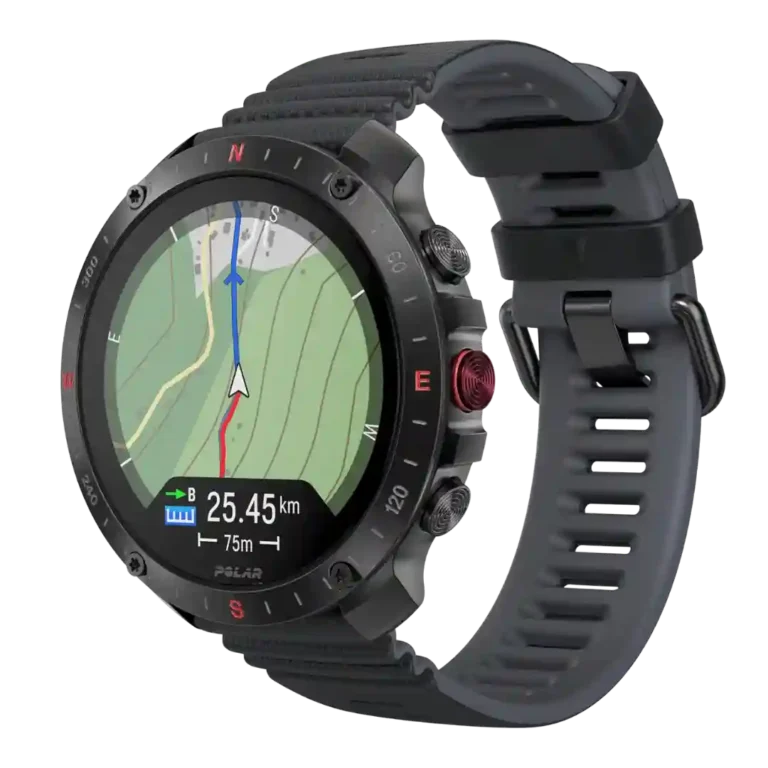
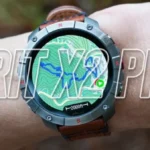
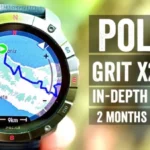
Review evidence frames the Polar Grit X2 Pro as a rugged, premium-looking outdoor sports watch with a standout AMOLED display, strong materials, useful maps, wide sport coverage, and Polar’s deep recovery and training tools. Its best case is for athletes already comfortable with Polar Flow who want durable hardware and simpler fitness-first software rather than a dense smartwatch platform. The tradeoff is value and polish: reviewers repeatedly flag missing onboard music, native payments, Wi-Fi gaps, basic notifications, sync issues, dated interface design, and inconsistent step and heart-rate behavior in harder scenarios. GPS is generally good on land, but navigation quirks, open-water weakness, and price comparisons against Garmin, Suunto, Coros, and the cheaper Vantage V3 make the Pro harder to justify.
Compared in Reviews
Products reviewers directly compared with this model, grouped into quick takeaways.
- Cheaper: maps and price The reviewer says the cheaper Suunto Race has very similar maps, weakening the Grit X2 Pro value case.
Polar Vantage V3
- Similar: heart rate software and accuracy The reviewer says the Grit X2 Pro and Vantage V3 share the same heart-rate software update.
- Alternative: same hardware in cheaper package The reviewer says buyers can get the same hardware in the cheaper Vantage V3 unless they need durability.
- Similar: shared features and internals The reviewer says the Grit X2 Pro and Vantage V3 are effectively the same on features and core internals.
Feature Scorecards
Pros
-
Durability is a standout, supported by MIL-STD testing, sapphire protection, water resistance, and reviewers reporting little to no visible wear after use.
-
Water resistance is strong on the Pro at 100m and still serviceable on the smaller Grit X2 at 50m, making water durability a clear hardware strength.
-
Outdoor visibility is excellent overall, with reviewers repeatedly saying the display remains readable in bright sun, darkness, rain, and mixed outdoor conditions.
-
Build quality is one of the strongest areas, with reviewers praising the rugged case, sapphire glass, stainless or titanium materials, and premium-feeling hardware.
-
Brightness is a clear strength: reviewers repeatedly cite 1050-nit or high-brightness AMOLED hardware and strong readability in varied lighting.
-
Charging speed is a positive, with reviewers describing quick top-ups and full charging in under an hour.
-
Workout variety is excellent, with reviewers repeatedly citing 150-plus sport profiles, triathlon/multisport support, and broad activity coverage.
-
Display quality is consistently praised: the AMOLED screen is described as bright, sharp, colorful, responsive, and a major upgrade over older MIP displays.
-
Materials quality is strong, with repeated mentions of sapphire glass, stainless steel, titanium options, metal bezels, and premium hardware construction.
-
Style and design are strongly praised, with reviewers calling the watch premium, rugged, sleek, good-looking, and visually Polar’s best effort.
-
Band feedback is split: the Titan leather band earns strong praise and some straps are called secure, but silicone options are also criticized as stiff, floppy, or not breathable enough.
-
Touchscreen responsiveness is generally good, with reviewers praising predictable taps, map panning, and responsive AMOLED interaction in most conditions.
-
Coaching features are a major strength, with FitSpark, FuelWise, Training Load Pro, Cardio Load, daily suggestions, recovery-linked workouts, and testing tools repeatedly praised.
-
Fit is mixed: smaller Grit X2 models are praised for slim wrists, while the Pro can feel oversized on smaller wrists.
-
Recovery insights are a Polar strength, with Nightly Recharge, HRV, Cardio Load, Recovery Pro, and training-load tools frequently described as valuable.
-
Button controls are mostly praised for five-button access, glove usability, grip, and click feel, though one reviewer found the five-button flow less intuitive.
-
Battery life is generally solid, with reviewers seeing multi-day smartwatch use and strong GPS claims, but always-on display, maps, and music controls can reduce endurance noticeably.
-
Wellness insights are strong for HRV, recovery, sleep, skin temperature, and general readiness, though some reviewers question how actionable certain metrics are.
-
GPS accuracy is mostly good to strong on land, with multiple reviewers praising dual-frequency performance, though open-water swimming, power-save mode, and occasional drift remain caveats.
-
Automatic climb/descent segmentation is mentioned through Hill Splitter, giving the watch useful activity-context detection for hilly routes, though reviewers do not describe broader automatic workout detection.
-
Cross-platform support is adequate through Polar Flow, web/mobile syncing, and data export options, but most praise is for training data access rather than smartwatch-platform depth.
-
Fitness tracking accuracy is generally solid for pace and common workouts, but evidence is stronger for GPS and heart-rate specifics than for every activity metric.
-
Reviewers repeatedly focus on maps and navigation: offline maps, breadcrumb trails, Komoot/Strava routing, and useful outdoor context are praised, while rerouting limits, compass calibration, sparse map detail, and some route quirks keep it from feeling fully polished.
-
Comfort depends on size and strap: some reviewers find the watch wearable or secure, especially smaller Grit X2 variants, while others say the Pro is bulky for all-day wear.
-
Software smoothness is better than older Polar watches thanks to faster processing and snappy screens, but bugs, pauses, and dated software keep it from top marks.
-
Health tracking accuracy is broadly respectable for health and recovery data, but the evidence is mostly generalized and stronger for sleep, HRV, and heart-rate trends than for every sensor.
-
Watch faces are acceptable and lightly customizable, with several reviewers liking newer faces, but the lack of a store or deeper customization limits appeal.
-
Sleep tracking is generally useful for sleep timing, HRV, and recovery insights, though reviewers distrust stages or note bugs and mixed scientific sleep-stage results.
-
Charging convenience is mixed: USB-C on the cable side and charging during activities help, but map transfers still require a computer and proprietary charging hardware.
-
Reliability is mixed: rugged hardware and workout capture are reassuring, but bugs, sync failures, and route or sleep issues prevent a fully dependable impression.
-
Heart-rate accuracy is mixed: some reviewers found strong or chest-strap-like results, while others saw missed intervals, spikes, or poor cycling and burst-effort performance.
-
Blood oxygen tracking is present through SpO2 sensors and is treated as part of Polar’s broader biosensing suite, but reviewers offer little evidence of independent SpO2 accuracy testing.
Cons
-
ECG functionality exists, but reviewers consistently frame it as non-medical and not an atrial-fibrillation detection tool.
-
Customization exists for sport profiles, data pages, fields, and watch faces, but limits such as four data fields and no deep watch-face store make it only moderate.
-
The user interface is usable but dated; some reviewers find it easy or familiar, while others want a refresh and criticize old-school organization.
-
Companion app quality is mixed to poor: Polar Flow is data-rich and powerful for training analysis, but reviewers call it dated, unintuitive, slow, or prone to sync friction.
-
Music controls are present for phone playback, but reviewers treat them as basic and sometimes note battery drain or limited functionality.
-
Call handling is limited to call-related notifications; reviewers mention call/message/app notifications but do not describe answering calls from the watch.
-
Third-party support is mixed: Strava, Komoot, TrainingPeaks export, and sensors help, but missing app-store depth and incomplete integrations limit the ecosystem.
-
The operating system experience is functional but dated: reviewers like stability in places yet complain about messy organization, old-school structure, bugs, and feature gaps.
-
Bluetooth works for phone media and external sensors, but reviewers describe heart-rate broadcasting and repeated pairing as finicky, so connectivity is useful but not frictionless.
-
Calorie and energy-use data is useful for training context, but reviewers treat it as estimated and sometimes criticize Polar’s step/activity conversion logic.
-
Smartphone notifications are basic: the watch can show alerts, texts, calls, and app notifications, but reviewers repeatedly note limited actionability.
-
Value for money is the biggest divide: the Grit X2 base is viewed as better value, while the Grit X2 Pro is often called expensive or overpriced versus similar competitors.
-
Stress tracking is limited: reviewers mention breathing, Nightly Recharge, and wellness tools, but Serene is called basic and stress-specific functionality is not a major strength.
-
Pairing and sync reliability are inconsistent, with repeated complaints about Polar Flow sync failures, phone disconnections, buggy syncing, and repeated sensor pairing.
-
Menu navigation is a weakness; reviewers describe clunky navigation, dated layouts, awkward save/start flows, and occasional fiddliness despite usable basics.
-
Smartwatch features are limited compared with Apple, Garmin, and Wear OS devices, with reviewers emphasizing notifications, widgets, and music controls rather than a rich smart platform.
-
The app ecosystem is a weak point: reviewers repeatedly note no app store or proper ecosystem, with Polar leaning on built-in tools and limited integrations instead of a broad wearable platform.
-
Step counting accuracy is poor in several reviews because Polar converts non-step activities into steps, creating inflated or inconsistent step totals.
-
Onboard music storage is absent, and reviewers repeatedly call out the lack of offline music or playback despite onboard storage for maps.
-
Contactless payments are a major omission on the Grit X2 Pro, with reviewers repeatedly noting no native NFC/payment support.
-
Wi-Fi connectivity is a weakness because reviewers explicitly note no Wi-Fi or describe connectivity only through Bluetooth and a proprietary USB-C cable, especially for map transfers.
Compared With Category Average
Compared with other Smart Watch, this product is below average in step counting accuracy, Wi-Fi connectivity, onboard music storage.
| Attribute | This product | Category average | Difference |
|---|---|---|---|
| step counting accuracy | 1.3 | 3.7 | -2.5 |
| Wi-Fi connectivity | 1.0 | 3.2 | -2.2 |
| onboard music storage | 1.0 | 2.9 | -1.9 |
| contactless payments | 1.0 | 2.9 | -1.9 |
| app ecosystem | 1.7 | 3.6 | -1.9 |
| pairing reliability | 2.4 | 4.0 | -1.6 |
| value for money | 2.5 | 3.8 | -1.3 |
| menu navigation | 2.2 | 3.8 | -1.6 |
FAQ
Is the Polar Grit X2 Pro good for outdoor navigation?
Yes, reviewers consistently praise offline maps, breadcrumb trails, route syncing, and the bright AMOLED map view. The main caveats are no dynamic rerouting, occasional compass calibration friction, sparse map detail in some reviews, and route-profile quirks.
How accurate is the GPS?
Land-based GPS accuracy is generally good to strong across the evidence, especially with dual-frequency tracking. Reviewers still found weaknesses in open-water swimming, power-saving GPS modes, occasional drift, and slower acquisition than some competitors.
How accurate is the heart rate sensor?
Heart-rate accuracy is mixed. Some reviewers found close chest-strap agreement or solid steady-state results, while others saw missed intervals, spikes, poor burst-effort tracking, or weaker cycling performance.
Does it have smartwatch features like apps, music, and payments?
Smartwatch features are limited. Reviews mention notifications, widgets, and phone music controls, but also repeatedly note no app store, no onboard music storage, no native contactless payments, and limited actionability.
Is the display easy to read outdoors?
Yes. Display quality and outdoor visibility are among the strongest points, with reviewers praising the bright AMOLED screen, strong sunlight readability, sharpness, and responsive touch experience.
Is it worth the price?
The value case is difficult for the Pro model because reviewers compare it against cheaper or more feature-rich Garmin, Suunto, Coros, and Polar Vantage alternatives. It makes the most sense for users who specifically want Polar’s rugged premium hardware and recovery ecosystem.
Consider This Instead
If you want better contactless payments
Choose Apple Watch SE 3. It scores 4.8 vs 1.0 for contactless payments, with a 4.1 overall score.
If you want better onboard music storage
Choose Huawei Watch Fit 4. It scores 4.7 vs 1.0 for onboard music storage, with a 4.1 overall score.
If you want better step counting accuracy
Choose OnePlus Watch 3. It scores 4.8 vs 1.3 for step counting accuracy, with a 4.0 overall score.
If you want better app ecosystem
Choose Apple Watch Ultra 3. It scores 4.9 vs 1.7 for app ecosystem, with a 4.2 overall score.
Overall Top Smart Watch Alternatives
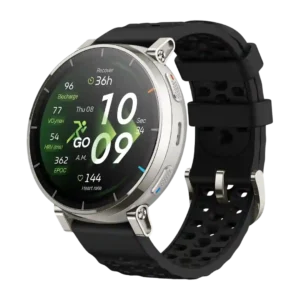
Good if you want the most rugged Apple Watch, brighter outdoor screen, better battery, LTE, and top apps. Skip it if you need Garmin-like mapping, recovery analytics, smaller sizing, or...
Pros: display quality, heart rate accuracy
Cons: cross-platform compatibility, recovery insights
Choose the Galaxy Watch 6 for a polished Android smartwatch with a bright screen, strong apps, and broad health tracking. Skip it if battery life, iPhone support, or full non-Samsung...
Pros: outdoor visibility, workout tracking variety
Cons: cross-platform compatibility, battery life
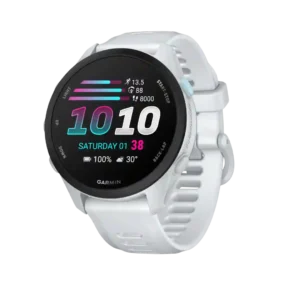
Good if you need a rugged Garmin with deep outdoor, tactical, GPS, training, and battery features. Skip it if you want a cheaper lifestyle watch or do not need the...
Pros: materials quality, durability
Cons: LTE connectivity, value for money
Good if you want premium golf maps, virtual caddie tools, health metrics, music, notifications, and long battery life in one watch. Skip it if you only need basic yardages or...
Pros: pairing reliability, brightness
Cons: software smoothness, user interface