
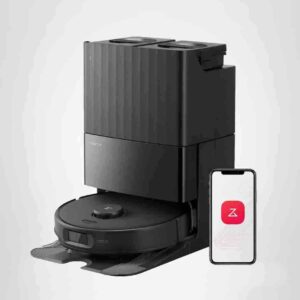
Review: Roborock Qrevo Edge S5A Robot Vacuum and Mop
Updated: 3 months ago
4.2
Based on methodology below
246
Insights analyzed
51
Grouped by key features
9
From expert reviews
Scores below reflect consolidated expert coverage across these features.
Bottom Line
Choose the Roborock Qrevo Edge S5A if you want strong vacuum+mop performance and near tangle-free hair pickup with a low-maintenance dock; Skip if your home has lots of loose cords or tall thresholds where better obstacle avoidance and chassis lift matter.
Best for
Busy homes with mostly hard floors plus rugs, especially with pets or long hair, that want hands-off vacuuming and mopping with minimal brush detangling and dock-managed pad washing/drying.
Not for
Homes with lots of floor clutter and loose cables, frequent tall thresholds between rooms, or shoppers who want camera-based remote viewing and automatic detergent dispensing.
Verdict
Roborock’s Qrevo Edge S5A delivers a very complete all-in-one experience: fast LiDAR mapping, a highly tunable app, strong hard-floor vacuuming, and rotary mopping that stays streak-free for everyday grime. Its DuoDivide brush design is repeatedly praised for minimizing hair wraps, making it especially practical for pet and long-hair homes, and the dock’s hot-wash and hot-air drying reduce day-to-day upkeep. The tradeoff is that obstacle avoidance can miss cables and small clutter, and without an adaptive lift chassis it is limited on taller thresholds. If you can do light pre-tidying, it nails the fundamentals.
Pros
-
4.8based on 1 reviewOdor control: 4.8, based on 1 reviewHot-water washing plus hot/warm air drying helps keep mop pads fresh, and at least one real-home review explicitly reports no lingering smells after repeated runs.
-
4.8based on 9 reviewsHair‑Wrap / Tangle Resistance: 4.8, based on 9 reviewsHair-wrap resistance is one of the biggest strengths: the DuoDivide brush and redesigned side brush greatly reduce tangles. In extreme stress tests, some hair may channel to the center and require a quick manual pull, but it is easy to clear.
-
4.7based on 4 reviewsHair Pickup — Hard Floors: 4.7, based on 4 reviewsHair pickup on hard floors is a standout, including long and even slightly damp strands, with users reporting thorough collection and minimal cleanup afterward.
-
4.7based on 2 reviewsRuntime: 4.7, based on 2 reviewsMeasured low-suction runtime and coverage are impressive in testing, with the robot covering roughly 3,947 sq ft before reaching 0% battery, which is above average. Measured max-suction runtime and coverage are weaker in testing, with roughly 513 sq ft covered before depletion, which is below average. Expect significantly better results on mixed or lower suction settings.
-
4.7based on 3 reviewsAssembly and Setup: 4.7, based on 3 reviewsSetup is described as straightforward: attach the ramp, plug in the dock, charge, pair to Wi‑Fi, and fill the clean water tank. Most reviewers report quick, hassle-free first run and mapping.
-
4.7based on 8 reviewsAI, Smart, App and Automation: 4.7, based on 8 reviewsAutomation and smart features are a highlight: schedules, no-go/no-mop zones, multi-floor maps, granular suction and water control, assistant integrations, and dock control. Obstacle detection relies on structured-light style sensing rather than a camera on this model.
-
4.6based on 9 reviewsMap and Path Efficiency (Robot Vacuums): 4.6, based on 9 reviewsLiDAR-based navigation earns strong marks for fast, accurate mapping and efficient room coverage. Multi-floor support and reliable pathing are repeatedly highlighted as core strengths.
-
4.6based on 3 reviewsHard Floor — Fine Dust Pickup: 4.6, based on 3 reviewsHard-floor fine dust pickup is repeatedly described as strong, including successfully collecting very fine particles like powdery debris without leaving a visible film.
-
4.6based on 3 reviewsHard Floor — Large Debris Intake: 4.6, based on 3 reviewsHandles larger debris well on hard floors, such as crumbs, rice, and oatmeal, often clearing scattered mess in a single run or a couple of passes.
-
4.6based on 3 reviewsPet-Ready Features: 4.6, based on 3 reviewsWell-suited to pet homes thanks to excellent hair pickup and anti-tangle brush design. It lacks camera-based pet recognition features found on higher models, but day-to-day pet hair cleanup is a standout.
-
4.6based on 6 reviewsDocking and Auto-Empty Reliability (Robot): 4.6, based on 6 reviewsDocking and automation are consistently reliable in reviews: automatic dust emptying, water refilling, mop washing, and drying generally work as expected. The tradeoff is a larger dock footprint compared with simpler stations.
-
4.6based on 8 reviewsSelf-cleaning cycle: 4.6, based on 8 reviewsThe dock automates mop washing, pad drying, water refills, and in some cases self-cleaning of the base tray. Reviews generally find these cycles effective and appreciate the reduced hands-on maintenance.
-
4.6based on 7 reviewsControls and UI: 4.6, based on 7 reviewsThe Roborock app and controls are repeatedly called intuitive and customizable, with clear UI for maps, routines, suction, and water levels. Live video-style viewing is not available on this model, but core control is polished.
-
4.6based on 3 reviewsClogging and debris prevention: 4.6, based on 3 reviewsThe brush and dock system handle heavy hair and mixed debris without frequent clogs, and auto-emptying is reported to work without choking on hair. Occasional checks are still advisable, but clogging is not a common complaint.
-
4.6based on 9 reviewsEdge and Baseboard Cleaning (Hard Floors): 4.6, based on 9 reviewsEdge and baseboard cleaning is a consistent strength, helped by an extending mop pad and flex arm side brush that can reach right up to walls. It is often described as better than most robot mops, though not always perfect in tight corners.
-
4.6based on 7 reviewsEmptying and Mess Control: 4.6, based on 7 reviewsAuto-emptying to a sealed bag keeps dust handling clean and hands off, and swapping bags is reported to be quick with minimal mess. This is a major convenience advantage for frequent cleaning.
-
4.6based on 5 reviewsPrivacy controls: 4.6, based on 5 reviewsThe absence of a front-facing camera means no live video monitoring, which many see as a privacy benefit. The tradeoff is weaker camera-assisted obstacle recognition and fewer monitoring features compared with models that include an RGB camera.
-
4.5based on 8 reviewsMopping performance: 4.5, based on 8 reviewsMopping performance is widely praised: dual spinning pads, adjustable water output, and frequent pad washing produce clean, refreshed hard floors. Sticky dried stains may take multiple passes, but everyday grime is handled very well.
-
4.5based on 9 reviewsWater tank: 4.5, based on 9 reviewsThe clean/dirty water tank setup is a key convenience feature; reviewers cite large tanks (around 4 L clean and ~3.5 L dirty in one real-home test) and automatic onboard refills. This enables multiple full clean-and-mop sessions before needing attention.
-
4.5based on 4 reviewsNoise level: 4.5, based on 4 reviewsGenerally quieter than many competitors; peak loudness is cited around 70 dB on higher suction, and real-home testing reports low disruption (pets barely reacting).
-
4.5based on 1 reviewFresh Liquid Pickup Speed: 4.5, based on 1 reviewFresh liquid pickup is reported as effective when mopping up spills like a glass of water, with the spinning pads absorbing and clearing liquid without leaving notable residue.
-
4.5based on 9 reviewsBin and Bag: 4.5, based on 9 reviewsUses a dock dust-bag system that empties cleanly and is easy to swap with minimal mess. Reported replacement cadence ranges from roughly 30–60 days to about 2–3 months depending on debris load.
-
4.5based on 4 reviewsCarpet — Medium-Pile Pickup: 4.5, based on 4 reviewsCarpet cleaning is generally rated strong for the tier, including an above-average deep-cleaning score in testing and good pickup on rugs. Performance is not positioned as flagship-level, but it is consistently described as effective.
-
4.4based on 6 reviewsMop lifting system: 4.4, based on 6 reviewsThe mop lifting system (about 10 mm) works well for most rugs and carpets and helps prevent wetting during transitions. Very plush/high-pile carpet can still be challenging without using vacuum-first settings.
-
4.4based on 6 reviewsSuction and Airflow: 4.4, based on 6 reviewsStrong rated suction (up to 18,500 Pa) and consistently good real-world pickup, even when lab airflow/pressure measures slightly below average. Overall cleaning results on hard floors and rugs are described as above average for the price tier.
-
4.4based on 8 reviewsHeating element: 4.4, based on 8 reviewsThe dock uses heated processes (hot water mop washing and warm/hot air drying). Some testing questions whether advertised maximum water temperature is reached, but the heating still appears effective for pad cleaning and drying.
-
4.4based on 4 reviewsMaintenance requirements: 4.4, based on 4 reviewsMaintenance is largely hands off thanks to the auto-empty and mop-wash dock, plus reduced hair tangling. Users still need to replace bags, rinse/clean the dock tray occasionally, and maintain filters and pads.
-
4.4based on 2 reviewsAccessories and Tools: 4.4, based on 2 reviewsThe box contents are comprehensive for an all-in-one robot: dock, ramp, mop pads, power cord, an extra dust bag, and printed guides, making it easy to get started without extra purchases.
-
4.4based on 1 reviewHair-removal channel issues: 4.4, based on 1 reviewWhen hair does collect, it tends to channel toward the center of the split brush, making it quick to remove by hand. This is described as manageable rather than a major snagging problem.
-
4.4based on 6 reviewsEdge‑Following Accuracy (Robot): 4.4, based on 6 reviewsEdge-following is strong, with the robot staying close to walls and the mop pad reaching into baseboard lines. Reviewers often show it maintaining contact better than typical robot mops.
-
4.4based on 9 reviewsCorner Cleaning (Robot): 4.4, based on 9 reviewsCorner cleaning improves notably thanks to an extending side brush, leaving corners visibly cleaner than many robots. Some reviews still note a small amount of leftover debris in tight corners.
-
4.4based on 4 reviewsBattery and Charging: 4.4, based on 4 reviewsBattery life is repeatedly called a strong point, with a large battery and long runtimes on lower suction settings. Higher suction drains faster, and some testing shows max-power coverage below average, but typical mixed use is expected to fall in between.
-
4.3based on 4 reviewsLow-profile design: 4.3, based on 4 reviewsThe robot is relatively slim for a LiDAR-top model (around 4 inches / ~9.8 cm), helping it fit under more furniture than many competitors. It is still taller than ultra-thin flagships that remove the top LiDAR turret.
-
4.3based on 3 reviewsHair Pickup — Carpets: 4.3, based on 3 reviewsCarpet hair pickup is usually strong, especially on rugs, though a few tests still show small amounts of hair remaining after a pass. Overall performance is described as better than average for this tier.
-
4.3based on 5 reviewsDried-On Stain Removal: 4.3, based on 5 reviewsHandles common dried messes well, including muddy paw prints and dried coffee, often improving significantly on a second pass. Tougher stains like dried ketchup may require multiple passes and sometimes manual intervention.
-
4.3based on 6 reviewsPrice and Value: 4.3, based on 6 reviewsValue is strongest when discounted, with multiple reviewers calling sale pricing an excellent deal versus higher models with cameras or chassis lift. At full price it sits in an upper mid-tier range and may feel expensive if you mainly want top obstacle avoidance.
-
4.3based on 2 reviewsUnder-Furniture Pickup: 4.3, based on 2 reviewsIts relatively low height helps it reach under furniture and low cabinetry where many robots miss dust. At least one real-home test highlights under-cabinet cleaning as a major day-to-day benefit.
-
4.2based on 6 reviewsStreaking / Residue: 4.2, based on 6 reviewsMopping is typically reported as streak free on hard flooring, but heavy muddy messes can smear on an initial pass before pad washing and follow-up cleaning improves the result.
-
4.2based on 3 reviewsOngoing ownership costs (bags, filters, batteries): 4.2, based on 3 reviewsConsumables are typical for an auto-empty robot: dust bags and periodic filter cleaning/replacement. Reported bag life of 30–60 days (or 2–3 months) helps keep ongoing costs manageable, but you may also buy cleaning solution since it is manually dosed.
-
4.2based on 4 reviewsArea Rug Handling: 4.2, based on 4 reviewsMop pads lift when carpet/rugs are detected and many users report rugs staying dry during transitions. Very high-pile carpets may still get damp depending on settings, so vacuum-first routines can be helpful.
-
4.1based on 4 reviewsDirty water sensor: 4.1, based on 4 reviewsThe dock dirt-detection and remopping concept can work well (for example, triggering a second pass after muddy paw prints). However, other testing reports it did not reliably detect certain dried stains, making the behavior inconsistent.
-
4.1based on 3 reviewsComparative performance: 4.1, based on 3 reviewsAcross comparisons, the S5A is framed as upper mid-tier: strong fundamentals and automation, but behind flagships in obstacle avoidance sophistication and premium extras. Many reviewers still consider it a sweet spot when priced well.
-
3.8based on 2 reviewsStorage footprint and upright-stand stability: 3.8, based on 2 reviewsThe dock is described as larger because it houses clean/dirty tanks and the auto-empty system, so it needs dedicated floor space. Some comparisons note it is narrower than certain flagship docks, but it is still a sizable station.
-
3.7based on 3 reviewsAesthetic design and finish: 3.7, based on 3 reviewsDesign is generally viewed as modern and clean, though some reviewers prefer the more premium-looking alternatives (for example Curv or flagships). The dock can look a bit industrial, but the robot and station still fit well in most rooms.
Cons
-
3.4based on 5 reviewsStuck resistance: 3.4, based on 5 reviewsMost day-to-day runs are described as smooth with few stops, but the robot can still get caught by cables or a sock in some tests. Lack of chassis lift also limits its ability to self-recover on tall thresholds.
-
3.3based on 9 reviewsObstacle Avoidance (Robot): 3.3, based on 9 reviewsObstacle avoidance is the most mixed area: some users see graceful navigation around common items, while multiple controlled tests show it can run over cables and miss smaller or low objects, especially on carpet. Camera-equipped models are consistently reported as better here.
-
3.3based on 1 reviewSuitability for small spaces: 3.3, based on 1 reviewThe robot itself suits small spaces well thanks to efficient mapping, but the multifunction dock is relatively large. Homes with limited floor space near outlets may need to plan dock placement carefully.
-
2.8based on 7 reviewsSolution / Liquid system: 2.8, based on 7 reviewsThere is no auto solution or detergent dispensing tank, so cleaning solution must be added manually to the clean water tank. Multiple reviews call this a missed feature at this price.
-
1.5based on 2 reviewsHeadlight and LED lights: 1.5, based on 2 reviewsThis model is noted as lacking built-in LED or headlight illumination, which some reviewers say would help in dim rooms and for better obstacle detection.
-
1.2based on 4 reviewsAdaptive chassis lift: 1.2, based on 4 reviewsThis model does not include an adaptive lift chassis, which limits threshold climbing compared with the higher Edge model and some flagships. If your home has tall transitions, this is a notable constraint.
FAQ
Does the Qrevo Edge S5A have a camera or live video viewing?
No. It uses LiDAR plus structured-light style obstacle sensing without a front camera, which many people prefer for privacy. The tradeoff is fewer camera-based monitoring features and less reliable detection of small cables.
How does it handle pet hair and long hair?
Reviews consistently praise the DuoDivide brush design for dramatically reducing hair wrap and keeping pickups strong on both hard floors and rugs. In extreme hair stress tests, some hair can collect at the center split, but it is typically easy to remove.
Will it mop rugs or carpets without getting them wet?
The mop pads can lift about 10 mm and the robot can shut off water when it detects carpet, which works well for many rugs. Very high-pile carpets may still get damp unless you use vacuum-first settings or adjust carpet handling in the app.
Do I need to add cleaning solution manually?
Yes. Multiple reviews note there is no auto solution or detergent dispensing tank, so you add cleaning solution directly into the clean water tank when you refill it.
How often do I need to replace the dust bag and maintain the dock?
Bag replacement is commonly described as quick and mess-free, with estimates ranging from about 30–60 days to around 2–3 months depending on use. You will still empty/refill the water tanks as needed and occasionally rinse the dock tray or clean filters.
Can it climb thresholds between rooms?
It does not have an adaptive lift chassis, so threshold climbing is more limited than higher models. Testing suggests it handles typical small transitions (around 2 cm) but may refuse or struggle with taller thresholds without a ramp.
Reviews we analyzed
Video Reviews



Article Reviews
Best Robotic Vacuums
#1
4.5
Choose the Roborock Qrevo Curv for a low-touch vacuum+mop that cleans edges/corners well and clears thresholds better than most. Skip if you have...
Pros: Hard Floor — Fine Dust Pickup, Hard Floor — Large Debris Intake, Hair Pickup — Hard Floors, Battery & Charging, Docking & Auto-Empty...
Cons: None
#2
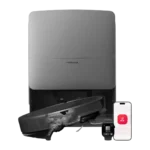
4.4
Choose it for standout suction, threshold climbing, and low-babysitting navigation. Skip it if top-tier mopping consistency or a lower price matters more.
Pros: Controls and UI, Versatility, Heating element, Overall cleaning convenience, Large debris handling, Hard Floor — Large Debris Intake, Under-Furniture Pickup
Cons: Dock noise, Streaking / Residue, Storage footprint and upright-stand stability
#3
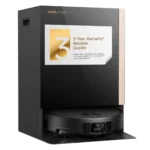
4.4
Choose it for exceptional vacuuming, obstacle avoidance, and true hands-off mop swapping. Skip it if you want longer battery life, a smaller dock,...
Pros: Hair‑Wrap / Tangle Resistance, Adaptive chassis lift, Innovation compared to competitors, Hard Floor — Fine Dust Pickup, Suction and Airflow, Pet-Ready Features, Tool-change...
Cons: Dirty water sensor, Suitability for small spaces, Storage footprint and upright-stand stability, Streaking / Residue, Battery and Charging, Runtime
#4
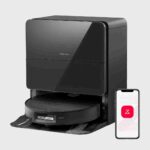
4.3
Choose Saros 10 if you want a slim, premium robot that vacuums hard, climbs thresholds, and runs a truly hands-off dock. Skip it...
Pros: Pet-Ready Features, Low-profile design, Suction & Airflow, Mop lifting system, Aesthetic design & finish, Hair‑Wrap / Tangle Resistance, Adaptive chassis lift
Cons: Streaking / Residue, Stuck resistance