- Review score
- 3.6
Shipwrecked: Nightmare at Sea Movie Review
Bottom Line
Choose it for a gripping, emotionally devastating reconstruction driven by survivor accounts and archival footage. Skip it if you want a thorough investigation of corporate responsibility, safety failures, legal aftermath, or the people’s lives after the disaster.
Best for viewers who enjoy immersive true-crime, survival, and disaster documentaries built around firsthand testimony. It offers a clear, tense introduction to the Costa Concordia tragedy.
Skip it if you want a definitive investigation of Costa Cruises, maritime safety failures, legal accountability, or survivors’ later lives. It may also be distressing for anyone anxious about cruise travel.
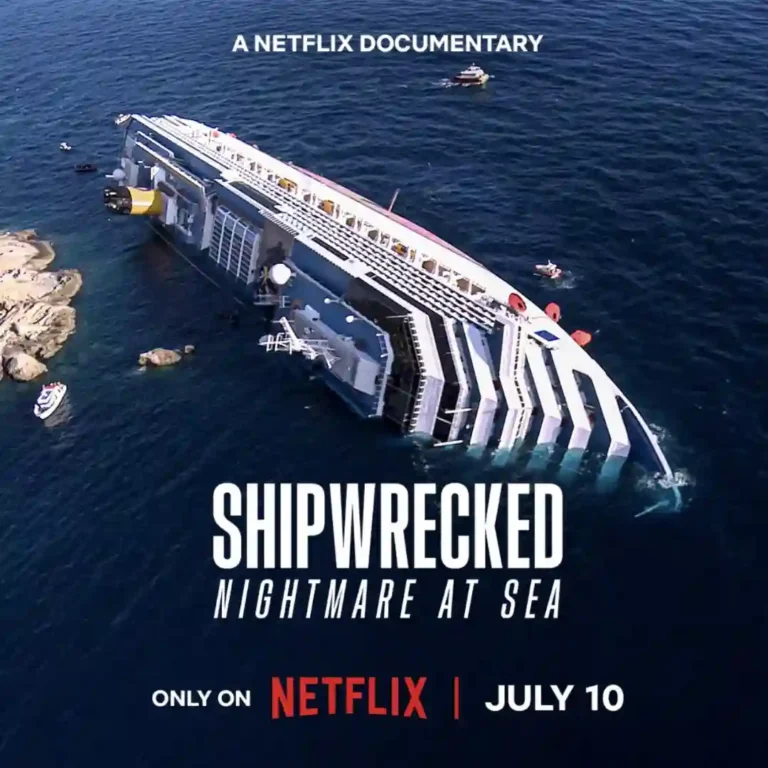
Shipwrecked works best as an immediate, visceral reconstruction of the Costa Concordia disaster. Survivor testimony, passenger footage, surveillance material, and black-box audio create sustained dread, while the chronological storytelling keeps a complicated evacuation easy to follow. The emotional force is substantial, especially when families and crew recount the chaos and loss. Its weakness is investigation: several critics say the final section rushes through corporate responsibility, training failures, legal consequences, rescue efforts, and survivors’ later lives. The result is gripping and accessible rather than definitive—a powerful introduction to the tragedy that may leave curious viewers searching for a deeper account afterward.
Feature Scorecards
Summary
24 reviewed features- Very positive 4.5-5.0 54% 13 features
- Positive 3.5-4.4 21% 5 features
- Neutral 2.5-3.4 13% 3 features
- Negative 1.5-2.4 13% 3 features
- Very negative below 1.5 0% 0 features
Pros
-
The delayed evacuation, failing lifeboats, darkness, and cross-cutting between survivors create sustained, edge-of-the-seat tension. The danger feels immediate rather than merely recounted.
-
The real-life panic, darkness, tilting ship, and delayed rescue make the documentary more frightening than many fictional horror films. The terror comes from knowing every desperate moment actually happened.
-
It has broad appeal for true-crime, disaster, and survival-documentary viewers because it is easy to follow and intensely gripping. People anxious about cruises may find it especially unsettling.
-
The firsthand stories of panic, loss, and survival are repeatedly described as heartbreaking and harrowing. Families carrying children and survivors recalling lost loved ones give the film substantial emotional force.
-
The candid survivor and crew interviews are the documentary’s strongest element. They communicate panic, grief, confusion, and resilience with exceptional immediacy.
-
The documentary is consistently described as gripping and easy to stay absorbed in. Its intensity makes it compelling viewing, though the thin investigation may limit lasting satisfaction.
-
The chronological structure clearly explains how the collision, misinformation, delayed evacuation, and rescue unfolded. Testimony is tied to recordings and footage in a way that keeps a complicated sequence easy to follow.
-
The evacuation stories deliver intense human drama without needing reenacted spectacle. Accounts involving trapped crew, families with children, and failed lifeboats are especially powerful.
-
The direction turns survivor testimony, surveillance material, and recorded audio into a coherent, immersive reconstruction. It balances factual detail with strong emotional weight.
-
The documentary is regarded as fact-rich and broadly comprehensive about the collision and evacuation. Its weakness is omission and compression rather than a clearly identified factual distortion.
-
Real footage, eyewitness testimony, and ship recordings make the disaster feel frighteningly present. The documentary’s strongest achievement is placing viewers inside the confusion without fictionalizing it.
-
Passenger videos, surveillance footage, and archival images create an immediate, documentary-first visual style. The real material makes the reconstruction vivid and unsettling.
-
Black-box recordings, intercepted calls, and archival audio add immediacy and expose the failures on the bridge. Their placement intensifies the dread without needing artificial dramatization.
-
Critical response leans positive on immersion, clarity, and emotional power. The main division is whether those strengths outweigh the film’s limited investigative depth.
-
As a reconstruction of the night, the film is clear, gripping, and emotionally powerful. As a complete account of causes and consequences, it feels frustratingly surface-level.
-
It succeeds strongly as a tense disaster documentary and emotional survivor account. Viewers expecting a rigorous true-crime investigation or definitive corporate exposé may find it incomplete.
-
Previously unseen footage and survivor testimony give the film a fresh immediate draw. Its overall format still feels familiar beside other Netflix disaster documentaries.
-
Cross-cutting between people ashore and those still trapped sharply heightens the tension. The editing becomes less effective when the final investigative section suddenly accelerates.
Cons
-
The documentary communicates the cost of failed leadership and the importance of preparedness with force. Its message is weakened by limited attention to corporate accountability, rescue heroism, and survivors’ later lives.
-
The film raises questions about leadership, training, corporate responsibility, and systemic failure but does not explore them deeply enough. Important context arrives late or remains outside the documentary.
-
The final stretch introduces corporate and investigative context too late and too quickly. It closes with major questions still open instead of delivering a fully developed reckoning.
-
The evacuation unfolds with strong momentum, but the film rushes once it reaches the investigation and aftermath. The late acceleration makes the final section feel compressed and uneven.
-
The survivors are vivid and affecting during the disaster itself, but the film gives too little attention to how their lives changed afterward. Their long-term recovery and legal struggles remain underdeveloped.
-
The shorter runtime keeps the film accessible but leaves too little room for the disaster’s legal, corporate, and human aftermath. The subject feels larger than the time allotted to it.
Cast & Creators
-
Chiara Messineo is praised for shaping a fact-rich documentary that still leaves room for the survivors’ emotional toll. Her direction is most effective during the immersive reconstruction of the disaster.
Compared With Category Average
Compared with other Movies, this product is above average in plot clarity, historical accuracy, realism.
Summary
8 compared features- Above average 0.4+ pts higher 100% 8 features
- Same as average within 0.3 pts 0% 0 features
- Below average 0.4+ pts lower 0% 0 features
| Attribute | This product | Category average | Difference |
|---|---|---|---|
| plot clarity | 4.8 | 2.9 | +1.9 |
| historical accuracy | 4.8 | 2.9 | +1.9 |
| realism | 4.7 | 3.0 | +1.7 |
| drama quality | 4.8 | 3.2 | +1.7 |
| emotional impact | 4.9 | 3.3 | +1.6 |
| entertainment value | 4.8 | 3.5 | +1.3 |
| scares | 5.0 | 3.7 | +1.3 |
| audience appeal | 4.9 | 3.6 | +1.2 |
FAQ
Is Shipwrecked: Nightmare at Sea scary?
Yes. Critics describe the real footage, darkness, failed evacuation, and survivor accounts as more frightening than many horror films.
Does the documentary explain the disaster clearly?
Yes. Its chronological structure connects eyewitness testimony with passenger video, surveillance footage, black-box recordings, and Coast Guard calls.
Does it deeply investigate Costa Cruises and the aftermath?
Not fully. Several critics say the film raises corporate, training, legal, and systemic questions but rushes through them near the end.
What is the documentary’s strongest element?
The candid survivor and crew interviews provide the strongest emotional impact and make the confusion, fear, and loss feel immediate.
Is it a good choice before taking a cruise?
It is informative and gripping, but one critic specifically warns that its intensity may be a poor choice immediately before a cruise trip.
Sample Expert Reviews We Analyzed
These are a few of the reviews included in our analysis.

- Review score
- 4.9
- Review score
- 4.6
- Review score
- 4.8
- Review score
- 3.7
Compared in Reviews
Products reviewers directly compared with this model, grouped into quick takeaways.
Internet Historian’s The Cost of Concordia
- Worse: investigative depth The reviewer considers Internet Historian’s documentary a deeper and stronger treatment of the disaster.
The Costa Concordia: Why She Sank
- Worse: investigative depth The reviewer presents this documentary as a stronger alternative for viewers seeking more depth.
Consider This Instead
If you want better character development
Choose Mockbuster. It scores 5.0 vs 2.0 for character development, with a 4.5 overall score.
If you want better ending satisfaction
Choose The Isolate Thief. It scores 5.0 vs 2.5 for ending satisfaction, with a 4.0 overall score.
Top Movies to Consider
Best for a funny, heartfelt look at low-budget filmmaking and a likable creative underdog. Skip it if you need exhaustive production detail or perfectly even pacing.
Pros: character development, originality
Cons: pacing, plot clarity
Best for the icy atmosphere, tense mind games, and standout Foy-Bean performances. Skip it if slow-burn pacing, graphic violence, or sexual-abuse material will outweigh the strong finale.
Pros: ending satisfaction, soundtrack quality
Cons: family friendliness, age appropriateness
Choose Minions & Monsters for energetic family slapstick and old-Hollywood jokes. Skip it if Minion chaos, thin monster plotting, or mild PG scares and rude humor wear you out.
Pros: ending satisfaction, acting performance
Cons: sexual content level, plot clarity
Best for Millie Bobby Brown, sweet romance, Malta scenery, and breezy family adventure. Skip it if you need a sharp mystery or are tired of the franchise formula.
Pros: production design, score quality
Cons: realism, originality