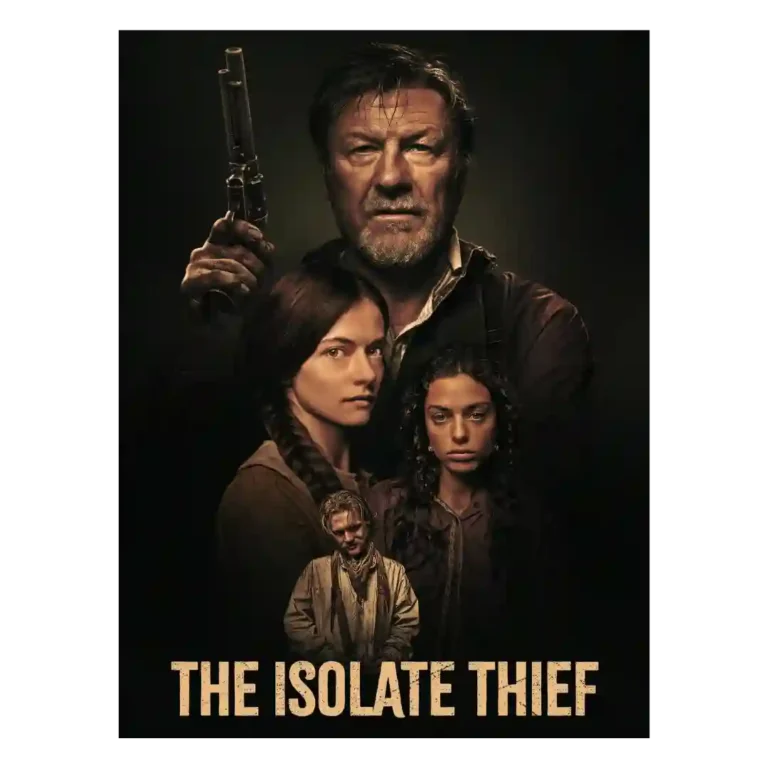
Choose it for the icy atmosphere, tense mind games, and standout Foy-Bean performances. Skip it if slow-burn pacing, graphic violence, or sexual-abuse material will outweigh the strong finale.
Best for
Best for adults who enjoy slow-burn Western thrillers, isolated settings, female-led survival stories, and tension built through conversation before a violent payoff.
Not for
Skip it if you want nonstop action, dislike deliberate pacing, or prefer to avoid graphic violence, violence against women, sexual abuse, and crude language.
Verdict
The Isolate Thief works best as an intimate winter pressure cooker rather than a conventional action Western. Mackenzie Foy anchors the film with quiet grit and emotional resolve, while Sean Bean turns controlled charm into credible menace. John Suits and cinematographer Will Stone make the frozen outpost feel oppressive and visually distinctive, and the delayed violence lands with force. The tradeoff is a dialogue-heavy middle that several critics found slow, thin, or predictable, with supporting outlaws who sometimes blur together. Its treatment of violence and sexual abuse is also harsh enough to limit the audience. Still, the performances, atmosphere, and satisfying final escalation give patient Western-thriller fans a worthwhile experience.
Tension is the film’s most dependable strength, growing from polite deception, confined space, and the constant threat of violence before erupting in the finale.
lead performance: 4.8, 5 reviews, strong consensus
Mackenzie Foy convincingly carries the film with restrained caution, grit, emotional depth, and physical resolve. Her mature dramatic turn is one of the clearest highlights.
Cold blue tones, wide landscapes, and desolate winter imagery make the isolation visually immediate. The photography is among the film’s most consistently praised elements.
John Suits uses confinement, withheld violence, and the frozen location to build sustained unease. The direction is repeatedly praised for making modest resources feel purposeful.
The cast is a major strength, led by commanding work from Mackenzie Foy and Sean Bean. Even mixed assessments generally agree that the performances add weight to the lean material.
The violence is effective when used as a looming threat, but the graphic final act and repeated grisly injuries can feel excessive and difficult to watch.
Compared with other Movies, this product is above average in ending satisfaction, screenplay quality, dialogue quality, near average in audience appeal, plot clarity, below average in age appropriateness, family friendliness, historical accuracy.
Comparison summary
40 compared features
Above average0.4+ pts higher
25(63%)
Same as averagewithin 0.3 pts
6(15%)
Below average0.4+ pts lower
9(23%)
Largest category differences
Attribute
This product
Category average
Difference
age appropriateness
1.0
3.1
-2.1
family friendliness
1.0
3.0
-2.0
ending satisfaction
5.0
3.4
+1.6
screenplay quality
4.3
2.9
+1.4
dialogue quality
4.5
3.0
+1.5
historical accuracy
2.0
3.5
-1.5
realism
2.0
3.3
-1.3
sexual content level
1.8
3.1
-1.3
Consider This Instead
If you want better supporting cast performance
Choose Crime 101. It scores 4.5 vs 3.8 for supporting cast performance, with a 4.0 overall score.
Products reviewers directly compared with this model, grouped into quick takeaways.
The Hateful Eight
Similar: claustrophobic Western structureIt echoes The Hateful Eight structurally while still establishing its own identity.
Better: character and thematic complexityIt shares The Hateful Eight's pressure-cooker setup but lacks its character and thematic complexity.
Sinners
Similar: slow-build structure before eruptive violenceIts lingering-threat structure is compared favorably with Sinners.
The Damned
Similar: environment as a storytelling forceLike The Damned, the frozen environment actively shapes the story.
FAQ
Is The Isolate Thief action-packed?
Not for most of its runtime. It plays as a slow, dialogue-heavy psychological Western before erupting into a violent final act.
Are the performances good?
Yes. Mackenzie Foy’s restrained grit and Sean Bean’s controlled menace receive the strongest praise, with Odeya Rush and Joe Pantoliano also making memorable contributions.
Is The Isolate Thief suitable for children?
No. The film includes bloody violence, violence against women, sexual abuse, prostitution references, crude language, and an F-bomb.
Does the slow buildup pay off?
For most critics, yes. The ending and final shootout are described as worth waiting for, although the middle act can feel bogged down.
Is the story original?
Its chamber-Western structure is familiar and recalls The Hateful Eight, but the female-led perspective, frozen setting, and intimate survival focus give it its own identity.
Sample Expert Reviews We Analyzed
These are a few of the reviews included in our analysis.
Best for pristine archival footage, immersive sound, and a surprisingly tense look at Disneyland’s construction. Skip it if you want a comprehensive, deeply critical history; several reviewers found the 78–79-minute...
Best for a profound, formally inventive meditation on grief, memory, and the ethics of filming family. Skip it if intensely personal addiction material, a 114-minute runtime, or occasional repetition will...
Best for joyful music, rare footage, candid interviews, and a layered Maurice White portrait. Skip it if you want a tightly focused, unconventional reappraisal that lingers on performances instead of...
Best for a tender, accessible portrait that lets Oliver’s poetry, friends, and archival voice carry the experience. Skip it if you want a brisk, deeply investigative biography; the calm rhythm...
Pros: romance quality, faithfulness to source material