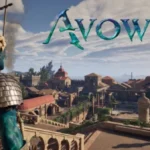
- Similar: party structure The review compares Avowed's two-companion structure to The Outer Worlds.
- Worse: overall design The reviewer says Avowed improves on The Outer Worlds but remains disappointing in its own way.
Avowed Review
Bottom Line
Choose Avowed for vivid Eora worldbuilding, flexible combat, and dense exploration. Skip it if you need deep simulation, broad enemy variety, or a smoother gear-progression loop.
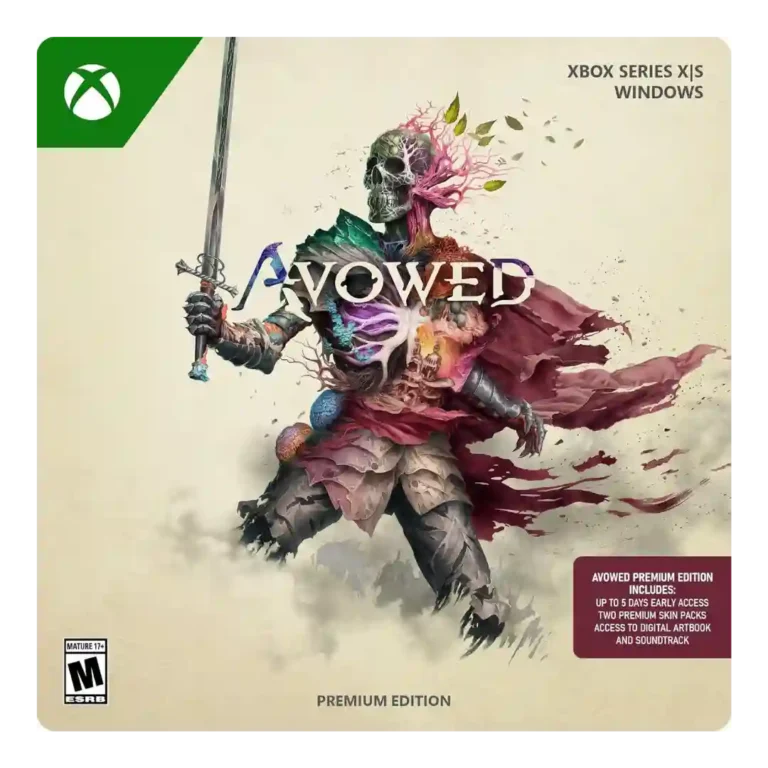
Best for players who want a focused first-person fantasy RPG with colorful world-building, flexible combat builds, and dense exploration. It especially suits fans who value lore, secrets, and choice-driven quest outcomes over sandbox simulation.
Not for players expecting a huge reactive sandbox, complex systemic role-play, deep stealth, broad enemy variety, or frictionless gear progression. Reviewers repeatedly warn that the world can feel static and upgrade systems can dominate the loop.
Avowed’s review consensus is that Obsidian built a memorable, colorful Eora adventure whose best moments come from exploration, magic-forward combat, lore, and morally weighted choices. Reviewers repeatedly enjoyed the dense open zones, flexible builds, and strong world-building, especially when the game rewards curiosity with secrets or consequences. The tradeoff is that its systems are thinner than many RPG fans may expect: gear tiers, scarce upgrade materials, repeated enemy types, and limited world reactivity frustrated multiple reviewers. It lands as a confident, often fun action RPG with excellent atmosphere, but not a genre-redefining sandbox.
Compared in Reviews
Products reviewers directly compared with this model, grouped into quick takeaways.
Baldur's Gate 3
- Better: world reactivity The reviewer says Baldur's Gate 3 feels more alive than Avowed's setting.
- Compared: romance and companion systems The reviewer expected to miss Baldur's Gate 3-style romance but felt Avowed's relationships still worked.
Skyrim
- Compared: first-person RPG style The reviewer frames Avowed as a favorable riff on Skyrim in Eora.
- Compared: open-world expectations The reviewer stresses that Avowed is not Skyrim, while criticizing how it avoids that model.
Feature Scorecards
Summary
81 reviewed features- Very positive 4.5-5.0 14% 11 features
- Positive 3.5-4.4 51% 41 features
- Neutral 2.5-3.4 26% 21 features
- Negative 1.5-2.4 9% 7 features
- Very negative below 1.5 1% 1 feature
Pros
-
The tutorial was praised for teaching systems naturally and creating meaningful choices early.
-
Level design was praised for verticality, density, handcrafted routes, and spaces that felt larger than their footprint.
-
Lore depth was consistently praised, especially the in-game books, history, politics, and reference systems that made Eora feel rich.
-
The Living Lands’ vivid tone, music, and dreamlike spaces were repeatedly praised for creating a distinctive atmosphere.
-
Returning Eora fans often felt Avowed was faithful to the Pillars of Eternity world, while still accessible to newcomers.
-
Movement feel and parkour were strongly praised for making exploration fluid, vertical, and enjoyable.
-
Most reviewers praised the bold, colorful, alien fantasy art direction, though a few disliked the cartoony look or felt presentation was uneven.
-
Exploration was one of the strongest consensus positives, with dense maps, secrets, vertical paths, and constant rewards keeping reviewers engaged.
-
Environmental detail was strongly praised through dense secrets, vistas, caves, and handcrafted spaces, even by some otherwise mixed reviewers.
-
Visual effects, especially magic, were repeatedly praised for impact, color, and satisfying feedback.
-
World-building was one of Avowed’s clearest strengths, especially its politics, cultures, history, and Eora continuity.
-
Platform-specific support was praised for PS5 performance modes, Sony-platform feel, and PC features such as DLSS.
-
Build and class flexibility was praised because Avowed lets players mix archetypes freely, though balance sometimes favored magic or specific styles.
-
Sound design was praised for impactful effects, combat feedback, and strong weapon audio.
-
Controls and combat feel were commonly praised for responsiveness, impact, and keybind flexibility, with a few targeting frustrations.
-
Fast travel was viewed as convenient and generous, making it easy to revisit areas without friction.
-
Post-launch support was viewed positively, with free updates improving stability, customization, build options, and quality-of-life features.
-
Character creation was generally praised as solid or deep, with later updates adding more races and appearance options.
-
Platforming precision was a pleasant surprise, with simple mantling and vertical puzzles adding a welcome exploration layer.
-
Reviewers liked the dense zones and amount of side content, although some felt the scope was restrained rather than sprawling.
-
Fun factor leaned positive overall, especially for combat and exploration, though some reviewers found the experience merely solid or underwhelming.
-
Camera-related options were appreciated, especially the ability to adjust head bob and camera shake for comfort.
-
Combat was one of the most consistently praised elements, especially magic, responsiveness, and build variety, despite repetition and gear-gating complaints.
-
Graphics quality was divisive but often positive, with praise for stunning vistas and vivid visuals alongside criticism of poor or compromised visuals on some platforms.
-
Reviewers noted useful accessibility and comfort controls such as camera, subtitle, difficulty, and arachnophobia-related options, though colorblind support was called out as missing.
-
Narrative quality was usually a strength thanks to mystery, choices, and world stakes, but some reviewers found the main plot predictable or underwhelming.
-
Weapon balance and variety were mostly praised for experimentation and flexible loadouts, but some reviewers felt magic outclassed melee or guns.
-
Emotional impact came mostly from moral choices, consequences, and companion moments, though some endings or fallout felt muted to critics.
-
Voice acting was mostly praised as strong or outstanding, though one reviewer found performances unable to save weaker writing.
-
Crash stability varied by platform and version: some reviewers reported no crashes, while another had severe startup crashes before fixes.
-
One reviewer specifically framed Avowed as more appropriate for older teens and adults because of its complex themes and mature material.
-
Learning support was helped by reference and lore systems that made Eora’s terminology easier to understand.
-
UI options such as text sizing and subtitles were appreciated as useful interface support.
-
Gameplay mechanics were generally praised as streamlined and flexible, but a few reviewers felt RPG systems lacked depth or reactivity.
-
Side characters and companions were highly divisive: some found them memorable and heartfelt, while others thought they were shallow or uninspired.
-
Writing quality was widely praised for lore, companion dialogue, and sharp prose, but a minority found it wordy, pretentious, or mid.
-
Onboarding was praised when it taught by doing, though lore-heavy openings could feel steep for newcomers.
-
Quest design ranged from excellent side stories and meaningful follow-ups to fetchy, inconsistent, or repetitive tasks.
-
Polish improved over time but remained uneven, with reviewers citing jank, lack of gloss, or presentation limits alongside strong craftsmanship.
-
Replay value improved with choices and post-launch New Game Plus, though some reviewers felt repeated runs changed too little.
-
Puzzles were generally light but appreciated when they used environmental elements, timing, and exploration paths.
-
Dialogue quality ranged from standout and well acted to overly wordy, forced, or limited in the options it offered.
-
Immersion was helped by dense worldbuilding and atmosphere but hurt for some by static NPCs and limited world reactivity.
-
Bug reports varied widely: some reviewers found almost none, while others hit quest bugs, map-edge bugs, or issues that required reloads.
-
Menu and ability-wheel usability was mixed; some quality-of-life systems helped, but radial wheels and limited hotkeys disrupted combat for others.
-
Skill trees were praised for flexibility but criticized by others as simple, shallow, or uneven across archetypes.
-
Open-zone design split reviewers: many liked curated, dense hubs, while others found the world restrictive, lifeless, or not interactive enough.
-
Soundtrack reception was generally positive but often stopped short of calling the music unforgettable.
-
Haptic support was platform-dependent: one PS5 review praised DualSense vibration, while another noted missing haptic and trigger use.
-
HUD clarity improved through options to reduce clutter, adjust opacity, and toggle display elements.
-
Enemy AI was considered serviceable but not especially smart; later impressions suggested fights remain engaging without feeling brain-dead.
-
Steam Deck suitability was considered playable and verified, but the visual tradeoff was significant.
Cons
-
Difficulty balance was one of the most debated areas, with some finding it fair and flexible and others criticizing gear checks, sponginess, or uneven scaling.
-
Performance optimization varied sharply across versions, from stable and improved after patches to demanding, stuttery, or poorly optimized on some PCs.
-
Frame-rate stability varied: some reviewers saw stable performance, while others reported hitches, drops, screen tearing, or stuttering.
-
The companion roster was often seen as small or limited, though some reviewers still liked the four supporting characters.
-
Value for money was mixed: reviewers praised Game Pass or lower pricing but questioned the original premium price for the scope.
-
Companion combat AI was mixed: some found companions self-sufficient or improved by patches, while others called them weak or unnecessary in fights.
-
Progression systems were divisive: some liked flexible builds and added points, while others found midgame growth stagnant or too gear-dependent.
-
Innovation was usually described as limited; reviewers saw Avowed as confident and enjoyable rather than genre-changing.
-
Map and navigation design was mixed, with missing custom markers criticized before later updates added them.
-
Animation feedback was mixed, with stiff NPCs and less impressive presentation keeping the game from feeling fully modern.
-
Save reliability was a concern for at least one reviewer who needed more careful saving because of bugs.
-
Pacing was mixed, with slow starts, downtime, filler quests, and late-game repetition weighing against an otherwise easy-to-follow story.
-
Loot opinions were mixed: unique items and progression could be satisfying, but many chests and rewards felt predictable or unexciting.
-
Originality was limited; reviewers often described Avowed as familiar comfort-food fantasy rather than a bold genre evolution.
-
Upgrade systems were sharply divisive, with some liking gear longevity and many others criticizing tiers, scarcity, or number-go-up design.
-
Facial animations were criticized in later impressions as not matching next-generation expectations.
-
Character development split reviewers: some found companions distinct and engaging, while others thought characters were bland or hard to care about.
-
Crafting was mixed to negative, with several reviewers calling it threadbare, expensive, or too tied to gear-tier progression.
-
Resource balance divided reviewers: some liked the meaningful economy, while others felt crafting materials and upgrade resources were too scarce.
-
Aiming and first-person spell placement drew criticism when ground-targeted abilities were hard to place precisely.
-
Enemy variety was a recurring concern; many reviewers felt the same bears, spiders, skeletons, and humanoids appeared too often.
-
Grind level was a common complaint tied to gear upgrades, resource hunting, and spongy combat loops.
-
Sandbox freedom was limited compared with full open-world RPGs, though some reviewers still appreciated freedom in story choices or builds.
-
Mission design drew criticism when quests felt repetitive, fetchy, or like back-and-forth errands, though some standout missions remained.
-
The core loop was divisive: strong combat and exploration were often undermined for some reviewers by gear-tier repetition and open-zone structure.
-
World interactivity was one of the most common criticisms, with many reviewers finding NPCs, theft, objects, and systems too static.
-
Boss design was criticized as disappointing, with bosses feeling like tougher versions of regular enemies rather than unique encounters.
-
Endgame content was criticized because the original experience did not allow continued post-story play and lacked New Game Plus at launch.
-
Stealth was criticized as underdeveloped or nearly useless, with little support for stealth-focused play.
Compared With Category Average
Compared with other Video Games, this product is above average in tutorial quality, below average in world interactivity, endgame content, core gameplay loop.
Summary
8 compared features- Above average 0.4+ pts higher 13% 1 feature
- Same as average within 0.3 pts 0% 0 features
- Below average 0.4+ pts lower 88% 7 features
| Attribute | This product | Category average | Difference |
|---|---|---|---|
| world interactivity | 1.9 | 4.0 | -2.2 |
| endgame content | 1.5 | 3.6 | -2.1 |
| core gameplay loop | 2.0 | 4.1 | -2.1 |
| stealth mechanics | 1.4 | 3.4 | -2.0 |
| boss design | 1.8 | 3.8 | -2.0 |
| sandbox freedom | 2.3 | 4.2 | -1.9 |
| tutorial quality | 4.9 | 3.4 | +1.5 |
| character development | 2.7 | 4.0 | -1.3 |
FAQ
Is Avowed more about combat or story?
Reviews describe both as important, but combat and exploration are the most consistent sources of fun. Story and writing are often praised, though some reviewers found the main plot predictable or uneven.
Does Avowed feel like a full open-world RPG?
No. Reviewers describe it as open-zone or semi-open, with dense handcrafted areas rather than one seamless sandbox. Some liked the focus; others wanted more freedom and world reactivity.
How good is the combat?
Combat is one of Avowed’s strongest reviewed areas, especially magic, flexible loadouts, and responsive feel. The main caveats are repeated enemy types, gear-tier friction, and occasional sponginess.
Are the companions memorable?
Opinions are mixed. Several reviewers loved the companion writing, banter, and emotional moments, while others found the cast shallow, underused in combat, or hard to connect with.
Is exploration rewarding?
Yes, this is one of the strongest points across reviews. Dense maps, vertical routes, secrets, treasure, caves, and environmental puzzles were repeatedly praised.
What are the biggest complaints?
The most repeated concerns are thin world interactivity, limited enemy variety, uneven gear progression, resource grind, and RPG systems that feel simpler than some players expected.
Consider This Instead
If you want better world interactivity
Choose Donkey Kong Bananza. It scores 5.0 vs 1.9 for world interactivity, with a 4.4 overall score.
If you want better stealth mechanics
Choose The Last of Us Part II Remastered. It scores 4.7 vs 1.4 for stealth mechanics, with a 4.2 overall score.
If you want better endgame content
Choose Street Fighter 6. It scores 4.5 vs 1.5 for endgame content, with a 4.0 overall score.
If you want better sandbox freedom
Choose Metal Gear Solid Delta: Snake Eater. It scores 5.0 vs 2.3 for sandbox freedom, with a 3.8 overall score.
Overall Top Video Games Alternatives
Good if you want fast, tactical roguelite combat with huge progression depth, striking art, and standout music. Skip it if repetition, resource micromanagement, or a less emotionally satisfying sequel story...
Pros: skill tree depth, dialogue quality
Cons: emotional impact, economy and resource balance

Best for joyful destruction, dense exploration, and a charming DK-Pauline adventure. Skip it if camera quirks, frame-rate dips, easy bosses, or premium Switch 2 pricing are dealbreakers.
Pros: gameplay mechanics, world interactivity
Cons: economy and resource balance, enemy variety
Choose Death Stranding 2 if you want a gorgeous, stranger, more action-friendly delivery epic with powerful performances. Skip it if fetch quests, Kojima exposition, reduced tension, or easier traversal undercut...
Pros: animation quality, facial animations
Cons: quest design, AI behavior
Choose it if you want classic turn-based Dragon Quest modernized with richer stories, gorgeous HD-2D visuals, and helpful quality-of-life options. Skip it if random encounters, grinding, or occasional difficulty spikes...
Pros: visual effects quality, environmental detail
Cons: AI behavior, level design