- Review score
- 4.6
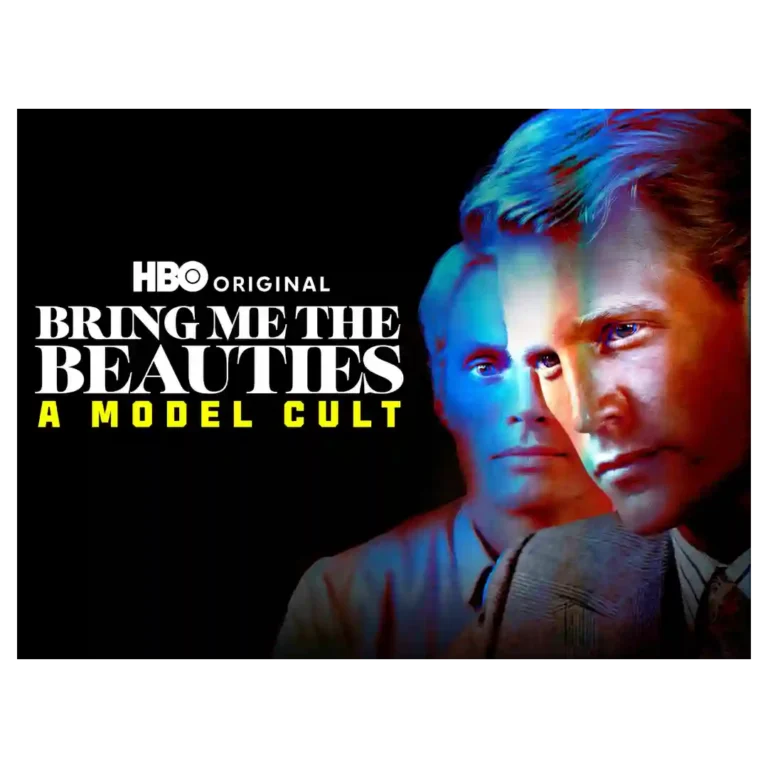
Bring Me the Beauties: A Model Cult, Season 1 Review
Bottom Line
Choose it if you want a strange, absorbing cult documentary with rich firsthand accounts and a tight three-part binge. Skip it if you need every psychological question fully explained or dislike messy true-crime storytelling.
Best for true-crime and cult-documentary viewers who want a strange, tightly packaged story with survivor interviews, archival footage, and a glamorous 1980s New York backdrop.
Not for viewers who need a fully conclusive psychological explanation or who dislike messy stories involving coercion, exploitation, and cult abuse.
Bring Me the Beauties: A Model Cult comes across as a strong, highly watchable cult docuseries built around an unusually strange true story: a male supermodel, an alien doomsday prophet, Manhattan glamour, and financial and emotional control. The strongest praise goes to Chris Smith’s direction, the survivor interviews, archival material, and the compact three-part format, which several writers frame as ideal for a binge. The tradeoff is clarity. A few critics argue the series does not fully explain why followers accepted von Mierers’s claims or how the group’s danger escalated. Even with that caveat, the consensus leans positive because the story is memorable, disturbing, and difficult to stop watching.
Feature Scorecards
Summary
31 reviewed features- Very positive 4.5-5.0 48% 15 features
- Positive 3.5-4.4 32% 10 features
- Neutral 2.5-3.4 19% 6 features
- Negative 1.5-2.4 0% 0 features
- Very negative below 1.5 0% 0 features
Pros
-
The compact three-part run is treated as a strength for streaming. One critic says it is best consumed all at once as a tight one-night binge.
-
Critical reception is presented as unusually strong, with a perfect Rotten Tomatoes score and several outlets quoted in praise. The main caveat is not enthusiasm, but how neatly the story explains the cult’s hold on people.
-
Across the full season, the pacing is praised as fast without losing the thread. The story reportedly keeps moving even as the details become stranger.
-
Entertainment value is one of the most consistent strengths. The show is called compulsively watchable, wildly juicy, absorbing, fascinating, and naturally compelling, even by sources that note clarity issues.
-
Chris Smith’s direction earns repeated praise for control, style, and making a crowded, bizarre story digestible. Even shorter pieces frame him as a major reason the series rises above a basic cult-doc recap.
-
The series lands hardest when survivors describe public humiliation, regret, and the cost of leaving. Critics point to dark, unnerving, and moving moments rather than simple shock value.
-
The show’s hook clearly travels: critics call it unforgettable, relatable, and especially strong for viewers drawn to cult and true-crime stories. Its mixture of fashion-world glamour, alien claims, and survivor testimony gives it broad curiosity value.
-
The documentary’s interviews and archival material are a major asset. Former members, first-person narration, public-access footage, and rare archival material give the series texture and credibility.
-
For cult-doc and true-crime viewers, the fit is very strong. Multiple outlets frame it as a stream-worthy or must-watch entry in the genre.
-
The reveals are treated as one of the series’ pleasures. Critics describe the story spiraling outward and serving up one juicy, bizarre detail after another.
-
The story’s realism is unsettling because the most outlandish details are presented as real human behavior, not fantasy. The series also suggests cultic vulnerability can feel closer to ordinary life than viewers expect.
-
Hoyt Richards carries the show as its central witness. Decider describes him as the dominant voice, and his blank-slate vulnerability becomes part of the fascination.
-
The strongest media-scrutiny moment is the talk-show confrontation, where Richards recalls being attacked by the host and audience. It plays as a chilling public rupture in the group’s self-image.
-
The three-episode season length is praised as efficient. It gives enough room for the saga while remaining short enough for a single-night watch.
-
Visual style gets a notable lift from the quoted Wall Street Journal appraisal. The show is framed as stylishly constructed rather than merely lurid.
-
Suspense comes from watching the cult’s appeal curdle into control and exposure. The coverage emphasizes whistleblowing threads and a story that becomes hard to look away from.
-
The premise feels unusually fresh even within the crowded cult-documentary space. Writers repeatedly highlight the strange blend of models, Manhattan glamour, UFO beliefs, gemstones, and doomsday thinking.
-
The story is the main draw: a male supermodel, an alien doomsday cult, and a charismatic socialite make an unusually compelling documentary subject. Praise is broad, though one critic found the storytelling messier than the premise.
-
The strongest thematic thread is vulnerability: how people searching for meaning can give power away to a charismatic figure. Some critics still wanted the series to go deeper into why belief took hold.
-
The dramatic pull comes from lies, chaos, mystery, and the moment the group’s rules turn sinister. The material is dark rather than sensational for its own sake.
-
The ending is described as somewhat satisfying while still tragic. It appears to offer truth and closure without pretending the people involved emerge unscarred.
-
The finale is valued mainly as the destination of a short binge. ScreenRant suggests waiting for all three installments so the conclusion can be reached without a weekly pause.
-
The completed three-part story closes on a satisfying but mournful note. The series seems more interested in hard-won truth than in a triumphant ending.
-
Jacki Adams stands out as a key supporting voice. Decider singles her out as the figure likely to expose the group’s inner workings.
-
The pilot starts strongly enough for a stream recommendation and one critic calls the series off to a great start. Another wanted more detail about von Mierers’s beliefs and the group’s grip.
Cons
-
Writing and storytelling are split between praise for clarity and criticism of messiness. Some found the material well unpacked; others felt it skipped past the hardest explanatory questions.
-
Episode structure is mixed: Decider found some reenactments unnecessary, while ScreenRant thought the weekly rollout could help build an audience. The short format still keeps the series easy to finish.
-
Clarity is the main tradeoff. Some praise the show as easy to follow, while others say it does not fully explain why so many people believed von Mierers or how the danger escalated.
-
The first episode’s pacing gets a mixed response because one critic wanted it to push further into the cult’s danger sooner. The setup is watchable, but not as forceful as it could be.
-
The series points directly at the cult’s refusal to face reality after public criticism. Richards’s account makes accountability feel like a core part of the psychological damage rather than a tidy resolution.
-
Editing is the clearest weak spot in the negative coverage. One critic felt the series jumps past important explanations and leans too much on the next juicy detail.
Compared With Category Average
Compared with other TV Shows, this product is above average in season pacing, season length, critic appeal, below average in editing quality.
Summary
8 compared features- Above average 0.4+ pts higher 88% 7 features
- Same as average within 0.3 pts 0% 0 features
- Below average 0.4+ pts lower 13% 1 feature
| Attribute | This product | Category average | Difference |
|---|---|---|---|
| season pacing | 4.8 | 3.1 | +1.7 |
| season length | 4.5 | 3.1 | +1.4 |
| critic appeal | 5.0 | 3.8 | +1.2 |
| realism | 4.5 | 3.4 | +1.1 |
| editing quality | 2.5 | 3.6 | -1.1 |
| plot originality | 4.4 | 3.6 | +0.8 |
| entertainment value | 4.7 | 3.9 | +0.8 |
| story quality | 4.3 | 3.6 | +0.7 |
FAQ
Is Bring Me the Beauties worth watching?
Yes for cult-doc and true-crime fans. The strongest coverage calls it compulsively watchable, absorbing, and a must-watch, though not every critic thought the explanation of the cult’s appeal was complete.
Can I binge the whole season?
Yes. The season is only three episodes, and one critic specifically framed the format as a perfect one-night binge.
What is the show’s biggest strength?
Its biggest strength is the combination of a bizarre real story with strong survivor testimony and archival material. Reviews repeatedly point to Hoyt Richards, former members, and old footage as key assets.
What is the main criticism?
The main criticism is clarity. Some critics wanted the series to explain more fully why people believed von Mierers and how the group’s stranger beliefs became persuasive.
Is it more sensational or thoughtful?
It has sensational details, including aliens, modeling money, gemstones, sex, and doomsday claims. Still, several reviewers describe the series as thoughtful, empathetic, harrowing, or respectful rather than merely lurid.
Who is the central figure in the docuseries?
Hoyt Richards is treated as the central witness, with his modeling career and long involvement in Eternal Values anchoring the story. Other former members add context around the group’s rise and collapse.
Sample Expert Reviews We Analyzed
These are a few of the reviews included in our analysis.

- Review score
- 4.6
- Review score
- 3.6
- Review score
- 4.6
Compared in Reviews
Products reviewers directly compared with this model, grouped into quick takeaways.
Disclosure Day
- Compared: alien walk-in premise Variety notes the accidental overlap between the show’s alien-walk-in material and Spielberg’s sci-fi premise.
Mind Over Murder
- Compared: true-crime streaming appeal ScreenRant groups it with Mind Over Murder as part of HBO Max's strong true-crime slate.
The Jinx
- Compared: true-crime streaming appeal ScreenRant places it beside high-profile true-crime series that make HBO Max a destination for the genre.
Consider This Instead
If you want better editing quality
Choose The Bear, Season 5. It scores 5.0 vs 2.5 for editing quality, with a 4.1 overall score.
If you want better episode structure
Choose The Pitt, Season 2. It scores 5.0 vs 3.4 for episode structure, with a 4.6 overall score.
If you want better writing quality
Choose Dark Winds, Season 4. It scores 4.8 vs 3.4 for writing quality, with a 4.3 overall score.
If you want better accountability handling
Choose The American Experiment, Season 1. It scores 4.3 vs 3.0 for accountability handling, with a 4.0 overall score.
Overall Top TV Shows Alternatives
Choose The Pitt Season 2 for a gripping, realistic medical drama with superb acting and emotional depth. Skip it if graphic procedures, unresolved arcs, or slower character-driven pacing bother you.
Pros: episode structure, main cast performance
Cons: age appropriateness, plot clarity

Choose Dark Winds Season 4 for moody noir suspense, excellent acting, and richer Native-centered themes. Skip it if uneven pacing, thin conspiracy plotting, or a stranger L.A. detour would frustrate...
Pros: costume design, directing quality
Cons: family friendliness, age appropriateness
Choose The Agency Season 2 for adult spy drama with superb acting, tense intrigue, and a stronger pace. Skip it if you want simple plotting, constant action, or a Fassbender-only...
Pros: directing quality, bingeability
Cons: none
Choose Silo Season 3 for revealing, ambitious sci-fi with strong performances and a rewarding finale. Skip it if slow-burn pacing, amnesia plots, or dense mystery-box storytelling test your patience.
Pros: drama quality, finale satisfaction
Cons: character development, season pacing