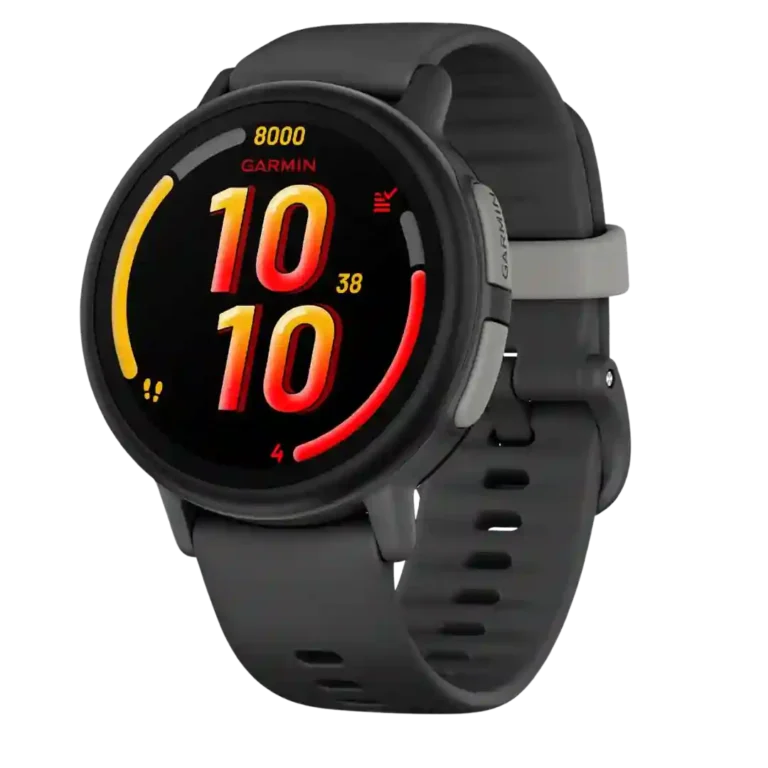
Choose it for younger kids who need waterproof, phone-free calling, geofencing, and simple parental controls. Skip it if dependable indoor tracking, regular phone-number calling, multi-day battery life, or low total cost is essential.
Best for
Families with younger children who want controlled communication, geofencing, waterproofing, and a phone-free path to independence. It fits best where Garmin LTE coverage is consistently strong.
Not for
Families that need guaranteed real-time tracking, ordinary phone-number communication, long battery life, or a low-cost device. Older children may also outgrow its closed feature set quickly.
Verdict
The Garmin Bounce 2 gets the child-facing hardware right: it is light, colorful, responsive, highly water-resistant, and simple enough for young users. Geofencing, approved contacts, calls, voice notes, activity challenges, and the Garmin Jr. app create a convincing bridge between no device and a first phone. The problem is that its most important services are also its least consistent. Some families report accurate tracking and reliable communication, while many others encounter indoor dead zones, delayed messages, failed calls, or location lag. Battery life commonly requires nightly or every-other-night charging, and the $299 price plus LTE subscription makes those failures harder to accept. It is strongest for younger children in areas with dependable coverage, but it is not a safe purchase for families unwilling to tolerate connectivity uncertainty.
The watch body feels premium and meets Garmin’s usual construction standards. Even highly critical owners often separate the solid hardware from unreliable connected services.
Wi-Fi setup is straightforward and can keep messaging working where cellular service or roaming is unavailable. Performance still depends on having a known, strong network.
A full charge takes about two hours and was considered quick by one family, though other sources view that duration as inconvenient for such short battery life.
Step challenges, activity goals, games, and family competitions can genuinely motivate children to move. Chore rewards also appeal to some families, though not every child stays interested.
The AMOLED screen is consistently described as sharp, vivid, and a major upgrade over the original model. Colors pop and graphics look unusually polished for a kids’ watch.
style and design: 4.7, 12 reviews, strong consensus
The round, colorful design looks more like a real watch than a toy, and children generally liked wearing it. One buyer found it bulky, but appearance is otherwise a clear strength.
The reinforced case and glass usually handle bumps, scrapes, swimming, and months of child use well. Long-term durability is less certain because some earlier Bounce concerns remain unresolved.
The watch covers a broad mix of running, cycling, swimming, team sports, and other activities. It offers more sport variety than most child-focused wearables.
user interface: 4.7, 6 reviews, moderate consensus
The basic interface is easy for children to learn and use. Simple menus and clear controls are praised even by some owners who dislike the connected services.
Step counts are generally useful and can record individual steps more precisely than some alternatives. One owner still relied on steps only because pairing failures disabled the connected features.
The focused mix of communication, safety, games, activities, music, and chores suits younger children who are not ready for a phone. Older children may find it restrictive or quickly want more apps and entertainment.
Garmin Jr. is usually considered clean, intuitive, and easy to set up, with strong contact and location controls. A minority of owners report poor syncing, missing family members, or unreliable notifications.
The closed contact system limits strangers, apps, and social media, which gives parents more control than a smartphone. Continuous child-location data still requires trust in Garmin’s handling of sensitive information.
Voice notes and automatic voice-to-text are easier for children than typing on a tiny screen, and several families enjoyed them. Poor audio or service failures can make the feature unreliable.
School mode, approved contacts, and feature restrictions give parents meaningful control. The controls are effective but still need more granular options for individual apps and family permissions.
chore and reward features: 4.0, 3 reviews, low consensus
Chores, virtual coins, and real-world rewards can turn routines into a motivating system. Some families use it enthusiastically, while others find children do not care enough to keep checking tasks.
Boundary alerts automatically notify parents when a child enters or leaves a set area. They reduce the need to repeatedly open the app and check location.
Geofencing, live location, check-ins, and emergency assistance can provide excellent peace of mind when they work. Customer experiences are sharply divided because unreliable tracking and communication can undermine the watch’s core safety purpose.
onboard music storage: 3.8, 8 reviews, moderate consensus
Offline music is a welcome feature and can be easy to set up, but it is restricted to Amazon Music. Families already using other services may need another subscription or skip music entirely.
The educational games are fun and age-appropriate at first, but the small selection may lose appeal quickly. Some parents would rather remove games altogether.
Voice commands can start calls, set alarms, and check information, but they require rigid wording. It is useful once children learn the accepted phrases.
The soft silicone strap is easy to clean and comfortable for many children. Several families disliked the limited band choices, while one owner confirmed it can be replaced with a small watch tool.
Two-way calls and app-based messaging are convenient for younger children and work very well for some families. Many others report failed calls, delayed messages, poor indoor service, or frustration that every contact must use Garmin Jr.
Typical endurance lands around one and a half to two days, with some families getting slightly more. LTE, GPS, calls, and aging batteries can reduce it to a day or even several hours, making frequent charging the most consistent complaint.
Movement-only sleep tracking provides a rough estimate rather than dependable health data. It is better treated as a basic habit indicator than a diagnostic tool.
Glances, contacts, schedules, and appearance can be adjusted, but hardware customization is weak. Fixed band choices and limited protective accessories frustrate some families.
Location tracking is the most polarizing part of the watch. Some families find it accurate and reassuring, while many report lag, incorrect positions, weak rural or indoor performance, and tracking that fails when it matters.
The $299 hardware price plus an LTE subscription is difficult to justify when tracking or calling is unreliable. Families who prioritize waterproofing, parental control, and phone-free independence are more willing to accept the premium.
Standalone LTE is essential to the watch’s phone-free appeal, but coverage quality varies dramatically. Indoor dead zones, country restrictions, and delayed service are common concerns.
Garmin families benefit from shared challenges and centralized management, but communication remains heavily locked to Garmin Jr. Requiring approved contacts to install the app is one of the most repeated frustrations.
Reliability ranges from excellent to deeply frustrating. Some families report dependable daily use, while others face pairing failures, delayed communication, charging problems, and services that work only intermittently.
Third-party support is limited, especially for music. Amazon Music is the only offline service, and the lack of Spotify or broader app options frustrates many families.
The proprietary charging cable is a recurring annoyance and cannot be replaced by a common USB-C cable. One owner also experienced a complete charging failure.
Compared With Category Average
Compared with other Smartwatches, this product is above average in Wi-Fi connectivity, mapping and navigation, cross-platform compatibility, near average in call handling, safety features, below average in reliability, GPS accuracy, value for money.
Summary
48 compared features
Above average0.4+ pts higher
27(56%)
Same as averagewithin 0.3 pts
6(13%)
Below average0.4+ pts lower
15(31%)
Largest category differences
Attribute
This product
Category average
Difference
Wi-Fi connectivity
5.0
2.8
+2.2
reliability
2.0
3.8
-1.7
GPS accuracy
2.6
4.1
-1.5
value for money
2.4
3.8
-1.4
score tracking
2.0
3.9
-1.9
battery life
3.0
4.2
-1.2
charging convenience
1.8
3.3
-1.6
app ecosystem
2.2
3.6
-1.4
Consider This Instead
If you want better GPS accuracy
Choose Garmin Fenix 8. It scores 4.6 vs 2.6 for GPS accuracy, with a 4.0 overall score.
Cheaper: upfront price and feature emphasisFitbit Ace LTE costs less, while the Bounce 2 places greater emphasis on location tracking.
Cheaper: price and comparable featuresFitbit Ace was significantly cheaper with comparable features, but unavailable with service in Canada.
original bounce
Older model: display qualityThe Bounce 2's AMOLED display is considered better than the original bounce's LCD.
Older model: hardware and displayThe Bounce 2 is described as a major hardware upgrade over the original Bounce.
FAQ
What age is the Garmin Bounce 2 best for?
It fits younger children roughly six to ten best. Older children may find the limited apps, closed contacts, and basic health tracking too restrictive.
Does it require an LTE subscription?
Yes for calling, messaging, live location, geofencing, and emergency assistance. Without the plan, much of the watch’s core value disappears.
How reliable is the GPS tracking?
Experiences are mixed. Some families get accurate, useful tracking, while others report lag, wrong locations, weak indoor performance, or updates that fail entirely.
How long does the battery last?
Most experiences cluster around one and a half to two days. Heavy LTE, GPS, calling, music, poor signal, or battery degradation can reduce it to a day or less.
Can the watch call normal phone numbers?
Communication is generally limited to approved contacts using Garmin Jr. The app requirement is a major frustration for grandparents, friends, and relatives who expect ordinary calling or texting.
Can children swim with it?
Yes. Its 5 ATM water resistance performed well in pools, showers, rain, snow, and ocean use.
Sample Expert Reviews We Analyzed
These are a few of the reviews included in our analysis.
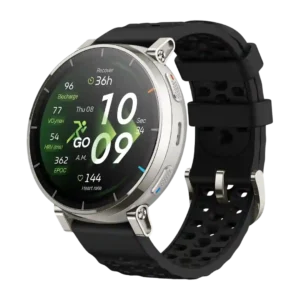
Good if you want premium running features, long battery life, and maps for under $200. Skip it if you need flawless heart-rate data, multiband GPS, LTE, or richer app support.
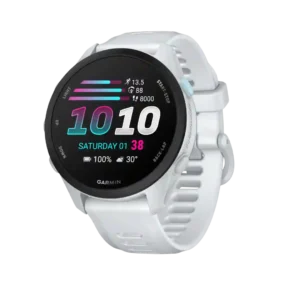
Best for accurate running metrics, excellent coaching tools, a bright AMOLED display, and dependable battery life. Skip it if you need offline maps, music storage, contactless payments, multi-band GPS, or...
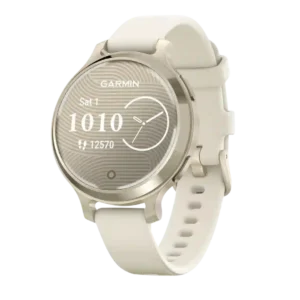
Good if you want a compact, stylish Garmin with strong GPS, comfort, and week-plus battery life. Skip it if you need richer smartwatch apps, onboard music, bright always-on display, or...
Pros: health tracking accuracy, blood oxygen tracking
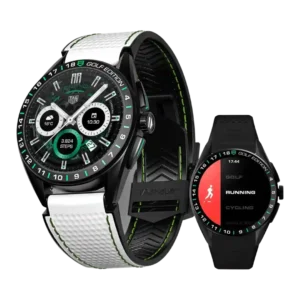
Best for luxury-watch styling, vivid TAG faces, solid build, and casual smartwatch use. Skip it if you need top fitness accuracy, call handling, LTE, or strong value.