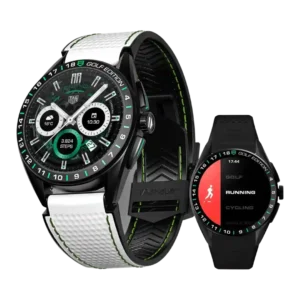
- Worse: display, battery, and fitness tracking The reviewer says buyers tempted by the Apple Watch Ultra 2 may prefer the Venu X1 for display, battery, and fitness tracking.
- Compared: price The Venu X1 is positioned around the same price as the Apple Watch Ultra 2.
- Worse: battery life The reviewer says the Venu X1 easily lasts longer than the Apple Watch Ultra 2.
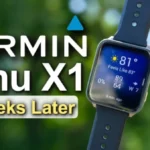
Garmin Venu X1 Review
Bottom Line
Choose the Garmin Venu X1 if you want a thin, comfortable Garmin with a huge bright screen, maps, and deep training tools. Skip it if you need LTE, ECG, multiband GPS, long always-on battery life, or lots of physical buttons.
Best for Garmin users, runners, hikers, golfers, and fitness-focused smartwatch buyers who want a large bright screen, full maps, deep training tools, and a lighter watch they can wear all day and overnight.
Not for buyers who want a true phone replacement, rich app ecosystem, LTE calling, ECG, multiband GPS, diving-grade water features, marathon Garmin battery life, or a traditional five-button Garmin feel.
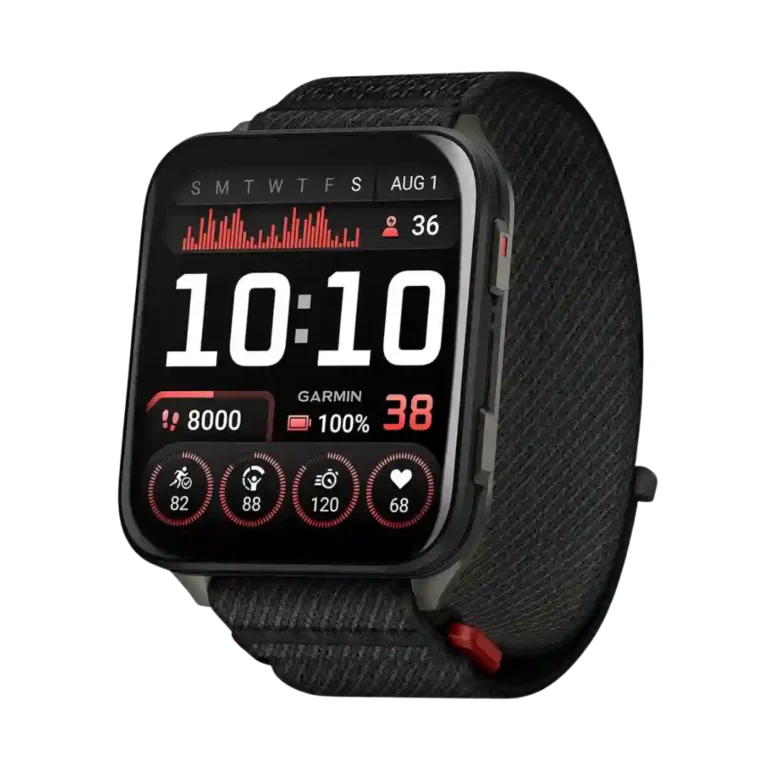
The Garmin Venu X1 lands as a comfort-first Garmin with a genuinely standout display. Reviewers repeatedly praise the thin, light case, huge AMOLED screen, rich mapping, golf tools, and deep training and recovery metrics. The tradeoff is that Garmin’s usual endurance-watch strengths are trimmed: always-on battery life is short by Garmin standards, physical controls are limited, and many reviews call out missing LTE, ECG, and multiband GPS. Its smartwatch side is useful for calls, music, payments, notifications, and voice features, but still does not match Apple-style app depth or phone integration.
Compared in Reviews
Products reviewers directly compared with this model, grouped into quick takeaways.
- Better: features and battery life The reviewer says the cheaper Forerunner 970 offers more latest features and arguably better battery life.
- Better: overall watch capabilities The reviewer concludes the Forerunner 970 is a better watch but prefers the Venu X1's fit and feel.
- Alternative: athlete features versus design The reviewer presents the Forerunner 970 as a lower-cost internal alternative with more hardcore-athlete features.
- Worse: navigation The reviewer says Garmin's built-in mapping gives trail users an advantage over the Apple Watch Ultra 2.
- Similar: design and feel The reviewer calls it Garmin's closest Apple Watch-like experience while stressing it is still a Garmin.
Feature Scorecards
Pros
-
Pairing reliability evidence is positive for Garmin accessories and golf sensors/rangefinders, though it appears in only two reviews.
-
Watch face evidence is limited but positive, with one reviewer calling the main X1 watchface a favorite.
-
Mapping and navigation are a major advantage, especially on the large square display, with strong praise for offline maps, routing, golf maps, and ClimbPro-style features.
-
Display quality is the standout feature across nearly every review: reviewers praise the huge AMOLED panel, sharpness, color, and map readability.
-
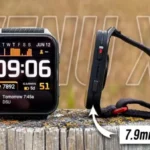
Comfort is the strongest point of consensus: reviewers repeatedly say the thin, light body is easy to wear all day, during workouts, and overnight.
-
Fit evidence is positive but narrow, centered on the thin, flat, lightweight case and strap helping it sit securely and disappear on the wrist.
-
Brightness is one of the watch's strengths: reviewers repeatedly describe the AMOLED screen as very bright, vibrant, and easy to read.
-
Workout variety is excellent, with repeated evidence of 100+ sports, multisport, golf, gym, running, swimming, and advanced training modes.
-
Safety features are a quiet strength, centered on the built-in flashlight, red/strobe modes, and visibility or signaling use cases.
-
Fitness tracking accuracy gets direct support from swim/lap tracking evidence in one review, while broader accuracy is covered by heart-rate and GPS attributes.
-
Coaching features are a major strength, with repeated praise for Training Readiness, Training Status, Garmin Coach, endurance metrics, and race/training tools.
-
Outdoor visibility is strong, with multiple reviewers saying the screen remains readable in bright sun or outdoor light.
-
Wellness insights are a clear Garmin strength, with useful Body Battery, recovery, sleep, and ecosystem motivation evidence.
-
Durability evidence is positive, with reviewers citing sapphire glass, titanium, and watches surviving swimming, hikes, bags, and gym use without obvious damage.
-
Materials quality is strong, with repeated references to titanium, sapphire, fabric/nylon bands, and premium construction.
-
Recovery insights are widely praised, with frequent references to Body Battery, Training Readiness, sleep recommendations, HRV, and recovery outlooks.
-
Health tracking is broadly praised for Garmin's deep metrics and sensors, though the evidence is stronger for overall capability than for every individual metric.
-
Build quality is consistently strong, with reviewers calling out the titanium back, sapphire glass, reinforced polymer, and overall premium construction.
-
Customization is good for Garmin-style controls, data screens, fonts, watch faces, and widgets, with reviewers calling several options easy to adjust.
-
Onboard music storage is a strength, especially with repeated 32GB storage mentions and offline playback support.
-
Sleep tracking is helped by the comfortable thin design and is generally described as useful or reliable for overnight wear and recovery metrics.
-
Bluetooth and sensor connectivity are supported for accessories, headphones, and external sensors, with reviewers generally treating this as a solid part of the training ecosystem.
-
Heart-rate accuracy is mostly strong, with chest-strap comparisons and positive sensor comments, but one golf-focused review reports treadmill warm-up issues.
-
Stress tracking is commonly listed as part of Garmin's wellness suite and recovery calculations, but few reviews test it independently.
-
Music support is useful, with offline Spotify/Amazon/Deezer-style playback and controls repeatedly mentioned.
-
Charging speed is acceptable to good in the limited evidence, with one review reporting a quick jump from 5% to 66% in 40 minutes.
-
Blood oxygen or SpO2 tracking is repeatedly listed as part of Garmin's health sensor package, but the reviews offer little detailed accuracy testing for that metric specifically.
-
Setup and companion-app use are described as easy, with Garmin Connect route/app usage mentioned, though detailed app-quality evidence is limited.
-
GPS accuracy is generally good to excellent in normal conditions, but many reviewers note the lack of multiband/dual-frequency GPS as a limitation.
-
Software smoothness is mostly positive in setup and general operation, though some reviewers notice lag or dated-feeling software.
-
The included nylon/ComfortFit band is widely praised for comfort and adjustability, with caveats about fabric getting wet, dirty, or needing time to dry.
-
Style and design are polarizing: many praise the slim modern look, while others think the square case looks too much like an Apple Watch clone.
-
Step counting evidence is sparse; one transcript references a high step total rather than a rigorous accuracy test.
-
Wi-Fi evidence is limited but positive for improving Connect IQ access and faster music downloads.
-
Bluetooth call handling is available through the speaker and microphone, and several reviewers found it useful, though one transcript reports limited app-call handling.
-
Reviewers cite useful automatic detection in movement, golf shot tracking, and rep recognition, though the rep-counting evidence is more mixed than the golf evidence.
-
Contactless payments are present through Garmin Pay or NFC, but one reviewer notes bank support limitations.
-
Touchscreen responsiveness is generally good on the big display, but reviewers mention sweaty, wet, or edge-tap limitations.
-
Voice features are present and sometimes useful for timers, notes, or commands, but reviewers often describe them as less seamless or less smart than Apple.
-
Water resistance is adequate for swimming and showers at 5ATM/50m, but reviewers repeatedly note it is not a dive or hardcore water-sports watch.
-
Menu navigation is mixed: some reviewers get used to the flow, while others find swiping or the reduced-button layout less intuitive.
-
Smartwatch features are better than many sports watches but still behind Apple/Wear OS, mainly because LTE, richer apps, and deeper phone integration are missing.
-
Cross-platform evidence is limited, but one review notes Android-specific texting while still allowing basic notifications elsewhere.
Cons
-
Battery life is better than mainstream smartwatches in raise-to-wake use, but reviewers consistently flag always-on mode and GPS-heavy use as major tradeoffs versus other Garmins.
-
Value is mixed: reviewers see fair value for Garmin fans and premium golf/fitness users, but casual buyers may find the $799 price hard to justify.
-
Notifications are usable but basic, with some dismissal benefits and iOS/true-smartwatch limitations noted.
-
Reliability is mixed: one review reports crashes/resets, another worries about post-launch updates, while another describes HR/GPS reliability positively.
-
The user interface is easier to read on the large screen, but several reviewers still find Garmin's UI dated, confusing, or less polished than rivals.
-
The operating system experience is mixed: it can feel redesigned and capable, but reviewers still compare it unfavorably with Apple or call it dated.
-
The two-button layout is a common compromise: it keeps the watch slim, but many Garmin users miss extra physical controls and shortcuts.
-
Garmin Connect IQ and a few app options help, but reviewers repeatedly note that the ecosystem is thinner than Apple or Google and some apps/features are platform-limited.
-
Third-party app support is limited compared with true smartwatches, though Garmin Connect IQ adds watch faces, data fields, and some apps.
-
Charging is functional but not especially loved: reviewers mention Garmin's proprietary cable and, in one case, a very short cable, while fabric-band wetness also affects daily convenience.
-
Only one reviewer directly questioned calorie math/usefulness, so the evidence is limited and mildly negative.
-
Size options are limited: reviewers note the watch comes in one large size, which may not suit smaller wrists.
-
ECG is the most mixed-but-mostly-negative attribute: most reviewers say it is missing, while one transcript says ECG is included.
-
LTE is consistently absent; reviewers repeatedly call out no cellular/LTE support as a smartwatch limitation.
Compared With Category Average
Compared with other Smart Watch, this product is above average in onboard music storage, mapping and navigation, voice assistant quality, below average in battery life, ECG functionality, LTE connectivity.
| Attribute | This product | Category average | Difference |
|---|---|---|---|
| onboard music storage | 4.3 | 2.8 | +1.5 |
| mapping and navigation | 4.8 | 3.6 | +1.2 |
| battery life | 3.4 | 4.2 | -0.8 |
| ECG functionality | 1.3 | 2.3 | -1.0 |
| voice assistant quality | 3.6 | 2.6 | +1.0 |
| LTE connectivity | 1.0 | 1.9 | -0.9 |
| call handling | 3.9 | 3.1 | +0.8 |
| button controls | 3.1 | 3.9 | -0.8 |
FAQ
Is the Garmin Venu X1 comfortable enough for sleep tracking?
Yes. Multiple reviewers praised the very thin, light case and said the comfort makes overnight wear and recovery data easier to use.
How good is the Venu X1 display?
The display is the most consistently praised feature. Reviewers describe the large AMOLED screen as bright, sharp, colorful, and especially useful for maps, golf, and workout data.
Does the Venu X1 have LTE or cellular connectivity?
No. Reviewers repeatedly note the lack of LTE or cellular support, which limits it compared with true smartwatches when your phone is not nearby.
Is battery life a strength or weakness?
Both, depending on context. It can last far longer than many smartwatches in raise-to-wake use, but always-on display and long GPS activities reduce battery life substantially by Garmin standards.
Are maps and navigation good on the Venu X1?
Yes. Reviewers repeatedly praise offline maps, routing, golf maps, and ClimbPro-style navigation, with the large square display making map data easier to read.
Is the Venu X1 a good value?
Value is mixed. Reviewers see it as compelling for dedicated Garmin users who will use the premium training, golf, and map features, but expensive for casual smartwatch buyers.
Consider This Instead
If you want better size options
Choose Google Pixel Watch 3. It scores 4.7 vs 2.3 for size options, with a 4.2 overall score.
If you want better battery life
Choose Suunto Vertical. It scores 4.9 vs 3.4 for battery life, with a 3.8 overall score.
If you want better button controls
Choose Garmin Forerunner 970. It scores 4.8 vs 3.1 for button controls, with a 4.0 overall score.
If you want better app ecosystem
Choose Apple Watch Ultra 2. It scores 4.9 vs 2.9 for app ecosystem, with a 4.3 overall score.
Overall Top Smart Watch Alternatives
Good if you want the most rugged Apple Watch, brighter outdoor screen, better battery, LTE, and top apps. Skip it if you need Garmin-like mapping, recovery analytics, smaller sizing, or...
Pros: display quality, heart rate accuracy
Cons: cross-platform compatibility, recovery insights
Choose the Galaxy Watch 6 for a polished Android smartwatch with a bright screen, strong apps, and broad health tracking. Skip it if battery life, iPhone support, or full non-Samsung...
Pros: outdoor visibility, workout tracking variety
Cons: cross-platform compatibility, battery life
Good if you need a rugged Garmin with deep outdoor, tactical, GPS, training, and battery features. Skip it if you want a cheaper lifestyle watch or do not need the...
Pros: materials quality, durability
Cons: LTE connectivity, value for money
Good if you want premium golf maps, virtual caddie tools, health metrics, music, notifications, and long battery life in one watch. Skip it if you only need basic yardages or...
Pros: pairing reliability, brightness
Cons: software smoothness, user interface