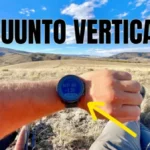
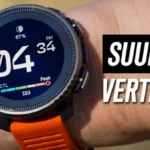
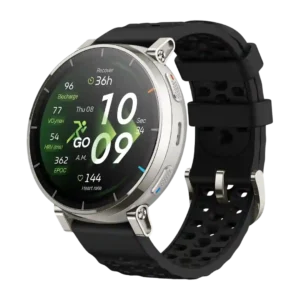
- More expensive: budget alternative The older Suunto 9 Peak was described as a cheaper alternative for Suunto shoppers.
- Older model: battery life The reviewer found the Vertical a major battery-life upgrade over the Suunto 9 Peak.
Suunto Vertical Review
Bottom Line
Choose the Suunto Vertical for long battery life, offline maps, and excellent GPS on multi-day outdoor trips. Skip it if you need reliable wrist HR, onboard music, payments, or a smoother smartwatch feel.
Best for hikers, trail runners, cyclists, mountaineers, and multi-day outdoor users who value battery life, offline maps, durable hardware, and accurate GPS more than full smartwatch features.
Not for buyers who prioritize reliable wrist HR during workouts, onboard music, contactless payments, ECG, voice assistant features, LTE, or a fast smartwatch-style interface.
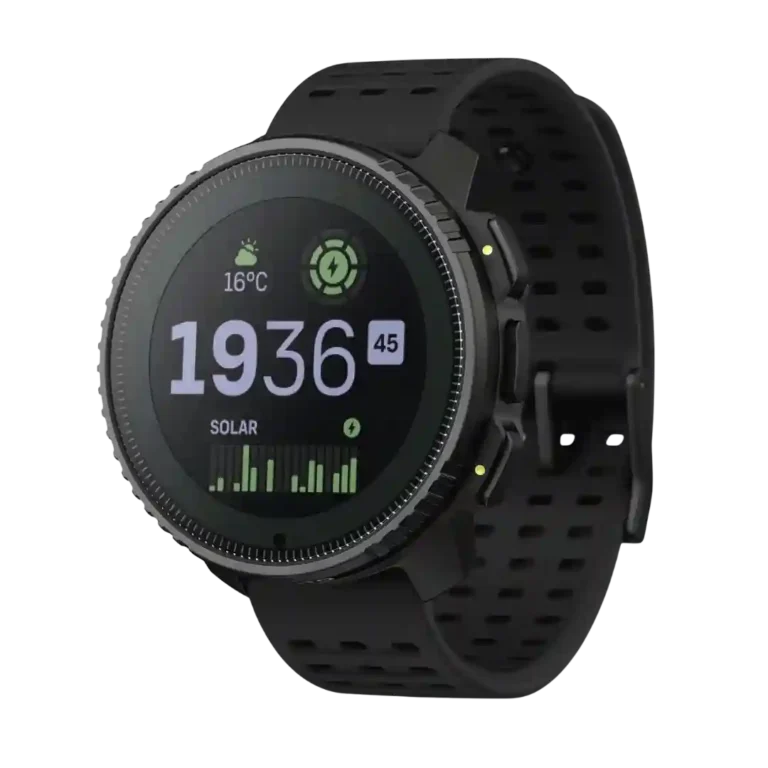
The Suunto Vertical stands out as an outdoor-first GPS watch built around endurance, mapping, and accuracy. Reviewers consistently praised its battery life, rugged construction, offline maps, and land-based GPS performance, making it especially compelling for hiking, trail running, cycling, and multi-day trips. The tradeoff is that it behaves more like a focused adventure tool than a full smartwatch: wrist heart-rate accuracy drew repeated criticism, open-water swim tracking had issues in one review, and features like onboard music, payments, ECG, and richer app support are limited or absent. Its interface is understandable, but lag and touchscreen responsiveness keep it from feeling as polished as some rivals.
Compared in Reviews
Products reviewers directly compared with this model, grouped into quick takeaways.
- Worse: hiking and trail use For hikes, trail runs, and mountain biking, the reviewer put the Suunto Vertical ahead of the Apple Watch Ultra.
- More expensive: battery value The reviewer said the Vertical challenged the more expensive Garmin Enduro on battery value.
Feature Scorecards
Pros
-
Battery life was the clearest strength, with reviewers reporting week-plus daily use, strong GPS endurance, and class-leading longevity.
-
Materials quality was a strength thanks to sapphire glass plus titanium or steel construction.
-
Durability evidence was strong, citing sapphire glass, MIL-level testing, and long-term rough-use confidence.
-
Workout variety is broad, with reviewers citing more than 90 modes, up to 95 sport modes, and many sport profiles.
-
Reliability was supported by long-term battery stability and a reviewer describing it as dependable.
-
Build quality was repeatedly described as premium, rugged, sturdy, and tank-like.
-
GPS accuracy received broad agreement as a major strength, with reviewers repeatedly calling the tracks accurate or best-in-class.
-
The Suunto app was strongly praised for route planning, visual data, and a simpler organization than some competitors.
-
Menu navigation was described as intuitive and easy, with key settings and data not buried too deeply.
-
Style and design were widely liked, with reviewers praising the clean, rugged, premium Suunto look.
-
Fit was praised by one reviewer who found the watch lighter and less noticeable than a larger previous GPS watch.
-
Display quality improved markedly, with a larger, readable MIP screen, though it is less flashy than AMOLED rivals.
-
Recovery insights were viewed positively through Suunto app metrics, training load, fitness change, and recovery guidance.
-
Third-party app support is useful through SuuntoPlus, partner apps, and an app store reviewers felt had caught up.
-
Customization is strong across widgets, watch faces, activity profiles, buttons, and home-screen data.
-
Brightness improved versus older Suunto models, with reviewers praising the backlight and quick wrist illumination.
-
Water resistance was treated as suitable for swimming/snorkeling, with reviewers citing 100m specs and shallow-water use.
-
Band feedback was positive overall: reviewers liked the comfort, standard 22mm compatibility, ventilation, and secure strap design.
-
Comfort was good for a large outdoor watch, with reviewers saying it was not chunky and could be worn or slept in comfortably.
-
Outdoor visibility was mostly strong in bright sun, though one long-term reviewer reported glare in some cloudy situations.
-
Button feedback was mostly positive for gloves, solidity, and simplicity, though one reviewer wanted a five-button layout.
-
Pairing and syncing evidence was positive for fast satellite acquisition and quick app syncing.
-
Calorie estimates were viewed as more realistic than another tested watch in one review.
-
Charging speed was presented positively in the review evidence, with a full charge cited at about 90 minutes.
-
Wellness insights include HRV and broader training/recovery context rather than deep medical-style health features.
-
Reviewers saw a useful SuuntoPlus and partner-app ecosystem, but one noted that only one SuuntoPlus app can run at a time.
-
Coaching and training tools include VO2-related tests, Suunto Coach, and personalized training/recovery guidance.
-
The interface was generally understandable and organized, though hardware/software lag held it back.
-
Wi-Fi enables map downloads, but reviewers noted constraints such as needing normal Wi-Fi, a charger, and time.
-
Safety-related tools include storm alerts, weather alerts, and sunset information, with storm accuracy described as useful but imperfect.
-
Blood oxygen was confirmed as an available widget/tracking view, but reviewers did not deeply validate SpO2 accuracy.
-
The route-planning experience extends beyond the phone, with one reviewer noting tablet and macOS desktop use.
-
Stress tracking appears through Suunto's resources metric, tying stress and recovery into energy-level feedback.
-
Sleep tracking was mixed: several reviewers liked sleep/wake timing, while another distrusted motion-based sleep data.
-
Health tracking evidence was limited but generally positive for training data realism, while other health metrics were mixed.
-
Bluetooth support covers common external sport sensors, including heart-rate straps, though sensor management is not especially advanced.
-
Music controls are available for controlling phone audio, but the feature does not extend to onboard playback.
-
Watch-face options exist and can be customized, but one reviewer still wanted better watch faces.
-
The operating system was considered usable and intuitive enough, but not especially polished.
Cons
-
Smartphone notifications work, but one reviewer noted weak emoji support.
-
Value was mixed: the watch is expensive, but some reviewers found it competitive versus Garmin and COROS alternatives.
-
General fitness tracking was strong on land, but open-water swim tracking was a serious weak spot in one in-depth review.
-
Charging convenience was mixed: the magnetic charger attaches easily, but reviewers disliked proprietary/no-wireless charging and one reported charging trouble.
-
Software smoothness was a recurring complaint, though later software was described as noticeably improved.
-
Touchscreen behavior was mixed: usable in rain and sweat, but repeatedly criticized for lag.
-
Smartwatch features are limited compared with broader smartwatches, especially for music, payments, and richer smart functions.
-
Heart-rate accuracy was the most consistent weakness, especially for sports, with several reviewers recommending or implying a chest strap.
-
Size options are limited, with one-size hardware and variation mainly by materials or straps.
-
Onboard music storage is absent, and multiple reviewers called that a downside or missed opportunity.
-
Contactless payments are a clear miss, with reviewers explicitly noting no NFC or tap-to-pay functionality.
-
ECG is not included, and one reviewer grouped it with other missing smartwatch-style features.
Compared With Category Average
Compared with other Smart Watch, this product is above average in third-party app support, battery life, below average in contactless payments, heart rate accuracy, onboard music storage.
| Attribute | This product | Category average | Difference |
|---|---|---|---|
| contactless payments | 1.0 | 2.9 | -1.9 |
| heart rate accuracy | 2.3 | 3.9 | -1.6 |
| onboard music storage | 1.3 | 2.9 | -1.6 |
| ECG functionality | 1.0 | 2.3 | -1.3 |
| third-party app support | 4.4 | 3.1 | +1.2 |
| size options | 2.0 | 3.2 | -1.2 |
| software smoothness | 2.8 | 3.9 | -1.1 |
| battery life | 4.9 | 4.2 | +0.7 |
FAQ
How good is the Suunto Vertical battery life?
Battery life is the product's strongest point in the review evidence. Reviewers reported week-plus everyday use, long GPS endurance, and class-leading battery performance, especially with solar exposure.
Is the GPS accuracy reliable?
Yes for land-based use. Reviewers repeatedly described the dual-band GNSS tracks as accurate, clean, Garmin-like, or among the best they had tested.
Is the wrist heart-rate sensor accurate?
It is the main weakness. Multiple reviewers found wrist-based heart rate inaccurate or inconsistent during sports, and some recommended using an external chest strap or Bluetooth heart-rate sensor.
Does the Suunto Vertical have offline maps?
Yes. Reviewers praised the downloadable offline maps, topographic context, route planning, and navigation tools, while noting that the maps are not fully routable like some Garmin maps.
Does it support music storage or payments?
No onboard music storage was reported, though phone music controls are available. Reviewers also explicitly noted missing NFC/contactless payments.
Who is the Suunto Vertical best suited for?
It fits outdoor athletes and adventurers who want a dependable GPS tool for hiking, trail running, cycling, or multi-day trips. It is less ideal for someone who wants a richer general-purpose smartwatch.
Consider This Instead
If you want better contactless payments
Choose Apple Watch SE 3. It scores 4.8 vs 1.0 for contactless payments, with a 4.1 overall score.
If you want better onboard music storage
Choose Huawei Watch Fit 4. It scores 4.7 vs 1.3 for onboard music storage, with a 4.1 overall score.
If you want better ECG functionality
Choose Apple Watch Series 11. It scores 4.5 vs 1.0 for ECG functionality, with a 4.2 overall score.
If you want better heart rate accuracy
Choose Apple Watch Ultra 2. It scores 4.9 vs 2.3 for heart rate accuracy, with a 4.3 overall score.
Overall Top Smart Watch Alternatives
Good if you want the most rugged Apple Watch, brighter outdoor screen, better battery, LTE, and top apps. Skip it if you need Garmin-like mapping, recovery analytics, smaller sizing, or...
Pros: display quality, heart rate accuracy
Cons: cross-platform compatibility, recovery insights
Choose the Galaxy Watch 6 for a polished Android smartwatch with a bright screen, strong apps, and broad health tracking. Skip it if battery life, iPhone support, or full non-Samsung...
Pros: outdoor visibility, workout tracking variety
Cons: cross-platform compatibility, battery life
Good if you need a rugged Garmin with deep outdoor, tactical, GPS, training, and battery features. Skip it if you want a cheaper lifestyle watch or do not need the...
Pros: materials quality, durability
Cons: LTE connectivity, value for money
Good if you want premium golf maps, virtual caddie tools, health metrics, music, notifications, and long battery life in one watch. Skip it if you only need basic yardages or...
Pros: pairing reliability, brightness
Cons: software smoothness, user interface