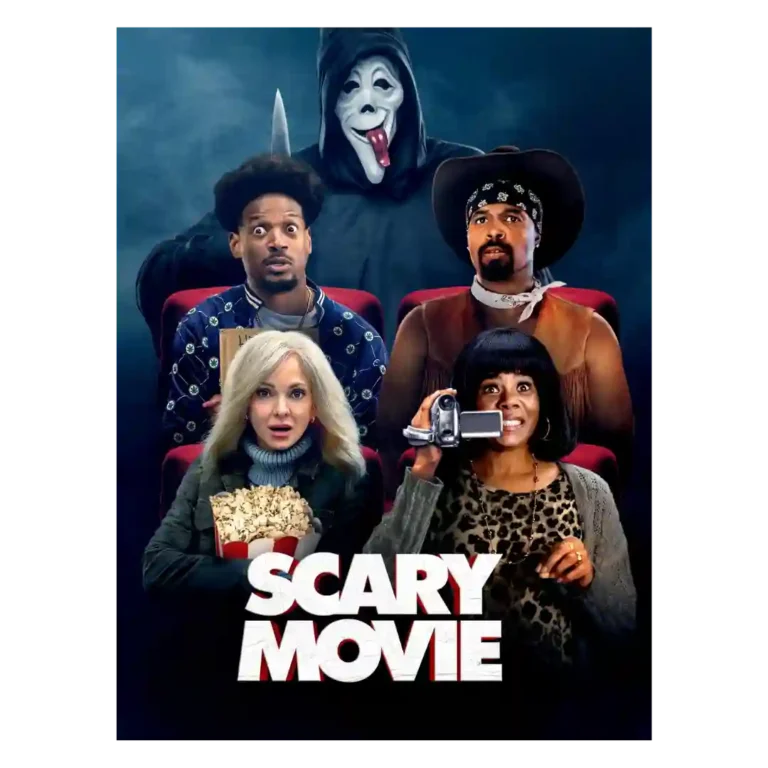
Scary Movie Review
Bottom Line
Choose it for Anna Faris, Regina Hall, franchise nostalgia, and a few inspired visual gags. Skip it if you need consistent laughs, a coherent story, or sharper satire; most reviewers found the jokes stale, uneven, and overly dependent on recognition.
Best for established fans of the early Wayans entries who enjoy crude, rapid-fire parody and want a nostalgic cast reunion.
Skip it if you want a coherent story, consistently clever satire, restrained sexual humor, or sensitive handling of gender and generational politics.
Scary Movie works best as a nostalgic cast reunion rather than a sharp modern parody. Anna Faris, Regina Hall, Olivia Rose Keegan, and several cameos repeatedly earn praise, and reviewers point to the opening, background sight gags, fourth-wall jokes, and final act as the clearest highlights. The problem is consistency. Across the reviews, the rapid-fire approach produces far more misses than hits, while the Scream-derived story dissolves into disconnected sketches. Many critics also find the social commentary dated, toothless, or mean-spirited, especially around gender and younger audiences. Fans of the first two films may still enjoy the familiar rhythms and committed performers, but anyone expecting the freshness or precision of a strong spoof is likely to find the revival overstuffed, repetitive, and only intermittently funny.
Feature Scorecards
Summary
31 reviewed features- Very positive 4.5-5.0 19% 6 features
- Positive 3.5-4.4 23% 7 features
- Neutral 2.5-3.4 6% 2 features
- Negative 1.5-2.4 29% 9 features
- Very negative below 1.5 23% 7 features
Pros
-
Anna Faris and Regina Hall remain the movie’s strongest leads, repeatedly creating laughs through timing, expression, and total commitment.
-
Cindy and Brenda’s rapport remains one of the movie’s strongest pleasures, and the returning ensemble often clicks when allowed to share scenes. The movie does not give that chemistry enough room.
-
The late action-comedy material gives Cindy a welcome showcase, with energetic fighting and physical gags that improve the final act.
-
The costumes closely mirror the Scream requel’s character styling, helping the visual parody register immediately.
-
The younger ensemble and cameo players are energetic and game, with several charismatic turns helping individual sketches land.
-
The movie convincingly imitates the look of its horror targets, with sets, framing, and visual identities that often resemble the source films closely.
-
The final stretch is consistently stronger than the middle, with darker swings, legacy-cast payoffs, and a more focused climax that finally delivers some of the movie’s biggest laughs.
-
The overall experience depends strongly on tolerance for crude, absurd, deliberately lowbrow comedy. Fans can have a relaxed, enjoyable time, while others may find the long stretches between strong jokes exhausting.
-
The recreated horror locations are impressively recognizable and often make the parodies funnier before a joke is even delivered.
-
The younger characters receive more setup than expected and can feel better defined than comparable legacy-sequel characters, although many are still reduced to one-note traits.
-
The cinematography accurately recreates recognizable horror imagery and helps the visual parodies read immediately.
-
The music choices help the parodies resemble their source films and contribute to the movie’s strongest stylistic imitations.
-
The committed cast is the clearest strength, especially the returning leads and Olivia Rose Keegan. Some performers are underused or trapped in tired routines, but they frequently make thin material more watchable.
Cons
-
The movie is built primarily for viewers who already enjoy the first two entries and early-2000s Wayans humor. Newcomers and younger audiences are less likely to connect with its references, nostalgia, and deliberately dated style.
-
The 96-minute length is compact and welcome on paper, but weak comic rhythm can still make the movie feel slow despite its short running time.
-
The comedy is wildly inconsistent. Inspired sight gags, fourth-wall jokes, and committed delivery earn real laughs, but the rapid-fire barrage contains far more stale, obvious, stretched, or recycled punchlines.
-
The central story follows the modern Scream template extremely closely, often feeling more like a crude restaging than an inventive parody.
-
The relentless sexual material is often judged excessive, repetitive, or strangely ineffective rather than genuinely transgressive or funny.
-
The basic Ghostface setup is easy to grasp, but the movie repeatedly abandons it for disconnected sketches, crowded cameos, and characters who vanish for long stretches.
-
Michael Tiddes keeps the references visually legible but struggles to impose rhythm, focus, or connective tissue on the overloaded material.
-
The handling of gender, pronouns, queer identities, and Gen-Z politics is the movie’s most contentious weakness. Several jokes feel dated or cruel, though a minority view the everyone-is-a-target approach as self-aware and inclusive.
-
The reboot-sequel premise and occasional meta joke show promise, but much of the movie feels like a recolored collection of old tricks and recognizable scenes without a fresh comic angle.
-
The script has a few clever concepts but relies too heavily on recognition, repeated bits, and surface-level references. Many setups are stretched past their punchlines or never develop into proper jokes.
-
The movement from setup to setup feels bumpy and abrupt, making the film play like loosely assembled sketches rather than a smoothly escalating comedy.
-
The Scream-inspired family storyline offers a workable spine, but it quickly dissolves into a nonsensical chain of sketches with little investment, continuity, or character consequence.
-
The opening and final act move best, while the middle loses momentum through long, repetitive sketches and abrupt detours. Even the short runtime can feel laborious when jokes fail.
-
The scattered laughs and nostalgic reunion are not enough to make the film an easy theatrical recommendation for most viewers.
-
As a horror spoof, the movie often functions more like a reference reel than a complete comedy. It recognizes many recent films but rarely develops a sharp point of view about them.
-
The satire rarely develops a clear point of view, leaving the social and industry commentary feeling toothless, confused, or needlessly hostile.
-
The movie has little thematic substance beyond nostalgia, franchise self-commentary, and broad complaints about modern culture.
-
The film lacks a stable tonal throughline, jumping from nostalgia to gross-out comedy, political provocation, and unrelated parody without smooth transitions.
Cast & Creators
-
ActorTeyana Taylor’s self-mocking cold-open performance is widely treated as an early high point, combining physical confidence, sharp timing, and star-persona jokes.
-
SaraOlivia Rose Keegan is a standout new addition, capturing Cindy’s breathy comic rhythm while giving Sara her own energetic presence.
-
CindyAnna Faris remains one of the franchise’s most reliable comic weapons, selling weak material through deadpan sincerity, physical commitment, and precise line delivery.
-
ActorHeidi Gardner delivers a sharp, specific send-up of the detective archetype and makes strong use of her limited screen time.
-
BrendaRegina Hall brings expressive, fearless comic timing to Brenda and repeatedly lifts scenes that would otherwise fall flat.
-
JackCameron Scott Roberts gives Jack a playful, committed parody performance and nails the mannerisms of the character type he is spoofing.
-
MichaelKenan Thompson turns a weak setup into a memorable payoff, giving the Michael parody one of its better punchlines.
-
ActorKim Wayans makes her brief nurse cameo memorable by leaning fully into the character’s hostile comic energy.
-
DirectorMichael Tiddes handles the returning performers competently and captures why the ensemble became comedy favorites, though the movie around them often lacks focus.
-
ElleRuby Snowber makes a lively impression in a showy supporting role and stands out among the new cast.
-
RayShawn Wayans earns occasional chuckles through sheer commitment, though Ray’s running joke feels dated and one-dimensional.
-
DoofyDave Sheridan’s return as Doofy is more uncomfortable than funny, reviving a caricature that feels especially ill-suited to the new film.
-
ShortyMarlon Wayans brings familiar energy to Shorty, but the overextended stoner routine often feels repetitive and less funny than it once did.
Compared With Category Average
Compared with other Movies, this product is below average in genre satisfaction, theme depth, message quality.
Summary
8 compared features- Above average 0.4+ pts higher 0% 0 features
- Same as average within 0.3 pts 0% 0 features
- Below average 0.4+ pts lower 100% 8 features
| Attribute | This product | Category average | Difference |
|---|---|---|---|
| genre satisfaction | 1.0 | 4.0 | -3.0 |
| theme depth | 1.0 | 3.8 | -2.8 |
| message quality | 1.0 | 3.8 | -2.8 |
| tonal consistency | 1.0 | 3.7 | -2.7 |
| cultural representation | 1.6 | 4.0 | -2.4 |
| directing quality | 1.8 | 4.0 | -2.2 |
| story quality | 1.4 | 3.3 | -1.9 |
| originality | 1.6 | 3.5 | -1.9 |
FAQ
Is Scary Movie (2026) actually funny?
It is very inconsistent. A few visual gags, cameos, fourth-wall jokes, and the final act earn strong laughs, but most critics found the overall hit rate low.
What is the best part of the movie?
The returning cast is the most reliable strength, especially Anna Faris and Regina Hall, while Olivia Rose Keegan and Teyana Taylor also receive notable praise.
Do I need to know recent horror movies?
Familiarity with Scream, The Substance, Get Out, Sinners, Longlegs, Terrifier, and other recent titles helps because many jokes depend on recognizing the reference.
Is it family-friendly?
No. The reviews describe explicit sexual jokes, nudity, gross-out material, strong language, violence, and identity-based humor that may be uncomfortable or offensive.
Who is most likely to enjoy it?
Longtime fans of the first two films and viewers who enjoy crude, absurd, early-2000s-style Wayans comedy have the best chance of enjoying the reunion.
Sample Expert Reviews We Analyzed
These are a few of the reviews included in our analysis.
Video Reviews
Article Reviews
After 25 years the Wayans Brothers return to spoof the ever changing modern horror landscape from Get Out to Sinners with the promise of...
- Review score
- 3.8
Looking for a review of "Scary Movie?" The Movie Buff is your source for reviews, movie news, and more.
- Review score
- 3.8
The new 'Scary Movie' is a nostalgic trip down memory lane blending horror commentary with inconsistent jokes that don’t always land.
- Review score
- 3.4
If this Scary Movie doesn’t convince them that it’s time to box up this saga once and for all, we don’t know what will.
- Review score
- 2.9
The Wayan brothers return with another parody of slasher flicks and horror-film clichés. And this time, it's personal.
- Review score
- 3.0
Compared in Reviews
Products reviewers directly compared with this model, grouped into quick takeaways.
Scary Movie 5
- Worse: overall quality Even a mixed reviewer considers it preferable to the fifth film.
- Worse: overall quality It is still judged better than the franchise’s widely disliked fifth installment.
Naked Gun reboot
- Better: humor It is substantially less funny than the recent spoof reboot.
Scary Movie 2
- Better: humor The reviewer enjoyed it but laughed less than during the early sequel.
Consider This Instead
If you want better message quality
Choose Honeyjoon. It scores 4.7 vs 1.0 for message quality, with a 4.2 overall score.
If you want better theme depth
Choose Maddie’s Secret. It scores 4.8 vs 1.0 for theme depth, with a 4.0 overall score.
If you want better genre satisfaction
Choose Romería. It scores 5.0 vs 1.0 for genre satisfaction, with a 4.5 overall score.
If you want better originality
Choose The Invite. It scores 5.0 vs 1.6 for originality, with a 4.5 overall score.
Top Movies to Consider
Best for a profound, formally inventive meditation on grief, memory, and the ethics of filming family. Skip it if intensely personal addiction material, a 114-minute runtime, or occasional repetition will...
Pros: plot originality, ending satisfaction
Cons: runtime, pacing
Best for a tender, accessible portrait that lets Oliver’s poetry, friends, and archival voice carry the experience. Skip it if you want a brisk, deeply investigative biography; the calm rhythm...
Pros: romance quality, faithfulness to source material
Cons: none
Best for joyful music, rare footage, candid interviews, and a layered Maurice White portrait. Skip it if you want a tightly focused, unconventional reappraisal that lingers on performances instead of...
Pros: ending satisfaction, drama quality
Cons: runtime, originality
Best for razor-sharp adult comedy, exceptional ensemble work, and a surprisingly moving marriage story. Skip it if talk-heavy chamber pieces, explicit relationship discussions, or an occasionally intrusive string score wear...
Pros: plot originality, lead performance
Cons: runtime, score quality