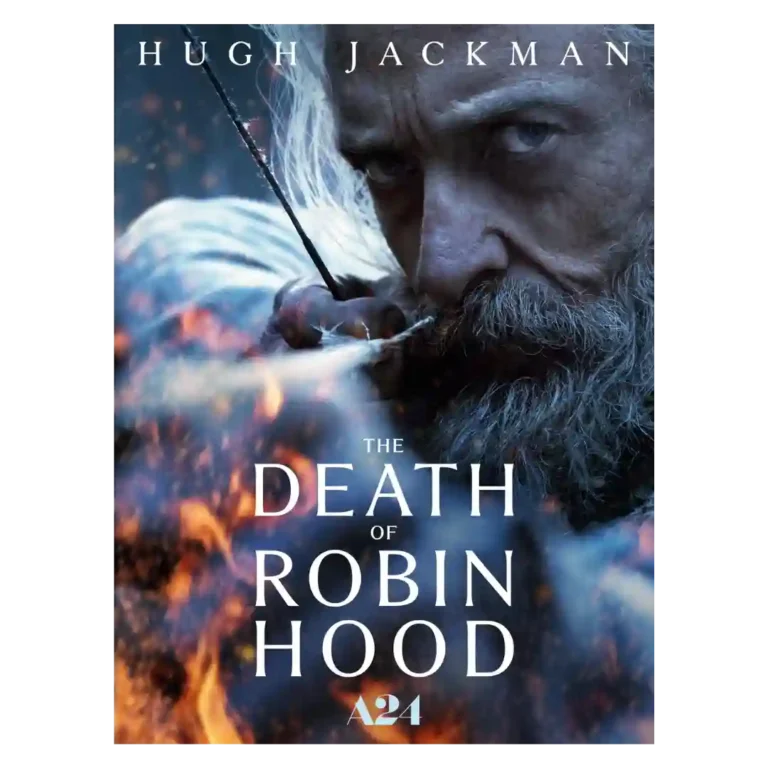
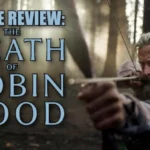
Choose it for Hugh Jackman’s commanding performance, striking medieval imagery, and a thoughtful redemption story. Skip it if graphic child-killing, relentless gloom, or a very slow second half will outweigh the craft.
Best for
Best for viewers who enjoy austere period dramas, revisionist folklore, strong acting, and morally serious stories about guilt and redemption. Its visual and sound design reward theatrical viewing.
Not for
Skip it if you want a traditional swashbuckling Robin Hood adventure, brisk pacing, humor, or family-friendly action. The child deaths and graphic gore are especially difficult.
Verdict
Michael Sarnoski’s revisionist Robin Hood is a visually formidable, morally severe character study anchored by one of Hugh Jackman’s strongest dramatic performances. Reviewers consistently praise the textured cinematography, mournful score, committed ensemble, and the bold decision to replace swashbuckling heroics with guilt, mortality, and the cost of violence. The divide comes after the brutal opening: admirers find the quieter priory section haunting and emotionally rich, while detractors see an overlong, underwritten slog that withholds too much of Robin’s inner life. The graphic violence is unusually punishing, and the film’s humorless tone narrows its audience. At its best, it is a beautiful, thoughtful dismantling of a legend; at its worst, its solemnity feels like a substitute for dramatic momentum.
The cinematography is one of the clearest strengths, with ravishing landscapes, textured 35mm imagery, expressive aspect-ratio changes, and striking contrasts between mud-dark violence and island light.
The visual style is a major consensus strength, moving from volcanic darkness, mud, and fire to pastoral light, sea, and stone. The tactile compositions give the film a distinctive, mournful beauty.
The cast is broadly praised for committed, emotionally grounded work, even by reviewers who disliked the film. The performances often keep the severe material watchable when the story stalls.
Jim Ghedi’s folk-inflected score is widely praised for its mournful power. It deepens the old-world atmosphere and gives the film emotional lift when the drama turns sparse.
The opening combat is savage, messy, and physically convincing rather than heroic or polished. Reviewers admired the stunt work and impact, though the brutality can be exhausting.
The film’s richest material examines how stories reshape violence, whether redemption can be earned, and what a legacy costs. Many reviewers find those themes compelling even when the narrative treatment feels incomplete.
Reviewers consistently recognize the film as a fresh, daring inversion of the familiar outlaw legend. Its anti-heroic, anti-action approach feels distinctive even when the execution frustrates.
The rough fabrics, weathered clothing, and old-world details help sell the medieval setting. The costumes blend naturally with the earthy production design rather than feeling decorative.
Despite its contemplative second half, the film often preserves a sense that Robin’s past will catch up with him. Reviewers praised the twists and sustained unease even when action recedes.
Hugh Jackman’s lead is widely regarded as the film’s anchor, combining physical weariness, menace, regret, and restrained tenderness. Even negative reviews often single him out as a major strength.
The plot overturns familiar Robin Hood expectations by treating the legend as a lie and focusing on guilt, mortality, and the end of violence. That subversion is one of its strongest creative choices.
Robin’s gentler connections with Margaret and Brigid are among the film’s most affecting elements. Reviewers especially praise the natural warmth that emerges against the otherwise severe tone.
The film draws thoughtfully from older Robin Hood ballads and the darker edges of the folklore while freely reshaping details. Reviewers generally see its relationship to the canon as purposeful rather than literal.
Fans of grim revisionist folklore, meditative westerns, and morally thorny period dramas may find the approach rewarding. Traditional swashbuckling expectations are deliberately denied.
Stone halls, muddy landscapes, simple orchards, and worn interiors create a vivid gothic medieval world. The design supports the film’s movement from hellish brutality toward fragile sanctuary.
The film builds a persuasive medieval world of blood feuds, ruined landscapes, religious refuge, and fragile community. Its gothic detail makes the setting feel lived-in and morally harsh.
The film’s muddy combat, rough living conditions, natural light, and austere environments create a convincing medieval texture. Its realism is atmospheric rather than a claim of strict factual reconstruction.
The physical violence and weapon impacts are described as disturbingly realistic. The effects make the action feel painful and immediate rather than glossy or fantastical.
The 35mm imagery, sound, and large-scale landscapes benefit from a theatrical presentation. One reviewer specifically felt the film would lose impact on streaming.
The film emphasizes ugly, intimate violence and harsh period living over romantic adventure. Reviewers often find the tactile detail convincing, even when the realism becomes oppressive.
The supporting ensemble is consistently capable and often excellent, especially in quiet scenes around the priory. Several reviewers still feel the characters are underwritten or given too little screen time.
The film works as a somber character study rather than a conventional adventure. Its seriousness gives the material weight, though it can also make the experience feel emotionally remote.
Heavy arrows, axes, and bodily impacts give the violence unusual force, and several reviewers admire the thudding soundscape. One reviewer found the recurring wind effect distracting and repetitive.
The funeral-like folk music strongly reinforces the film’s mournful identity. Its severity fits the material, though it contributes to the unrelenting gloom.
The violence is graphic, ugly, and frequently upsetting, especially in the first act. Even reviewers who admire its purpose warn that the gore and child deaths may be too much for many viewers.
Pacing is the most repeated complaint. The deliberate shift from a violent opening to a quiet priory drama works for some, but many describe the middle as sluggish, restless, or ponderous.
character development: 2.4, 6 reviews, moderate consensus
Robin’s late-life reckoning intrigues reviewers, but many find his inner change too remote, vague, or convenient. The redemption arc works best when grounded in his relationships with Brigid and the children.
entertainment value: 2.5, 6 reviews, low consensus
Entertainment value is sharply divided: admirers appreciate the reflective mood and unconventional structure, while detractors call it a joyless slog. It is not designed as a breezy or action-heavy crowd-pleaser.
This is not family-friendly Robin Hood material. Strong bloody violence, child deaths, despair, and a relentlessly adult tone make it unsuitable for casual family viewing.
The movie is nearly humorless, and some reviewers see that severity as a weakness. Its rare flashes of macabre personality come mostly through Little John rather than comic relief.
This is most likely to satisfy viewers who enjoy slow, grim period dramas and revisionist folklore. Those expecting a lively Robin Hood adventure or broad entertainment may struggle.
The story is the main dividing line: supporters call it profound, moving, and inventive, while detractors find it thin, vague, and dramatically inert. Nearly everyone agrees it is a radical departure from familiar Robin Hood adventures.
The graphic first half is a poor fit for younger or sensitive viewers. Its child killings, gore, and bleak moral atmosphere make the film firmly adult-oriented.
The story leaves important motivations and backstory deliberately vague. For some viewers, that ambiguity weakens emotional investment and makes Robin’s redemption harder to understand.
The film’s ideas about guilt, forgiveness, and redemption are ambitious, but some reviewers feel it never fully commits to or resolves them. Its moral argument can feel more suggestive than satisfying.
Some reviewers love the intimate storytelling scenes and formal exchanges, while others find the dialogue stilted, mumbled, or emotionally distancing. The writing is strongest in quieter character encounters.
The film’s austere pacing, symbolism, and anti-blockbuster structure may appeal more to critics and arthouse audiences than mainstream viewers. That specialized focus can also feel self-conscious.
Robin and Brigid share tenderness and a possible spark, but the film keeps their bond restrained and largely platonic. Viewers expecting a developed romance may find it underrealized.
At roughly two hours, the film’s meditative structure does not always feel fully earned. Some reviewers wanted tighter progression through the priory section.
The screenplay contains thoughtful ideas about storytelling, violence, and absolution, with some beautifully written exchanges. Critics are divided over whether it develops those ideas deeply enough.
The movie commits fully to melancholy, austerity, and moral seriousness. That consistency impresses some viewers, while others find the unbroken dourness suffocating and lifeless.
The final image and thematic resolution moved some reviewers with their beauty and restraint. Others found the ending rushed, underexplored, or unable to deliver the emotional punch it promises.
Several reviewers found the redemption story haunting, tender, and unexpectedly moving. Others felt the film’s coldness, thin characterization, and slow middle prevented the intended emotions from landing.
The aged, weathered transformation mostly works, especially the hair and overall grime. One reviewer found the beard application noticeably uneven in places.
Michael Sarnoski’s direction is bold, visually controlled, and committed to deconstructing the legend. Reactions split over whether that restraint creates profundity or an overly severe, underpowered drama.
Skarsgård makes Little John memorable through hulking physicality, macabre humor, and volatile energy. Reviewers often praise him while wishing the brief role had more room.
Delaney is praised for a compelling, emotionally precise performance as Margaret. Her quiet bond with Robin supplies some of the film’s most tender and human moments.
Jackman earns broad praise for a physically imposing yet inward performance that carries menace, exhaustion, regret, and flashes of tenderness. Many reviewers rank it among his strongest dramatic roles.
Comer is repeatedly described as luminous, tender, restrained, and emotionally intelligent. Some critics wish Sister Brigid were written with more depth, but her presence consistently softens and steadies the film.
Bartlett’s hidden, philosophical leper is often called a standout and the soul of the priory section. A minority view finds the character reduced to empty platitudes.
Jupe’s restrained work is appreciated, especially when he communicates pain with limited dialogue. Reviewers also feel the film underuses both the actor and his revenge-driven character.
Compared With Category Average
Compared with other Movies, this product is above average in plot originality, value for money, action sequences, near average in story quality, ending satisfaction, below average in humor, violence level, message quality.
Comparison summary
45 compared features
Above average0.4+ pts higher
18(40%)
Same as averagewithin 0.3 pts
10(22%)
Below average0.4+ pts lower
17(38%)
Largest category differences
Attribute
This product
Category average
Difference
humor
1.2
3.6
-2.4
violence level
1.6
3.1
-1.5
message quality
2.0
3.8
-1.8
plot originality
4.8
3.1
+1.7
family friendliness
1.2
2.8
-1.6
age appropriateness
1.5
3.0
-1.5
value for money
4.2
2.8
+1.4
entertainment value
2.5
3.7
-1.2
Consider This Instead
If you want better critic appeal
Choose Leviticus. It scores 5.0 vs 2.5 for critic appeal, with a 4.2 overall score.
No. It dismantles the heroic legend and presents Robin as an aging killer confronting guilt, mortality, and the stories built around his name.
How violent is The Death of Robin Hood?
Extremely violent in its first act, with graphic weapon injuries, gore, and deaths involving children. The second half becomes much quieter and more contemplative.
Is Hugh Jackman’s performance worth seeing?
Yes. Even many negative reviews praise his physical commitment, weary intensity, and restrained emotional work as the film’s strongest element.
Does the movie have slow pacing?
Yes. After the brutal opening, it shifts into a deliberate priory-set character drama, and many reviewers found that section sluggish or overlong.
Should it be seen in a theater?
The large landscapes, textured cinematography, forceful sound, and mournful score benefit from a theatrical presentation, though the slow structure may still test patience.
Sample Expert Reviews We Analyzed
These are a few of the reviews included in our analysis.
Best for a profound, formally inventive meditation on grief, memory, and the ethics of filming family. Skip it if intensely personal addiction material, a 114-minute runtime, or occasional repetition will...
Best for joyful music, rare footage, candid interviews, and a layered Maurice White portrait. Skip it if you want a tightly focused, unconventional reappraisal that lingers on performances instead of...
Best for a tender, accessible portrait that lets Oliver’s poetry, friends, and archival voice carry the experience. Skip it if you want a brisk, deeply investigative biography; the calm rhythm...
Pros: romance quality, faithfulness to source material
Best for razor-sharp adult comedy, exceptional ensemble work, and a surprisingly moving marriage story. Skip it if talk-heavy chamber pieces, explicit relationship discussions, or an occasionally intrusive string score wear...