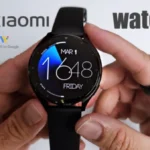
- Similar: GPS performance GSMArena found the Watch 2 GPS performance on par with the Xiaomi Watch 2 Pro.
- Worse: software smoothness Wareable found the standard Watch 2 software slicker than the Watch 2 Pro experience.
Xiaomi Watch 2 Review
Bottom Line
Choose the Xiaomi Watch 2 if you want an affordable Wear OS watch with a strong display, app support, and comfort. Skip it if daily charging, inconsistent heart-rate data, or missing LTE and advanced health features are dealbreakers.
Best for Android users who want an affordable Wear OS smartwatch with Google apps, third-party apps, strong display quality, and comfortable everyday wear. It also suits casual fitness users who value GPS, sleep tracking, and broad workout modes more than medical-grade precision.
Not for users who need LTE, advanced health features such as ECG or temperature tracking, reliable heart-rate precision, or multi-day battery life with everything enabled. It is also a weaker fit for iPhone users or anyone who dislikes proprietary chargers.
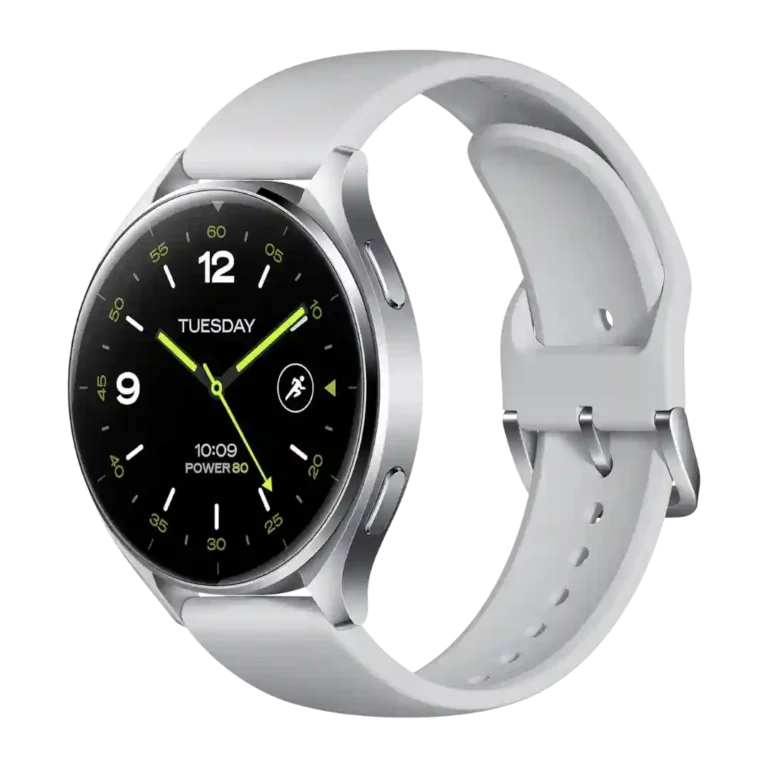
Reviewers frame the Xiaomi Watch 2 as a budget Wear OS watch that gets the big everyday pieces right: a bright AMOLED display, comfortable lightweight body, broad Google and third-party app access, fast charging, and unusually strong value. The tradeoff is consistency. Battery life ranges from decent two-day use in lighter setups to daily charging with fuller tracking enabled, and health/fitness accuracy is uneven: GPS and sleep often impress, while heart-rate and calorie/recovery data draw notable complaints. The older Wear OS version, missing LTE, limited size options, and proprietary charger keep it from feeling fully polished, but the feature set remains compelling for the price.
Compared in Reviews
Products reviewers directly compared with this model, grouped into quick takeaways.
- Better: heart rate accuracy The long-term reviewer found Apple watch readings more realistic than the Watch 2 in similar conditions.
- Compared: heart rate accuracy In real-time heart-rate comparison, the Watch 2 stayed close to the Garmin Epix Pro (Gen 2).
Feature Scorecards
Summary
55 reviewed features- Very positive 4.5-5.0 22% 12 features
- Positive 3.5-4.4 40% 22 features
- Neutral 2.5-3.4 22% 12 features
- Negative 1.5-2.4 16% 9 features
- Very negative below 1.5 0% 0 features
Pros
-
Charging speed was consistently praised as fast, often offsetting some frustration with short battery life.
-
Bluetooth connectivity was praised in one review for staying reliable throughout testing.
-
Customization was a clear strength, including many watch faces, complications, straps, and Wear OS personalization options.
-
Watch faces were praised for looking good on the AMOLED screen and offering customization.
-
Brightness was praised as sufficient, including in direct sun or sunny-day use.
-
Value for money was the strongest consensus point: reviewers repeatedly called it affordable, good value, or a bargain for Wear OS.
-
Display quality was one of the strongest areas, with multiple reviewers praising the AMOLED panel, clarity, and screen appearance.
-
Third-party app support was a major advantage, with multiple reviewers praising access to Google Play apps and big-name services.
-
Comfort was a consistent strength, with reviewers praising the light body for daily wear, workouts, and sleep.
-
Outdoor visibility was strong overall, with reviewers saying the display remained bright or visible outdoors.
-
The app ecosystem was a strength because Wear OS provided Google services, downloadable apps, and broad wrist-based functionality.
-
Onboard music storage was praised as ample for playlists, apps, and offline listening.
-
Call handling was consistently positive, with reviewers saying watch calls sounded good or were easy to take from the wrist.
-
Smartwatch features were considered strong for the price, with reviewers calling the watch packed or complete enough for everyday smartwatch tasks.
-
Blood oxygen tracking received positive practical comments, including useful breathing-score context and close comparison to another oximeter-style device.
-
Voice assistant quality was generally useful thanks to Google Assistant, though one reviewer noted recognition could be slow.
-
Pairing and syncing were positive in the YouTube review that described automatic pairing and syncing with the Mi Fitness app.
-
Reliability was positive in Wareable’s Watch 2 review because earlier Xiaomi Wear OS bugs were not encountered.
-
GPS accuracy was mostly praised for dual-band precision and strong real-world performance, with one reviewer finding it less exact.
-
Workout variety was viewed as broad, with 150+ or 160+ modes, though one reviewer cautioned that many modes can feel like simple exercise tags.
-
Sleep tracking was generally one of the better health features, with several reviewers saying it was detailed or matched their experience, though one noted it was not perfectly precise.
-
Menu navigation was mostly intuitive, though the lack of a crown made swiping more necessary.
-
Step counting was included in a positive basic-tracking judgment from one reviewer who felt daily steps were handled well.
-
Software smoothness was mostly good, with reviewers calling it slick or fluid, though some still saw occasional sluggishness or stutter.
-
Notification handling was polarized: several reviewers found replies and mirroring reliable, while one highlighted Wear OS notification delays.
-
Contactless payments worked well and were convenient, but the required screen lock was an annoyance.
-
The user interface was easy to learn overall, but small-screen typing and interaction still required patience.
-
Build quality ranged from superb or premium-feeling for the price to noticeably less premium than leading watches.
-
Button controls were generally usable and customizable, but reviewers missed the Pro model’s crown.
-
Water resistance was generally appreciated for swimming or showers, but one review noted the limitation of 5ATM with no IP rating.
-
Fit was acceptable but size-dependent; reviewers found it large or noticeable despite light weight.
-
Reviewers treated general health data as useful directional guidance rather than professional-grade measurement; one review was positive about raw data while another warned not to treat it as hard fact.
-
Style and design divided reviewers: some liked the minimalist look, while others found it plain or characterless.
-
Materials quality was mixed: one review praised the premium feel, while another called the materials cheaper than more expensive rivals.
Cons
-
Durability had mixed evidence, with one reviewer feeling confident and another faulting the lack of military durability and sapphire glass.
-
Music controls worked, but the experience had a caveat because album art was missing in one reviewer’s test.
-
Operating system experience was mixed: Wear OS gave strong app access, but reviewers criticized the older Wear OS 3.5 base and uncertain update path.
-
Battery life was the biggest split: one review praised two days, but several others found one-day endurance or daily charging disappointing.
-
Touch responsiveness was mixed: one reviewer found typing acceptable, while another said responsiveness could be slow after startup.
-
Mapping and navigation were mixed: one reviewer found directions unclear, while another showed GPS navigation working well.
-
Fitness tracking accuracy was mixed: basic tracking worked well for some reviewers, but others found workout data rudimentary or inconsistent in accuracy and usefulness.
-
Companion app quality was split: some found Mi Fitness intuitive or fine, while Wareable called analysis a chore.
-
Coaching was mixed: running and workout guidance existed, but sleep advice was described as generic.
-
Band quality was mixed to weak: the included TPU band suited workouts but felt cheap or awkward for everyday use.
-
Heart-rate accuracy was split sharply: one tester saw close agreement with a Garmin reference, while others reported unreliable or inconsistent readings.
-
Wellness insights were limited; reviewers wanted more proactive tracking and described some health presentation as bare-minimum.
-
Cross-platform compatibility was a weakness because the watch is Android-focused and loses potential or support outside that ecosystem.
-
Size options were a weakness because reviewers noted only one case size and concern for smaller wrists.
-
Activity auto-detection was criticized as trigger-happy and inconsistent about stopping activities.
-
Charging convenience was poor because reviewers disliked the proprietary or orientation-sensitive magnetic puck.
-
Body temperature tracking was a missing feature and was called a consideration for users who specifically want it.
-
LTE connectivity was a repeated drawback because the standard Watch 2 lacks cellular support and pushes untethered users toward the Pro model.
-
Calorie tracking usefulness was weak because Mi Fitness sometimes showed glitched calorie figures that did not match the watch.
-
ECG functionality was treated as a missing advanced feature, softened only by the watch’s lower price.
-
Recovery insights were criticized because suggested recovery times could be unrealistic enough that the reviewer learned to ignore them.
Compared With Category Average
Compared with other Smartwatches, this product is above average in onboard music storage, third-party app support, below average in recovery insights, calorie tracking usefulness, activity auto-detection.
Summary
8 compared features- Above average 0.4+ pts higher 25% 2 features
- Same as average within 0.3 pts 0% 0 features
- Below average 0.4+ pts lower 75% 6 features
| Attribute | This product | Category average | Difference |
|---|---|---|---|
| recovery insights | 1.5 | 3.9 | -2.4 |
| calorie tracking usefulness | 1.5 | 3.3 | -1.8 |
| onboard music storage | 4.5 | 2.8 | +1.7 |
| activity auto-detection | 2.0 | 3.7 | -1.7 |
| cross-platform compatibility | 2.1 | 3.6 | -1.5 |
| third-party app support | 4.6 | 3.1 | +1.4 |
| wellness insights | 2.5 | 4.0 | -1.5 |
| charging convenience | 1.9 | 3.3 | -1.4 |
FAQ
Is the Xiaomi Watch 2 good value for money?
Yes. Reviewers repeatedly called it affordable, good value, or a bargain for a Wear OS watch with Google apps and third-party support.
How long does the battery last?
Battery life depends heavily on settings. Some reviewers reached around two days, but others found it closer to one day with fuller tracking, always-on display, or heavier use.
Does the Xiaomi Watch 2 support LTE?
No. Reviewers repeatedly treated LTE as a missing feature and pointed users who want phone-free connectivity toward other models.
How accurate is the health and fitness tracking?
The evidence is mixed. GPS and sleep tracking were often praised, but heart-rate accuracy, calorie figures, recovery suggestions, and some workout data drew complaints.
Is the display good outdoors?
Yes. Multiple reviewers praised the AMOLED screen for clarity, brightness, and visibility in sunny or outdoor conditions.
Does it work with iPhone?
Reviewers treated it as primarily Android-focused. One review said iPhone use limits its full potential, while others described Android-only compatibility.
Is charging convenient?
Charging is fast, but reviewers disliked the proprietary magnetic puck and orientation-sensitive pin design.
Sample Expert Reviews We Analyzed
These are a few of the reviews included in our analysis.
Video Reviews
- Review score
- 4.0/5
- Review score
- 3.4/5
- Review score
- 4.2/5
Article Reviews
- Review score
- 3.2/5
- Review score
- 3.6/5
Consider This Instead
If you want better recovery insights
Choose Garmin Lily 2 Active. It scores 5.0 vs 1.5 for recovery insights, with a 4.1 overall score.
If you want better calorie tracking usefulness
Choose Amazfit T-Rex 3 Pro. It scores 5.0 vs 1.5 for calorie tracking usefulness, with a 3.6 overall score.
If you want better LTE connectivity
Choose Samsung Galaxy Watch Ultra (2025). It scores 5.0 vs 1.7 for LTE connectivity, with a 3.9 overall score.
If you want better ECG functionality
Choose Apple Watch Series 11. It scores 4.8 vs 1.5 for ECG functionality, with a 4.3 overall score.
Overall Top Smartwatches Alternatives
Best for rugged outdoor training, long battery life, accurate GPS, maps, calls, and a genuinely useful flashlight. Skip it if the high price, tactical extras, proprietary charging cable, or mixed...
Pros: wellness insights, build quality
Cons: LTE connectivity, band quality
Good if you want the best balanced Apple Watch for an older upgrade, stronger battery, comfort, and health tools. Skip it if you own Series 10, need week-long battery, or...
Pros: ECG functionality, app ecosystem
Cons: cross-platform compatibility, recovery insights
Choose it if you want a rugged Garmin hybrid with real hands, a sharp AMOLED display, strong tracking, and a genuinely useful flashlight. Skip it if price, full maps, onboard...
Pros: heart rate accuracy, GPS accuracy
Cons: onboard music storage, mapping and navigation
Best for bright AMOLED visuals, strong battery life, accurate GPS, maps, and standout value. Skip it if you need rich apps, reliable payments, LTE, ECG, or the cleanest companion app.
Pros: step counting accuracy, menu navigation
Cons: voice assistant quality, contactless payments