If you want better mapping and navigation
Choose Garmin Forerunner 965. It scores 4.6 vs 3.5 for mapping and navigation, with a 3.9 overall score.
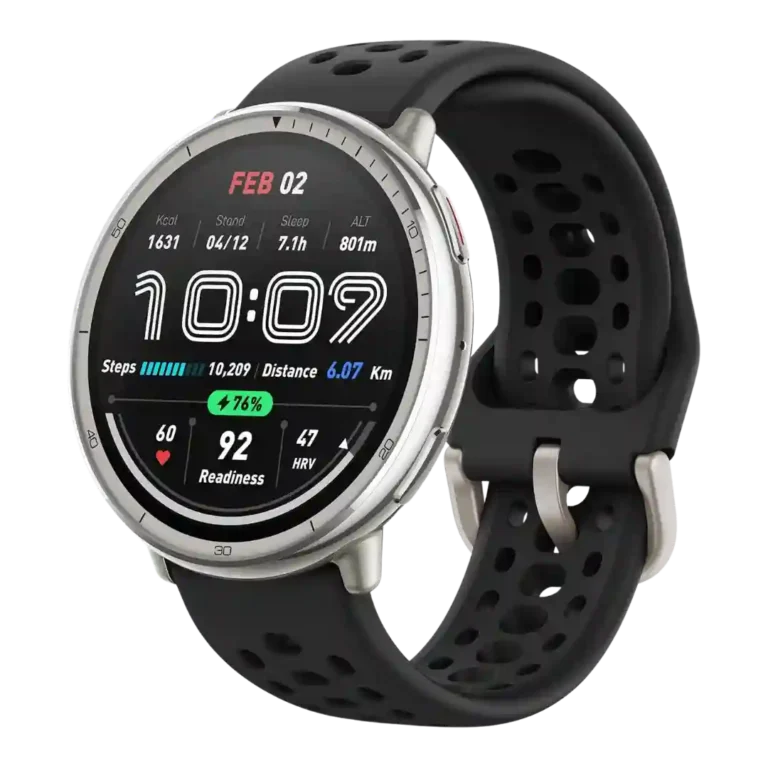
Choose the Amazfit Active 2 for a stylish, low-cost smartwatch with strong battery, display, maps, and broad fitness tools. Skip it if you need polished apps, exact health metrics, dependable navigation, LTE, or advanced safety features.
Best for budget-minded Android or iPhone users who want a light, attractive smartwatch with long battery life, lots of workout modes, notifications, calls, and basic health tracking. It is especially appealing if maps and a bright AMOLED screen matter more than premium app depth.
Not for users who need medical-grade health features, ECG, LTE, polished third-party apps, dependable turn-by-turn navigation, or highly actionable readiness and stress insights. Serious athletes may also want a dedicated sports watch for more consistent heart-rate and GPS precision.
Reviewers largely agree that the Amazfit Active 2 delivers an unusually rich smartwatch and fitness package for its price. Its bright AMOLED screen, long battery life, classy design, water resistance, broad workout modes, Bluetooth sensor support, and offline maps make it feel far more capable than a typical budget wearable. The tradeoff is polish: health metrics can be inconsistent, stress and readiness insights are not always useful, navigation can be clunky or unreliable, and Zepp OS still has quirks. The best evidence points to a watch with excellent core value and enough accuracy for casual fitness tracking, but not the refinement or dependable metrics of higher-end ecosystems.
Compared with other Smartwatches, this product is above average in value for money, blood oxygen tracking, call handling, near average in style and design, battery life, below average in stress tracking, wellness insights, recovery insights.
| Attribute | This product | Category average | Difference |
|---|---|---|---|
| stress tracking | 1.5 | 3.5 | -2.0 |
| wellness insights | 2.5 | 4.0 | -1.5 |
| value for money | 5.0 | 3.8 | +1.2 |
| recovery insights | 2.5 | 3.9 | -1.4 |
| blood oxygen tracking | 4.5 | 3.4 | +1.1 |
| call handling | 4.2 | 3.2 | +1.0 |
| smartwatch features | 4.4 | 3.5 | +0.9 |
| pairing reliability | 5.0 | 4.0 | +1.0 |
Choose Garmin Forerunner 965. It scores 4.6 vs 3.5 for mapping and navigation, with a 3.9 overall score.
Choose Amazfit Balance 2. It scores 4.8 vs 2.5 for wellness insights, with a 4.0 overall score.
Choose Garmin Vivoactive 6. It scores 4.5 vs 2.5 for recovery insights, with a 3.9 overall score.
Choose Huawei Watch GT 6 Pro. It scores 4.7 vs 3.6 for heart rate accuracy, with a 4.0 overall score.
Products reviewers directly compared with this model, grouped into quick takeaways.
Yes. Reviewers overwhelmingly described it as exceptional value because it combines a bright AMOLED display, long battery life, maps, calls, workout tracking, and a premium-looking design at a budget price.
Accuracy is mixed. Several reviewers saw strong GPS, step, sleep, and running heart-rate results, but others reported weak stress tracking, inconsistent health readings, GPS drift, or heart-rate problems during harder workouts.
Yes. Reviewers commonly got several days per charge, often four to six days with heavier use or always-on display, and some reported about a week or more with lighter settings.
They are useful for basic context and a rare feature at this price, but reviewers found navigation uneven. Map loading, route imports, turn prompts, zooming, and local map accuracy could be clunky or unreliable.
It can cover many basics such as notifications, calls, workouts, music controls, and voice assistance, but reviewers said app support and smart features are much more limited than Apple or Wear OS watches.
Reviewers often leaned toward the premium version because the small price increase adds sapphire glass, extra strap value, and contactless payment support where available.
These are a few of the reviews included in our analysis.
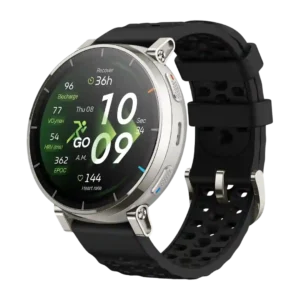
Good if you want premium running features, long battery life, and maps for under $200. Skip it if you need flawless heart-rate data, multiband GPS, LTE, or richer app support.
Pros: pairing reliability, brightness
Cons: Wi-Fi connectivity, Bluetooth connectivity
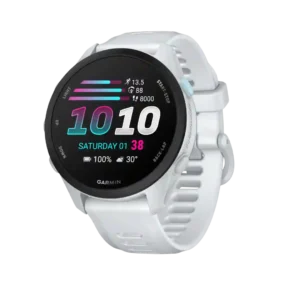
Best for accurate running metrics, excellent coaching tools, a bright AMOLED display, and dependable battery life. Skip it if you need offline maps, music storage, contactless payments, multi-band GPS, or...
Pros: step counting accuracy, app ecosystem
Cons: Bluetooth connectivity, pairing reliability
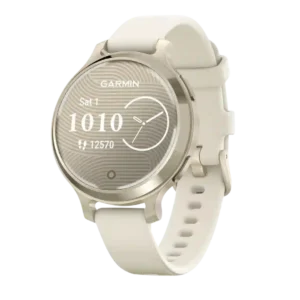
Good if you want a compact, stylish Garmin with strong GPS, comfort, and week-plus battery life. Skip it if you need richer smartwatch apps, onboard music, bright always-on display, or...
Pros: health tracking accuracy, blood oxygen tracking
Cons: ECG functionality, onboard music storage
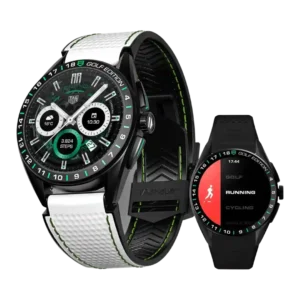
Best for luxury-watch styling, vivid TAG faces, solid build, and casual smartwatch use. Skip it if you need top fitness accuracy, call handling, LTE, or strong value.
Pros: contactless payments, pairing reliability
Cons: LTE connectivity, call handling