
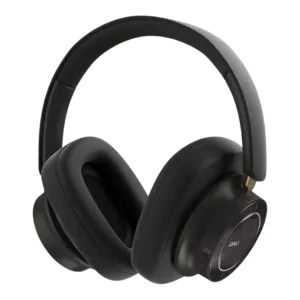
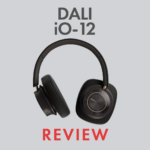
Review: DALI IO-12 Headphones
Updated: 2 months ago
4.1
Based on methodology below
213
Insights analyzed
43
Grouped by key features
11
From expert reviews
Scores below reflect consolidated expert coverage across these features.
Bottom Line
Choose the DALI IO-12 if you want near-audiophile wireless sound and plush long-session comfort. Skip if you need class-leading ANC, app-based tuning, or a compact travel-friendly fold.
Best for
Audiophiles who want a high-end wireless closed-back that can also pull double duty at home over USB-C or 3.5 mm, with comfort that supports long sessions.
Not for
Frequent travelers who prioritize maximum portability and the strongest noise cancelling, or anyone who expects an app with deep EQ and feature customization at this price.
Verdict
The IO-12 targets listeners who care more about fidelity than feature checklists. Across reviews it delivers an unusually speaker-like presentation for Bluetooth: deep, controlled bass, standout midrange clarity, airy treble, and wide imaging that stays composed even at higher volumes. Comfort and materials are consistently praised, and wired USB-C or 3.5 mm listening can add extra resolution while still working in passive mode. The tradeoff is convenience: there is no companion app or detailed EQ and ANC tuning, and the headphones and case are bulky for travel. ANC is competent but not on Bose or Sony flagships, while battery lands around 30 to 35 hours.
Pros
-
4.8based on 2 reviewsMaximum volume clarity: 4.8, based on 2 reviewsReviews that discuss loud listening report strong composure and minimal distortion at higher volumes, encouraging careful use because it stays clean as you turn it up.
-
4.8based on 1 reviewReplaceable earpads: 4.8, based on 1 reviewReplaceable earpads are explicitly mentioned as a welcome premium touch, with pads that can be removed for cleaning or replacement.
-
4.8based on 9 reviewsEar cup padding quality: 4.8, based on 9 reviewsEarcup and pad materials are frequently described as plush, premium leather with generous space for larger ears, contributing to both comfort and isolation.
-
4.7based on 11 reviewsSound quality: 4.7, based on 11 reviewsAcross reviews, sound quality is the headline: a speaker-like, highly resolving presentation that many call among the best in wireless closed-backs, with strong imaging and refinement. Wired sound is often described as equal or better in resolution than wireless, with USB-C and 3.5 mm options; passive use is supported, and some recommend listening powered on to benefit from onboard DSP.
-
4.7based on 7 reviewsaptX: 4.7, based on 7 reviewsMultiple reviews explicitly cite aptX options, including higher-tier variants such as aptX HD and aptX Adaptive, as part of the IO-12 wireless feature set.
-
4.7based on 7 reviewsInstrument separation: 4.7, based on 7 reviewsInstrument separation and imaging are consistently praised, with precise placement and clear spacing between layers even in complex mixes.
-
4.7based on 8 reviewsBuild quality: 4.7, based on 8 reviewsBuild quality is repeatedly described as ultra-premium, with strong materials and a luxury feel that holds up to travel use when handled with care.
-
4.7based on 8 reviewsMidrange clarity: 4.7, based on 8 reviewsMidrange clarity is repeatedly highlighted as a standout strength, with clean layering and realistic vocal and instrument textures that feel unusually hi-fi for Bluetooth.
-
4.7based on 2 reviewsVolume output: 4.7, based on 2 reviewsVolume output is commonly described as having plenty of headroom, with enough drive to get loud without feeling strained.
-
4.6based on 3 reviewsBluetooth: 4.6, based on 3 reviewsBluetooth connectivity is commonly reported as stable, with fast pairing and few to no dropouts even in busy environments.
-
4.6based on 1 reviewHeadband adjustability: 4.6, based on 1 reviewHeadband adjustment is described as smooth and secure, holding its position well once set.
-
4.6based on 9 reviewsComfort during long use: 4.6, based on 9 reviewsLong-session comfort is one of the most consistently praised aspects, with roomy earcups and plush pads that avoid pressure points for many listeners.
-
4.6based on 7 reviewsCarry case quality: 4.6, based on 7 reviewsThe carry case is typically praised as premium and protective, with good structure and compartments, but it adds bulk and can be impractical for compact packing.
-
4.6based on 7 reviewsCodec support: 4.6, based on 7 reviewsCodec support is positioned as strong for a premium wireless headphone, with repeated mentions of AAC and aptX-family options that help preserve detail over Bluetooth.
-
4.5based on 3 reviewsUSB-C: 4.5, based on 3 reviewsUSB-C is highlighted as both a charging and playback option, with multiple sources noting USB audio support up to 24-bit and 96kHz.
-
4.5based on 8 reviewsBass performance: 4.5, based on 8 reviewsBass is typically described as tight and controlled in Hi-Fi mode with convincing weight, while Bass mode adds slam and warmth without turning into a boomy mess, though it can trade away some treble presence.
-
4.5based on 9 reviewsSoundstage width: 4.5, based on 9 reviewsMost reviews describe an unusually open, spacious soundstage for a closed-back wireless headphone, with strong width and credible depth; one reviewer notes it is not stadium-wide but avoids feeling claustrophobic.
-
4.5based on 6 reviewsNoise isolation (passive): 4.5, based on 6 reviewsPassive noise isolation is described as strong thanks to large, well-sealing earcups and design details aimed at closing gaps around the ear, providing a solid foundation before ANC is even enabled.
-
4.5based on 2 reviewsFrequency response accuracy: 4.5, based on 2 reviewsHi-Fi mode is commonly described as balanced and relatively uncolored, while Bass mode shifts the tonality warmer and can slightly reduce upper-mid and treble prominence.
-
4.4based on 3 reviewsClamping force comfort: 4.4, based on 3 reviewsClamping force is usually described as secure but comfortable, ranging from light to moderately firm depending on the reviewer, without feeling unstable.
-
4.4based on 4 reviewsIncluded accessories: 4.4, based on 4 reviewsIncluded accessories are generally considered generous, with multiple cables and adapters plus a premium case, though some note the absence of a USB-C to USB-C cable.
-
4.4based on 7 reviewsTreble clarity: 4.4, based on 7 reviewsTreble is generally airy, detailed, and smooth, with occasional notes that it can approach brightness on certain recordings; Bass mode can tame the top end if needed.
-
4.3based on 2 reviewsWeight comfort: 4.3, based on 2 reviewsWeight is noted as present but generally not burdensome once worn, though some acknowledge the overall heft and size compared to mainstream travel headphones.
-
4.2based on 3 reviewsEar cup swivel/rotation range: 4.2, based on 3 reviewsEarcups are commonly described as able to swivel or lay flat, aiding seal and travel storage even though the overall design does not fold compactly.
-
4.2based on 1 reviewMultipoint connectivity reliability: 4.2, based on 1 reviewMultipoint is noted as supported and convenient for staying connected to two devices, though it is not heavily stress-tested across all sources.
-
4.2based on 8 reviewsPreset EQ profile quality: 4.2, based on 8 reviewsPreset sound modes are generally seen as well-judged: Hi-Fi is the reference setting for balance and clarity, while Bass mode adds punch and warmth, sometimes with a tradeoff in treble and mid presence.
-
4.2based on 7 reviewsDesign and Aesthetics: 4.2, based on 7 reviewsDesign is widely described as premium and distinctive, but the dark chocolate color can divide opinion, and the large earcups create a bold, bulky look on some heads.
-
4.1based on 8 reviewsButton control usability: 4.1, based on 8 reviewsButtons are often praised for responsiveness and tactile feedback, but a few reviewers mention accidental activation, especially when adjusting volume or leaning against a seat while traveling.
-
4.1based on 1 reviewTouch control responsiveness: 4.1, based on 1 reviewControl surfaces are generally responsive; some coverage mentions touch-style control areas, but overall interaction is described as clicky and deliberate rather than finicky.
-
4.1based on 1 reviewVoice assistant integration: 4.1, based on 1 reviewVoice assistant support is described as available via a press or long-press action, and some sources also mention voice prompts for battery status.
-
4.1based on 9 reviewsBattery: 4.1, based on 9 reviewsBattery life is commonly cited around 35 hours, with at least one real-world report closer to 30 hours; overall it is respectable but not exceptional relative to cheaper competitors.
-
4.1based on 7 reviewsTransparency mode quality: 4.1, based on 7 reviewsTransparency mode is generally described as clear and practical for awareness, without strong criticism, though fewer reviews go deep on its nuance.
-
4.0based on 1 reviewStability: 4.0, based on 1 reviewFit stability is generally described as secure with a good seal, but the sizing and overall footprint may feel better suited to average-to-larger heads than very small ones.
-
3.8based on 8 reviewsActive noise cancellation: 3.8, based on 8 reviewsANC is broadly described as effective for reducing low rumbles and general ambient noise, but it is not considered class-leading compared with flagship Bose, Sony, or Apple models; some mention susceptibility to wind noise. Noise cancellation adjustability is limited to onboard mode switching in most coverage, with some sources noting multiple ANC modes, but no fine tuning via app.
-
3.8based on 3 reviewsCharging: 3.8, based on 3 reviewsCharging is described as taking roughly 1.5 to 2 hours from flat with no fast-charge boost mentioned, and one reviewer notes behavior consistent with limiting charge to protect long-term battery health.
-
3.7based on 3 reviewsSoftware/setup simplicity: 3.7, based on 3 reviewsDay-to-day operation is described as straightforward because settings are handled on the headphones, but the lack of an app also means limited customization and some sources note manual firmware updating.
Cons
-
2.6based on 4 reviewsPortability/foldability: 2.6, based on 4 reviewsPortability is a recurring compromise: the headphones are large, do not fold down compactly, and several reviewers mention the case is too big for many backpacks.
-
2.0based on 1 reviewCable quality: 2.0, based on 1 reviewCable quality feedback is mixed: some appreciate the included cables and finish, while at least one reviewer calls the cable frustrating to use and prefers the shorter option.
-
1.5based on 1 reviewSensors: 1.5, based on 1 reviewSome coverage notes the absence of wear sensors and similar smart conveniences found on mainstream flagships, reinforcing the IO-12 focus on audio and simplicity over automation.
-
1.1based on 5 reviewsEqualizer customization: 1.1, based on 5 reviewsWithout an app, EQ customization is not available beyond onboard preset modes, which limits personalization compared with mainstream flagship wireless headphones.
-
1.0based on 7 reviewsApp: 1.0, based on 7 reviewsMultiple sources confirm there is no companion app for the IO-12.
FAQ
Is there a companion app for the DALI IO-12?
No. Multiple reviews note there is no app, so EQ and ANC settings are handled only with on-headphone controls.
How good is the noise cancelling compared with top travel headphones?
Reviews generally call it effective for reducing low rumbles and everyday noise, but not class-leading versus Bose, Sony, or Apple flagship ANC.
Can you use the IO-12 wired if the battery dies?
Yes. Reviews describe passive 3.5 mm use, and also USB-C wired playback; some note the sound stays consistent even when powered off.
What EQ options do you get without an app?
You get onboard sound presets, typically described as Hi-Fi and Bass modes. Bass mode adds impact but can reduce treble presence and slightly push mids back.
What battery life should you expect in real use?
Most sources cite about 35 hours, while at least one reviewer reports closer to 30 hours. Overall it is respectable but not standout for the price.
Do the headphones fold for travel?
They generally lay flat but do not fold into a compact shape, and several reviews mention the carry case is large.
Reviews we analyzed
Video Reviews




Article Reviews

Futureaudiophile
Majorhifi
Audiograde
Audio46
Best Over-Ear Headphones
#1

4.2
Choose the PX7 S3 for class-leading sound and premium comfort with strong-enough ANC; Skip if you want Sony/Bose-level noise canceling or a lighter,...
Pros: aptX, Multipoint connectivity reliability, Codec support, Volume output, Android compatibility, Maximum volume clarity, Design and Aesthetics
Cons: Replaceable battery, LDAC, Spatial audio, Portability/foldability, Preset EQ profile quality
#2

4.2
Choose the Meze 105 Silva for gorgeous, comfy open-back listening with strong imaging and a warm-yet-detailed tuning; Skip if you need isolation for...
Pros: Sustainability materials, Replaceable earpads, Design and Aesthetics, Headband adjustability, Hinge durability, Build quality, Volume output
Cons: Noise isolation (passive), Portability/foldability
#3
4.1
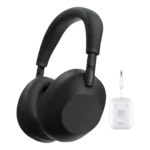
Choose the WH-1000XM6 if you want top-tier noise canceling with rich, tunable sound in a travel-friendly foldable case. Skip if you need wired...
Pros: Active noise cancellation effectiveness, Weight comfort, Carry case quality, Microphone noise reduction, USB-C, Charging, LDAC
Cons: Water/sweat resistance rating, Replaceable battery, aptX, Cable quality, Smudge resistance, Included accessories
#4
4.1
Choose these for travel-first flexibility, long battery life, and very strong ANC. Skip them if you want the most premium feel or perfectly...
Pros: Battery, Connectivity options, Included accessories, Features at launch, ANC background noise level, Instrument separation, Equalizer customization
Cons: Water/sweat resistance rating, Replaceable earpads, Maximum volume clarity, Smart Pause performance, Premium feel, Preset EQ profile quality, ANC effect on sound signature