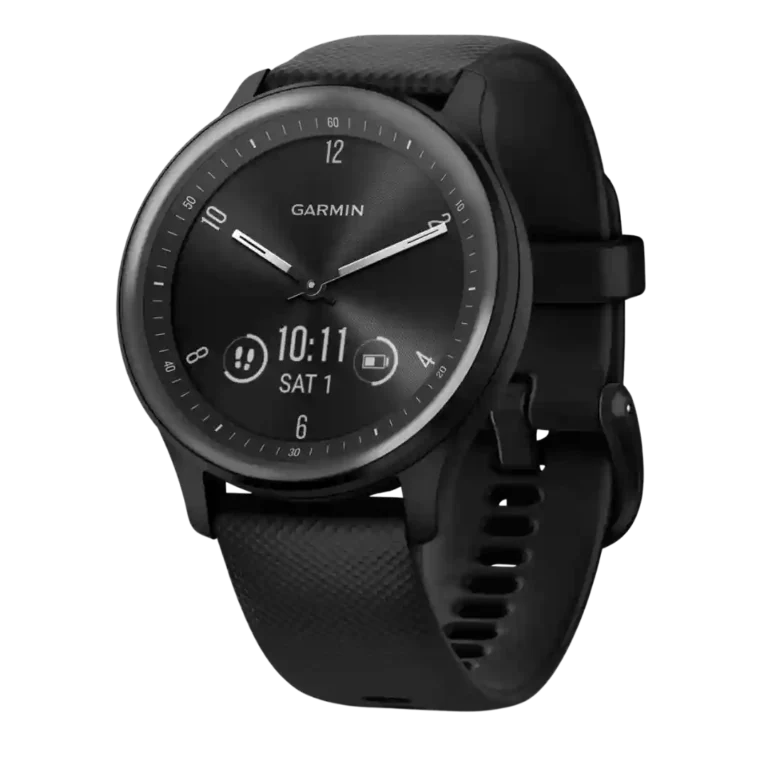
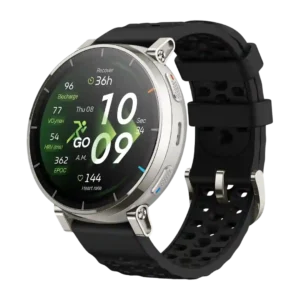
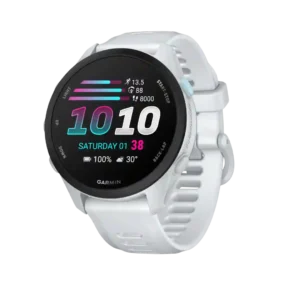
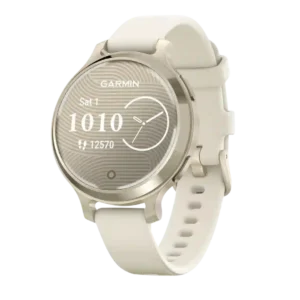
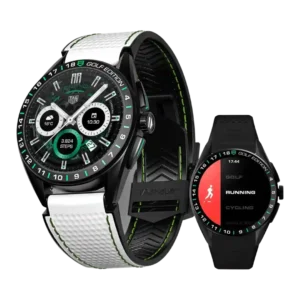
- Compared: case materials and display The Vivomove Style is positioned as a more expensive upgrade with better materials and display features.
Garmin Vivomove Sport Review
Bottom Line
Choose the Garmin Vivomove Sport for a stylish, comfortable hybrid with strong wellness basics and good value. Skip it if you need built-in GPS, bright outdoor workout stats, NFC payments, voice features, or advanced training tools.
Best for casual exercisers and everyday wearers who want an analog-looking watch with Garmin wellness data, notifications, and a light, comfortable fit. It especially suits people who value style and app-based health trends over advanced sports features.
Not for runners, cyclists, or smartwatch users who need built-in GPS, bright multi-metric workout screens, contactless payments, voice assistants, onboard music, or advanced training analysis. It is also a poor fit for anyone who dislikes touchscreen-only controls.
The Garmin Vivomove Sport comes across as a polished hybrid watch for people who want analog style without giving up everyday health data. Reviewers consistently liked the light, comfortable case, soft band, discreet hidden display, useful Garmin wellness metrics, and approachable price. The tradeoff is that its hybrid format limits the experience: the small OLED can be hard to read outdoors, navigation can feel fiddly, and key extras such as onboard GPS, NFC payments, music storage, microphones, speakers, and voice assistants are missing. Tracking is strongest for casual activity, steps, sleep, stress, and general wellness trends, while heart-rate and GPS results vary more during intense workouts or when phone-tethered tracking is inconvenient.
Compared in Reviews
Products reviewers directly compared with this model, grouped into quick takeaways.
- Compared: premium features The Trend is framed as a pricier upgrade with Garmin Pay and wireless charging.
- Compared: battery life and health sensors The ScanWatch is treated as a more premium hybrid with much stronger battery life.
Feature Scorecards
Pros
-
Auto-detection is a strong point where discussed, with Move IQ and auto-recognition detecting walking, running, or short activity events without manually starting every workout.
-
Comfort is one of the strongest areas, with many reviewers wearing it all day, during sleep, and through workouts without discomfort.
-
Pairing reliability is strong in the reviews that discuss it, with setup, syncing, and day-to-day Garmin Connect synchronization reported as reliable.
-
Style and design are the clearest strength, with reviewers consistently praising the analog look, hidden screen, light case, and attractive hybrid design.
-
Water resistance is strong and repeatedly supported, with reviews citing 5 ATM, shower use, swimming, and up to 50 meters of resistance.
-
Fit is favorable for smaller or medium wrists, with evidence for a small 40mm case, snug strap, and specified wrist sizing.
-
Reliability is positive in limited evidence, especially for syncing, wrist activation, and the clever hand/display interaction.
-
Band quality is positive overall, with reviewers describing the silicone strap as soft, robust, flexible, durable, and comfortable.
-
The Garmin ecosystem is viewed positively because Connect, Strava syncing, Garmin data depth, and ecosystem support add value beyond the watch hardware.
-
Cross-platform compatibility is strong, with support for both iPhone and Android, though some phone-specific features such as Android replies are limited by platform.
-
Value for money is strong overall, with reviewers repeatedly calling it affordable, well-priced, or a good gateway into Garmin, despite missing premium features.
-
Customization is a strength, with evidence for adjustable widgets, watch faces, dashboards, activities, settings, straps, brightness, and activity profiles.
-
Safety features are a meaningful extra, with evidence for LiveTrack, incident detection, emergency contacts, assistance, and location sharing via phone.
-
Wellness insights are a highlight, especially Body Battery, hydration, sleep stages, stress, respiration, and readiness-style guidance for everyday wellness decisions.
-
Recovery insights are mainly driven by Body Battery and sleep/stress context; reviewers found the metric useful for deciding when to rest, though presentation is sometimes basic.
-
Charging speed is solid where measured, with reviews citing roughly an hour to an hour and a half for a full charge.
-
Durability evidence is limited but positive, with one reviewer describing the lighter watch as durable.
-
Workout variety is strong for a hybrid, with reviews citing walking, running, cycling, strength, yoga, cardio, swim, treadmill, Pilates, and other activity profiles.
-
Bluetooth connectivity is necessary for pairing, notifications, GPS tethering, syncing, and phone features, and reviewers generally present it as functional.
-
Stress tracking is a clear Garmin strength in the reviews, with multiple reviewers calling it helpful, comparable to perceived stress, or better than most competitors.
-
Blood oxygen tracking is widely supported through Pulse Ox or SpO2, including sleep, spot checks, or all-day options, with one test finding readings mostly in a normal range.
-
Reviewers found the Vivomove Sport useful for broad health tracking, especially everyday metrics such as heart rate, sleep, stress, steps, oxygen, hydration, and wellness trends, though it is not treated as medical-grade.
-
Build quality is generally respectable for the price, with strengthened glass, polymer casing, and durable-feeling construction, but it is not a premium metal build.
-
The operating system experience is only lightly covered, but one review describes close parity between the Garmin Connect website and app experience.
-
Step counting appears fairly reliable but not perfect, with one review finding counts close to another tracker and another noting a tendency to overcount.
-
Charging convenience is acceptable, helped by easy charging and a familiar Garmin cable, though it still relies on a proprietary wired system.
-
Music controls are useful and repeatedly mentioned, but they only control phone playback rather than turning the watch into a standalone music device.
-
Fitness tracking accuracy is generally good for casual activity and steady workouts, but reviewer testing is less confident for high-intensity sessions or situations with more movement.
-
Calorie tracking is present and integrated with the watch widgets, but reviewers mostly mention it as part of basic activity data rather than as a deeply analyzed feature.
-
The companion app is powerful but polarizing, praised for deep health data and dashboards but criticized as cluttered, complex, or less user-friendly.
-
Touchscreen responsiveness is mostly good once learned, but reviewers still report occasional failures with sweat, small icons, unresponsiveness, or movement.
-
Watch face quality is decent but limited: reviewers cite 12 available faces and useful displays, while one notes that no extra Connect IQ faces can be added.
-
Materials quality is practical rather than luxurious, relying on polymer/plastic, silicone, quick-release bands, and strengthened glass.
-
Battery life is mixed: five days is common and better than full smartwatches, but some reviewers saw only 2.5 to 4 days and expected more from a hybrid.
-
Sleep tracking gets mixed-to-positive evidence, with some reviewers finding accurate stages and strong sleep-cycle detection, while others saw extra sleep time or poor awake detection.
-
Software smoothness is mixed: one review praises smooth, quick swiping, while another calls the broader user experience less than ideal.
-
Smartwatch features are adequate but intentionally limited, covering notifications, timers, music controls, calendars, weather, and health widgets rather than phone-free smartwatch use.
Cons
-
Notifications are useful for triage, calls, texts, emails, calendars, and app alerts, but the small display makes long messages harder to read.
-
Brightness ranges from adequate indoors or on auto settings to too dim for bright conditions, making it a context-dependent attribute.
-
Coaching is limited but useful in simple forms, mainly guided breathing, Fitness Age, badges, reminders, and basic wellness prompts rather than advanced training coaching.
-
Display quality is highly mixed: reviewers like the hidden OLED concept and readability in some conditions, but criticize its low resolution, limited size, and daytime usability.
-
Heart-rate accuracy is mixed: some reviews found close agreement with Apple Watch, Polar, or Garmin references, while others reported lag, peaks missed, or higher readings during harder workouts.
-
GPS is the major tradeoff: connected GPS can be accurate when paired to a phone, but reviewers repeatedly note the lack of onboard GPS and mixed phone-tethered results.
-
Menu navigation is one of the most repeated caveats, ranging from clunky or fiddly to straightforward after practice; it is better suited to casual use than mid-workout control.
-
The user interface is mixed because the hidden touchscreen and icon-driven menus are clever but small, buttonless, and sometimes challenging to learn.
-
Outdoor visibility is the clearest display weakness, with several reviewers reporting bright sunlight or high-intensity light makes the screen difficult to use.
-
Call handling is limited: reviewers note answering, declining, rejecting, or Android text replies, but no speaker or microphone for wrist calls.
-
Button controls score poorly because the watch has no physical side buttons, making the touchscreen the only control method.
-
Third-party app support is weak on the watch itself because it lacks Connect IQ Store access, even though Garmin Connect can sync with some external services.
-
Contactless payments are a consistent omission; multiple reviewers note no Garmin Pay, NFC payments, or mobile payments on this model.
-
Onboard music storage is absent, with multiple reviewers stating music downloads or storage are not supported on the watch.
-
Voice assistant support is essentially absent, with reviewers specifically noting no Siri or Google Assistant and no speaker, microphone, or smart assistant.
Compared With Category Average
Compared with other Smart Watch, this product is below average in button controls, onboard music storage, contactless payments.
| Attribute | This product | Category average | Difference |
|---|---|---|---|
| button controls | 1.7 | 3.9 | -2.2 |
| onboard music storage | 1.0 | 2.9 | -1.9 |
| contactless payments | 1.1 | 2.9 | -1.8 |
| voice assistant quality | 1.0 | 2.7 | -1.7 |
| outdoor visibility | 2.8 | 4.3 | -1.5 |
| third-party app support | 1.7 | 3.1 | -1.4 |
| display quality | 3.2 | 4.3 | -1.0 |
| GPS accuracy | 3.2 | 4.0 | -0.8 |
FAQ
Does the Garmin Vivomove Sport have built-in GPS?
No. Reviewers consistently describe it as using connected GPS through a paired phone, which can work well but is inconvenient if you do not want to carry your phone.
Is the Garmin Vivomove Sport comfortable to wear all day?
Yes. Many reviewers found it light and comfortable for all-day wear, sleep, and workouts, with a smaller 40mm case that works well on smaller wrists.
How long does the battery last?
Most evidence clusters around three to five days in smartwatch use. Some reviewers reached five days or a little more, while others saw about 2.5 to four days depending on settings, Pulse Ox, notifications, and activity tracking.
Is it good for serious workout tracking?
It is better for casual workouts, gym sessions, short runs, and general fitness trends than serious training. Reviews praise its activity variety but note no onboard GPS, small workout screens, and mixed heart-rate accuracy in harder sessions.
Can it handle calls, payments, music, or voice assistants?
It can show call alerts, let you decline or answer from the wrist in limited ways, and control phone music. Reviewers note no wrist calling speaker or microphone, no contactless payments, no onboard music storage, and no voice assistant support.
Is the hidden display easy to read outdoors?
Indoor readability is often acceptable, but outdoor visibility is a repeated weakness. Several reviewers found the small OLED dim or difficult to use in bright sunlight, especially during workouts.
Consider This Instead
If you want better contactless payments
Choose Apple Watch SE 3. It scores 4.8 vs 1.1 for contactless payments, with a 4.1 overall score.
If you want better onboard music storage
Choose Huawei Watch Fit 4. It scores 4.7 vs 1.0 for onboard music storage, with a 4.1 overall score.
If you want better button controls
Choose Garmin Forerunner 970. It scores 4.8 vs 1.7 for button controls, with a 4.0 overall score.
If you want better third-party app support
Choose Samsung Galaxy Watch 8. It scores 4.8 vs 1.7 for third-party app support, with a 4.0 overall score.
Overall Top Smart Watch Alternatives
Good if you want the most rugged Apple Watch, brighter outdoor screen, better battery, LTE, and top apps. Skip it if you need Garmin-like mapping, recovery analytics, smaller sizing, or...
Pros: display quality, heart rate accuracy
Cons: cross-platform compatibility, recovery insights
Choose the Galaxy Watch 6 for a polished Android smartwatch with a bright screen, strong apps, and broad health tracking. Skip it if battery life, iPhone support, or full non-Samsung...
Pros: outdoor visibility, workout tracking variety
Cons: cross-platform compatibility, battery life
Good if you need a rugged Garmin with deep outdoor, tactical, GPS, training, and battery features. Skip it if you want a cheaper lifestyle watch or do not need the...
Pros: materials quality, durability
Cons: LTE connectivity, value for money
Good if you want premium golf maps, virtual caddie tools, health metrics, music, notifications, and long battery life in one watch. Skip it if you only need basic yardages or...
Pros: pairing reliability, brightness
Cons: software smoothness, user interface