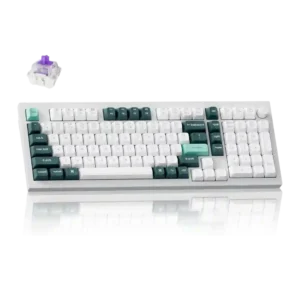
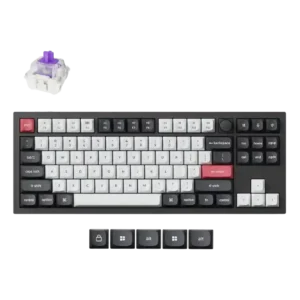
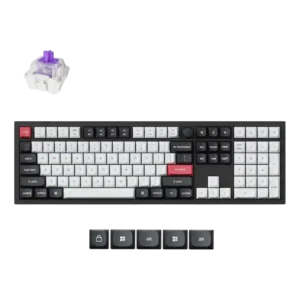
- Alternative: smaller size and desk mobility The reviewer suggests the Keychron K2 HE as a smaller alternative if the GX87 is too bulky.
McHose GX87 Keyboard Review
Bottom Line
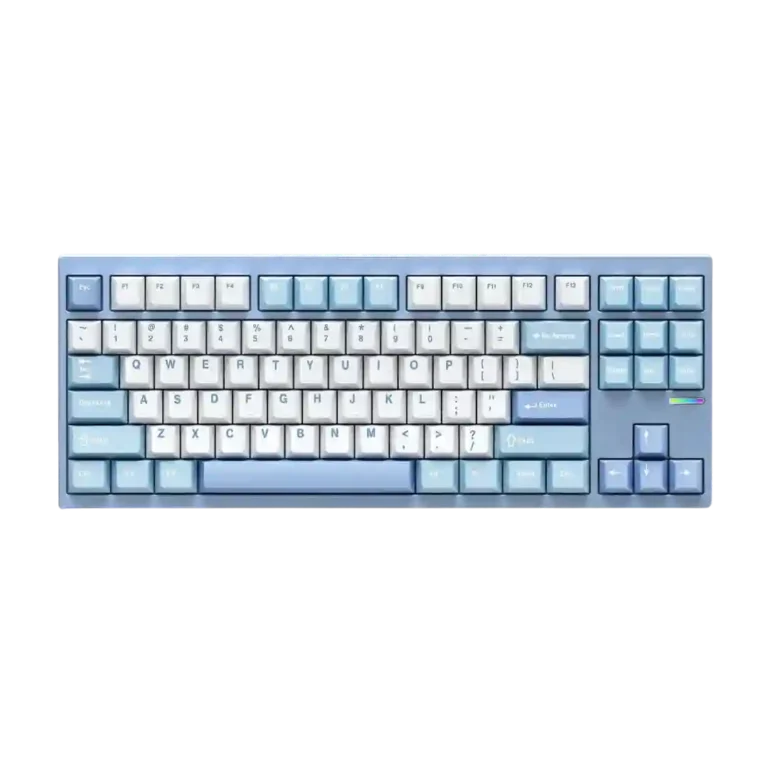
Choose the McHose GX87 if you want a budget aluminum TKL with thocky sound, strong customization, and huge battery life. Skip it if you need a light portable board, tactile/clicky stock switches, or advanced gaming features.
Best for mechanical-keyboard enthusiasts who want a budget-friendly aluminum TKL with thocky stock sound, hot-swap modding, and QMK/VIA-style customization. It also suits users who split time between typing and casual or mainstream gaming.
Not for buyers who need a lightweight portable keyboard, tactile or clicky switch choices at checkout, or advanced Hall Effect gaming features. It may also frustrate users who want perfectly polished RGB, cable quality, or wireless behavior.
The McHose GX87 lands as a rare budget TKL that reviewers describe as genuinely premium: a dense aluminum build, strong stock acoustics, hot-swap support, and QMK/VIA-style customization give it enthusiast appeal without a high price. Its typing feel earns broad praise, from smooth linear switches to foam-assisted pop and thock, and gaming performance is solid thanks to responsive inputs and high polling. The tradeoff is that it is not a lightweight or specialized gaming board; reviewers note the heavy chassis, limited stock switch choices, fixed angle, occasional wireless/input quirks, and less refined RGB or stabilizer implementation. It works best as a value-focused custom mechanical keyboard rather than a Hall Effect esports deck.
Compared in Reviews
Products reviewers directly compared with this model, grouped into quick takeaways.
- Alternative: smaller size and desk mobility The NuPhy Air60 HE is suggested as another smaller alternative to the chunky GX87.
Chilkey NDTKL
- Similar: build resemblance and customization features The reviewer says the GX87 strongly resembles the Chilkey NDTKL and shares customization features.
Feature Scorecards
Pros
-
Hot-swap support is consistently confirmed, with reviewers saying switches can be changed without soldering.
-
Value for money is one of the clearest strengths, with reviewers repeatedly emphasizing the low price for the feature set and build.
-
Frame rigidity is excellent in the strongest evidence, with no flex or rattles and a ball-catch system that feels like one solid piece.
-
Customization is one of the strongest themes, with easy disassembly, hot-swap support, software customization, and budget room for user mods.
-
Battery life is a major strength, with the 8,000mAh capacity repeatedly highlighted and one reviewer saying it goes forever.
-
Typing feel is a major strength, with reviews praising a soft or satisfying feel, strong flex balance, and a generally enjoyable typing experience.
-
Sound dampening is strongly supported by multiple foam and PET layers that reduce harsh frequencies and ping.
-
Durability evidence centers on the aluminum case and durable PBT keycaps, with reviewers describing the board and caps as built to last.
-
Onboard memory is directly supported by one review, which says customizations are stored on the keyboard and persist across devices.
-
Acoustics are a standout, with reviews calling the sound stock, poppy, thocky, and unusually good for the price.
-
Materials quality is a strength, with aluminum construction, high-quality components, and PBT keycaps repeatedly cited.
-
Build quality earns broad praise, with reviewers repeatedly describing a solid, dense, exceptional-feeling aluminum keyboard.
-
Noise character is favorable: reviews describe muted, thocky sound and stabilizers tuned to be nearly silent, not necessarily a silent board.
-
Reviewers describe the stock linear switches as smooth, poppy, crisp, snappy, and satisfying, though one notes the included choices lean linear rather than tactile.
-
Macro customization is supported through VIA/QMK-style remapping and the ability to create complex macros.
-
Typing comfort is strong, with reviewers citing soft/bouncy feel, a comfort focus, and a generally pleasant typing experience.
-
Switch replacement is generally easy due to hot-swap support, although one review says flex cuts can make installation more tedious.
-
Gaming performance is good for a mechanical productivity/gaming hybrid, with reviewers reporting competent play and responsive behavior rather than elite Hall Effect features.
-
Keycap quality is mostly positive thanks to double-shot PBT and good thickness, but one review noted a color mismatch on the white unit.
-
Latency is generally strong for a mechanical board, helped by 1,000Hz polling and an ultra-low latency mode, though it is not framed as a Hall Effect esports board.
-
Only one review directly addresses actuation consistency, saying the switches feel smooth with a consistent key press.
-
Polling-rate evidence is positive, with multiple reviews calling out 1,000Hz behavior and one video noting very high measured polling/latency behavior.
-
Compatibility evidence is positive but limited, with persistence across multiple devices and software OS/layout changes mentioned.
-
Software quality is broadly useful thanks to QMK/VIA and dedicated software mentions, though reviewers note clunky RGB and some uncertainty or wireless limits.
-
Responsiveness is praised across typing and gaming, with reviewers describing responsive switches, immediate key presses, and tactile/responsive keys.
-
Wireless performance is promising in the dedicated evidence, especially fast reconnection, but this is supported by one review only.
-
Extra gaming features are moderate: 1,000Hz polling and low-latency mode help, but reviews do not show advanced analog or rapid-trigger features.
-
RGB customization is supported through lighting controls, VIA/QMK-style tools, and software lighting effects, but one review found it clunky.
-
Ergonomics are generally acceptable, with typing comfort praised, but the fixed angle and firmer feel may not suit everyone.
-
Reliability is mixed: one review reports no QC issues, while another notes rare repeated inputs and worries the issue could worsen.
-
Layout-options evidence is limited to software-side OS/layout changes, not broad physical layout choices.
-
Connectivity is good overall through tri-mode support, but one review flags infrequent minor connectivity issues.
-
RGB lighting quality is acceptable to good, with south-facing RGB and lighting effects mentioned, though it is not described as best-in-class.
-
The TKL form factor is familiar and comfortable for many, but one review also calls it chunky and heavy.
-
Stabilizer quality is mixed: some reviewers found them lubed and quiet, while others wanted more lube or noted plate-mounted limitations.
Cons
-
Key stability evidence is mixed because the plate-mounted stabilizers are described as less stable and more prone to future rattling.
-
Switch choice is a limitation: one review says there are no tactile options, while another notes Vintage White and Matcha Latte choices.
-
Desk-space efficiency is a drawback for users who move the board around because one review says the chunky TKL is tricky on the desk.
-
Cable quality is a weak spot because one reviewer calls the cable cheap, while another simply describes it as a standard rubberized cable.
-
Portability is poor because the keyboard is heavy enough that one reviewer says they would not cart it to and from the office.
Compared With Category Average
Compared with other Gaming Keyboard, this product is above average in hot-swappable switches, value for money, ease of switch replacement, below average in portability, cable quality, desk space efficiency.
| Attribute | This product | Category average | Difference |
|---|---|---|---|
| hot-swappable switches | 5.0 | 3.2 | +1.7 |
| portability | 2.0 | 3.4 | -1.4 |
| value for money | 4.9 | 3.6 | +1.3 |
| cable quality | 2.6 | 3.8 | -1.2 |
| ease of switch replacement | 4.5 | 3.4 | +1.1 |
| desk space efficiency | 3.0 | 4.0 | -1.0 |
| wireless performance | 4.2 | 3.3 | +0.9 |
| battery life | 4.7 | 3.9 | +0.8 |
FAQ
Is the McHose GX87 good for gaming?
Yes for casual and mainstream gaming, since reviewers praise its responsiveness, 1,000Hz polling, and low-latency options. It is not presented as a true Hall Effect esports board with analog or rapid-trigger features.
How does the McHose GX87 sound?
Sound is one of the strongest points. Reviewers describe it as thocky, poppy, clean, and unusually good in stock form, helped by foam, PET layers, and the aluminum case.
Can I replace the switches?
Yes. Reviews repeatedly confirm hot-swap support, so switches can be replaced without soldering, though one reviewer says the flex-cut PCB can make installation a little more tedious.
Is the McHose GX87 portable?
Not really. The TKL layout is familiar, but reviewers call the keyboard heavy and chunky, with one specifically saying it is not something they would cart to and from the office.
How good is the software customization?
The software story is mostly positive because reviewers mention QMK, VIA, key remapping, macros, and lighting control. The caveats are clunky RGB customization in one review and wireless customization limits in another.
How is the battery life?
Battery life is strongly praised. Multiple reviews point to the 8,000mAh capacity, and one reviewer says they had not run out of charge during testing.
What are the main downsides?
The main downsides in the reviews are heavy weight, limited stock switch options, a cheap cable in one review, plate-mounted stabilizer caveats, and occasional connectivity or repeated-input quirks.
Consider This Instead
If you want better portability
Choose Epomaker G84 HE. It scores 4.5 vs 2.0 for portability, with a 4.2 overall score.
If you want better cable quality
Choose Keychron Q5 HE. It scores 4.6 vs 2.6 for cable quality, with a 4.4 overall score.
If you want better desk space efficiency
Choose Lemokey P1 HE. It scores 4.8 vs 3.0 for desk space efficiency, with a 4.2 overall score.
If you want better switch options
Choose MonsGeek M1 V5 HE. It scores 4.9 vs 3.2 for switch options, with a 4.3 overall score.
Overall Top Gaming Keyboard Alternatives
Best for 8K polling, magnetic-switch gaming control, premium build, and deep web customization. Skip it if you need broad switch compatibility, USB passthrough, a wrist rest, or a portable keyboard.
Pros: latency, polling rate
Cons: portability, switch options
Good if you want a premium full-size Hall Effect keyboard with smooth switches, strong gaming controls, and quiet acoustics. Skip it if you need a portable, budget, or broadly switch-compatible...
Pros: key stability, frame rigidity
Cons: portability, switch options
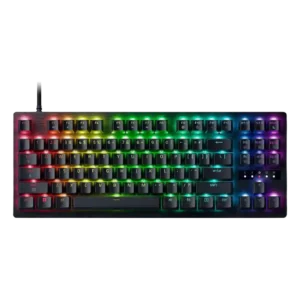
Best for a premium, quiet Hall Effect TKL with strong wireless, software, and gaming features. Skip it if price, switch flexibility, USB passthrough, or an included wrist rest matter most.
Pros: rapid trigger support, typing feel
Cons: switch options, portability
Best for a premium 96% metal keyboard with Hall Effect tuning, strong wireless, and excellent typing feel. Skip it for travel, bargain pricing, or maximum esports specs.
Pros: build quality, frame rigidity
Cons: portability, switch options