- More expensive: price The Coros Apex is noted as a much cheaper competitor, weakening the Vantage V2 value case.
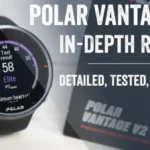
Polar Vantage V2 Review
Bottom Line
Choose the Polar Vantage V2 for serious training, recovery insights, strong sport variety, and useful battery life. Skip it if you want richer smartwatch features, onboard music, NFC payments, maps, or the smoothest syncing.
Best for serious runners, cyclists, and triathletes who want deep Polar Flow analysis, recovery guidance, performance tests, FuelWise, and broad sport tracking more than lifestyle apps.
Not for buyers who prioritize onboard music, contactless payments, full maps, rich app support, LTE, ECG, voice assistant features, or frictionless smartwatch polish.
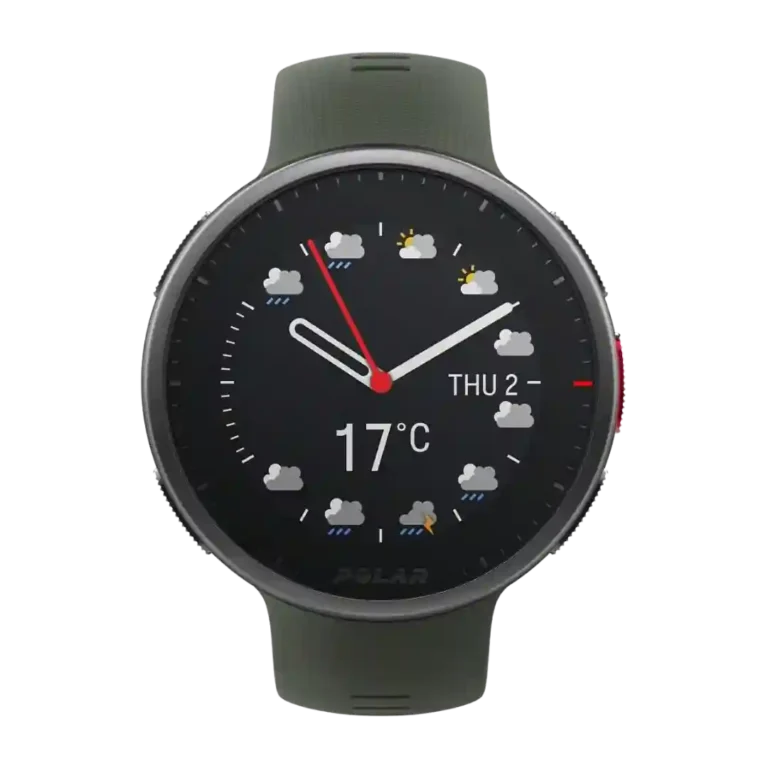
The Polar Vantage V2 comes across as a data-first multisport watch built for runners, cyclists, and triathletes who care more about training load, recovery, tests, and sport profiles than lifestyle extras. Reviewers consistently liked its lightweight design, comfort, Polar Flow depth, coaching tools, and generally capable GPS and battery life. The tradeoff is that its smartwatch side feels limited: no onboard music, no NFC payments, no full maps, and only basic notifications. Accuracy is also context-dependent, with heart-rate spikes, lag, and low-power GPS issues appearing in some tests. It is strongest as a serious training companion, not as a polished everyday smartwatch.
Compared in Reviews
Products reviewers directly compared with this model, grouped into quick takeaways.
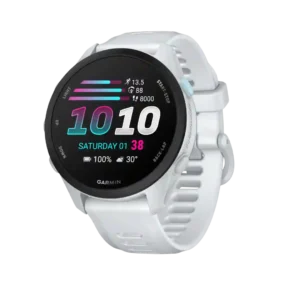
Garmin Forerunner 745
- More expensive: price and multisport capability The Forerunner 745 is described as slightly cheaper and still very competent, even though it lacks the same tests.
- Compared: music playback and maps The Forerunner 745 is presented as stronger for local music and some mapping-related functionality.
- Compared: music and payments The Forerunner 745 is presented as a same-price Garmin alternative with onboard music and contactless payment that the Vantage V2 lacks.
Garmin Forerunner 945
- Better: apps and payments The Vantage V2 is described as missing apps and contactless payments found on Garmin's Forerunner 945.
- Compared: price and premium features The Forerunner 945 costs more but is positioned as stronger on premium features such as music, payments, and visibility.
Feature Scorecards
Pros
-
Reliability is strong in the reviews that address it directly, including no glitches and rock-solid long-term use.
-
Workout variety is excellent, with repeated evidence for around 130 sport modes, strong run/cycle/swim coverage, and triathlon-oriented tracking.
-
Water resistance is strong, with 100m rating and swim tracking repeatedly mentioned.
-
Comfort is a consistent strength, helped by low weight and all-day or sleep-friendly wear, though one review warned it may bobble on smaller wrists.
-
Wellness insights are broad and data-heavy, covering recovery, sleep, readiness, cardio load, FitSpark, FuelWise, and general training-health feedback.
-
Style and design are repeatedly praised as lightweight, sleek, premium, and wearable beyond workouts.
-
Materials quality is strong, with nano-molded aluminum, alloy/polymer construction, and a more premium case repeatedly highlighted.
-
Outdoor visibility is a strength, with reviewers noting bright-condition and direct-sun readability.
-
Build quality is generally premium, with aluminum construction, a sleeker body, and good hardware construction praised across reviews.
-
Recovery insights are one of the watch's strongest themes, with Nightly Recharge, Training Load, Leg Recovery, and other tests praised, though some reviewers used them more than others.
-
The app ecosystem is strongest through Polar Flow and partner syncing, with reviewers praising Flow and Strava or TrainingPeaks links, though it is not a broad app-store watch ecosystem.
-
Coaching features are a major advantage, with FitSpark, guided workouts, fueling prompts, performance tests, and training plans repeatedly described as useful.
-
Calorie and energy tracking is unusually useful, with reviewers noting fat/carbs breakdowns, FuelWise, energy-source reporting, and calorie-related daily wellness data.
-
Durability is mostly good, with MIL-STD evidence, rugged glass, and long-term solidity, though one review noted a screen nick.
-
Sleep tracking is a strength overall, with reviewers often checking Polar's sleep and recovery data, though one review found it hit-or-miss or occasionally mistook stillness for sleep.
-
Fitness tracking accuracy is generally solid for mainstream sport tracking, swim lap detection, cadence, and distance, but a few reviews highlight pace, GPS, or HR inconsistencies.
-
Battery life is good for most users and activities, but reviewers are split because real-world endurance often falls short of Polar's headline claims.
-
The companion app is a key strength because Polar Flow exposes deep analysis, training plans, and web/app tools, although a few reviewers found it less intuitive than desired.
-
Stress support comes mainly through Serene guided breathing, which reviewers described as a calming, customizable breathing exercise feature rather than a deep stress analytics suite.
-
Size options are limited but present, with one review noting S and M/L strap choices.
-
Band quality is generally comfortable and robust, with fabric-like texture and soft silicone, but proprietary connectors and flexibility limits are drawbacks.
-
Customization is strong for sport profiles, data pages, dashboards, activity types, and training screens, though some reviews dislike limits such as four data fields.
-
GPS accuracy is mostly good in normal use, but evidence is mixed because some reviews saw slow acquisition, patchiness under trees, low-power mode errors, or track deviations.
-
Brightness is acceptable rather than brilliant, helped by ambient light adjustment and daylight readability but limited by contrast and vibrancy.
-
Button controls are generally strong and often preferred for training, though one review found the combined button-touch menu system counterintuitive.
-
Charging speed is decent but not class-leading, with reviewers citing about an hour to 100% or 100 minutes from flat.
-
Third-party app support is useful for Strava, TrainingPeaks, Komoot, and segments, but reviewers also noted gaps such as no broader apps or missing Strava route support.
-
Heart-rate accuracy is mixed: several reviewers praised Polar's optical HR, while others saw lag, spikes, overestimation, or high-intensity misses that make a chest strap preferable.
-
Fit is mostly positive when the right strap is used, but reviewers note strap-tightness tradeoffs and possible bobbing on smaller wrists.
-
Charging convenience is mixed: the watch uses a custom cable, but infrequent charging and cable continuity for existing Polar users help.
-
Watch faces and dashboards are customizable and useful, but evidence also points to a limited watch-face selection compared with competitors.
-
One review found broader heart-rate max, minimum, and average results broadly on target, but most accuracy evidence is more specific to heart rate, GPS, and sleep.
-
Value for money is debated: many see a strong multisport value, while others find the price high given missing maps, music, payments, or competitor features.
Cons
-
Menu navigation splits reviewers: some found it quick, simple, or intuitive after learning it, while others described the menus and buttons as counterintuitive.
-
Music controls work for phone playback and playlists, but they are control-only features rather than standalone listening.
-
The operating-system experience is functional but uneven, with quick menus and widgets balanced against confusing control choices and lag.
-
Display quality is practical but not premium-smartwatch vivid, with multiple reviews noting muted colors, lower contrast, or a transflective look.
-
Bluetooth connectivity is mixed: Bluetooth Smart sensor support and phone syncing exist, but no ANT+ and some dropouts or connection limitations hurt reliability.
-
Cross-platform compatibility is adequate across phone, computer, Bluetooth LE, and iOS/Android use, but limitations around ANT+, Wi-Fi conveniences, and sensor ecosystems remain.
-
Smartwatch features are serviceable but secondary: weather, notifications, breadcrumb navigation, and music controls exist, while maps, lifestyle polish, and casual features lag competitors.
-
Touchscreen responsiveness is mixed to weak: it can be usable, but many reviewers mention lag, sensitivity, rain issues, or less responsive swipes.
-
Smartphone notifications are present but limited: reviewers mention texts, weather, and phone alerts, but also read-only behavior and no notifications during activities.
-
Call handling is basic; one review says phone calls can be displayed, but there is no evidence of robust call answering or calling features.
-
The user interface works, but one review specifically called out niggles that keep it from feeling fully polished.
-
Software smoothness is only average, with reviewers noting slight touch lag, a laggy interface, and rapid-touch struggles.
-
Pairing and syncing reliability is a recurring concern, with reviewers reporting sporadic sync, first-try failures, and smartwatch connection dropouts.
-
Safety features are limited; one reviewer specifically wanted activity notifications to avoid missing emergency situations.
-
Onboard music storage is absent, with reviewers repeatedly stating there is no local music, offline Spotify, or watch-stored playback.
-
Contactless payments are absent, and several reviewers explicitly called out missing NFC or payment support.
-
Blood oxygen tracking is a clear gap: reviewers specifically noted no blood-oxygen or SpO2 sensor on the Vantage V2.
Compared With Category Average
Compared with other Smart Watch, this product is above average in reliability, below average in blood oxygen tracking, onboard music storage, contactless payments.
| Attribute | This product | Category average | Difference |
|---|---|---|---|
| blood oxygen tracking | 1.0 | 3.6 | -2.6 |
| onboard music storage | 1.0 | 2.9 | -1.9 |
| contactless payments | 1.0 | 2.9 | -1.9 |
| safety features | 2.0 | 3.9 | -1.9 |
| pairing reliability | 2.4 | 4.0 | -1.6 |
| reliability | 4.9 | 3.7 | +1.2 |
| software smoothness | 2.9 | 3.9 | -1.1 |
| display quality | 3.3 | 4.3 | -0.9 |
FAQ
Is the Polar Vantage V2 good for serious training?
Yes. Reviewers repeatedly frame it as a serious multisport tool with training load, recovery, FuelWise, FitSpark, performance tests, and broad sport tracking.
How accurate is the heart-rate tracking?
It is mixed. Some reviewers found Polar's wrist heart rate strong or generally accurate, while others saw lag, spikes, or high-intensity errors and preferred a chest strap.
Does it have onboard music or NFC payments?
No. Reviews repeatedly note that the Vantage V2 has phone-based music controls but no onboard music storage, offline Spotify, or contactless payments.
How is the battery life?
Most reviewers found the battery useful for everyday training, with several days of use or long GPS sessions. However, some tests fell short of Polar's 40-hour and 100-hour headline claims.
Is Polar Flow a strength?
Yes. Reviewers often praise Polar Flow for detailed training analysis, sleep and recovery data, plans, sport profiles, and partner syncing, though some found parts of the app less intuitive.
Who should not buy it?
It is a poor fit for users who want a polished smartwatch first, especially full maps, onboard music, NFC payments, rich apps, LTE, voice assistant features, or effortless syncing.
Consider This Instead
If you want better onboard music storage
Choose Huawei Watch Fit 4. It scores 4.7 vs 1.0 for onboard music storage, with a 4.1 overall score.
If you want better contactless payments
Choose Apple Watch SE 3. It scores 4.8 vs 1.0 for contactless payments, with a 4.1 overall score.
If you want better blood oxygen tracking
Choose Apple Watch Series 11. It scores 4.5 vs 1.0 for blood oxygen tracking, with a 4.2 overall score.
If you want better safety features
Choose Google Pixel Watch 3. It scores 4.8 vs 2.0 for safety features, with a 4.2 overall score.
Overall Top Smart Watch Alternatives
Good if you want the most rugged Apple Watch, brighter outdoor screen, better battery, LTE, and top apps. Skip it if you need Garmin-like mapping, recovery analytics, smaller sizing, or...
Pros: display quality, heart rate accuracy
Cons: cross-platform compatibility, recovery insights
Choose the Galaxy Watch 6 for a polished Android smartwatch with a bright screen, strong apps, and broad health tracking. Skip it if battery life, iPhone support, or full non-Samsung...
Pros: outdoor visibility, workout tracking variety
Cons: cross-platform compatibility, battery life
Good if you need a rugged Garmin with deep outdoor, tactical, GPS, training, and battery features. Skip it if you want a cheaper lifestyle watch or do not need the...
Pros: materials quality, durability
Cons: LTE connectivity, value for money
Good if you want premium golf maps, virtual caddie tools, health metrics, music, notifications, and long battery life in one watch. Skip it if you only need basic yardages or...
Pros: pairing reliability, brightness
Cons: software smoothness, user interface