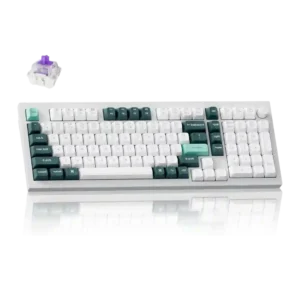
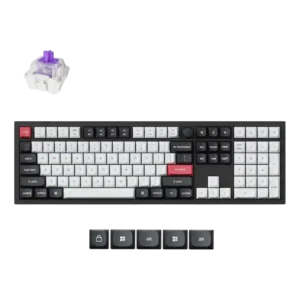
- Cheaper: price and wireless tradeoff The reviewer says the Keychron K2 HE costs less and has wireless use, but sacrifices polling rate and RGB quality.
- Cheaper: price and wireless convenience The reviewer frames the Keychron K2 HE as cheaper with wireless convenience, though without 8K polling.
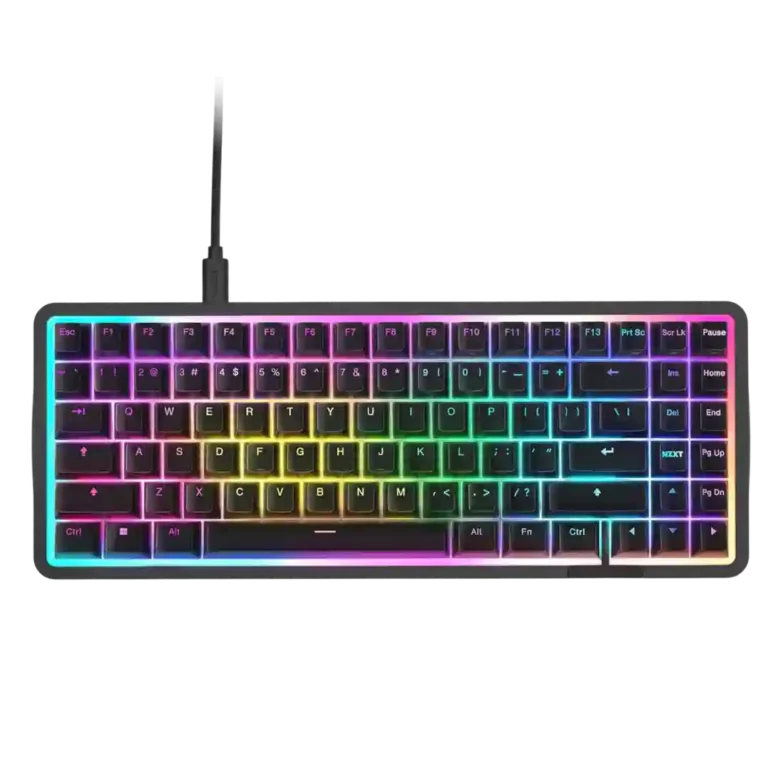
NZXT Function Elite MiniTKL Review
Bottom Line
Choose the NZXT Function Elite MiniTKL for fast Hall effect gaming, rich RGB, sturdy build, and a compact desk-friendly layout. Skip it if you need wireless, a wrist rest, dedicated controls, or better value.
Best for competitive or enthusiast PC gamers who want Hall-effect actuation control, Rapid Trigger, 8K polling, strong RGB, and a compact desk-friendly layout. It also suits users who already like NZXT CAM and want one software hub.
Not ideal for buyers who need wireless connectivity, a numpad, dedicated media controls, Mac CAM support, broad switch compatibility, or the lowest price. It is also risky for users sensitive to software bugs or spacebar/switch sound quirks.
The NZXT Function Elite MiniTKL lands as a fast, compact Hall-effect keyboard with unusually broad tuning for actuation, polling, Rapid Trigger, profiles, macros, and RGB. Most reviewers liked its sturdy aluminum-heavy build, thocky acoustics, vivid lighting, and smooth typing feel, especially for competitive play. The tradeoff is that its competitive focus leaves mainstream comforts behind: it is wired-only, lacks dedicated media controls, passthrough, and a wrist rest, and its proprietary switch ecosystem limits hot-swap flexibility. Value is the most divisive point, because some reviewers saw the price as fair for the feature set while others found cheaper rivals more compelling.
Compared in Reviews
Products reviewers directly compared with this model, grouped into quick takeaways.
- Compared: premium price competition The reviewer places the Function Elite in direct competition with the Asus ROG Azoth.
- Compared: sound level The reviewer says the Function Elite is somewhat louder than the Glorious GMMK 3 Pro but still pleasant.
Feature Scorecards
Summary
51 reviewed features- Very positive 4.5-5.0 25% 13 features
- Positive 3.5-4.4 45% 23 features
- Neutral 2.5-3.4 12% 6 features
- Negative 1.5-2.4 14% 7 features
- Very negative below 1.5 4% 2 features
Pros
-
Latency impressions were highly positive, with reviewers citing near-zero or nearly no delay in typing and gameplay.
-
Reviewers generally liked the board's thocky, satisfying sound, crediting the gasket/foam construction and switch tuning, with several calling the acoustics a highlight.
-
Customization was one of the strongest areas, especially per-key actuation, remapping, RGB, and performance tuning through CAM.
-
Per-key lighting control was praised as flexible, with reviewers highlighting per-key customization and command/category color coding.
-
The frame and weight were repeatedly praised for keeping the board planted and rigid on the desk.
-
Reviewers valued dual-actuation-style control for movement, driving, and walk/run actions, treating it as a genuinely useful Hall-effect advantage.
-
Gaming performance was widely praised for speed, responsiveness, and competitive usefulness, with only value and feature caveats tempering enthusiasm.
-
The 8,000Hz polling rate was praised for competitive performance, though some reviewers said many players will not notice the benefit.
-
Rapid Trigger support was widely praised for fast reset, repeat inputs, and competitive movement control.
-
Most reviewers praised the heavy, sturdy construction and premium feel, though one review found the build only solid rather than exceptional.
-
Responsiveness was usually praised as fast and snappy, though a few reviewers noted it is not the absolute fastest Hall-effect option.
-
Switch/keycap removal was described as easy with the included tool, supporting cleaning and replacement even if switch compatibility is limited.
-
Typing feel was widely praised as smooth, soft, and satisfying, with dissent from reviewers who wanted a deeper or punchier feel.
-
Reviewers consistently liked the compact layout for freeing desk space and giving more room for mouse movement.
-
Key stability was mostly positive thanks to dual-rail switches and stabilized presses, with one side-by-side test finding slight wobble.
-
Gaming extras such as Snap Overrides, 2-in-1 actions, and competitive movement features were viewed as powerful, though sometimes game-restricted or gimmicky.
-
Typing comfort was usually praised for pleasant long-session use, but some reviewers disliked the keycap feel or missing layout features.
-
Actuation was often praised for precision and adjustability, though a few reviewers noted the 0.6mm floor trails more sensitive competitors.
-
Ergonomics were generally praised for stability, grip, tilt options, and comfortable wrist positioning, though missing accessories limited comfort for some.
-
The detachable braided USB-C cable was considered good quality, with praise for its design and expected durability.
-
Sound dampening was usually effective, producing thocky or pleasant acoustics, though one negative review felt the gasket failed to add softness.
-
Switch feel was the most divided hands-on attribute: many described smooth, buttery, impressive switches, while one review found them rough and unpleasant.
-
Keycap quality was mostly praised for textured PBT feel and grip, though one reviewer found the texture abrasive over long sessions.
-
Macro customization was considered solid through remapping and CAM macro support, though some reviewers still wanted dedicated macro keys.
-
Onboard memory was useful for saving multiple profiles, with reviewers praising profile storage for switching games or setups.
-
Software quality was polarizing: many found CAM clean and easy, while one reviewer reported serious bugs and another felt overwhelmed.
-
Design opinions split: many praised the clean, premium look and RGB styling, while a few found it generic or lacking originality.
-
The MiniTKL/75% form factor was generally liked as compact and desk-friendly, with occasional complaints about cramped feel or missing full-size keys.
-
RGB quality was usually praised as vibrant and clean, though several reviewers found perimeter lighting or brightness consistency underwhelming.
-
RGB customization was praised for breadth, per-key control, animations, and CAM options, but some disliked software-only control or finicky behavior.
-
Materials quality leaned positive because of the aluminum and premium finish, but plastic underside and cheaper hand-feel drew criticism in some reviews.
-
Stabilizer quality was often praised for tuned, rattle-controlled larger keys, but the spacebar drew some ping/clunk criticism.
-
Profile management was useful overall, especially onboard profiles, though one reviewer wanted savable custom presets beyond included ones.
-
Backlighting was often bright and vivid, but some reviewers found perimeter brightness inconsistent or not as bright as expected.
-
Durability impressions were mixed but leaned positive: the heavy frame inspired confidence, while a few reviewers raised concerns about hollow plastic or port wiggle.
-
Noise level split by preference: many liked the quiet or balanced sound, while others heard clackiness or a slight spacebar ping.
Cons
-
Value was sharply mixed: several reviewers called the price fair or compelling, while others said the premium price was hard to justify.
-
Key spacing was mixed: some reviewers found it cramped or squashed, while others said the keys were well-balanced and easy to adapt to.
-
Compatibility was mixed: one review liked that it worked out of the box, while another criticized NZXT CAM being Windows-only.
-
Legend visibility was mixed: shine-through legends were praised, but secondary media labels were criticized as hard to see.
-
Hot-swap support was treated as useful but limited, because Hall-effect compatibility and proprietary switch support reduce flexibility.
-
The 75%/MiniTKL layout was valued for compactness and function-row retention, but the lack of full-size/numpad options limited typing appeal.
-
Switch options were a notable limitation because reviewers repeatedly said compatibility is narrow or proprietary.
-
Portability was limited by the board's weight and wired-only design, even though its compact footprint helps it fit bags and desks.
-
Media controls were a weakness: reviewers repeatedly noted the lack of dedicated controls, with media functions hidden behind secondary layers.
-
Reliability concerns came from reported switch failure and RGB/software wake issues, making this one of the weaker evidence areas.
-
Volume control was a weakness because reviewers wanted a rotary knob or volume dial that the Elite model lacks.
-
Wired-only connectivity was the most repeated limitation, with several reviewers calling the lack of wireless a downside or concern.
-
Wrist-rest quality scored poorly because reviewers repeatedly noted that no wrist rest is included and said one would improve comfort or value.
-
Wireless performance scored poorly because reviewers consistently criticized the lack of wireless connectivity rather than evaluating wireless operation.
-
Passthrough was a clear omission, with one reviewer explicitly noting there is no USB passthrough.
Compared With Category Average
Compared with other Gaming Keyboards, this product is above average in analog input support, below average in wireless performance, connectivity, wrist rest quality.
Summary
8 compared features- Above average 0.4+ pts higher 13% 1 feature
- Same as average within 0.3 pts 0% 0 features
- Below average 0.4+ pts lower 88% 7 features
| Attribute | This product | Category average | Difference |
|---|---|---|---|
| wireless performance | 1.2 | 4.0 | -2.8 |
| connectivity | 1.6 | 3.9 | -2.3 |
| wrist rest quality | 1.6 | 3.4 | -1.7 |
| volume control | 2.0 | 3.8 | -1.8 |
| media controls | 2.0 | 3.7 | -1.7 |
| reliability | 2.0 | 3.7 | -1.7 |
| analog input support | 4.7 | 3.2 | +1.4 |
| portability | 2.1 | 3.5 | -1.3 |
FAQ
Is the NZXT Function Elite MiniTKL good for competitive gaming?
Yes. Reviewers repeatedly praised its Hall-effect switches, Rapid Trigger, Snap Overrides, adjustable actuation, and 8,000Hz polling for fast competitive inputs.
Does it support wireless use?
No. Reviewers consistently described it as wired-only, and several treated the lack of 2.4GHz or Bluetooth as a major limitation.
How does the typing feel?
Most reviewers found it smooth, soft, thocky, or pleasant, but a few criticized rough switch feel, a shallow spacebar clunk, or slight wobble.
Is the RGB lighting good?
Usually yes. Many reviewers praised the vivid per-key RGB and perimeter lighting, though some found the perimeter strip inconsistent, finicky, or not bright enough.
Can you swap the switches?
Technically yes, but reviewers cautioned that Hall-effect compatibility is limited and the board mainly accepts NZXT magnetic switches.
Is the price worth it?
Reviewer opinion was mixed. Some called the price fair for the build and gaming feature set, while others said cheaper Hall-effect competitors offer similar or better value.
Does it include a wrist rest or dedicated media controls?
No. Multiple reviewers called out the missing wrist rest, and several noted that media controls are secondary functions rather than dedicated buttons or a dial.
Sample Expert Reviews We Analyzed
These are a few of the reviews included in our analysis.

Video Reviews
- Review score
- 3.9/5
- Review score
- 4.2/5
- Review score
- 3.5/5
Article Reviews
- Review score
- 3.4/5
- Review score
- 4.2/5
- Review score
- 2.7/5
Consider This Instead
If you want better wireless performance
Choose Keychron K10 HE. It scores 5.0 vs 1.2 for wireless performance, with a 4.2 overall score.
If you want better wrist rest quality
Choose Keychron K2 HE. It scores 5.0 vs 1.6 for wrist rest quality, with a 4.2 overall score.
If you want better connectivity
Choose ASUS ROG Azoth X. It scores 4.8 vs 1.6 for connectivity, with a 4.2 overall score.
If you want better volume control
Choose Keychron Q6 HE. It scores 5.0 vs 2.0 for volume control, with a 4.4 overall score.
Overall Top Gaming Keyboards Alternatives
Good if you want a premium 96% Hall Effect keyboard for work and gaming with excellent build, sound, and customization. Skip it if you need cheaper esports-first speed, 8,000Hz polling,...
Pros: cable quality, typing comfort
Cons: portability, switch options
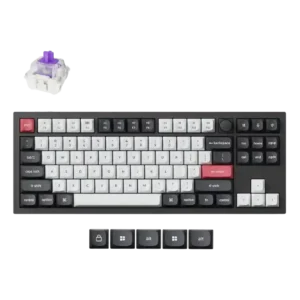
Good if you want a premium full-size Hall Effect keyboard with smooth switches, quiet sound, and deep customization. Skip it if you need a portable, budget-friendly board or broad switch...
Pros: key stability, frame rigidity
Cons: portability, switch options
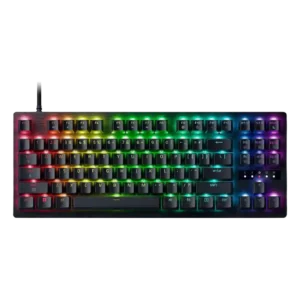
Good if you want a compact Hall Effect keyboard with smooth typing, strong gaming response, bright RGB, and good value. Skip it if you need polished software, quiet heavy presses,...
Pros: desk space efficiency, layout options
Cons: compatibility
Good if you want a premium, quiet TKL Hall Effect keyboard for typing and gaming. Skip it if price, portability, 8,000Hz polling, or broad switch choice matters most.
Pros: build quality, extra gaming features
Cons: switch options, hot-swappable switches