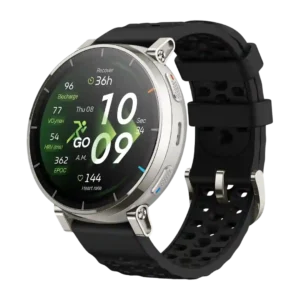
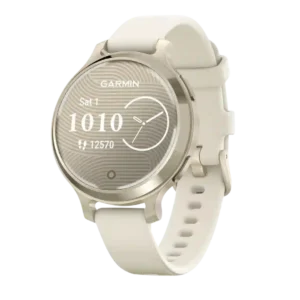
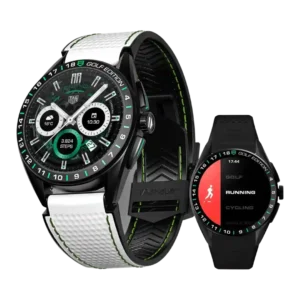
- Alternative: entry-level running watches Lifehacker preferred the Suunto Run among the entry-level options it compared.
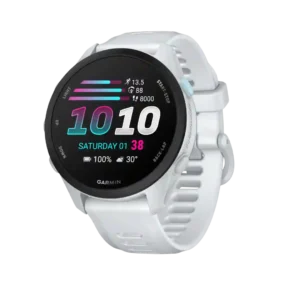
- Compared: GPS, display, and smart features The Garmin offers more smart features, but the Suunto Run counters with dual-band GPS and a larger display.
- Better: ecosystem and smart features The Suunto Run is framed as strong hardware, while Garmin has the stronger ecosystem and smart features.
Suunto Run Review
Bottom Line
Choose the Suunto Run for lightweight comfort, a sharp AMOLED display, strong GPS, recovery tools, and standout value. Skip it if you need full maps, streaming music, richer smartwatch features, or dependable wrist heart-rate accuracy in hard workouts.
Best for runners who want a light, comfortable, affordable AMOLED sports watch with accurate GPS, recovery data, structured workouts, and breadcrumb navigation. It also fits casual multisport users who value training basics over smartwatch extras.
Not for users who need full offline maps, streaming music, broad contactless payments, LTE, a rich third-party app store, or consistently precise wrist heart-rate data during hard intervals, cycling, or strength training.
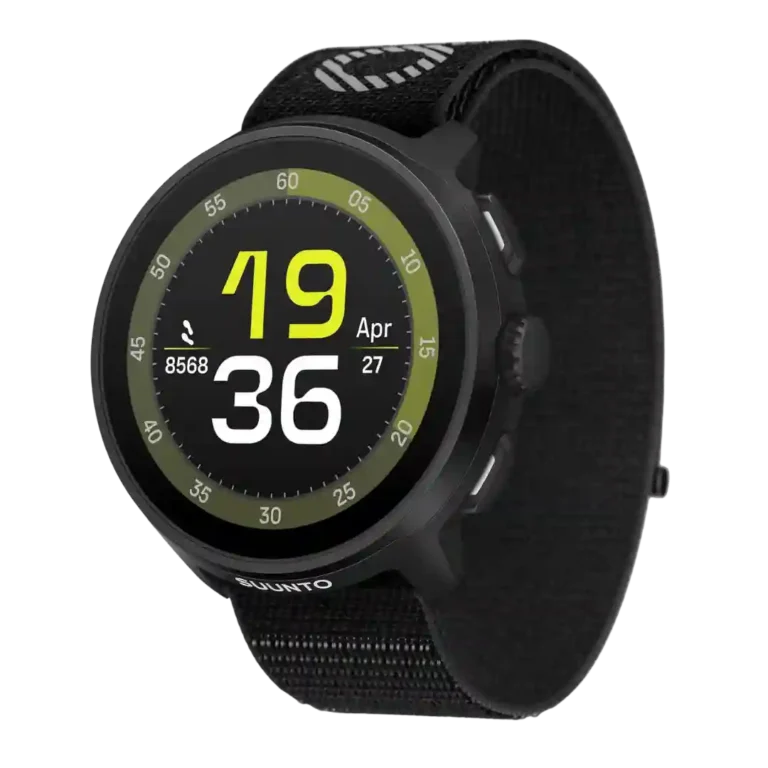
Across reviewers, the Suunto Run lands as a runner-first sports watch that feels unusually light and capable for its price. The strongest praise centers on its comfortable strap, bright AMOLED display, accurate dual-band GPS, useful route guidance, training load, recovery metrics, and simple everyday use. The tradeoff is that Suunto keeps the package lean: smartwatch tools are basic, notifications are less polished than rivals, onboard music is MP3-only, and SuuntoPlus apps or full maps are missing. Battery life is solid for regular training but less impressive with always-on display, while wrist heart-rate accuracy ranges from strong on steady efforts to shaky during intervals, cycling, or weights.
Compared in Reviews
Products reviewers directly compared with this model, grouped into quick takeaways.
- Upgrade: maps and advanced features The Race S is described as the more complete option because it adds maps, storage, SuuntoPlus apps, and power support.
- More expensive: running features and price The5KRunner says the Run offers similar core running features for less money than the Race S.
- More expensive: price and AMOLED competition The Coros Pace Pro is portrayed as similar but $100 more expensive than the Suunto Run.
Feature Scorecards
Pros
-
Comfort is a standout strength: reviewers repeatedly describe the 36g watch as light, thin, comfortable, and easy to wear day and night.
-
Value for money is one of the strongest points, with reviewers repeatedly calling the watch competitive, budget-friendly, or outstanding for the price.
-
Display quality is consistently praised, with the AMOLED screen described as crisp, bright, colorful, high-resolution, and easy to read.
-
Fitness tracking accuracy is broadly positive across supported sports, with reviewers praising reliable activity tracking while noting some heart-rate caveats separately.
-
Style and design are well liked, with reviewers praising the sleek, colorful, modern, lightweight look and premium design cues.
-
Durability looks good in reviewer experience, including Gorilla Glass, rugged feel, and surviving bumps or drops without obvious damage.
-
Touchscreen responsiveness is strong in positive reviews, with smooth mid-run swiping and good wet/sweaty performance mentioned.
-
GPS accuracy is one of the strongest themes, with dual-band tracking praised across roads and trails, although track geometry, open-water swim, or one reviewer’s early firmware results were less perfect.
-
Build quality is praised for feeling premium or robust despite the light, mostly plastic construction.
-
Water resistance is solid at 5ATM or 50 meters, with reviewers noting swimming, rain, and shower-safe use cases.
-
Fit is helped by included strap lengths and a secure, breathable fabric strap that accommodates most wrists.
-
Band quality is praised, especially the nylon strap’s softness, stretch, comfort, security, and quick-drying feel, with minor wetness or swap annoyances.
-
Cross-platform compatibility is solid, with reviewers using or citing support across Android phones and iPhones.
-
Wellness insights are useful for a simple watch, covering sleep, stress/readiness, breathing, HRV, and recovery-oriented daily context.
-
Button controls are a strength, especially the digital crown for scrolling, glove use, and avoiding touchscreen reliance during activities.
-
Reliability is generally good for setup, syncing, GPS use, and everyday operation, with reviewers describing problem-free use or reliable training performance.
-
Brightness is generally good indoors and outdoors, though a few reviewers noted direct-sun or lower-nit caveats.
-
Materials quality exceeds the price tier, with reviewers repeatedly highlighting the stainless-steel bezel, Gorilla Glass, and reinforced polyamide case.
-
Pairing and syncing are generally reliable across Suunto account setup, Strava, headphones, and sensors, with only the music-transfer process drawing some friction elsewhere.
-
Software smoothness is mostly praised, with several reviewers reporting smooth swipes or little lag, though at least one still noticed screen lag.
-
Recovery insights are a clear strength, combining HRV, sleep, TSS, training load, readiness, and post-workout recovery information, though the terminology can be dense.
-
Bluetooth connectivity is useful for headphones, heart-rate straps, foot pods, and music playback, with multiple reviewers connecting accessories successfully.
-
The companion app is generally a strength for workout review, syncing, routing, and recovery data, though one reviewer still found it dated.
-
Safety and navigation features are useful, with breadcrumb route following, off-course alerts, trackback-like route use, and clear route prompts helping runners stay oriented.
-
Blood oxygen and pulse-ox tracking are present on the watch, though reviewers mostly treated it as a supported wellness feature rather than deeply testing accuracy.
-
Stress tracking appears in the wellness/readiness mix, with one reviewer specifically calling out stress scores alongside sleep and training insights.
-
Workout variety is good for a runner-first watch, with 34 sport profiles, triathlon/multisport support, and core indoor/outdoor modes, but fewer profiles than higher-end Suunto models.
-
Outdoor visibility is mostly good, but direct sunlight can still challenge the display in some conditions.
-
Coaching features include structured intervals, Ghost Runner, hydration or nutrition alerts, training feedback, and some AI-coached guidance, but external plans and deeper coaching are limited.
-
Calorie tracking is included through daily activity stats and calorie-based training goals, but reviewers did not deeply validate calorie accuracy.
-
Customization is solid for sport pages, data screens, widgets, buttons, and watch faces, but widget limits and watch-face limits remain complaints.
-
Watch-face quality is adequate but limited, with some reviewers liking customization while others wanted more downloadable faces or more choices.
-
Battery life is solid for regular training but not class-leading, especially with always-on display where reviewers often saw three to six days.
-
Music controls work well for basic playback, skipping, pausing, volume, and lap/voice audio use.
-
Heart-rate accuracy is mixed, working well for steady efforts or some runs but struggling more with intervals, cycling, vibration, or weight training.
-
Sleep tracking drew split feedback, with several reviewers finding timing useful while others reported errors or weaker sleep-stage reliability.
-
Menu navigation is usable and often straightforward, helped by the crown, but some reviewers found features buried or the layout less intuitive than rivals.
Cons
-
Health tracking is useful but uneven: reviewers found continuous heart-rate data generally good, while sleep or daily tracking accuracy was less consistent.
-
Smartwatch features are intentionally basic, centered on notifications, weather, music controls, and simple daily tools rather than full smartwatch depth.
-
Charging speed is mixed, with one reviewer seeing a fast 75% boost while another found charging slower than expected.
-
User-interface feedback is mixed, ranging from smooth widget scrolling to complaints that Suunto still lags behind competitors or buries features.
-
Smartphone notifications are basic and useful, but reviewers noted missing sender/context details and no message replies.
-
Onboard music storage is useful but dated, limited to manually loaded MP3 files with no Spotify or other streaming integration.
-
The operating-system experience is a tradeoff: the newer platform feels responsive but contributes to missing SuuntoPlus support and uncertainty around future ecosystem direction.
-
Charging convenience is a recurring concern: several reviewers disliked the proprietary magnetic charger or weak alignment, though a few found the updated cable acceptable.
-
The app ecosystem is mixed: Suunto’s app is valued, but the Run lacks SuuntoPlus app-store support and broader add-on capability.
-
Size options are limited because the watch comes in one case size, though strap sizing is more flexible.
-
Third-party support is limited: syncing to services like Strava is useful, but SuuntoPlus apps and richer third-party app features are missing.
-
Step counting is a weakness, with multiple reviewers saying counts were noticeably low or off compared with other trackers.
-
Contactless payments are a major limitation outside China, with reviewers noting no broad payment support beyond Alipay availability in China.
-
Wi-Fi connectivity is absent, which makes podcast or music syncing less convenient.
Compared With Category Average
Compared with other Smart Watch, this product is above average in value for money, touchscreen responsiveness, below average in Wi-Fi connectivity, step counting accuracy, contactless payments.
| Attribute | This product | Category average | Difference |
|---|---|---|---|
| Wi-Fi connectivity | 1.0 | 3.2 | -2.2 |
| step counting accuracy | 1.9 | 3.7 | -1.8 |
| value for money | 4.6 | 3.8 | +0.8 |
| contactless payments | 1.8 | 2.9 | -1.1 |
| app ecosystem | 2.7 | 3.6 | -0.9 |
| charging convenience | 2.8 | 3.5 | -0.7 |
| operating system experience | 2.9 | 3.8 | -0.9 |
| touchscreen responsiveness | 4.5 | 3.6 | +0.9 |
FAQ
Is the Suunto Run good for runners?
Yes. Reviewers consistently frame it as a runner-first watch with strong GPS, structured workouts, recovery metrics, track mode, marathon tools, and a light 36g design.
How accurate is the GPS?
GPS is one of the best-supported strengths in the reviews. Most reviewers praised the dual-band GPS on roads and trails, though a few noted less perfect results for track geometry, open-water swimming, or early firmware tests.
Is the heart-rate sensor accurate?
It depends on the activity. Reviewers found it good on steady efforts and some runs, but less reliable during intervals, cycling descents, vibration, or weight training, so a Bluetooth chest strap is the safer option for precision.
How long does the battery last?
For regular training, reviewers generally found battery life solid. With always-on display, several saw roughly three to six days, while GPS specs and tests supported longer single-activity use.
Does it have music storage?
Yes, but it is limited. The watch stores MP3 files for offline playback through Bluetooth headphones, but reviewers repeatedly noted there is no Spotify, Amazon Music, YouTube Music, or other streaming support.
Does it have maps, payments, or full smartwatch features?
No full offline maps are included; reviewers describe breadcrumb navigation instead. Smartwatch features are basic, and contactless payments are limited, with Alipay mentioned for China but no broad Garmin Pay or Apple Pay equivalent.
Consider This Instead
If you want better contactless payments
Choose Apple Watch SE 3. It scores 4.8 vs 1.8 for contactless payments, with a 4.1 overall score.
If you want better step counting accuracy
Choose OnePlus Watch 3. It scores 4.8 vs 1.9 for step counting accuracy, with a 4.0 overall score.
If you want better third-party app support
Choose Samsung Galaxy Watch 8. It scores 4.8 vs 2.4 for third-party app support, with a 4.0 overall score.
If you want better app ecosystem
Choose Apple Watch Ultra 3. It scores 4.9 vs 2.7 for app ecosystem, with a 4.2 overall score.
Overall Top Smart Watch Alternatives
Good if you want the most rugged Apple Watch, brighter outdoor screen, better battery, LTE, and top apps. Skip it if you need Garmin-like mapping, recovery analytics, smaller sizing, or...
Pros: display quality, heart rate accuracy
Cons: cross-platform compatibility, recovery insights
Choose the Galaxy Watch 6 for a polished Android smartwatch with a bright screen, strong apps, and broad health tracking. Skip it if battery life, iPhone support, or full non-Samsung...
Pros: outdoor visibility, workout tracking variety
Cons: cross-platform compatibility, battery life
Good if you need a rugged Garmin with deep outdoor, tactical, GPS, training, and battery features. Skip it if you want a cheaper lifestyle watch or do not need the...
Pros: materials quality, durability
Cons: LTE connectivity, value for money
Good if you want premium golf maps, virtual caddie tools, health metrics, music, notifications, and long battery life in one watch. Skip it if you only need basic yardages or...
Pros: pairing reliability, brightness
Cons: software smoothness, user interface