Best for Surround sound simulation
Samsung HW-Q990H
5.0 feature score
Highest scored product for this feature based on supporting review evidence.
Highest scored product for this feature based on supporting review evidence.
Balances feature score, supporting reviews, and overall product strength.
Has the broadest review evidence for this feature.
Strongest overall product among items with scored evidence for this feature.
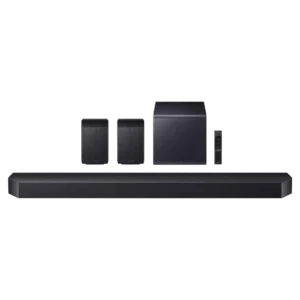
The four-piece system creates a remarkably complete, room-filling surround field with convincing side, rear, and overhead movement. Reviewers repeatedly ranked its immersion among the best available from a soundbar package.
Pros: Loudness / maximum volume, Stereo imaging accuracy
Cons: Smart assistant integration (Alexa, Status indicators

Surround immersion is outstanding across Atmos and upmixed 5.1 content. The system produces a large, enveloping bubble with convincing front-to-back, side-to-side, and overhead movement.
Pros: Chromecast compatibility, Spotify Connect reliability
Cons: Rear speaker cable length, Gaming HDMI passthrough
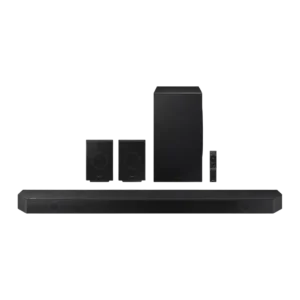
Surround performance was one of the strongest areas, with reviewers describing immersive, room-filling effects and convincing movement around the listening position.
Pros: Soundstage height, Surround sound simulation
Cons: Chromecast compatibility, Google
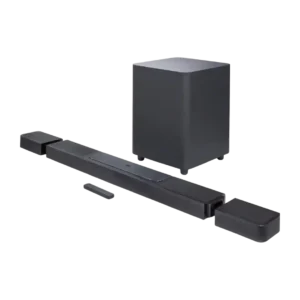
Surround performance was a major strength, repeatedly described as immersive, precise, and competitive with strong soundbar rivals.
Pros: Inter-speaker connectivity, Audio format support
Cons: optical, Gaming HDMI passthrough
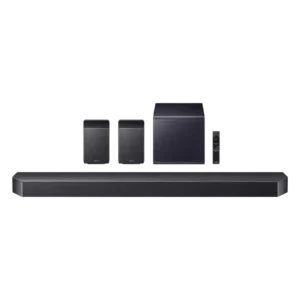
Surround presentation is the product’s strongest consensus area, with reviewers praising immersion, positioning, and a convincing sound bubble; one review found rear speakers weaker under stress.
Pros: Multi-speaker pairing reliability, Gaming HDMI passthrough
Cons: Google, Cabinet construction / bracing
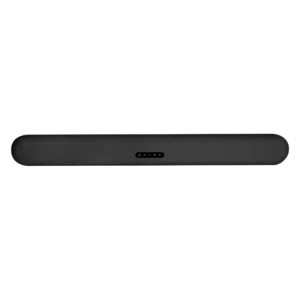
Surround performance was generally convincing for a single bar or expanded system, though some comments still reflect the limits of simulated or front-originating surround.
Pros: Distortion at high volume, Voice clarity
Cons: Spotify Connect reliability, Chromecast compatibility
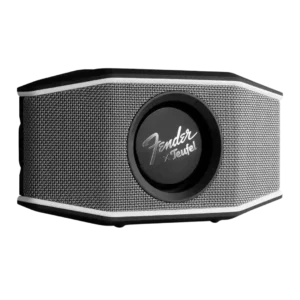
The Dynamore surround effect was widely praised for widening the presentation, though reviewers treated it as simulated rather than true surround.
Pros: Dust resistance rating, Cohesive presentation
Cons: Speakerphone quality, Microphone

Virtual surround is the Mini’s headline strength. Reviewers often praise its room-filling, immersive presentation for a compact bar, while also noting it cannot fully replace discrete speakers or larger Atmos...
Pros: On-device controls, Dynamic headroom
Cons: Multi-speaker pairing reliability, Inter-speaker connectivity
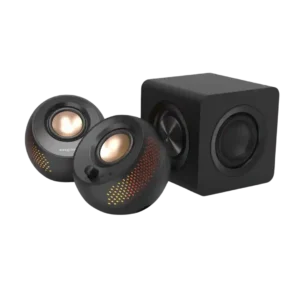
Surround-style processing had limited but positive evidence, with one reviewer saying the app processing brought the sound to life.
Pros: Bluetooth connection stability, Surround sound simulation
Cons: Bluetooth codec support, Audio format support
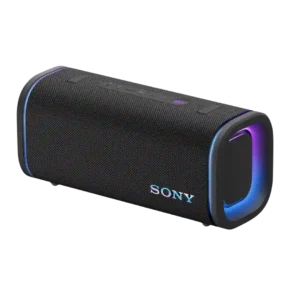
The wide, detached stage can feel surround-like for a speaker of this size.
Pros: Latency with TV (lip sync), Multi-speaker pairing reliability
Cons: Energy efficiency, Amplifier power requirements

Surround simulation was a major strength, with reviewers praising the Arc’s virtual 3D field, room-filling movie sound, and immersive presentation while noting it is not true in-ceiling Atmos.
Pros: Multi-speaker pairing reliability, Spotify Connect reliability
Cons: Gaming HDMI passthrough, Video passthrough support
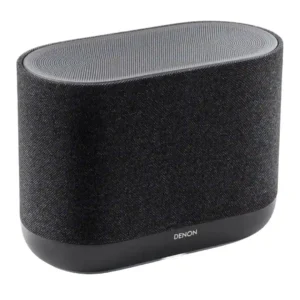
The spatial presentation is a major reason to buy the Home 400, especially with well-mixed Dolby Atmos Music. It can sound immersive and convincing, though track quality and extreme settings...
Pros: Dialogue clarity (for TV/soundbar use), Setup simplicity
Cons: Battery life (if portable), Water resistance rating

Surround simulation was widely liked for width and immersion, though it still falls short of discrete rear-speaker systems.
Pros: Multi-speaker pairing reliability, Voice recognition accuracy
Cons: Bluetooth connectivity, Video passthrough support
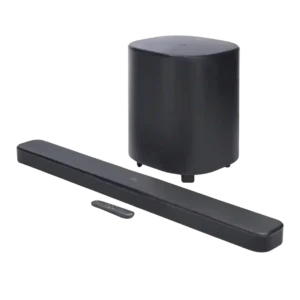
Surround simulation was widely praised for creating an immersive field without rear speakers, with caveats that the effect is still virtual and room-dependent.
Pros: Spotify Connect reliability, Setup simplicity
Cons: On-device controls, HDMI 2.1 gaming

SuperWide is the product’s signature strength, creating a wider, more open presentation for games and movies. It cannot replace real surround speakers, and some music sounds better with it disabled.
Pros: Bluetooth range, optical
Cons: Home theater integration, Headphone output quality

Virtual surround is convincing for a compact bar but not fully enveloping. Reviewers like the width and spatial bubble while acknowledging the limits of two-channel virtualization.
Pros: Distortion at high volume, Loudness / maximum volume
Cons: Chromecast compatibility, Google
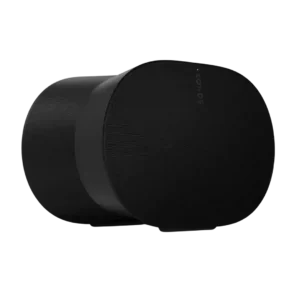
Surround simulation was excellent in full Sonos setups and spatial demos, but a single unit was not described as true surround sound.
Pros: Control button responsiveness, Smart features
Cons: Chromecast compatibility, Google
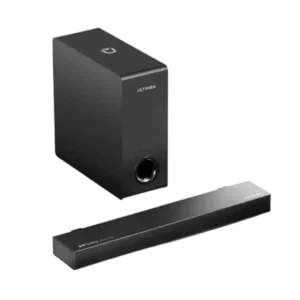
Surround simulation is stronger than expected for a tiny 2.1 system, with reviewers hearing immersive movement and voices around them.
Pros: Setup simplicity, Value for money
Cons: Design and build quality, Low-volume performance

Spatial and surround simulation was often praised as wider and surprisingly effective, though one reviewer found the effect reverby and uneven.
Pros: Latency with TV (lip sync), Setup simplicity
Cons: Multi-speaker pairing reliability, Audio format support
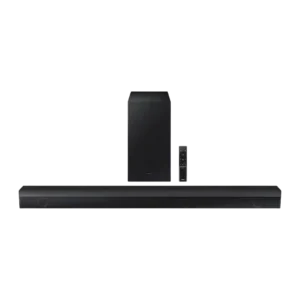
DTS Virtual:X and surround modes often created an immersive effect, but reviewers also noted that it is simulated and less reliable than true surround systems.
Pros: Bluetooth connection stability, Value for money
Cons: Smart assistant integration (Alexa, Video passthrough support
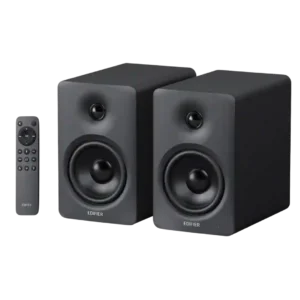
The wide front stage gives flyovers and directional effects convincing space, but it remains a stereo system rather than true surround sound.
Pros: HDMI ARC, Low-volume performance
Cons: AirPlay compatibility, Wi-Fi streaming reliability

Auracast grouping was described as creating a surround-like effect when multiple speakers are placed around a room.
Pros: Setup simplicity, Bluetooth connection stability
Cons: Wired input, Power bank function

One reviewer reacted positively to the paired-speaker surround-like effect, describing it as true wireless surround.
Pros: Multi-speaker pairing reliability, Drop resistance durability
Cons: Multipoint connectivity, Smart features
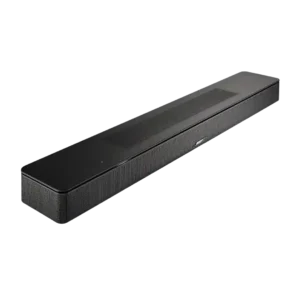
Surround simulation ranges from surprisingly immersive to weak or jarring, depending on content and Personal Surround expectations.
Pros: Chromecast compatibility, Spotify Connect reliability
Cons: Google, Privacy and data
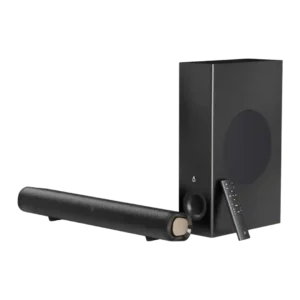
SuperWide and surround simulation are useful but imperfect; reviewers liked the wider, more immersive effect, while also noting lost definition, gimmickry, or fake-Atmos limits.
Pros: Setup simplicity, Weight convenience
Cons: Smart features, Rear speaker cable length

Surround impressions were mixed: the Beam can sound spacious and becomes stronger with rear speakers, but reviewers stressed it is not a true surround replacement on its own.
Pros: Dynamic headroom, On-device controls
Cons: Video passthrough support, Bluetooth connectivity

Paired speakers can create a wider, more immersive TV presentation through spatial processing, but the effect is simulated and lacks dedicated center, rear, height, or subwoofer channels.
Pros: Wi-Fi streaming reliability, Inter-speaker connectivity
Cons: Wired input, Frequency response balance
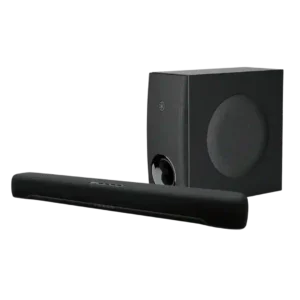
Virtual surround and 3D Movie modes can widen the presentation, but reviewers repeatedly note they are not as convincing as real Atmos/surround and can thin dialogue.
Pros: Inter-speaker connectivity, Stereo imaging accuracy
Cons: Status indicators, Distortion at high volume

The surround modes add some width and fullness, but they are not a substitute for a true theater system. Higher surround settings can also reduce the voice clarity that makes...
Pros: Stereo imaging accuracy, Subwoofer
Cons: Wi-Fi streaming reliability, Dolby Atmos height effects

Opinions were mixed: some reviewers liked the virtual surround effect, while others said it was not suitable for serious surround or home theater expectations.
Pros: Distortion at high volume, Setup simplicity
Cons: Dolby Atmos height effects, On-device controls
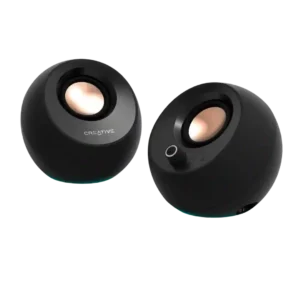
There is no true spatial-audio or surround-processing support. One owner describes an immersive, crisp presentation, but it remains a conventional two-speaker stereo system.
Pros: Battery life (if portable), Detail retrieval
Cons: optical, Audio format support
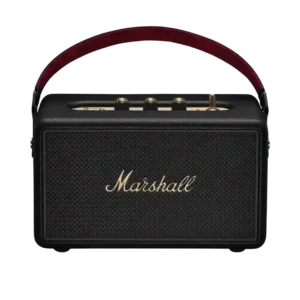
Surround-style presentation is limited; the speaker creates an immersive wide field, but reviewers caution it is not true surround sound.
Pros: Voice clarity, Bluetooth range
Cons: Multi-speaker pairing reliability, Inter-speaker connectivity

REN is a stereo system, so it lacks the surround/Atmos options some soundbars can provide.
Pros: HDMI ARC, Stereo imaging accuracy
Cons: Surround sound simulation, Bluetooth codec support
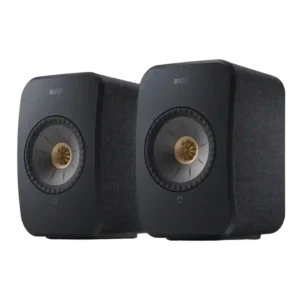
Surround immersion was a weakness in the one direct mention, with the speakers not delivering Atmos-style or DTS:X-like effects.
Pros: Soundstage height, Amplifier power requirements
Cons: On-device controls, Surround sound simulation
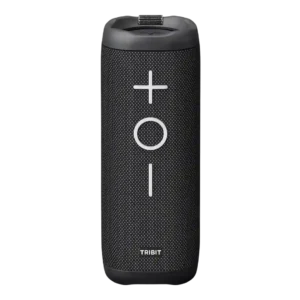
One reviewer rejected the idea that a single small speaker could deliver a truly immersive surround experience.
Pros: Cohesive presentation, Stereo imaging accuracy
Cons: Surround sound simulation, App reliability
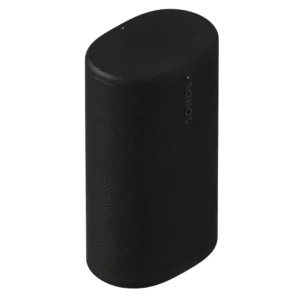
Spatial playback is a clear limitation: the Play lacks Dolby Atmos/spatial-audio support, so it does not create the kind of immersive surround effect some buyers may expect.
Pros: Dialogue clarity (for TV/soundbar use), Multi-speaker pairing reliability
Cons: Surround sound simulation, Protective case inclusion