Enphase IQ PowerPack 1500

Enphase IQ PowerPack 1500 Review

Brand: Enphase
Released: November 21, 2024
Updated: 1 hour ago
3.8
Overall review score
280
Review evidence points
96
Scored features
13
Expert reviews

Bottom Line

Choose it for quiet indoor backup, rapid wall charging, a class-leading touchscreen, and extensive safety certification. Skip it if you need whole-home power, lightweight portability, expandable capacity, roomy AC outlets, or strong solar value.

Best for

Best for Enphase households and buyers who want quiet indoor backup for refrigerators, routers, computers, lights, and similar essentials, with strong safety certification and fast wall charging.

Not for

Skip it for whole-home backup, large pumps or motors, frequent long carries, expandable storage, high-amperage RV connections, or buyers seeking the most capacity and solar input per dollar.

Verdict

The IQ PowerPack 1500 combines unusually polished hardware with practical outage performance. Its bright touchscreen, fast wall charging, quiet fans, clean inverter output, broad port mix, and extensive UL certification make it especially appealing for indoor backup and existing Enphase households. It can comfortably support refrigerators, routers, computers, lights, and some tools, while the optional cart solves much of the carrying problem. The tradeoffs are substantial: the fixed 1.5 kWh battery is heavy, the AC outlets are cramped, solar input is limited to 440 W, and the app raises both usability and privacy complaints. At its premium price, value depends on prioritizing safety, refinement, and ecosystem integration over capacity, expandability, and faster solar charging.

Feature Scorecards

Summary

96 reviewed features
  • Very positive 4.5-5.0
    48 (50%)
  • Positive 3.5-4.4
    18 (19%)
  • Neutral 2.5-3.4
    13 (14%)
  • Negative 1.5-2.4
    11 (11%)
  • Very negative below 1.5
    6 (6%)

Pros

Sort
  • 5.0
    6 reviews strong consensus
    AC charging speed: 5.0, 6 reviews, strong consensus
    Wall charging is a standout strength, with a full recharge consistently described as taking roughly 75 minutes or just over an hour.
  • 5.0
    6 reviews strong consensus
    design aesthetics: 5.0, 6 reviews, strong consensus
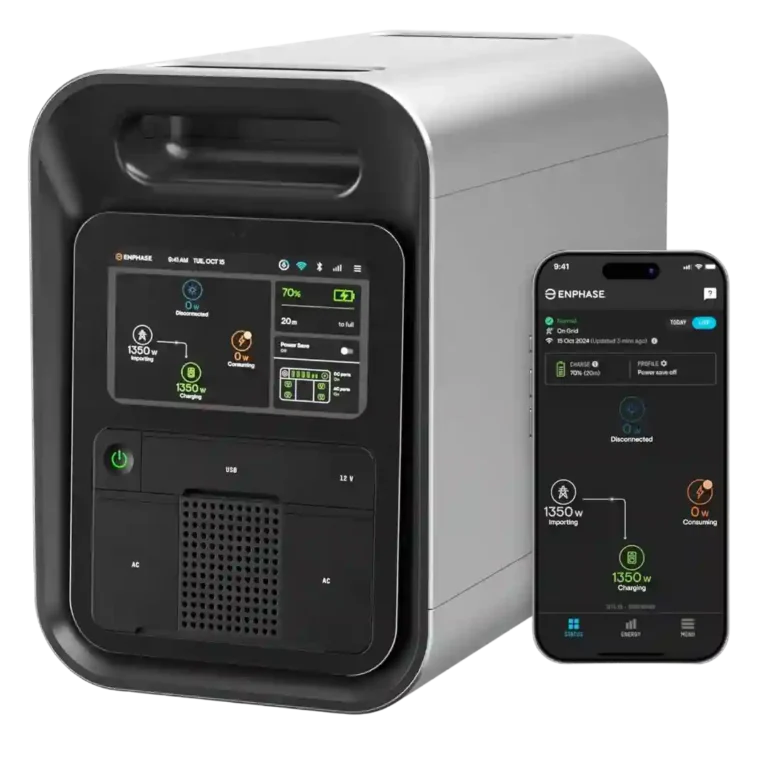
    The sleek silver enclosure, rounded edges, polished packaging, and motion-activated screen make this one of the best-looking stations in its class.
  • 5.0
    5 reviews strong consensus
    display readability: 5.0, 5 reviews, strong consensus
    Bright, clear graphics and strong visibility make charge status and power flow easy to read, including in sunlight.
  • 5.0
    5 reviews strong consensus
    safety certifications: 5.0, 5 reviews, strong consensus
    Extensive UL certification is the product’s clearest differentiator and a major reason to consider it for indoor backup.
  • 4.6
    11 reviews strong consensus
    display quality: 4.6, 11 reviews, strong consensus
    The large color touchscreen is widely praised for its premium feel, responsive controls, and unusually polished presentation.
  • 5.0
    4 reviews strong consensus
    ease of setup: 5.0, 4 reviews, strong consensus
    Charging, app pairing, Wi-Fi connection, and basic operation are repeatedly described as straightforward.
  • 5.0
    4 reviews strong consensus
    LiFePO4 battery: 5.0, 4 reviews, strong consensus
    The LFP chemistry is a major plus for safety, thermal stability, and frequent long-term use.
  • 5.0
    4 reviews strong consensus
    noise level: 5.0, 4 reviews, strong consensus
    Quiet fans and clean inverter operation make it well suited to living rooms, home offices, and indoor outage use.
  • 5.0
    3 reviews strong consensus
    app connectivity: 5.0, 3 reviews, strong consensus
    Wi-Fi, Bluetooth, cellular, and Enphase app integration give the station unusually broad connected functionality.
  • 5.0
    3 reviews strong consensus
    battery chemistry: 5.0, 3 reviews, strong consensus
    LFP chemistry is consistently viewed as the right choice for safety, thermal stability, and long service life.
  • 5.0
    3 reviews strong consensus
    battery management system: 5.0, 3 reviews, strong consensus
    The BMS earns confidence for safety, efficient cycling, and protecting the battery from damaging deep-storage conditions.
  • 5.0
    3 reviews strong consensus
    charging efficiency: 5.0, 3 reviews, strong consensus
    Measured efficiency closely matches or exceeds the rating, and real-world runtimes are considered dependable.
  • 4.6
    5 reviews strong consensus
    outlet selection: 4.6, 5 reviews, strong consensus
    Four AC outlets, four USB-A ports, two USB-C ports, and a 12-volt socket cover most common emergency and camping needs.
  • 4.5
    6 reviews moderate consensus
    accessory ecosystem: 4.5, 6 reviews, moderate consensus
    The matching cart and foldable solar panels make the system easier to move and use off-grid. The cart is especially helpful given the unit’s weight.
  • 5.0
    2 reviews limited evidence
    battery cycle life: 5.0, 2 reviews, limited evidence
    A 2,500-cycle rating and LFP chemistry point to years of typical backup and camping use.
  • 5.0
    2 reviews limited evidence
    cooling performance: 5.0, 2 reviews, limited evidence
    Cooling fans stay impressively quiet even under heavy loads, supporting comfortable indoor use.
  • 5.0
    2 reviews limited evidence
    handle comfort: 5.0, 2 reviews, limited evidence
    The paired top handles are comfortable and make short carries much easier.
  • 5.0
    2 reviews limited evidence
    lifting ease: 5.0, 2 reviews, limited evidence
    Comfortable paired handles make short lifts easier, even though the station itself remains heavy.
  • 5.0
    2 reviews limited evidence
    long-term reliability: 5.0, 2 reviews, limited evidence
    Hands-on use was reliable, and the engineering choices are designed to reduce common long-storage failures.
  • 5.0
    2 reviews limited evidence
    remote monitoring: 5.0, 2 reviews, limited evidence
    Battery level, load, charge status, and energy history can be checked remotely through the Enphase app.
  • 5.0
    2 reviews limited evidence
    simultaneous device support: 5.0, 2 reviews, limited evidence
    The broad port array can run or charge up to 11 devices at once, including appliances and personal electronics.
  • 4.7
    3 reviews strong consensus
    operating temperature range: 4.7, 3 reviews, strong consensus
    The broad certified range from roughly -4°F to 122°F supports use across many climates.
  • 4.7
    3 reviews strong consensus
    water resistance: 4.7, 3 reviews, strong consensus
    Gasketed port covers and outdoor certification inspire confidence against light rain and moisture, though some testers still avoid prolonged exposure.
  • 5.0
    1 review
    12-volt outlet: 5.0, 1 review
    The 12-volt socket rounds out the port selection for vehicle-style accessories and small DC gear.
  • 5.0
    1 review
    battery storage performance: 5.0, 1 review
    A protected reserve is designed to prevent the battery from becoming unusable after long storage, even following a deep discharge.
  • 5.0
    1 review
    Bluetooth connectivity: 5.0, 1 review
    Bluetooth joins Wi-Fi and cellular support to give the station several ways to connect with the Enphase app.
  • 5.0
    1 review
    cable storage: 5.0, 1 review
    The included semi-rigid case gives the charging cables a practical, organized place to live.
  • 5.0
    1 review
    charging cable quality: 5.0, 1 review
    The included wall and vehicle charging cables feel heavy-duty and well made.
  • 5.0
    1 review
    control panel layout: 5.0, 1 review
    The large touchscreen puts advanced charging, power-save, and output settings directly on the unit instead of hiding them in the app.
  • 5.0
    1 review
    dust resistance: 5.0, 1 review
    Sealed construction and gasketed port covers are designed to keep dust and grit away from the connections.
  • 5.0
    1 review
    ease of use: 5.0, 1 review
    Most advanced functions can be handled from the touchscreen, making day-to-day operation unusually simple.
  • 5.0
    1 review
    energy efficiency: 5.0, 1 review
    Efficient discharge and recharge behavior is presented as a core engineering strength.
  • 5.0
    1 review
    energy usage tracking: 5.0, 1 review
    The app provides detailed energy histories by day, week, month, year, and lifetime.
  • 5.0
    1 review
    heat management: 5.0, 1 review
    Even during a demanding vehicle-charging test, the enclosure remained barely warm.
  • 5.0
    1 review
    included accessories: 5.0, 1 review
    A semi-rigid cable case and robust charging cables add useful value to the base package.
  • 5.0
    1 review
    inverter quality: 5.0, 1 review
    The inverter delivers very clean AC power and passed demanding noise and load testing.
  • 5.0
    1 review
    output stability: 5.0, 1 review
    Pure sine wave output is described as clean and stable enough for electronics and essential appliances.
  • 5.0
    1 review
    pass-through charging: 5.0, 1 review
    AC pass-through lets the station power connected loads while its battery charges from the grid.
  • 5.0
    1 review
    power quality: 5.0, 1 review
    AC output is exceptionally clean, with no audible difference from normal grid power in amplification testing.
  • 5.0
    1 review
    pure sine wave output: 5.0, 1 review
    Pure sine wave AC supports sensitive electronics without the instability associated with rougher inverter output.
  • 5.0
    1 review
    rated output: 5.0, 1 review
    The inverter sustained roughly its 1,500 W rating for ten minutes without shutting down.
  • 5.0
    1 review
    recharge speed: 5.0, 1 review
    Overall recharge speed is excellent on AC power, with a full wall charge taking around 75 minutes.
  • 5.0
    1 review
    size and footprint: 5.0, 1 review
    The enclosure is relatively compact for a 1.5 kWh system, though its dense build contributes to the high weight.
  • 5.0
    1 review
    solar cable compatibility: 5.0, 1 review
    The common XT60 connection and readily available adapters make third-party solar cabling relatively straightforward.
  • 5.0
    1 review
    USB-A ports: 5.0, 1 review
    Four USB-A ports remain useful for older cables and help the station charge a broad mix of personal electronics.
  • 5.0
    1 review
    USB-C ports: 5.0, 1 review
    The two USB-C ports are a welcome addition, giving the port mix more flexibility than older AC-and-USB-A-only designs.
  • 5.0
    1 review
    Wi-Fi connectivity: 5.0, 1 review
    Wi-Fi integration supports remote status checks, energy monitoring, settings, and firmware updates through the Enphase ecosystem.
  • 4.5
    2 reviews limited evidence
    compactness: 4.5, 2 reviews, limited evidence
    Despite its weight, the enclosure packs a sophisticated 1.5 kWh system into a relatively compact footprint.
  • 4.3
    3 reviews strong consensus
    battery longevity: 4.3, 3 reviews, strong consensus
    LFP cells, controlled charging options, and long cycle coverage support strong long-term battery life.
  • 4.3
    3 reviews low consensus
    load handling: 4.3, 3 reviews, low consensus
    The station handles its rated output well and can start surprisingly demanding tools, though overload voltage throttling requires caution with sensitive equipment.
  • 4.3
    3 reviews low consensus
    solar panel compatibility: 4.3, 3 reviews, low consensus
    The common XT60 input makes third-party panel use practical, though buyers should confirm voltage, current, and connector limits.
  • 4.3
    3 reviews strong consensus
    warranty: 4.3, 3 reviews, strong consensus
    The five-year or 2,500-cycle warranty is strong and backed by an established solar-energy brand.
  • 4.3
    4 reviews strong consensus
    input and output monitoring: 4.3, 4 reviews, strong consensus
    The touchscreen and app clearly show live power flow, charge status, and detailed historical energy use.
  • 4.0
    11 reviews low consensus
    overall product satisfaction: 4.0, 11 reviews, low consensus
    The overall picture is positive but highly price-sensitive: buyers praise the screen, safety, fast charging, and quiet operation, while critics see better-value alternatives.
  • 4.0
    3 reviews moderate consensus
    runtime: 4.0, 3 reviews, moderate consensus
    Runtime is dependable for refrigerators, routers, lights, and electronics, though measured usable energy is somewhat below the nameplate capacity.
  • 4.0
    3 reviews moderate consensus
    weather resistance: 4.0, 3 reviews, moderate consensus
    The station is designed for temporary outdoor use and handles common weather conditions, but it should not be treated as permanently weatherproof.
  • 4.0
    1 review
    automatic start: 4.0, 1 review
    The station can shut down and wake itself to resume solar charging, although fully depleted operation depends on firmware behavior.
  • 4.0
    1 review
    EPS switchover speed: 4.0, 1 review
    UPS-style switching is quick enough to keep typical routers, refrigerators, and work equipment running through an outage.
  • 4.0
    1 review
    firmware updates: 4.0, 1 review
    Enphase is actively adding features, including improved solar wake behavior and more output control, though some functions were still pending.
  • 4.0
    1 review
    instruction quality: 4.0, 1 review
    The quick-start instructions are present, easy to follow, and appreciated during setup.
  • 4.0
    1 review
    remaining runtime estimate: 4.0, 1 review
    The screen adjusts its remaining-time estimate to the current load and presents it in minutes, hours, or days.
  • 4.0
    1 review
    startup performance: 4.0, 1 review
    Voltage throttling helps start demanding tools that would otherwise exceed the surge limit, though it may stress some motors.
  • 4.0
    1 review
    storage convenience: 4.0, 1 review
    Covered ports and a compact shape make it practical to tuck near a wall or pack beside other gear.
  • 3.9
    7 reviews low consensus
    build quality: 3.9, 7 reviews, low consensus
    Construction impressions are sharply split. Some call it professional-grade and exceptionally engineered, while others criticize thin, flexible side plastics that may not survive a fall.
  • 3.8
    4 reviews low consensus
    power output: 3.8, 4 reviews, low consensus
    The 1,500 W continuous inverter handles everyday essentials and its rated load, but it is underpowered for whole-home backup or sustained heavy equipment.
  • 3.7
    3 reviews low consensus
    standby power loss: 3.7, 3 reviews, low consensus
    Idle consumption varies by test, ranging from an excellent 9 W to an average 21 W, so power-save settings matter.

Cons

Sort
  • 1.4
    5 reviews strong consensus
    car charging speed: 1.4, 5 reviews, strong consensus
    The 12-volt vehicle input is best treated as a slow top-off; a full charge takes around 14 hours.
  • 1.4
    5 reviews strong consensus
    maximum solar input: 1.4, 5 reviews, strong consensus
    The 440 W solar ceiling is one of the most consistent complaints, especially at this price and battery size.
  • 2.1
    8 reviews moderate consensus
    weight: 2.1, 8 reviews, moderate consensus
    Weight is a major drawback. Depending on the measured specification, the unit is roughly 46 to 56 pounds—manageable for short lifts, but heavy for its capacity.
  • 1.0
    3 reviews strong consensus
    app privacy: 1.0, 3 reviews, strong consensus
    The app’s demand for extensive personal information and the always-connected cellular link are repeated privacy concerns, especially because control over that connection is unclear.
  • 1.0
    2 reviews limited evidence
    30-amp output: 1.0, 2 reviews, limited evidence
    There is no 30-amp outlet, which rules it out for buyers who need a direct higher-amperage connection.
  • 1.0
    2 reviews limited evidence
    RV outlet: 1.0, 2 reviews, limited evidence
    It lacks the higher-amperage RV connection some campers need, so direct RV powering may require a different station.
  • 2.8
    9 reviews low consensus
    solar charging speed: 2.8, 9 reviews, low consensus
    Solar performance is mixed. Two panels can recharge it in about four hours under good sun, but the low 440 W ceiling makes cloudy-day and single-panel charging slow.
  • 2.8
    8 reviews low consensus
    app quality: 2.8, 8 reviews, low consensus
    The app divides opinion: some find its layout and monitoring useful, while others call it clunky, intrusive, and too limited in actual control.
  • 1.5
    2 reviews limited evidence
    expandability: 1.5, 2 reviews, limited evidence
    The fixed 1.5 kWh battery cannot be stacked or expanded, a meaningful drawback beside modular competitors.
  • 2.6
    5 reviews low consensus
    outlet accessibility: 2.6, 5 reviews, low consensus
    Port covers are well sealed, but the four AC outlets are packed so tightly that bulky plugs can block neighboring sockets.
  • 2.3
    3 reviews low consensus
    built-in light: 2.3, 3 reviews, low consensus
    The proximity lighting adds a premium visual touch, but the main decorative light is too dim to serve as useful emergency illumination.
  • 2.3
    3 reviews low consensus
    impact resistance: 2.3, 3 reviews, low consensus
    Impact protection is one of the biggest disagreements: some descriptions call the enclosure rugged, while hands-on testers say the thin plastics may fail in a drop.
  • 3.0
    8 reviews low consensus
    value for money: 3.0, 8 reviews, low consensus
    Value is the central debate. Premium engineering, safety certification, and the touchscreen justify the price for some buyers, while others point to lighter, expandable, faster-solar competitors for less.
  • 2.8
    5 reviews low consensus
    whole-home integration: 2.8, 5 reviews, low consensus
    The Enphase branding can be misleading: it fits naturally into the company’s app ecosystem but does not directly connect to rooftop solar or replace a true whole-home battery.
  • 2.0
    2 reviews limited evidence
    surge capacity: 2.0, 2 reviews, limited evidence
    The 3,000 W surge lasts only briefly, and several testers caution against pumps, compressors, and other hard-starting loads.
  • 1.0
    1 review
    runtime at full load: 1.0, 1 review
    Running near 1,500 W drains the battery in under an hour, leaving little headroom for sustained heavy use.
  • 2.7
    3 reviews low consensus
    materials quality: 2.7, 3 reviews, low consensus
    Material impressions range from premium internal engineering to disappointingly thin exterior plastics.
  • 3.2
    6 reviews low consensus
    high-demand appliance support: 3.2, 6 reviews, low consensus
    It can run refrigerators, heaters, shop vacs, and some power tools, but its 1,500 W ceiling and voltage throttling make large motors and sustained heavy loads a poor fit.
  • 3.0
    4 reviews low consensus
    battery capacity: 3.0, 4 reviews, low consensus
    The 1.5 kWh capacity is useful for essentials, but several testers consider it modest for the price and weight.
  • 3.0
    4 reviews low consensus
    durability: 3.0, 4 reviews, low consensus
    Durability is disputed: some describe a rugged outdoor-ready enclosure, while others say the thin side panels feel fragile and vulnerable to drops.
  • 3.2
    5 reviews low consensus
    portability: 3.2, 5 reviews, low consensus
    The cart makes the complete system exceptionally easy to roll, but the bare unit is too heavy for casual long-distance carrying.
  • 2.0
    1 review
    battery reliability: 2.0, 1 review
    A reported dead-on-arrival unit and difficult replacement handling create some concern despite otherwise reassuring performance.
  • 2.0
    1 review
    customer support: 2.0, 1 review
    Support confidence is weakened by a dead-on-arrival report and frustration with replacement handling.
  • 2.0
    1 review
    housing durability: 2.0, 1 review
    The thin side panels flex under light pressure and may offer limited protection from bumps or drops.
  • 2.0
    1 review
    usable battery capacity: 2.0, 1 review
    Measured usable capacity was below average, especially through the DC output, partly because the system reserves energy for long-term battery protection.
  • 2.0
    1 review
    USB-C power delivery: 2.0, 1 review
    The USB-C ports are useful, but the missing published PD wattage makes laptop compatibility harder to judge.
  • 2.0
    1 review
    voltage regulation: 2.0, 1 review
    Voltage is strong at normal loads but drops when demand exceeds the 1,500 W rating, which is risky for sensitive electronics.
  • 3.3
    4 reviews low consensus
    home backup capability: 3.3, 4 reviews, low consensus
    It works well for refrigerators, routers, lights, and work equipment during short outages. It is not a critical-load-panel or whole-house solution.
  • 3.3
    4 reviews low consensus
    specification accuracy: 3.3, 4 reviews, low consensus
    Efficiency testing exceeded the advertised figure, but unclear solar and USB-C specifications and confusing home-integration marketing weaken confidence.
  • 3.4
    5 reviews low consensus
    remote control: 3.4, 5 reviews, low consensus
    Remote control ranges from genuinely useful to frustratingly limited. Basic settings are available, but some testers found most meaningful functions duplicated on the touchscreen.

Compared With Category Average

Compared with other Generators, this product is above average in included accessories, weather resistance, solar cable compatibility, near average in charging efficiency, ease of setup, below average in RV outlet, USB-C power delivery, voltage regulation.

Summary

90 compared features
  • Above average 0.4+ pts higher
    34 (38%)
  • Same as average within 0.3 pts
    22 (24%)
  • Below average 0.4+ pts lower
    34 (38%)

Largest category differences

Attribute This product Category average Difference
RV outlet 1.0 4.6 -3.6
USB-C power delivery 2.0 4.9 -2.9
voltage regulation 2.0 4.7 -2.7
housing durability 2.0 4.6 -2.6
included accessories 5.0 2.4 +2.6
maximum solar input 1.4 3.8 -2.4
impact resistance 2.3 4.7 -2.4
surge capacity 2.0 4.2 -2.2

Consider This Instead

If you want better car charging speed

Choose Bluetti Elite 30 V2. It scores 4.3 vs 1.4 for car charging speed, with a 4.4 overall score.

Compare

If you want better 30-amp output

Choose Bluetti Elite 300. It scores 4.6 vs 1.0 for 30-amp output, with a 4.3 overall score.

Compare

If you want better runtime at full load

Choose DJI Power 2000. It scores 5.0 vs 1.0 for runtime at full load, with a 3.9 overall score.

Compare

Compared in Reviews

Products reviewers directly compared with this model, grouped into quick takeaways.

  • Better: solar input The DJI is presented as accepting dramatically more solar input.

Anker F1500

  • Cheaper: price for similar specifications The Anker is described as offering similar size and specs for a few hundred dollars less.

Anker Solix F2000

  • Better: capacity, price, and portability The Anker is said to offer more capacity for less and include wheels and a handle.

FAQ

Can it back up an entire house?

No. Its 1,500 W continuous output and 1.5 kWh battery are better suited to refrigerators, routers, lights, computers, and other essential loads.

How fast does it charge from a wall outlet?

A full AC recharge takes about 75 minutes or just over an hour, making wall charging one of its strongest features.

Is solar charging fast?

Not especially. The 440 W maximum can deliver roughly a four-hour recharge with two panels in strong sun, but single-panel and cloudy-day charging are much slower.

Is it easy to carry?

The handles help, but the unit weighs roughly 46 to 56 pounds depending on the cited measurement. The optional cart is highly useful for regular movement.

Is the app worth using?

It provides remote monitoring, energy histories, and some controls, but several testers found it clunky, limited, or overly demanding of personal information.

What are its biggest advantages?

The best qualities are the large color touchscreen, fast AC charging, quiet fans, clean inverter output, broad port selection, and unusually extensive UL certification.

Sample Expert Reviews We Analyzed

These are a few of the reviews included in our analysis.
Video Reviews

Article Reviews

Top Generators to Consider

#1 Vtoman FlashSpeed Pro 3600
4.5

Best for fast-charging, high-output backup power that can run major appliances and roll easily between locations. Skip it if you need frequent lifting, a small footprint, or a screen that...

Pros: power output, surge capacity

Cons: specification accuracy, peak output
#2 Jackery Explorer 1000 V2
4.4

Best for quiet, fast-charging backup power for camping, remote work, and household essentials. Skip it for whole-home loads, expandable capacity, or unrestricted third-party solar use.

Pros: rated output, peak output

Cons: standby power loss, specification accuracy

#3 Bluetti Elite 30 V2
4.4

Best for quiet, portable UPS backup, fast laptop charging, camping, and short outages. Skip it for whole-home power, heavy appliances, freezing-weather charging, or anyone unwilling to manage standby drain and...

Pros: rated output, output stability

Cons: over-voltage protection, cold-weather performance

#4 Jackery Explorer 240D
4.3

Choose the Explorer 240D for exceptionally portable, fast USB-C power for laptops, phones, cameras, and short trips. Skip it if you need an AC outlet, overnight appliance runtime, airline carry-on...

Pros: power output, rated output

Cons: AC outlet count, repairability