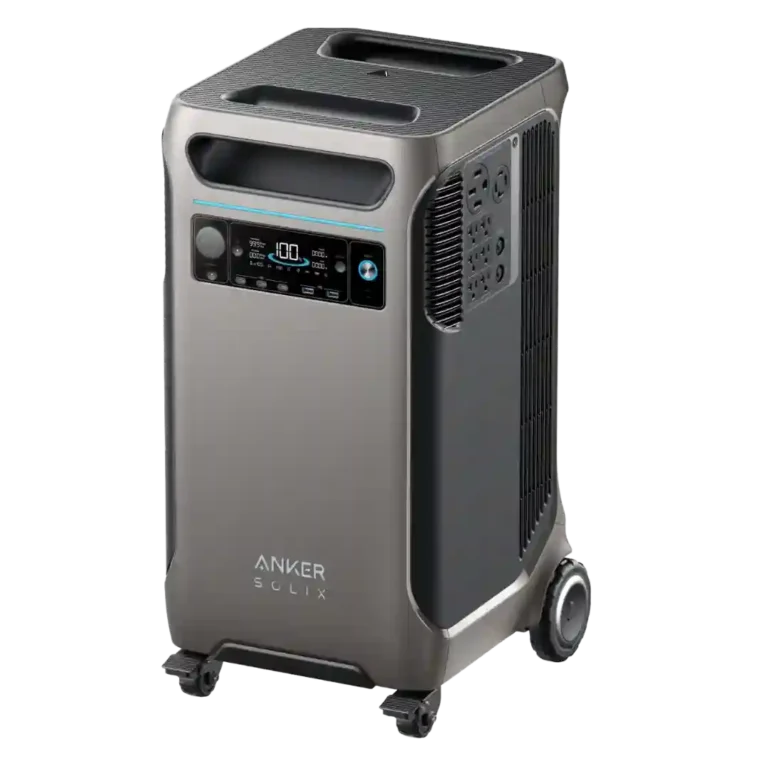
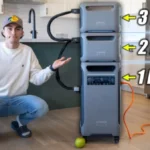
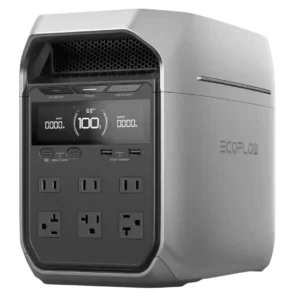
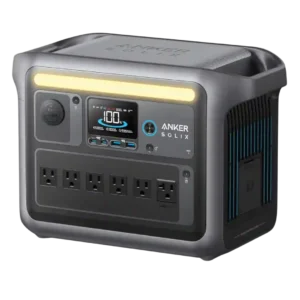
Choose the F3800 for quiet, single-unit 240V home backup, heavy appliances, and expandable capacity. Skip it if you need easy lifting, unrestricted third-party solar, dependable AC pass-through, or a low-cost off-grid system.
Best for
Homeowners, RV owners, workshops, and outage-prone households that need quiet single-unit 240V power for pumps, HVAC, appliances, medical equipment, or transfer-switch circuits. It is especially attractive when expansion batteries and a semi-permanent installation are planned.
Not for
Buyers who must carry a station up stairs, depend on common rooftop panels for maximum solar input, need unrestricted AC pass-through, or want inexpensive multi-day off-grid power. Cold, unheated storage also requires careful planning.
Verdict
The F3800’s biggest achievement is delivering genuine 6,000W, 120/240V split-phase power from one wheeled unit. Reviewers repeatedly ran refrigerators, well pumps, dryers, air conditioners, tools, RVs, and selected home circuits, while praising its quiet operation, clean output, fast wall charging, and exceptional battery expansion. The tradeoffs are substantial: at roughly 132 pounds it is rollable rather than truly portable, and the original model disables 240V plus some 120V outlets during AC charging. Its restrictive solar voltage and amperage windows also make the advertised 2,400W input difficult to reach with common panels. The app is generally easy and useful, but historical data and advanced scheduling remain inconsistent. For homeowners who specifically need serious 240V backup, the capability is compelling; for mobile or solar-first use, the limitations matter.
Quiet operation is one of the clearest strengths. Under ordinary and even substantial loads, it is often described as whisper-quiet and suitable for nighttime or indoor use.
The 6,000W split-phase inverter is consistently praised and repeatedly validated with major appliances, tools, HVAC, and home circuits. It is the product’s defining advantage.
Six household outlets plus heavy-duty 240V, USB, and DC connections make the F3800 one of the most versatile stations for home, RV, workshop, and electronics use.
Adding BP3800 batteries is one of the product’s strongest features, allowing the system to scale from short-term essentials to multi-day backup. Cable availability and expansion-battery pricing can complicate that promise.
The F3800 routinely runs dryers, air conditioners, well pumps, compressors, lifts, kitchen appliances, and power tools. Load timing still matters when several high-draw devices start together.
Transfer switches and the Smart Home Power Panel turn the F3800 into a polished household backup system with circuit prioritization, automation, solar integration, and room to expand.
home backup capability: 4.6, 34 reviews, low consensus
This is where the F3800 earns its strongest praise: it reliably keeps refrigerators, medical devices, lighting, internet, pumps, and even selected whole-home circuits operating. Base capacity is best for essentials or shorter outages unless expanded.
The large rear wheels and front casters are durable and effective on floors, pavement, grass, dirt, and light gravel, making the heavy unit much more manageable.
Most owners find the system intuitive, simple, and far easier than deploying a gas generator. Advanced solar and charging behavior still takes time to learn.
Warm units typically recharge from empty in roughly two to three hours, with several tests landing near the low end of that range. A few customers reported abnormally slow charging or cold-related throttling.
Most extended-use reports describe dependable day-after-day operation, including off-grid shops and repeated outages. A smaller set of charging failures keeps the picture from being flawless.
Portable setup is usually plug-and-play, and even electrician-installed home integrations were described as straightforward. A small number of users struggled with Bluetooth, solar, or regional app settings.
Most units arrived well protected, and the substantial packaging generally handled shipping well. One severely mishandled shipment still suffered frame, display, and USB damage.
Most reviewers are highly satisfied with the F3800’s power, flexibility, quiet operation, and home-backup value. The strongest negative reviews center on solar restrictions, charging failures, software gaps, cold performance, and cost.
The 3.84kWh base battery is substantial for refrigerators, lights, electronics, and shorter outages. Some buyers still find it too small for unrestricted whole-home use.
Refrigerator and essential-load tests commonly lasted many hours, sometimes a full day or more, and careful use can stretch into multiple days. Heavy HVAC or unrestricted whole-home loads drain the base battery much faster.
Bluetooth and Wi-Fi provide flexible local and remote control, though regional setup limitations and occasional connection problems can complicate onboarding.
The screen is usually bright and easy to understand indoors, though sunlight visibility can be poor and one customer struggled to find basic status information.
The wheels and suitcase-style handle make a 132-pound unit surprisingly easy to move on level floors and even some outdoor surfaces. Stairs, vehicle loading, and lifting still require help.
The app is usually easy to navigate and useful for live monitoring, settings, and firmware. The recurring complaint is shallow historical data, missing voltage details, and limited scheduling or advanced controls.
Updates are easy for many users and have fixed meaningful issues, including idle consumption and charging behavior. One owner, however, lost generator-charging capability after updating.
The station starts compressors, air conditioners, and other surge-heavy loads impressively, though one laboratory found the highest advertised spikes lasted only seconds.
A technically skilled owner found that third-party charging workarounds could bypass limitations, but they require wire cutting, DIY knowledge, and possible warranty risk.
Bluetooth connectivity: 3.7, 3 reviews, low consensus
Bluetooth usually makes nearby setup and monitoring convenient, with solid indoor range. One customer struggled to complete pairing, so the experience is not universally smooth.
included accessories: 3.5, 2 reviews, limited evidence
Home-backup bundles can be complete and practical, but the standalone station’s lack of a solar panel or certain charging cables disappoints some buyers.
Measured usable capacity varied from roughly 72% to 86%, with most results around the expected range for a large inverter. The spread means runtime estimates should include conversion losses.
Support experiences are split. Many owners received fast replacements and helpful technicians, while others faced slow email exchanges, automated responses, or difficulty arranging returns.
The original F3800’s biggest functional limitation is AC pass-through: 240V and part of the 120V bank are disabled while charging from AC. Solar charging is far more flexible and can preserve output operation.
solar panel compatibility: 2.2, 10 reviews, low consensus
Compatibility is one of the most repeated complaints. The 60V and amperage windows favor carefully configured or proprietary panels and can prevent rooftop or common fixed arrays from reaching full power.
maximum solar input: 2.0, 6 reviews, moderate consensus
The advertised 2,400W ceiling is difficult to reach with common panels because of the 60V and amperage limits. Multiple tests achieved far less than the headline figure.
Several customers reported units that would not recharge, stopped at 85%, or needed replacement. These failures are less common than the positive reports but serious when they occur.
The dual controllers work, but their voltage and amperage windows are the root of many solar complaints. Common arrays often deliver far less than the advertised maximum.
Idle consumption can be substantial with AC outputs kept awake, including reports around 40–79W. Firmware has improved some idle behavior, but it remains important for outage planning.
Documentation is a recurring weak spot: several owners wanted a proper printed manual, and some found the downloadable version cheap or incomplete. One later manual was praised for explaining display icons.
EV charging usefulness: 2.9, 6 reviews, low consensus
The 240V outlet can rescue an EV with a small emergency top-up, but a full F3800 battery usually adds only a handful of miles. It is better viewed as a last-resort feature than routine vehicle charging.
The inverter can deliver strong output in severe cold, but battery charging is heavily restricted until the cells warm. For unheated garages, vans, or winter solar use, this can be a deal breaker.
solar charging speed: 3.2, 12 reviews, low consensus
Solar performance ranges from very fast with a well-matched large array to frustratingly slow with one portable panel. Real-world results depend heavily on panel voltage, wiring, weather, and the input limits.
Value depends heavily on sale pricing and use case. Buyers who need single-unit 240V home backup often find it worthwhile, while solar accessories, expansion batteries, and full-home hardware can make the total cost feel excessive.
A severely dropped shipment left plastic frame pieces loose and the display bezel misaligned, showing that a hard enough impact can damage the housing.
The system performed through a severe snowstorm, but the station itself lacks meaningful rain protection and should not be operated exposed to wet weather.
A few users reported button presses that did not trigger the requested function, although the primary reviewer did not reproduce the issue.
Compared With Category Average
Compared with other Generators, this product is above average in specification accuracy, whole-home integration, 30-amp output, near average in home backup capability, noise level, below average in charging cable quality, battery management system, pass-through charging.
Products reviewers directly compared with this model, grouped into quick takeaways.
EcoFlow DELTA Pro Ultra
Better: garage storageThe F3800 does not stack as neatly in a garage.
Worse: high-demand car-lift performanceThe F3800 powered a loaded car lift that challenged the larger EcoFlow.
Anker C1000
Cheaper: price and portabilityThe C1000 is suggested for buyers who prioritize lower cost and easier transport.
Delta Pro 3
Worse: maneuverability and form factorThe reviewer prefers the F3800’s easier maneuvering and taller shape.
FAQ
Can the F3800 power a whole house?
Its 6,000W split-phase output can run selected whole-home circuits and many 240V loads. The 3.84kWh base battery is best for essentials or shorter outages unless expansion batteries are added.
Can it run 240V appliances?
Yes. Reviewers successfully powered dryers, well pumps, air conditioners, EV chargers, tools, and transfer-switch setups from the single-unit 240V output.
Does 240V work while the F3800 is charging from AC?
No. On the original F3800, AC charging disables the 240V outlets and part of the 120V bank; solar charging allows much more flexible simultaneous output.
How long can it run a refrigerator?
Tests ranged from roughly 20 to 30 hours for a refrigerator or similar essential-load setup, though appliance cycling, added loads, and conversion losses change the result.
How well does solar charging work?
A well-matched large array can charge quickly, but the 60V and amperage limits make the full 2,400W rating difficult to reach with many common panels.
Is the F3800 truly portable?
It rolls easily on its wheels and telescoping handle, but at about 132 pounds it usually needs two people for stairs or vehicle loading.
How good are the app and UPS features?
The app is generally easy for live monitoring, settings, and firmware updates, but advanced history and scheduling are limited. UPS switchover worked seamlessly in most tests, with one reported PC failure.
Sample Expert Reviews We Analyzed
These are a few of the reviews included in our analysis.
Best for rapid charging, versatile ports, excellent app control, and portable backup for appliances or electronics. Skip it for unattended low-load use or sustained heavy loads unless fan behavior and...
Best for fast-charging, high-output backup power that can run major appliances and roll easily between locations. Skip it if you need frequent lifting, a small footprint, or a screen that...
Best for quiet, fast-charging backup power for camping, remote work, and household essentials. Skip it for whole-home loads, expandable capacity, or unrestricted third-party solar use.
Best for quiet, portable UPS backup, fast laptop charging, camping, and short outages. Skip it for whole-home power, heavy appliances, freezing-weather charging, or anyone unwilling to manage standby drain and...