If you want better solar panel bundle value
Choose Jackery Explorer 1000 V2. It scores 4.8 vs 1.0 for solar panel bundle value, with a 4.4 overall score.
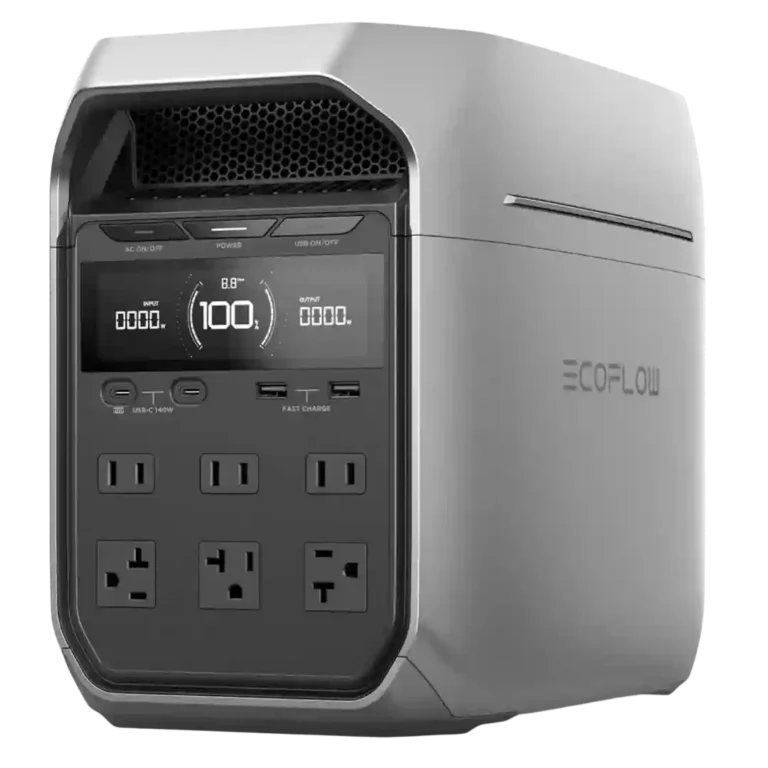
Choose it for rapid charging, versatile ports, excellent app control, and portable backup for appliances or electronics. Skip it for unattended low-load use or sustained heavy loads unless fan behavior and standby draw fit your setup.
Campers, home-office users, RV or overland travelers, and households that want fast-charging portable backup for essential 120V appliances and electronics.
Buyers needing native 240V whole-home backup, a 30A RV outlet, backpack portability, or an unattended low-load system with minimal standby loss.
The DELTA 3 Plus is one of the most capable 1kWh portable stations in the supplied sources. It repeatedly reaches a full AC charge in about an hour, runs common 1,500–1,800W appliances, switches quickly enough for UPS duty, and offers unusually rich app controls, six AC outlets, dual 140W USB-C, and up to 1,000W solar input. Its compact body and backward-compatible battery ecosystem make it especially flexible for camping, home-office backup, and short outages. The tradeoff is confidence under continuous use: multiple reviewers found erratic fan cycling, excessive heat, high AC idle draw, or early battery failures, while others reported silent, cool, flawless operation. That inconsistency makes it excellent for moderate or occasional loads, but less reassuring as an unattended always-on system or sustained near-limit power source.
Compared with other Generators, this product is above average in weather resistance, battery expandability, expandability, near average in build quality, overall product satisfaction, below average in heat management, solar panel bundle value, 30-amp output.
| Attribute | This product | Category average | Difference |
|---|---|---|---|
| heat management | 1.3 | 4.1 | -2.8 |
| solar panel bundle value | 1.0 | 3.6 | -2.6 |
| 30-amp output | 1.0 | 3.6 | -2.6 |
| hot-weather performance | 2.0 | 4.6 | -2.6 |
| weather resistance | 5.0 | 2.6 | +2.4 |
| self-discharge rate | 1.0 | 3.5 | -2.5 |
| battery expandability | 5.0 | 3.1 | +1.9 |
| control panel layout | 2.0 | 4.3 | -2.3 |
Choose Jackery Explorer 1000 V2. It scores 4.8 vs 1.0 for solar panel bundle value, with a 4.4 overall score.
Choose Bluetti Elite 30 V2. It scores 4.5 vs 1.3 for heat management, with a 4.4 overall score.
Choose AFERIY P280. It scores 5.0 vs 1.0 for 30-amp output, with a 4.5 overall score.
Choose Jackery Explorer 3000 v2. It scores 5.0 vs 1.0 for self-discharge rate, with a 4.3 overall score.
Products reviewers directly compared with this model, grouped into quick takeaways.
Most AC tests reached full charge in about 55–75 minutes. With a suitable array, the two solar inputs can accept up to 1,000W and recharge rapidly under strong conditions.
Yes. Multiple owners powered full-size refrigerators for several hours, while a low-draw camping fridge ran much longer; actual runtime depends heavily on compressor cycling and AC idle draw.
The under-10ms transfer kept computers, routers, printers, TVs, and refrigerators running without visible interruption. Fan cycling and standby consumption make always-on UPS use less appealing for some owners.
Yes. Compatible EcoFlow extra batteries can raise total capacity to as much as 5kWh, including several older battery lines, although the single expansion port may conflict with alternator-charger use.
Most reviewers found it exceptionally quiet, including under meaningful loads. Several others reported rhythmic, loud, or poorly controlled fan behavior, so individual experience is inconsistent.
The main concern is inconsistent thermal and standby behavior. Some tests recorded excessive heat or high idle draw, and a smaller group of owners reported early battery or electronics failures.
These are a few of the reviews included in our analysis.




EcoFlow DELTA 3 Plus review: we tested fast recharge, solar input and one overheating quirk we couldn't ignore. An amazing unit with one big...
EcoFlow DELTA 3 Plus review: 1024Wh, 1800W output, expandable to 5kWh. Discover if the $599 upgrade over the DELTA 3 delivers real value...
After putting the EcoFlow DELTA 3 Plus Power Station and 800W Alternator Charger through a grueling 7,100-mile TransAmerica Trail journey, we...
We tested the EcoFlow DELTA 3 Plus during a home blackout. See how this portable power station handled this real world test.
The EcoFlow Delta 3 Plus portable power station is a safe, maintenance-free, all-in-one box that reliably powers your electrical devices.
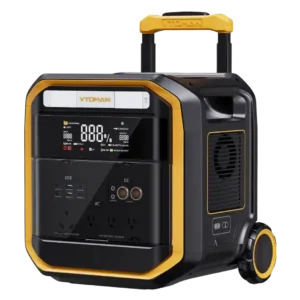
Best for fast-charging, high-output backup power that can run major appliances and roll easily between locations. Skip it if you need frequent lifting, a small footprint, or a screen that...
Pros: power output, surge capacity
Cons: specification accuracy, peak output
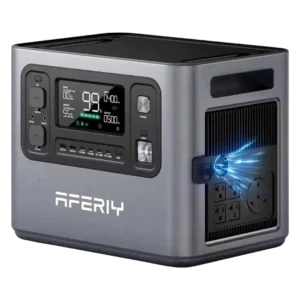
Choose the P280 for high-output home, RV, or off-grid backup with fast charging, strong usable capacity, UPS protection, and expansion. Skip it if you need lightweight portability, polished app control,...
Pros: rated output, peak output
Cons: app connectivity, voltage regulation
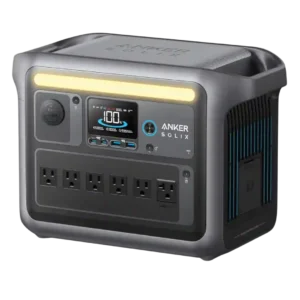
Best for fast charging, strong portable output, and short outage or camping duty. Skip it for quiet rooms, multi-day whole-home backup, or solar-only use with small panels.
Pros: power output, rated output
Cons: dual-input charging, cable storage
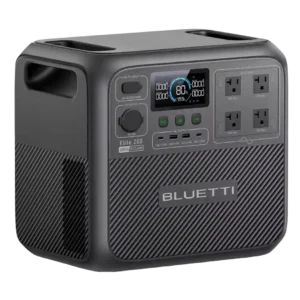
Best for compact, quiet, fast-charging backup power that can run serious appliances. Skip it if you need easy one-person carrying, waterproof outdoor use, battery expansion, or a built-in 30-amp RV...
Pros: output stability, pure sine wave output
Cons: specification accuracy, startup reliability