If you want better AC outlet count
Choose EcoFlow Delta 3 Plus Review. It scores 5.0 vs 2.0 for AC outlet count, with a 4.6 overall score.
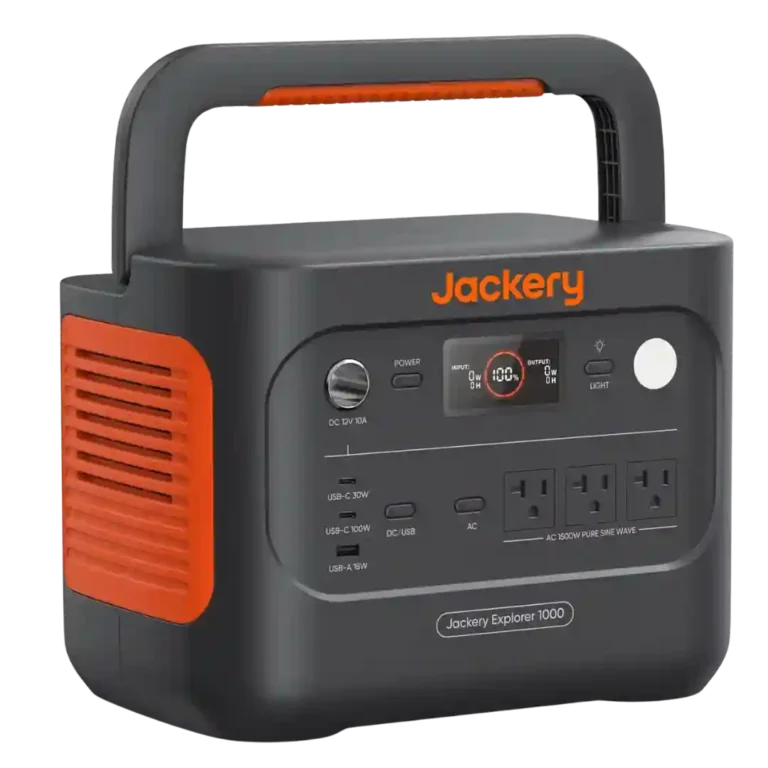
Choose it for quiet, fast-charging backup power for camping, remote work, and household essentials. Skip it for whole-home loads, expandable capacity, or unrestricted third-party solar use.
Campers, vehicle travelers, remote workers, renters, and households that want quiet backup for refrigeration, networking, lights, electronics, and other essentials.
Buyers needing whole-home power, routine loads above 1,500W, expandable batteries, ultralight carrying, or uncomplicated use of any third-party solar panel.
The Explorer 1000 V2 combines a genuinely useful 1,500W inverter with rapid AC charging, quiet operation, a compact fold-handle design, and a long-cycle battery. Across field work, camping, vehicle living, and outage tests, it reliably powered laptops, refrigeration, networking gear, tools, and many small appliances. Its app and clear display make power management straightforward, while UPS and pass-through modes add practical backup value. The tradeoffs matter: capacity cannot be expanded, sustained high-watt loads drain the battery quickly, and several sources criticize the solar connector ecosystem or conflicting compatibility information. Weight is manageable rather than ultralight, and value improves substantially at sale pricing. It is strongest as portable essentials power, not as a whole-home replacement.
Compared with other Generators, this product is above average in built-in light, instruction quality, cold-weather performance, near average in power output, overall product satisfaction, below average in standby power loss, specification accuracy, cable storage.
| Attribute | This product | Category average | Difference |
|---|---|---|---|
| standby power loss | 1.0 | 3.5 | -2.5 |
| built-in light | 4.8 | 2.6 | +2.1 |
| instruction quality | 5.0 | 2.8 | +2.2 |
| specification accuracy | 1.0 | 3.2 | -2.2 |
| cold-weather performance | 5.0 | 2.9 | +2.1 |
| cable storage | 2.0 | 3.9 | -1.9 |
| AC outlet count | 2.0 | 3.9 | -1.9 |
| runtime at full load | 1.5 | 3.3 | -1.8 |
Choose EcoFlow Delta 3 Plus Review. It scores 5.0 vs 2.0 for AC outlet count, with a 4.6 overall score.
Choose Bluetti Elite 30 V2. It scores 4.3 vs 2.0 for car charging speed, with a 4.4 overall score.
Choose Jackery Explorer 3000 v2. It scores 5.0 vs 1.0 for standby power loss, with a 4.3 overall score.
Choose AFERIY P280. It scores 5.0 vs 1.5 for runtime at full load, with a 4.5 overall score.
Products reviewers directly compared with this model, grouped into quick takeaways.
Yes. Several sources successfully ran portable or household refrigerators, but runtime varies widely with compressor cycling, size, temperature, and other connected loads.
Standard AC charging commonly takes about 1.5–1.8 hours. Emergency mode, enabled through the app, can reduce a full recharge to roughly one hour.
It ran coffee makers, kettles, microwaves, tools, portable fridges, and other moderate loads. Central air, large dryers, high-watt heaters, and appliances above the continuous limit are unsuitable.
The sources disagree. Several call the connector proprietary or Jackery-only, while others report that suitable adapters allow third-party panels, so compatibility should be verified for the exact panel and cable.
It produces no combustion exhaust and is consistently described as quiet enough for indoor or overnight use. It should still be kept dry, ventilated, uncovered, and away from heat.
No. The reviewed unit has fixed capacity, and sources repeatedly point buyers needing expansion toward larger models.
These are a few of the reviews included in our analysis.


Complete Jackery Explorer 1000 V2 review: 1,070Wh LiFePO4 capacity, 1,500W output, 20.7 lb weight. Full specs, pros/cons, comparison with...
Weighing just 10.8kg, the $799 Jackery Explorer 1000 V2 offers over 1,000Wh of portable power with durable LiFePO4 cells with fast, versatile...
A city slicker's honest review of the Jackery Explorer 1000 v2 Portable Power Station — coffee maker, projector and phone included.
Jackery Explorer 1000 v2 Portable Power Station review with pros, cons, blackout suitability, alternatives and a clear verdict
1070Wh LiFePO4, 1500W pure sine wave, 1-hour fast charge. The Jackery Explorer 1000 v2 runs your fridge, CPAP machine, and kitchen through a...
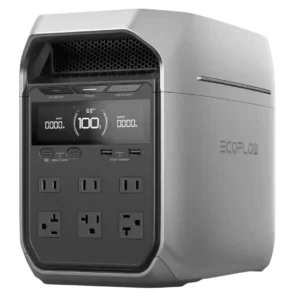
Best for rapid charging, versatile ports, excellent app control, and portable backup for appliances or electronics. Skip it for unattended low-load use or sustained heavy loads unless fan behavior and...
Pros: rated output, peak output
Cons: 30-amp output, parallel operation support
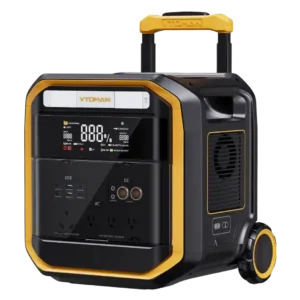
Best for fast-charging, high-output backup power that can run major appliances and roll easily between locations. Skip it if you need frequent lifting, a small footprint, or a screen that...
Pros: power output, surge capacity
Cons: specification accuracy, peak output
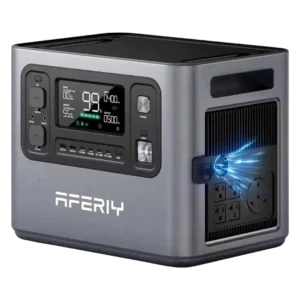
Choose the P280 for high-output home, RV, or off-grid backup with fast charging, strong usable capacity, UPS protection, and expansion. Skip it if you need lightweight portability, polished app control,...
Pros: rated output, peak output
Cons: app connectivity, voltage regulation
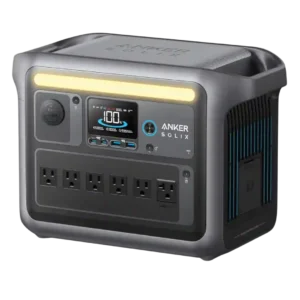
Best for fast charging, strong portable output, and short outage or camping duty. Skip it for quiet rooms, multi-day whole-home backup, or solar-only use with small panels.
Pros: power output, rated output
Cons: dual-input charging, cable storage