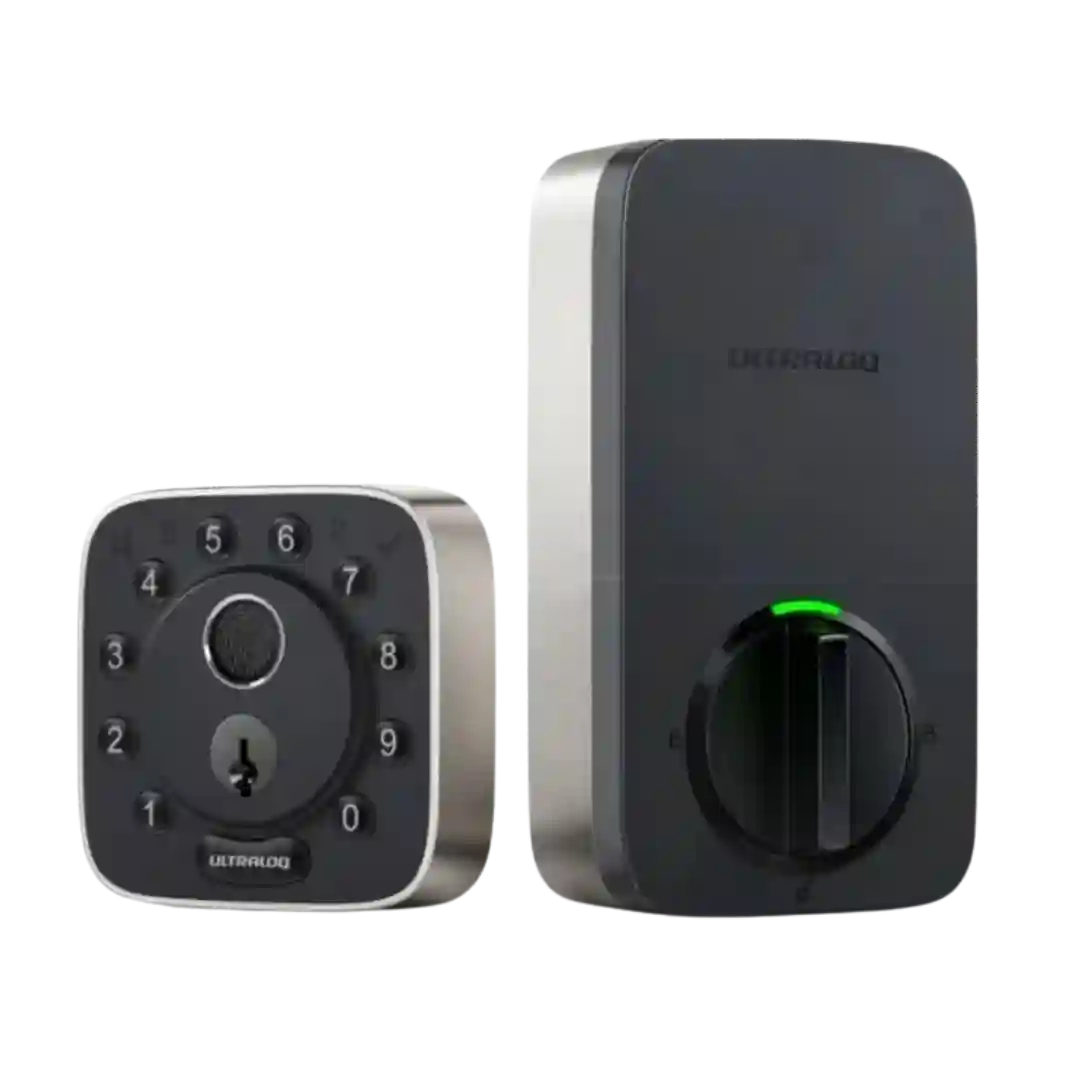
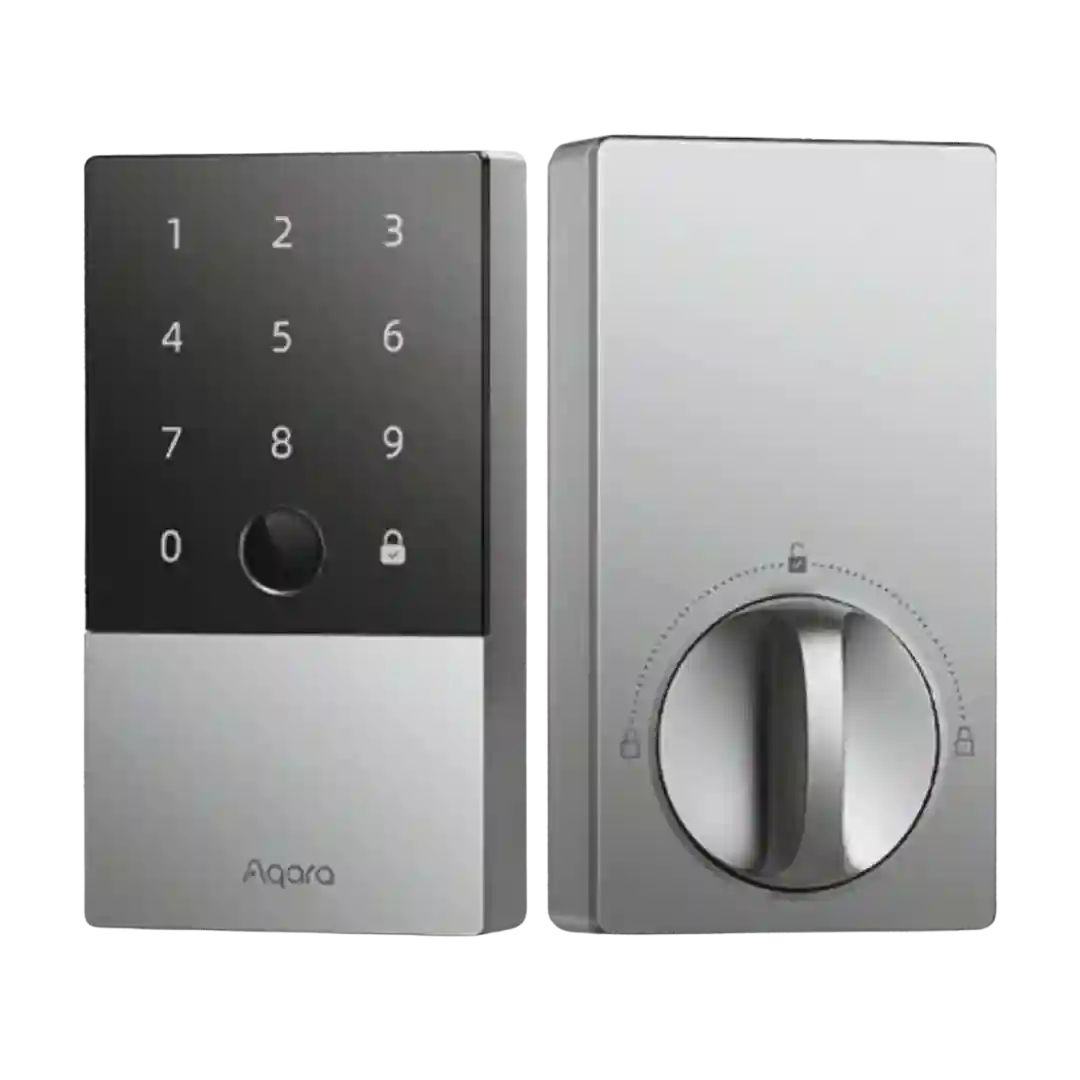
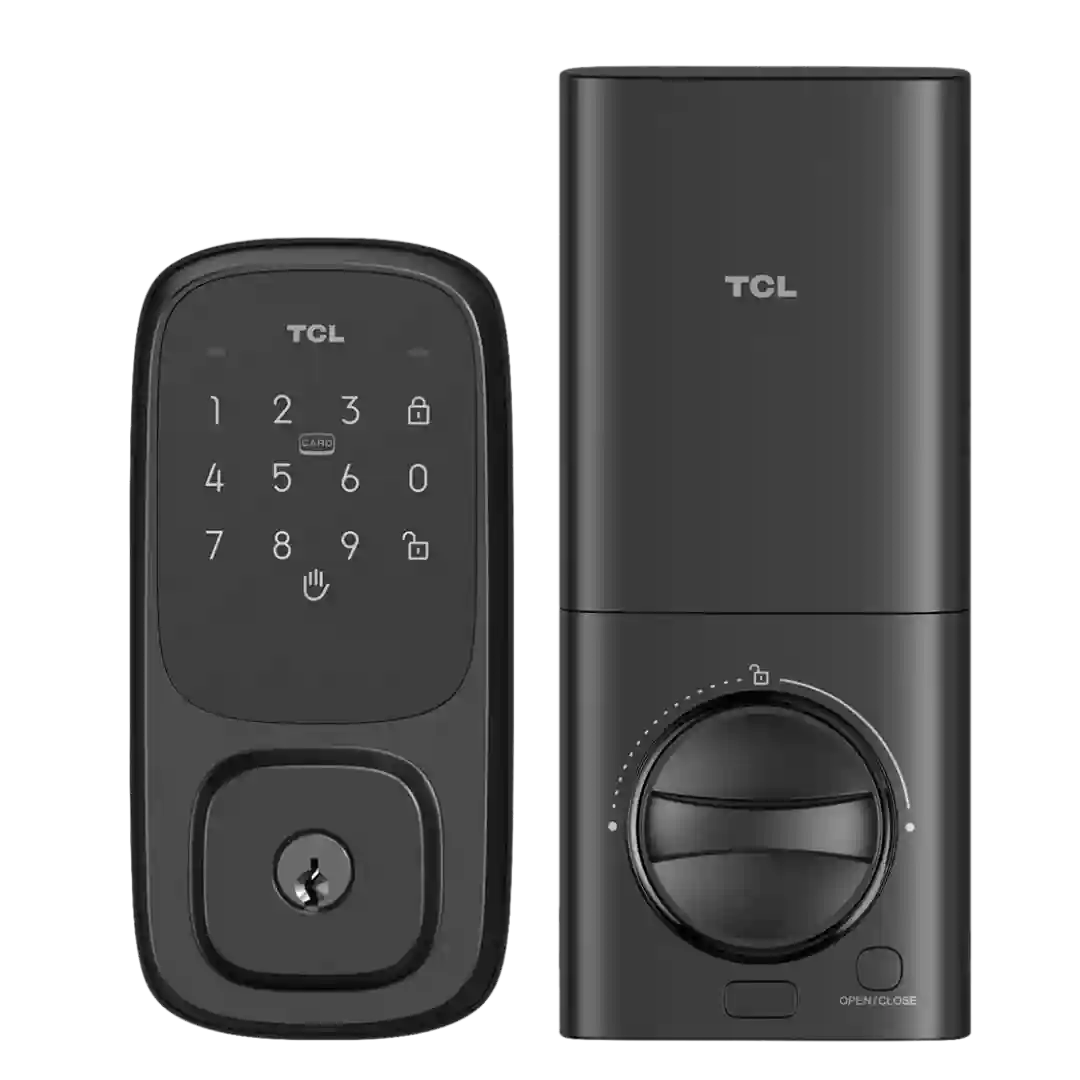
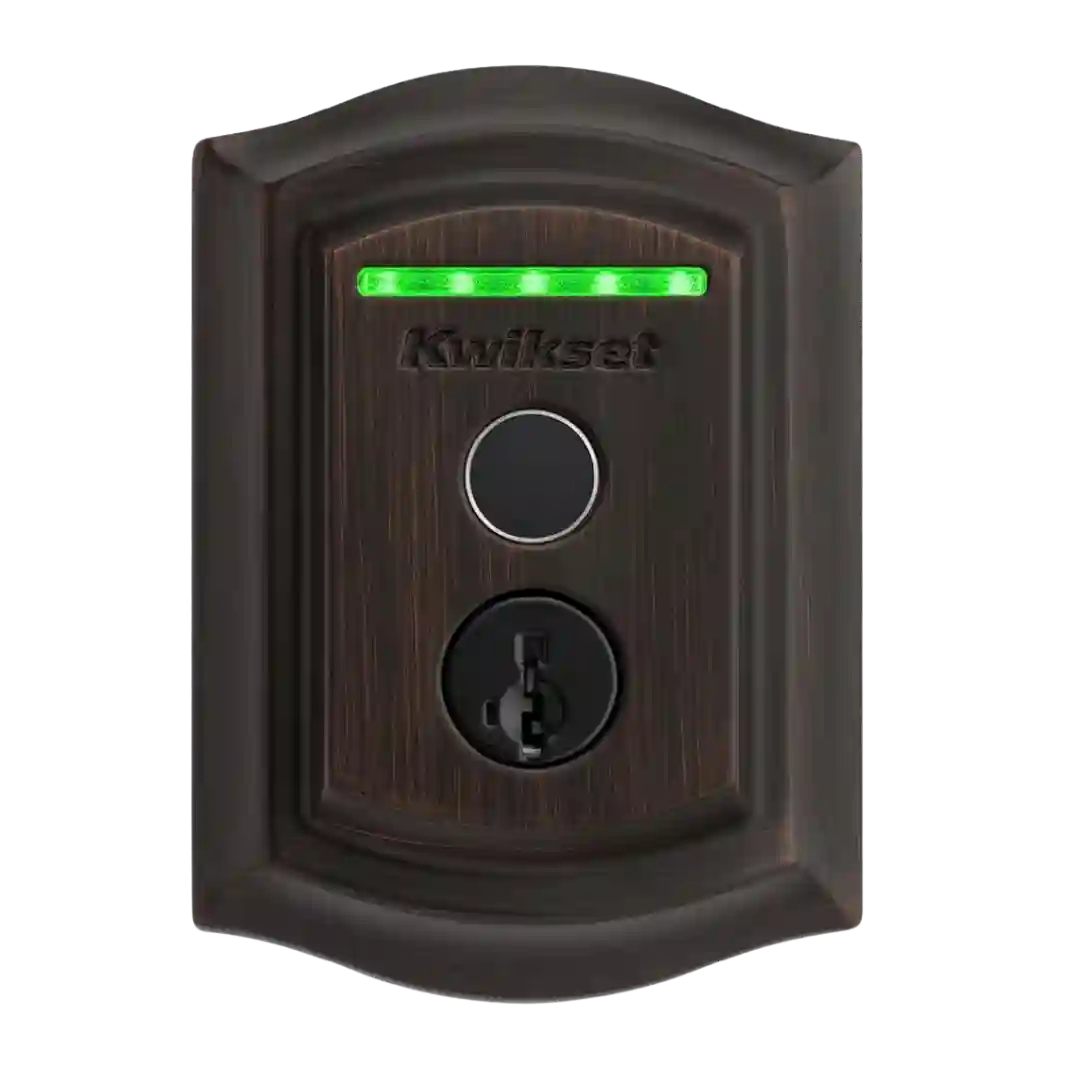
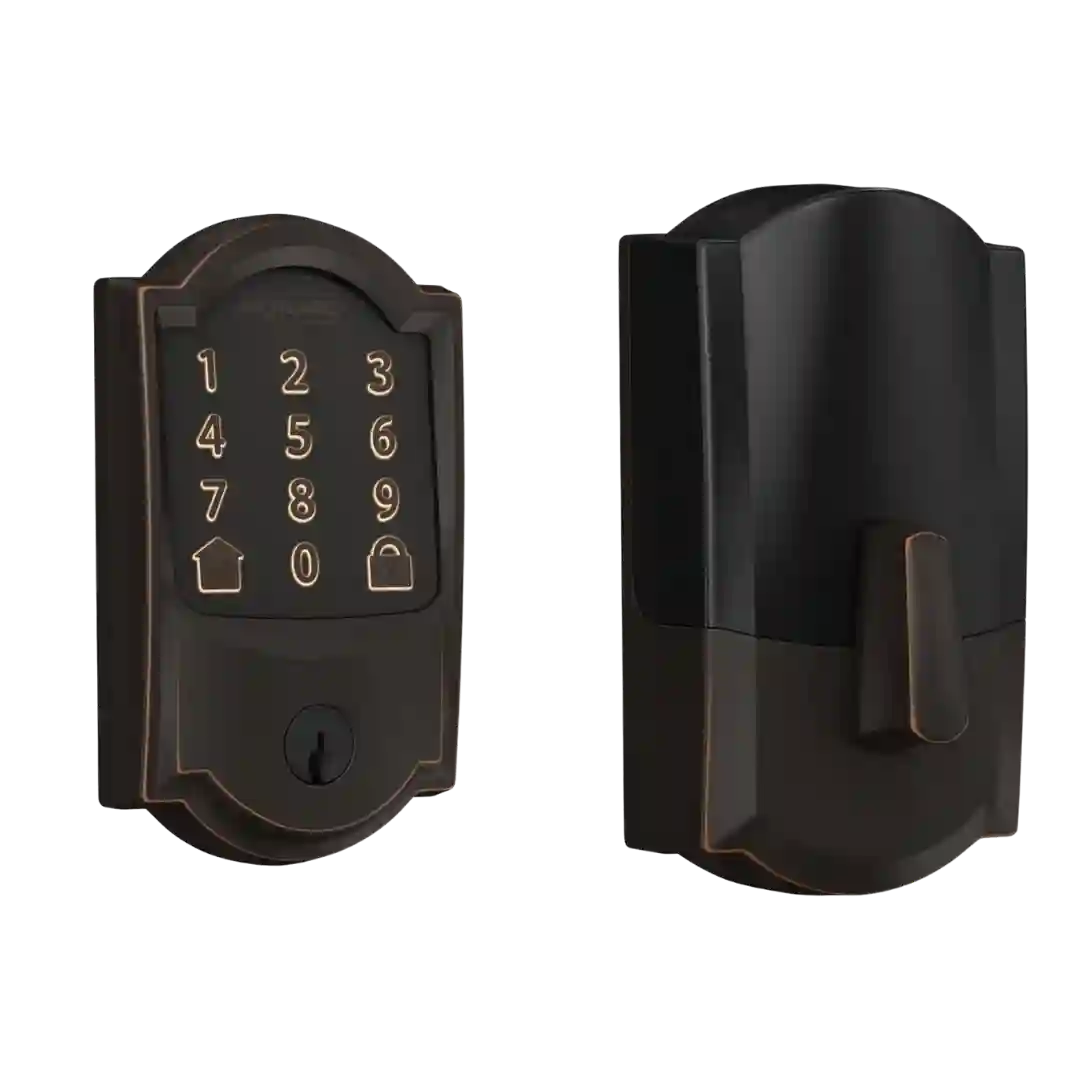
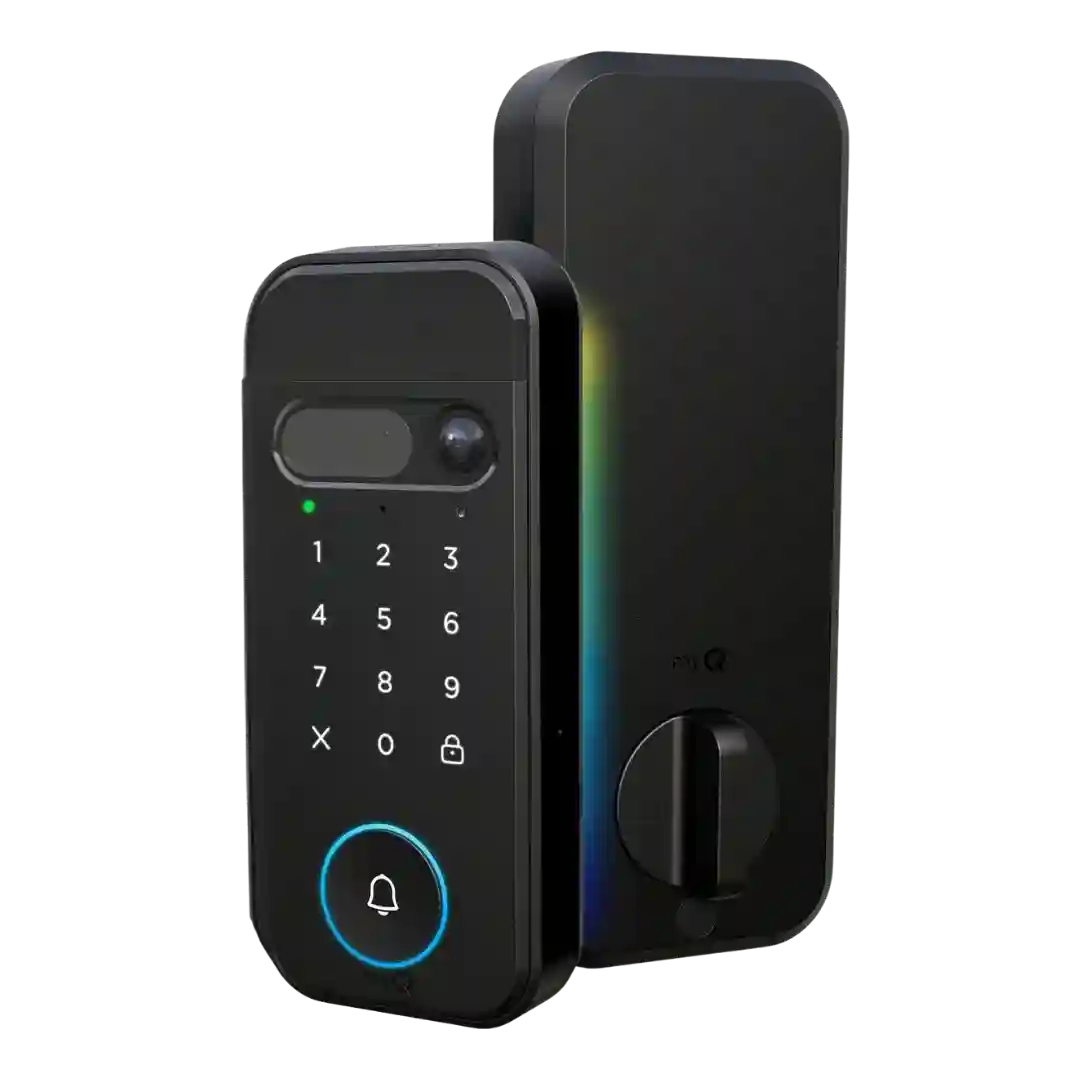
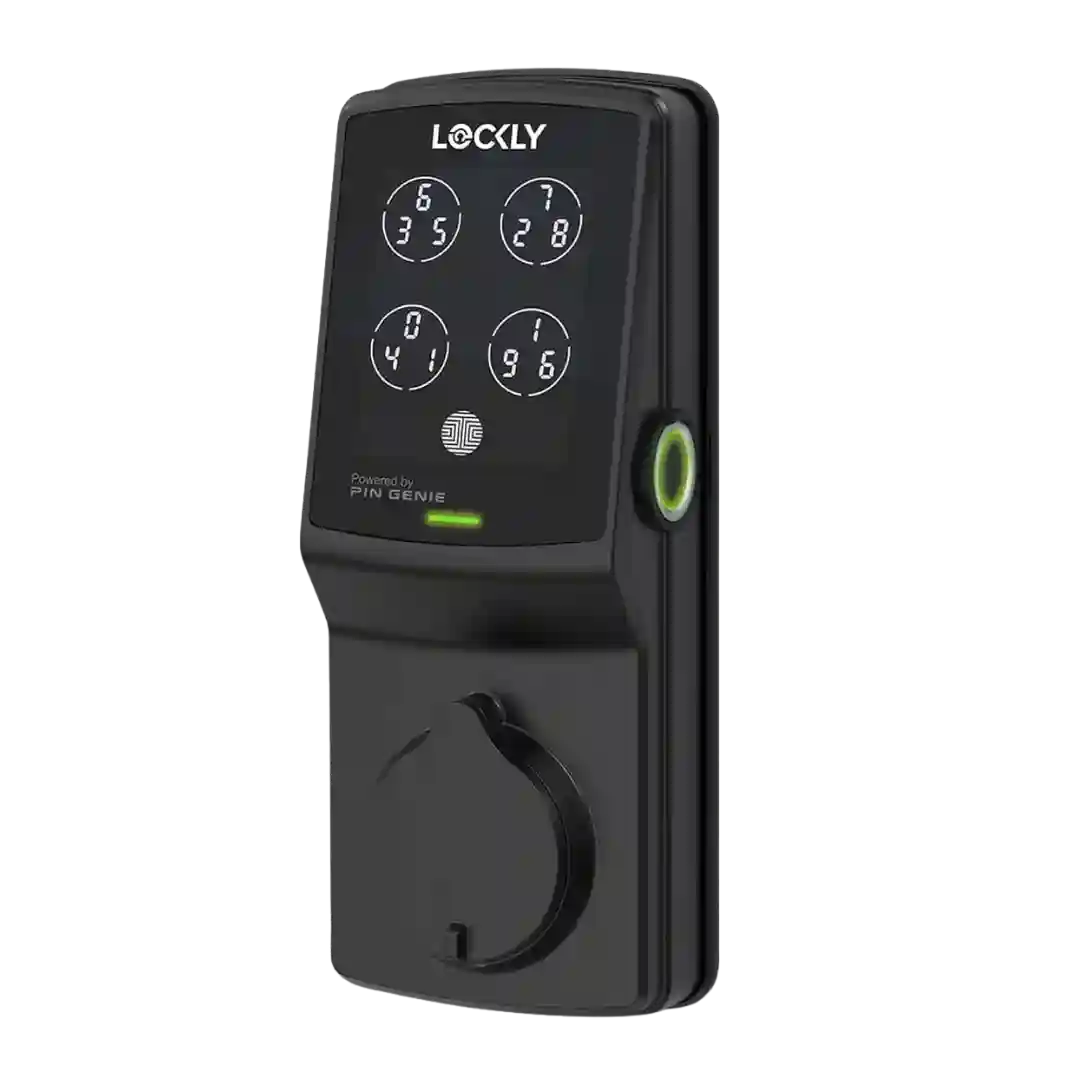
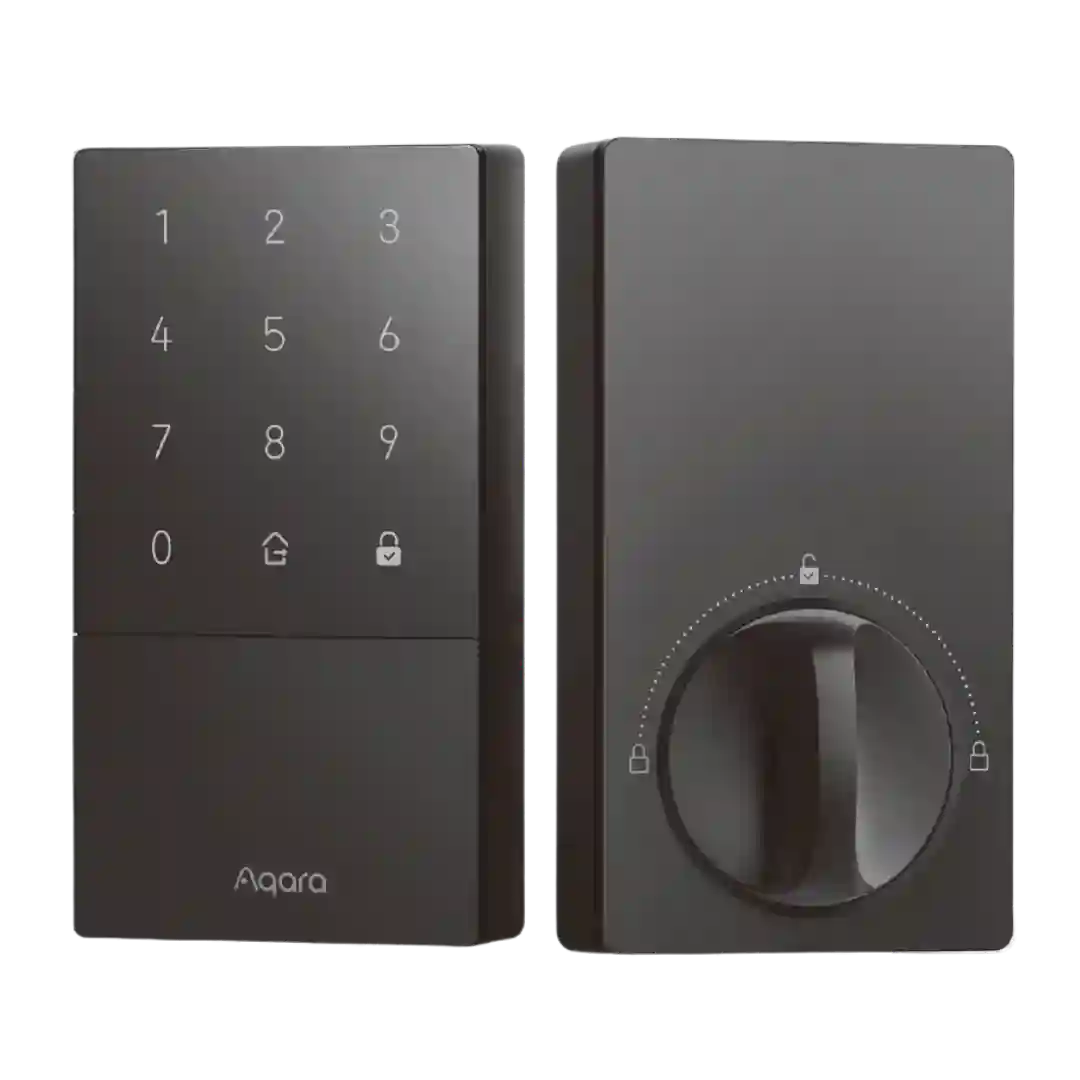
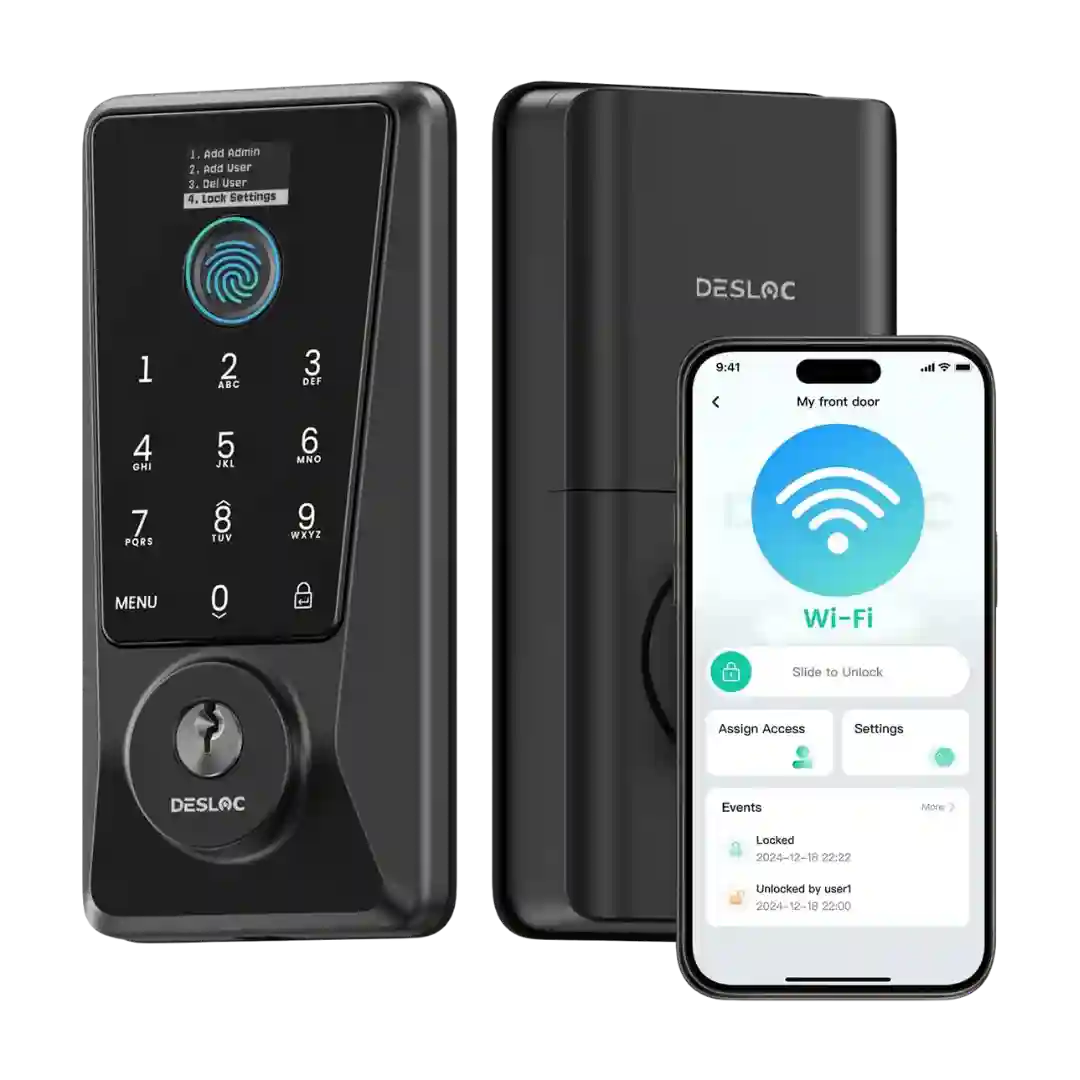
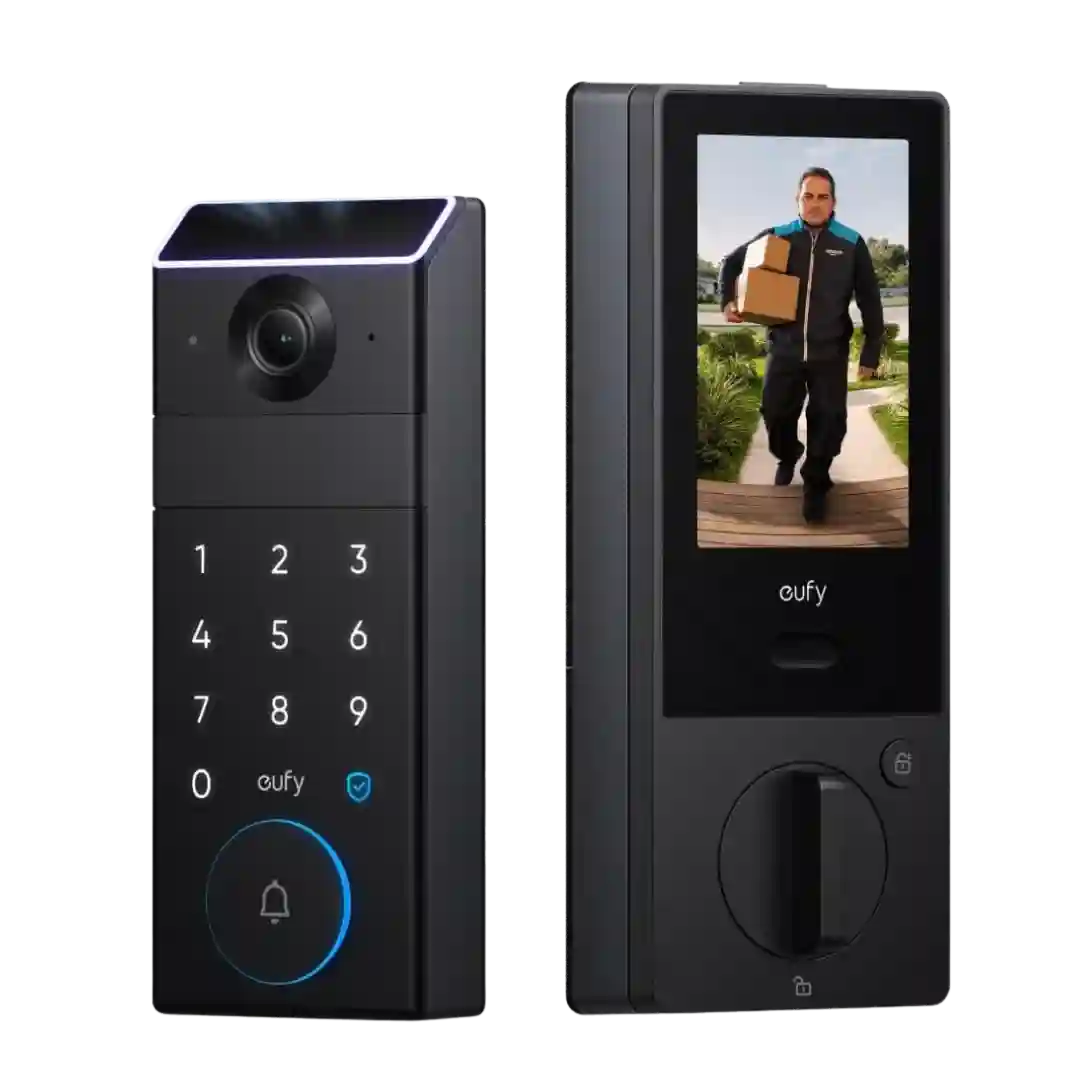
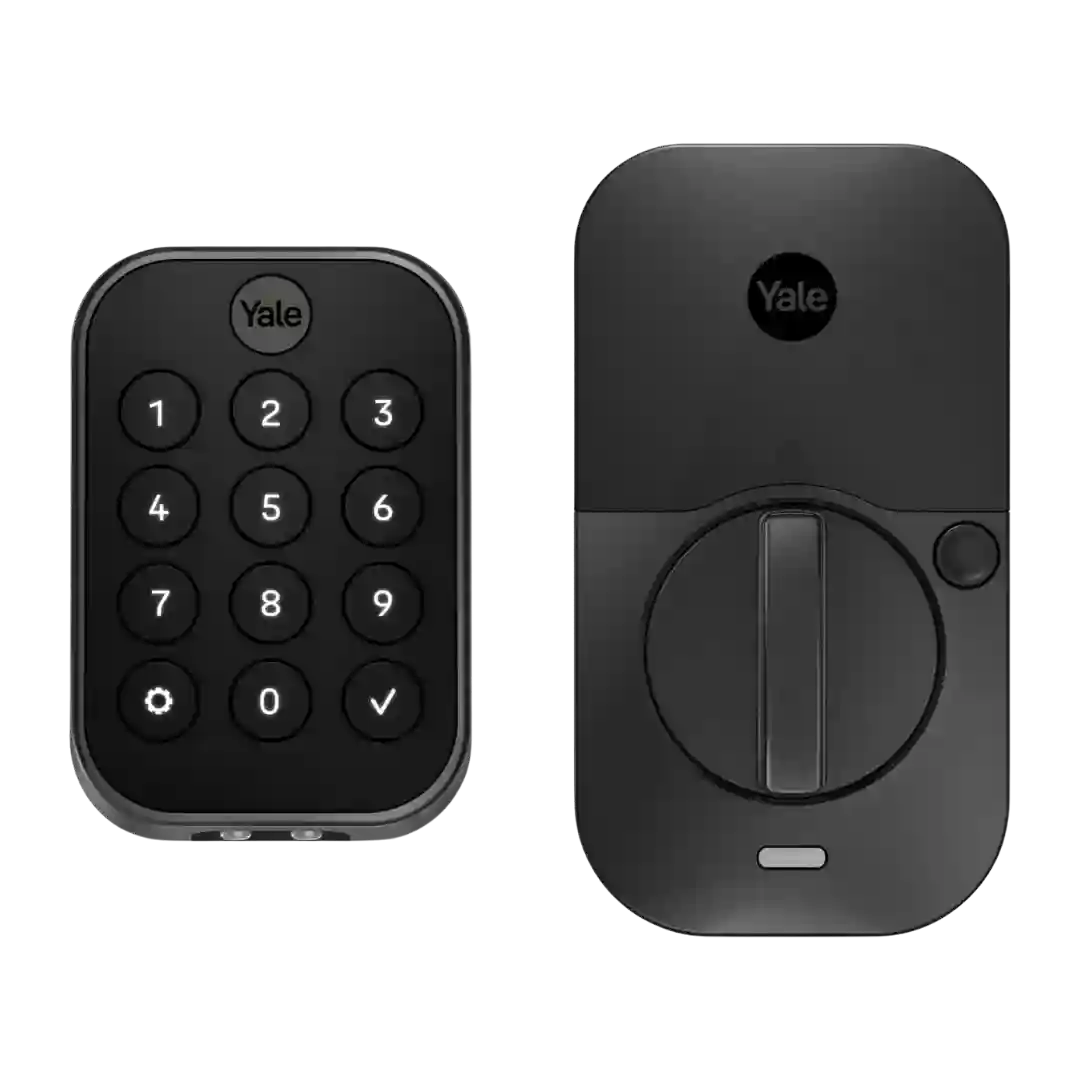
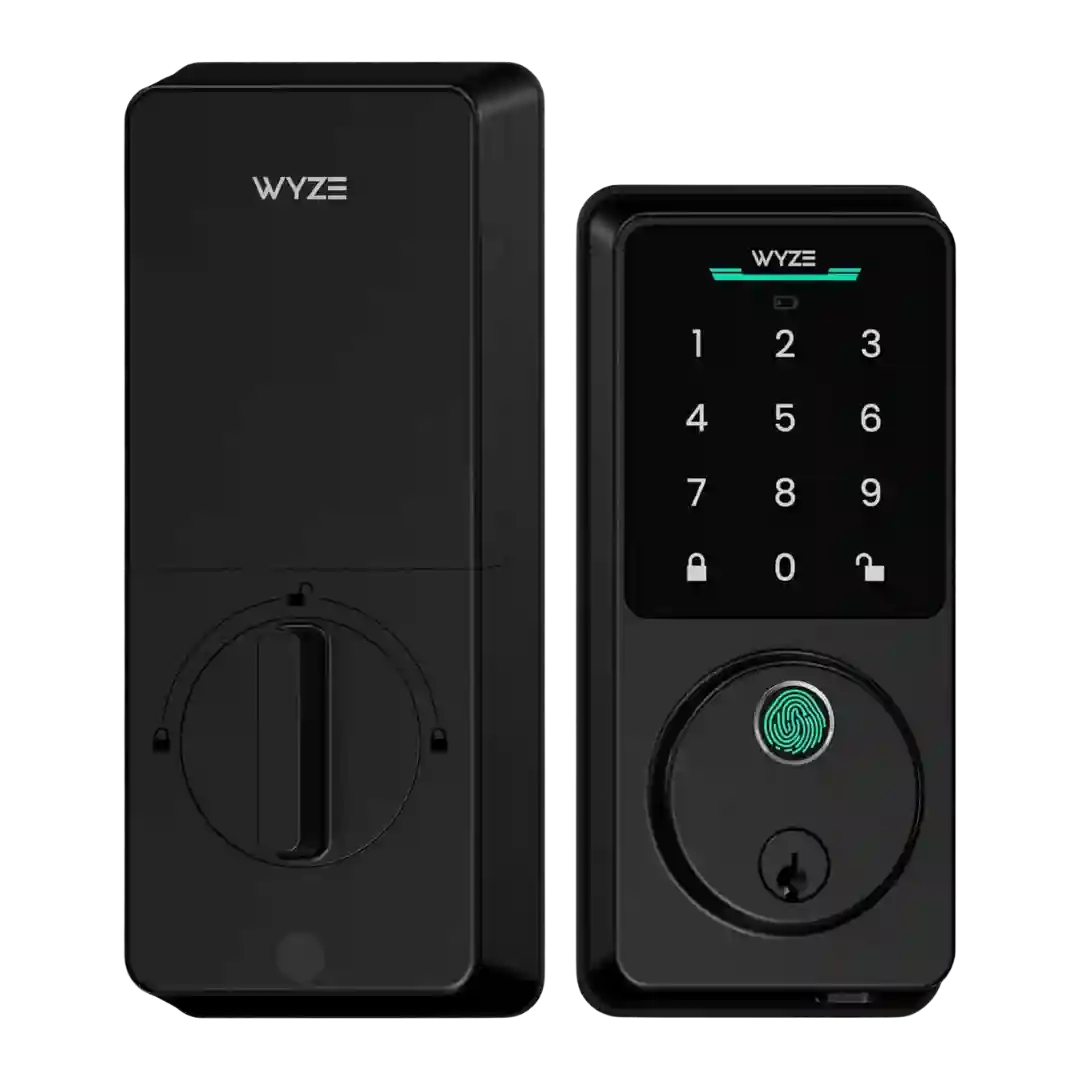
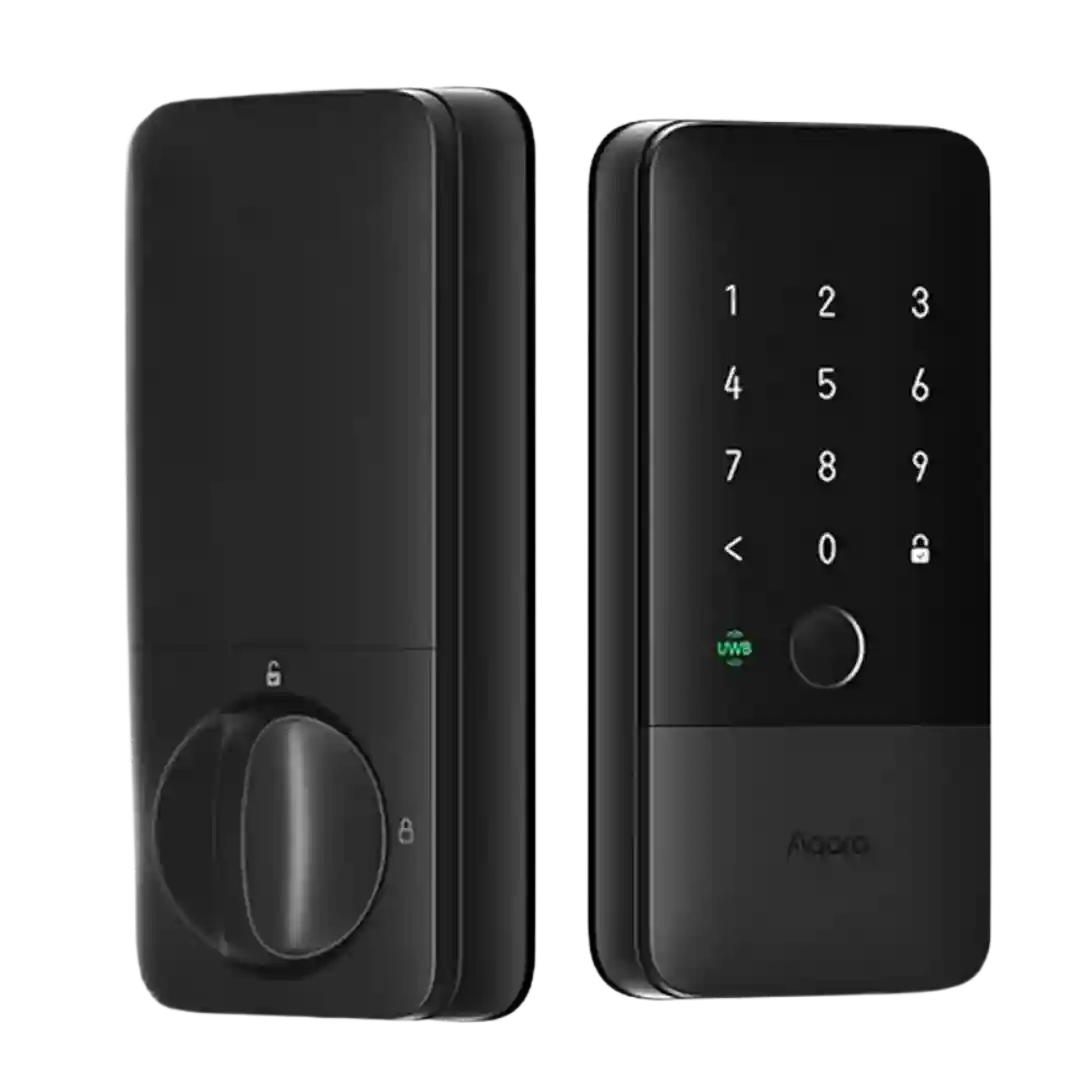
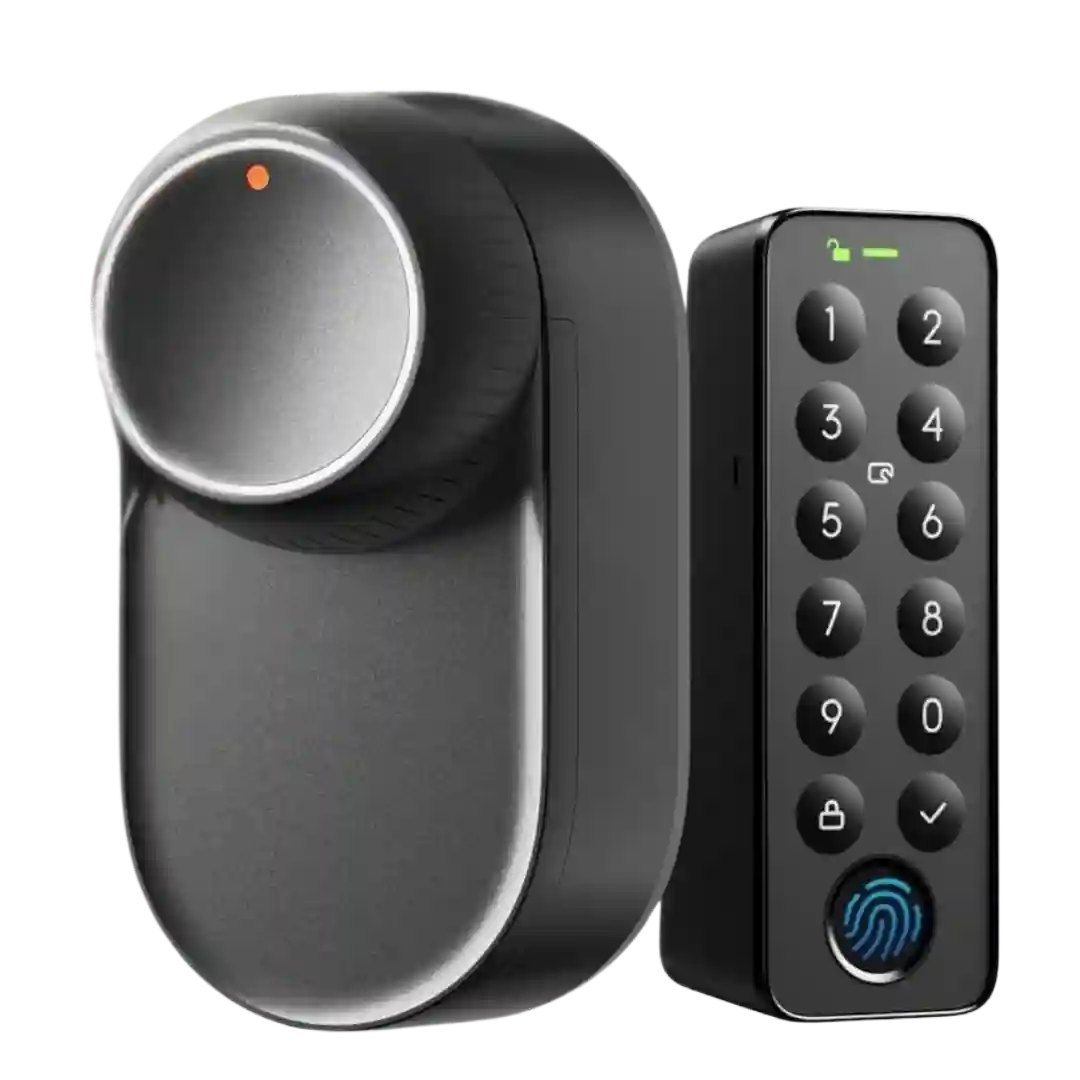
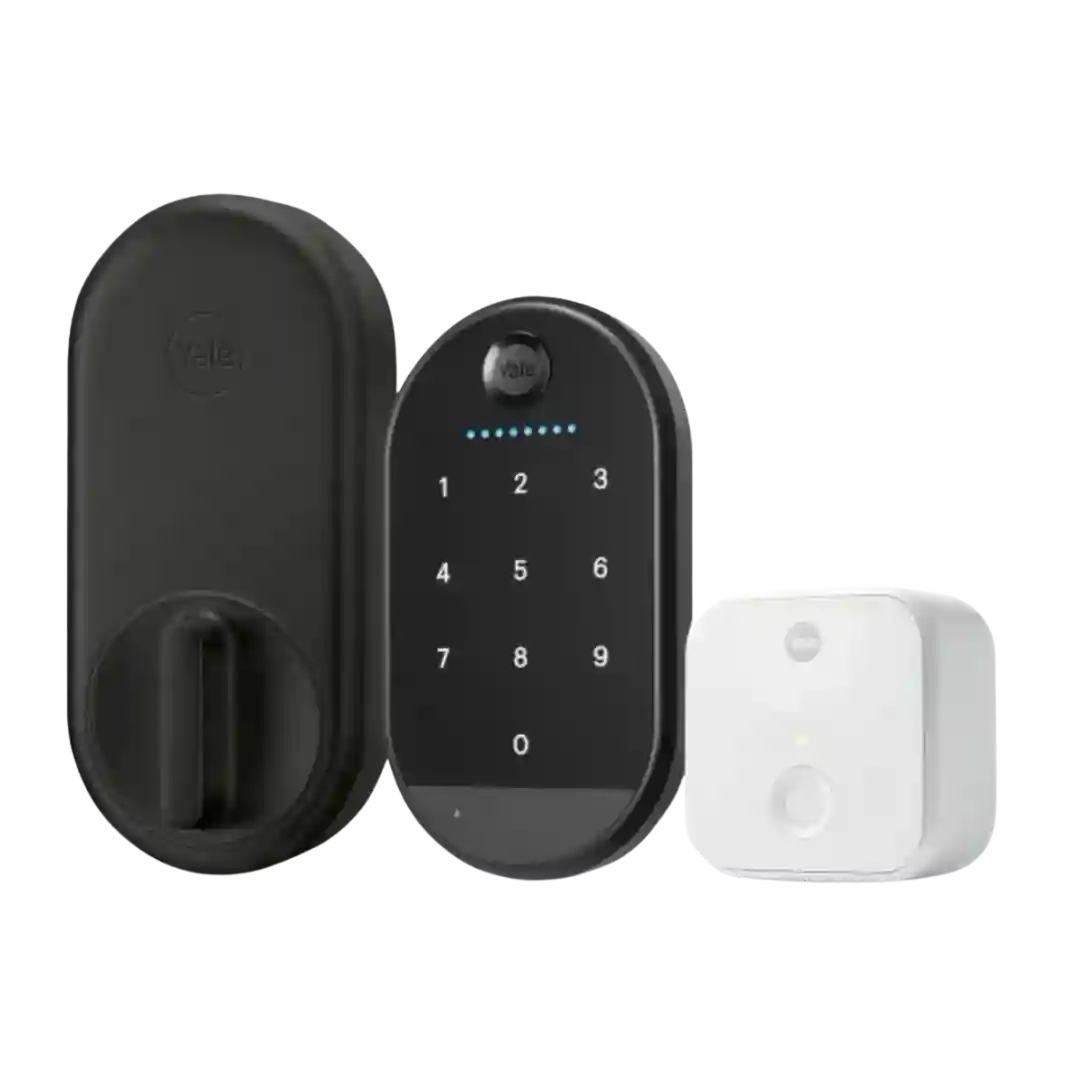
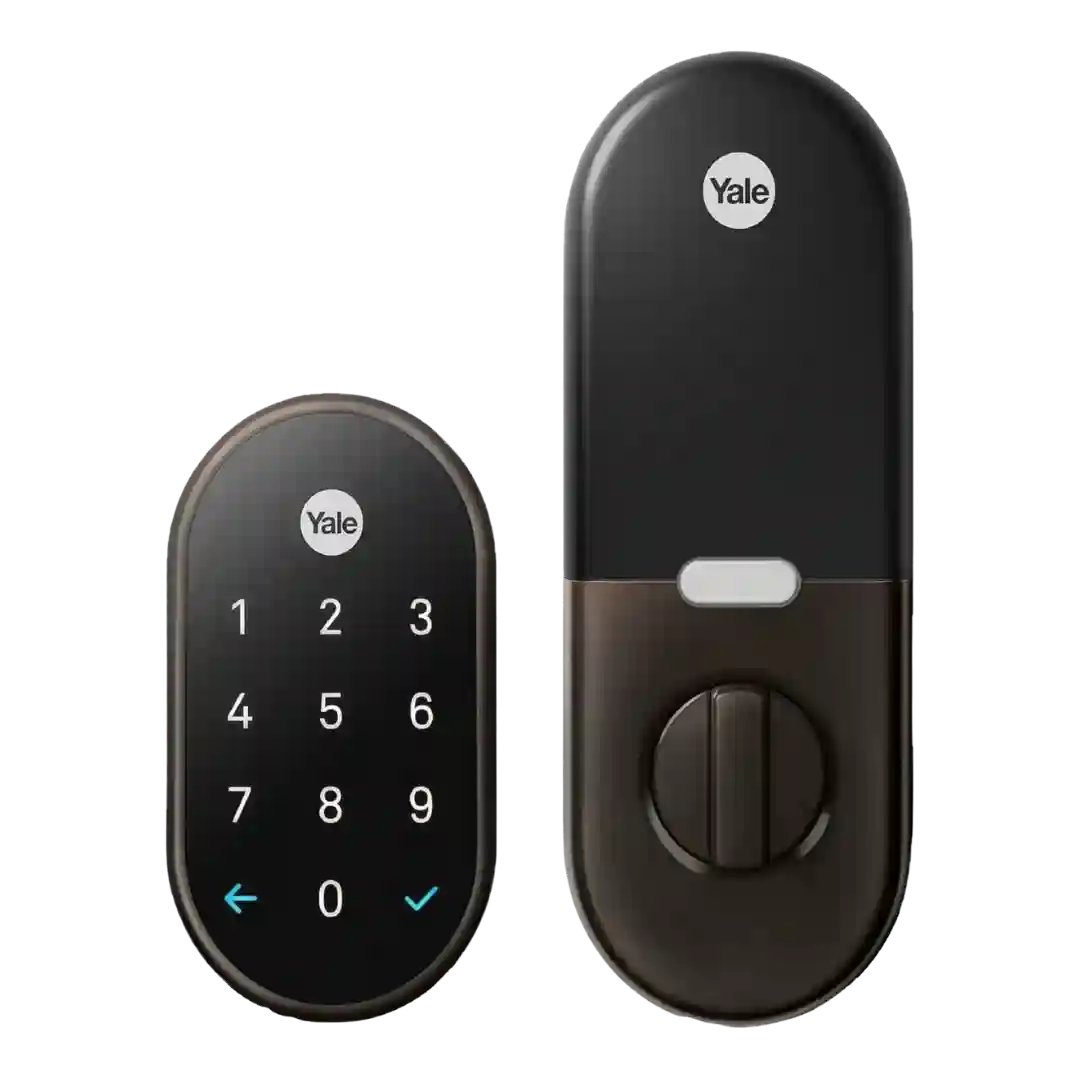
Physical key override remains an important safety net: reviews repeatedly note you can still unlock with a normal key if batteries die or smart features misbehave.
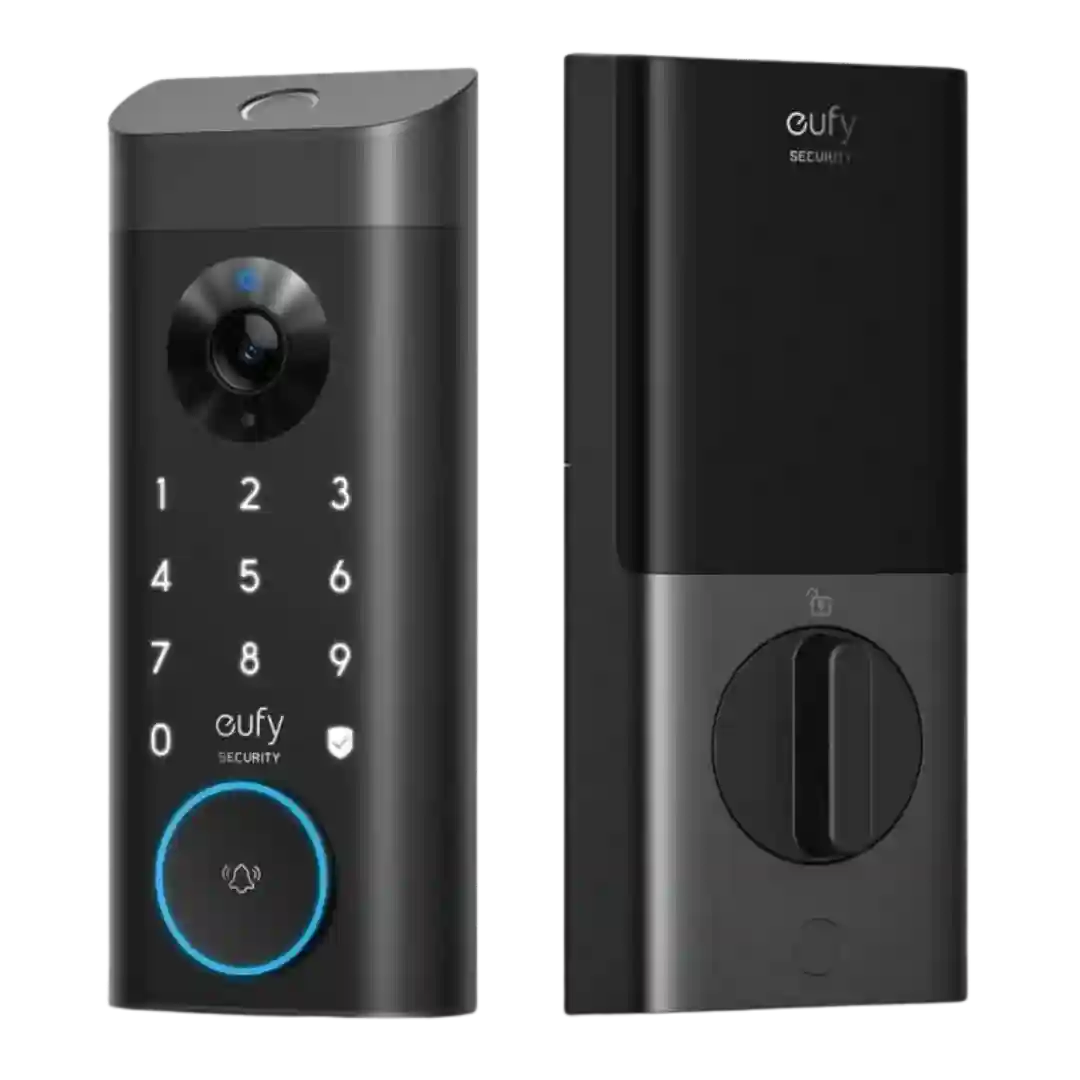
Backup entry is a recurring highlight: a concealed keyway behind the doorbell button plus an external USB-C emergency power option reduces lockout risk if the battery is depleted.
The hidden physical key is broadly viewed as a reliable backup, and emergency external power via a USB port adds another recovery option when batteries die. This layered fallback approach is frequently cited as a major practical advantage versus app-only smart locks.
A physical key is included and used as a backup method; no review reported key override failures, and several call out the presence of emergency power as an additional fallback.
Key override is consistently presented as a usable backup method, and reviewers treat it as a standard fail-safe alongside digital access. Detailed long-term reliability testing is not common in the reviews.
A hidden physical keyway plus included keys provide a dependable backup, and multiple reviewers recommend carrying a key in case of connectivity or power issues. Manual operation from inside remains simple via the thumbturn.
A traditional key backup is consistently included and generally works as expected, providing a dependable fallback alongside electronic methods. Emergency power via USB-C is also commonly mentioned for worst-case scenarios.
Physical key override is valued as a reliable fallback for dead batteries or connectivity issues; some reviewers note only one key is included, but the cylinder is easy to rekey or match to a home.
A physical key is available (often hidden under a cover), and multiple videos highlight an emergency 9V contact method to power the lock long enough to get inside if the main battery is drained.
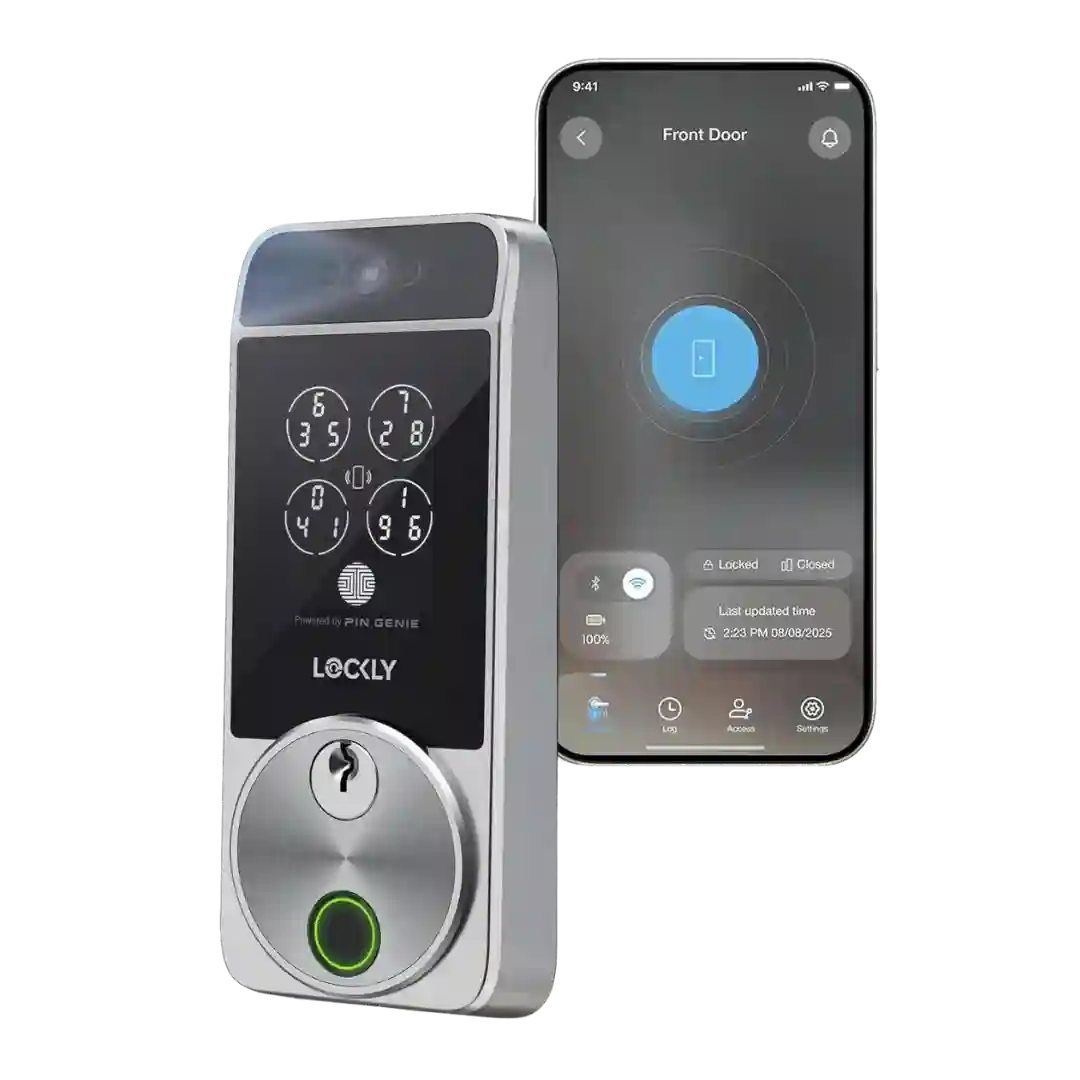
Mechanical key backup is consistently included and the hidden keyhole cover is appreciated for aesthetics and casual security, with reviewers generally treating it as a dependable fallback.
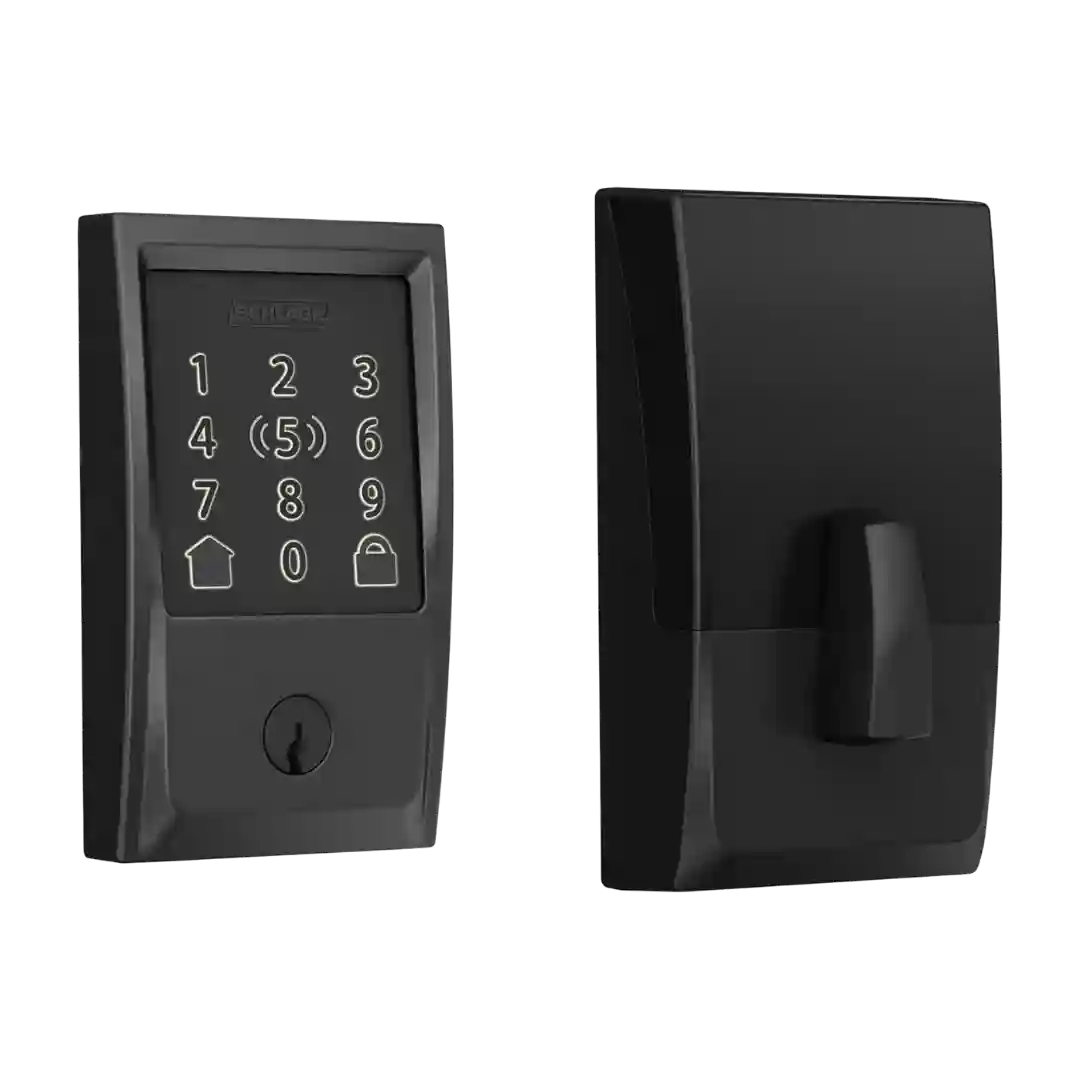
Physical keys remain a dependable fallback and are appreciated because the lock lacks external emergency power terminals. Reviewers report rarely needing the key, but value having it when batteries or connectivity fail.
Physical key access is consistently positioned as the dependable backup, especially because emergency external power is not emphasized across reviews. A few reviewers note only one key is included.
Backup entry is well covered via a traditional keyway, and several reviews also liked the USB-C emergency power option as an extra failsafe when batteries die.
The hidden keyway under the doorbell button and the availability of an emergency USB-C power option are valued for backup entry. One reviewer noted the doorbell-button cover can be fiddly to reseat, but overall the mechanical override is seen as an important safety net.
Keyed versions provide a dependable physical fallback, while key-free versions lean on 9V emergency power terminals; both approaches work, but key-free owners need to be mindful of battery state to avoid inconvenience.
Physical key access is treated as an important fallback, with the keyway often hidden behind a sliding cover. Reviewers generally expect it to be dependable even if they rarely use it.
Key override is a reliable fallback because the exterior hardware stays unchanged, and several reviewers like that a locksmith can still service the cylinder without destroying the smart module. However, certain installs that require an interior key left inserted can limit outside key insertion on some doors.
Keeping the original key is repeatedly framed as an important safety net. Given reports of occasional unresponsiveness or motor limitations, multiple reviews imply you should keep a backup key accessible even if you plan to go mostly keyless.
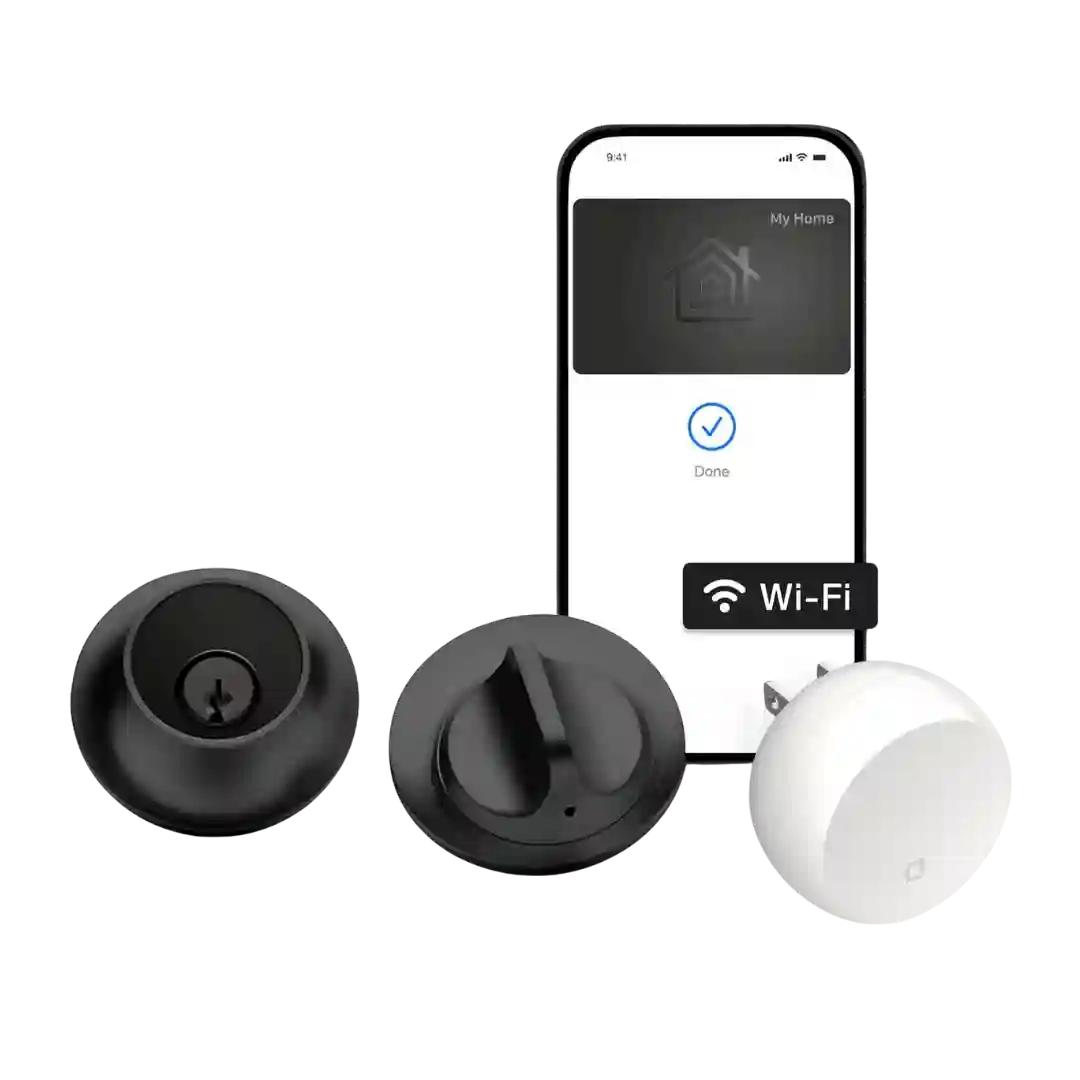
Because there is no physical key cylinder, reviewers are split: some like the security simplicity, while others dislike having no traditional fallback. Emergency 9V power is available, but several describe it as less convenient than a spare key.
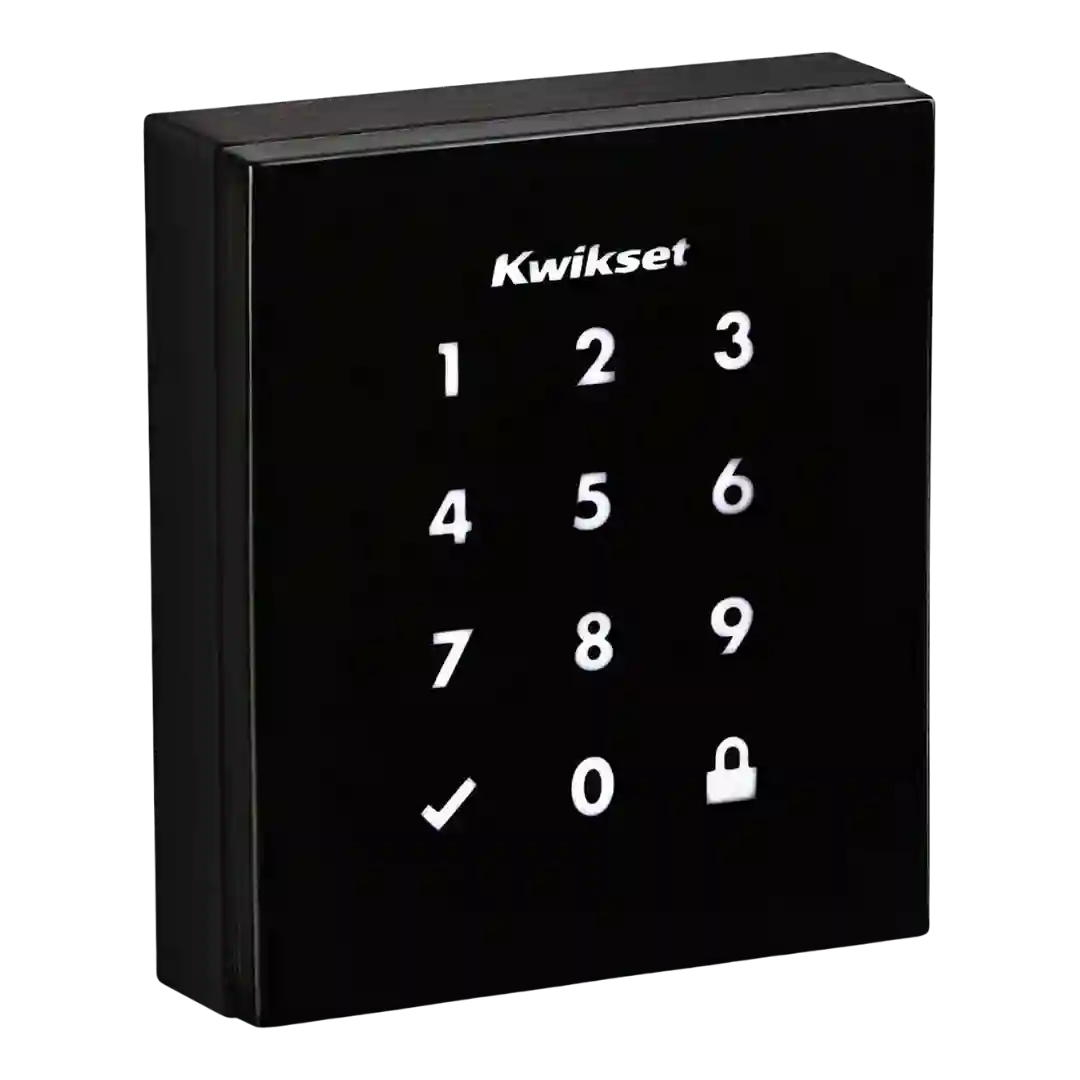
Obsidian is keywayless, so there is no physical key override if electronics fail; the emergency fallback is the external 9V jump terminals plus your PIN.