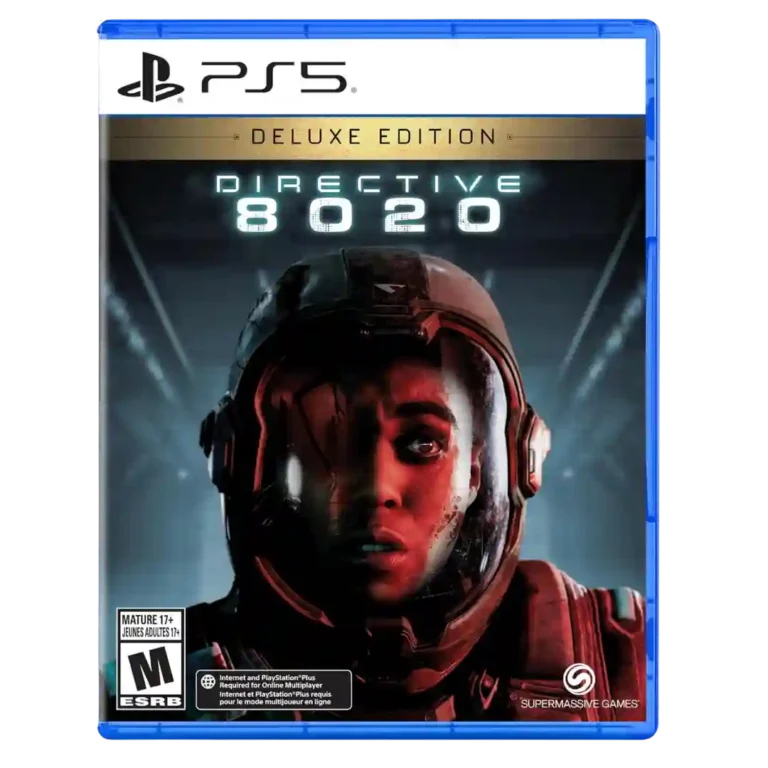
Review: Directive 8020

Updated: 33 minutes ago
4.0
Based on methodology below
280
Insights analyzed
58
Grouped by key features
17
From expert reviews
Scores below reflect consolidated expert coverage across these features.
Bottom Line

Choose Directive 8020 if you want cinematic sci-fi horror with branching choices, replay tools, and strong atmosphere. Skip it if predictable stealth AI or uneven action-heavy sections would undercut the tension.

Best for

Best for players who enjoy Supermassive-style cinematic horror, branching consequences, replaying alternate outcomes, and sci-fi paranoia. It also fits groups that use Movie Night or online co-op to argue through tense decisions together.

Not for

Not for players who need deep combat, highly dynamic stealth AI, or constant player agency in every action beat. The preview evidence shows some stealth sections may feel predictable or underwhelming.

Verdict

Directive 8020 looks like Supermassive’s most ambitious Dark Pictures evolution, adding real-time stealth, expanded exploration, and the Turning Points rewind system to its familiar choice-driven horror formula. The strongest evidence points to a gripping sci-fi setup, strong visual presentation, high replay value, and a tense atmosphere built around impostors, vents, darkness, and uncertain trust. The tradeoff is that the new stealth-action layer is not yet universally convincing. Several previews found it intense and more interactive, but critical impressions called enemy patrols predictable, controls awkward, and some encounters less scary than intended. It appears best when its cinematic decision-making, branching consequences, and space-horror paranoia work together, but its final impact will depend on whether the full game deepens the stealth systems beyond the preview sections.

What Reviewers Agree On

The clearest strength across the supplied reviews is the way Directive 8020 moves Supermassive’s choice-driven horror into a more active sci-fi survival format. The Cassiopeia setting, shapeshifting alien threat, dim vents, red-lit halls, and heavy use of shadows give the game a strong horror identity. Several previews also point to the visual presentation as a major upgrade, praising the character likenesses, textures, lighting, and cinematic presentation. The familiar Dark Pictures foundation remains intact through dialogue choices, quick-time events, branching outcomes, and the pressure of keeping characters alive, but the added real-time threats and exploration make the experience feel more hands-on than earlier entries.

The Turning Points system is the most consistently praised new feature. It lets players revisit major decisions, explore alternate branches, save favorite characters, and chase different endings without replaying the full game from scratch. That makes the game especially appealing for completionists, co-op groups, and players who enjoy comparing story outcomes. Accessibility and difficulty options also matter here: the evidence mentions easy mode, death toggles, rewind, Survivor-style permanence, and per-player difficulty settings in Movie Night, suggesting the game can support both forgiving and no-compromise playstyles.

The major unresolved tradeoff is stealth. Positive hands-on impressions describe hiding, movement patterns, terminals, radar tools, and alien encounters as tense, claustrophobic, and more interactive. Critical impressions describe some of the same sections as predictable, overly simple, or lacking tension, with robotic patrols and awkward controls reducing the fear. Directive 8020 is most likely to satisfy players who already like Supermassive’s cinematic horror and want more direct control, more replayable branches, and a paranoid space setting. Players primarily looking for deep survival-horror combat or highly dynamic stealth AI may find the preview evidence less reassuring.

Pros

  • 4.6
    based on 1 review
    couch co-op quality: 4.6, based on 1 review
    Couch co-op quality is supported through Movie Night returning and being improved. The evidence is limited but directly positive.
  • 4.5
    based on 12 reviews
    replay value: 4.5, based on 12 reviews
    Replay value is one of the strongest supported areas, with multiple endings, branching paths, all-survivor or everyone-dead outcomes, completionist timelines, rewind use, and repeated playthroughs all discussed across reviews.
  • 4.4
    based on 6 reviews
    graphics quality: 4.4, based on 6 reviews
    Graphics quality is a major strength across previews, with comments on the game looking amazing, modern, cinematic, and possibly Supermassive’s best-looking work. Even critical coverage praised presentation.
  • 4.4
    based on 6 reviews
    immersion: 4.4, based on 6 reviews
    Immersion is supported by the horror-film framing, different terror styles, cinematic TV-like presentation, and strong sense of place. Reviews mostly describe the world and structure as absorbing.
  • 4.4
    based on 3 reviews
    environmental detail: 4.4, based on 3 reviews
    Environmental detail is described through careful construction, lighting, spatial design, dark metal walls, and small level details. The evidence supports atmosphere-building spaces rather than broad spectacle.
  • 4.4
    based on 4 reviews
    core gameplay loop: 4.4, based on 4 reviews
    The central loop is framed around horror-movie decision making, consequence, and player-driven storytelling. Several reviews describe Directive 8020 as blending tension, choices, and cinematic survival situations rather than focusing on scale or combat depth.
  • 4.4
    based on 5 reviews
    progression system: 4.4, based on 5 reviews
    Progression is strongly tied to branching timelines, decision consequences, keeping characters alive, and seeing how choices ripple forward. The Turning Points structure gives players a visible way to revisit outcomes and track branches.
  • 4.4
    based on 12 reviews
    checkpoint system: 4.4, based on 12 reviews
    The checkpoint and Turning Points systems are strongly supported, letting players jump back, rewind decisions, revisit key points, or retry outcomes. Nearly every relevant preview treats this as a major feature.
  • 4.4
    based on 8 reviews
    innovation: 4.4, based on 8 reviews
    Innovation is supported by real-time threats, expanded exploration, active stealth and combat, organic story systems, and a game-changing Dark Pictures episode. The evidence points to a meaningful formula shift.
  • 4.4
    based on 4 reviews
    multiplayer design: 4.4, based on 4 reviews
    Multiplayer design includes online co-op, Movie Night improvements, and up to four friends joining the mission. Evidence points to broader group play support than previous local-only expectations.
  • 4.4
    based on 2 reviews
    social features: 4.4, based on 2 reviews
    Social features center on in-game messaging and communicator use, letting players contact crew, ask about status, and possibly interact with impostors. Evidence is promising but limited.
  • 4.3
    based on 5 reviews
    faithfulness to franchise: 4.3, based on 5 reviews
    Faithfulness to franchise remains strong: previews say it follows the Dark Pictures playbook, builds on Supermassive strengths, keeps hallmarks like dialogue and QTEs, and still feels like a Supermassive horror game.
  • 4.3
    based on 4 reviews
    character development: 4.3, based on 4 reviews
    Character development is supported by traits, relationships, and evolving or collapsing bonds based on choices. Evidence suggests decisions affect characters beyond immediate actions.
  • 4.3
    based on 3 reviews
    facial animations: 4.3, based on 3 reviews
    Facial animations are generally praised through impressive skin tones and textures, actor likenesses, and lip sync. One critical preview still highlighted face recreation as a strength.
  • 4.3
    based on 6 reviews
    visual effects quality: 4.3, based on 6 reviews
    Visual effects focus on humanoid creatures, horrifying monsters, disturbing organic imagery, alien gloop, and grotesque transformations. The evidence supports strong horror imagery and creature presentation.
  • 4.3
    based on 5 reviews
    accessibility options: 4.3, based on 5 reviews
    Accessibility options are repeatedly mentioned through rewind, death toggles, easy mode, Explorer-style play, and per-player difficulty/accessibility settings. The evidence suggests Supermassive is trying to broaden who can handle the added stealth and action.
  • 4.3
    based on 5 reviews
    co-op experience: 4.3, based on 5 reviews
    Co-op is described as viable both for group play and Movie Night-style sessions, with friends yelling commands, working together, or joining the mission. The evidence suggests strong social horror potential.
  • 4.3
    based on 5 reviews
    fun factor: 4.3, based on 5 reviews
    Fun factor is supported by time flying, wanting the best ending, fun group play, and the possibility of staying relevant through player discussion. Evidence is positive but still drawn from limited preview impressions.
  • 4.3
    based on 3 reviews
    content variety: 4.3, based on 3 reviews
    Content variety comes from the mix of lean-forward and lean-back gameplay, real-time encounters, dialogue, stealth, and cinematic sections. Evidence is positive overall but limited to a few reviews.
  • 4.3
    based on 9 reviews
    atmosphere: 4.3, based on 9 reviews
    Atmosphere is a consistent strength, with dim vents, lighting and shadows, scary space, claustrophobic pipes, red-lit halls, alien paranoia, and vulnerability. Even mixed reviews acknowledged some tense or atmospheric sections.
  • 4.3
    based on 5 reviews
    emotional impact: 4.3, based on 5 reviews
    Emotional impact comes from loss, regret, disheartening character deaths, and small choices with large consequences. The evidence supports strong emotional stakes, especially around irreversible or regretted decisions.
  • 4.3
    based on 15 reviews
    narrative quality: 4.3, based on 15 reviews
    Narrative quality is widely supported through branching choices, trust uncertainty, character survival, time shifts, dialogue impact, and story decisions. Most impressions are positive, though one preview was concerned about attachment and another found the plot confusing mid-demo.
  • 4.2
    based on 5 reviews
    difficulty balance: 4.2, based on 5 reviews
    Difficulty balance is supported by adjustable difficulty, survivor-style permanence, easy-mode options, and settings for keeping characters alive. Evidence suggests the game can be tuned for both forgiving and stricter playstyles.
  • 4.2
    based on 1 review
    endgame content: 4.2, based on 1 review
    Endgame content evidence is narrow but clear: one interview mentions different endings, including completionist motivations for getting them all. No broader endgame loop is supported.
  • 4.2
    based on 4 reviews
    protagonist appeal: 4.2, based on 4 reviews
    Brianna Young and Lashana Lynch are the clearest points of protagonist appeal. Previews describe Young stepping up, Lynch as recognizable or marketed as the lead, and one video calls her compelling.
  • 4.2
    based on 2 reviews
    art direction: 4.2, based on 2 reviews
    Art direction is supported by sci-fi horror influences such as The Thing, Alien, Event Horizon, and Color Out of Space, along with eerie purples and greens. Evidence suggests a clear genre identity.
  • 4.2
    based on 2 reviews
    enemy variety: 4.2, based on 2 reviews
    Enemy variety evidence is limited but positive, focusing on horrifying monsters and a mimic alien presence that can hide as crew members. The transcripts do not show broad enemy-type variety beyond that.
  • 4.2
    based on 2 reviews
    sandbox freedom: 4.2, based on 2 reviews
    Freedom is present in limited stealth and exploration contexts rather than an open sandbox. The strongest examples are going off the beaten path and choosing how to handle stealth routes or distractions.
  • 4.1
    based on 13 reviews
    horror tension: 4.1, based on 13 reviews
    Horror tension is one of the most debated attributes. Many previews found the demo scary, claustrophobic, or unnerving, while critical coverage said some stealth and jump scares failed to deliver real tension.
  • 4.1
    based on 9 reviews
    world-building: 4.1, based on 9 reviews
    World-building is consistently supported by the Cassiopeia, Tau Ceti, Earth’s collapse, alien infection, and colonization premise. Several reviews highlight how the setting supports isolation, suspicion, and decision pressure.
  • 4.1
    based on 3 reviews
    dialogue quality: 4.1, based on 3 reviews
    Dialogue is presented as consequential and flexible, with tense conversations, decision points, status checks, and choices that affect outcomes. The evidence supports dialogue as a meaningful part of the experience.
  • 4.1
    based on 8 reviews
    pacing: 4.1, based on 8 reviews
    Pacing is shaped by cinematic beats, action peaks, episodic stopping points, and tension buildup. Several impressions praised the rhythm, but one critical preview found the demo lacking dramatic Turning Points and overly focused on stealth-action.
  • 4.1
    based on 5 reviews
    world interactivity: 4.1, based on 5 reviews
    World interactivity includes activating distractions, using terminals, opening doors with tools, and environmental objects that affect enemy behavior. The best evidence presents interactivity as a key support for stealth and investigation.
  • 4.1
    based on 4 reviews
    mission design: 4.1, based on 4 reviews
    Mission objectives in the demos include restoring power, extending bridges, finding missing crew, isolating Simms, and crossing spaces for companions. The structure supports stealth, puzzles, and consequence-driven encounters.
  • 4.0
    based on 13 reviews
    gameplay mechanics: 4.0, based on 13 reviews
    The mechanics expand beyond classic quick-time events with direct control, real-time threats, stealth action, exploration, survival-horror elements, and branching choices. Positive previews called the gameplay strong or more active, while critical impressions found some sections mechanically dull or lacking agency.
  • 4.0
    based on 3 reviews
    camera behavior: 4.0, based on 3 reviews
    Camera behavior includes a new 3D camera, first-person vent sections, and shifts from third person to first person. The camera changes support claustrophobic horror and exploration.
  • 4.0
    based on 2 reviews
    character roster: 4.0, based on 2 reviews
    The playable roster is described as five astronauts or five protagonists. Evidence is factual but limited and does not deeply assess the roster’s personality range.
  • 4.0
    based on 2 reviews
    lore depth: 4.0, based on 2 reviews
    Lore depth is supported by background information through the communicator and the potential of branching dialogue on a ship with impostors. Evidence is positive but limited.
  • 4.0
    based on 1 review
    map and navigation design: 4.0, based on 1 review
    Navigation support appears through cameras guiding the player and a scanning pulse that briefly highlights enemy positions. Evidence is limited to one preview section.
  • 4.0
    based on 1 review
    tutorial quality: 4.0, based on 1 review
    The preview includes at least one tutorial-style scene that teaches focusing on objects, activating distractions, and the consequence of getting caught by the alien. Evidence is limited to one preview impression.
  • 4.0
    based on 3 reviews
    combat system: 4.0, based on 3 reviews
    Combat is limited but consequential, with choices between facing threats, sneaking around them, and using tools such as a stun baton or gun. The evidence points to a survival-horror support role rather than a full combat system.
  • 4.0
    based on 2 reviews
    user interface design: 4.0, based on 2 reviews
    User interface design evidence centers on the holographic chat app and scanner. It appears useful for communication and alien detection, though evidence is limited.
  • 3.9
    based on 12 reviews
    stealth mechanics: 3.9, based on 12 reviews
    Stealth is one of the most consistently discussed systems, covering hiding, movement patterns, guided sneaking, enemy avoidance, and fatal exploration. Some previews found it tense or effective, while others called it predictable, dated, or unconvincing.
  • 3.9
    based on 6 reviews
    exploration quality: 3.9, based on 6 reviews
    Exploration has expanded beyond earlier entries through full exploration, clue searching, additional paths, and environmental details. Some previews welcomed the freedom, while a critical demo found the exploration-and-stealth emphasis underwhelming.
  • 3.9
    based on 4 reviews
    writing quality: 3.9, based on 4 reviews
    Writing quality is tied to story attachment, the lens of film and TV, and personal choice-driven storytelling. Evidence is favorable in broader previews but mixed by one critic who struggled to connect with the story in the demo.
  • 3.7
    based on 4 reviews
    movement feel: 3.7, based on 4 reviews
    Movement is described as more modern and overhauled, with reworked stick feel and stronger third-person horror elements. The main negative comes from one critical demo impression that walking felt glacially slow.
  • 3.7
    based on 4 reviews
    originality: 3.7, based on 4 reviews
    Originality is mixed. Positive impressions like the shapeshifting space-horror setup and unique horror experience, while critics noted obvious Alien/The Thing homage and one found the survival-horror shift less distinct.
  • 3.6
    based on 6 reviews
    weapon balance: 3.6, based on 6 reviews
    Weapon balance is mixed. The gun and stun baton can matter, but previews also show restrictions, cooldowns, and one frustration that a gun could not be used until a cutscene.
  • 3.6
    based on 3 reviews
    mission variety: 3.6, based on 3 reviews
    Mission variety is described through stealth-action, action shifts, alien avoidance, and clue searching. One critical preview felt the demo was disproportionately weighted toward stealth-action, making variety a mixed area.
  • 3.5
    based on 5 reviews
    puzzle design: 3.5, based on 5 reviews
    Puzzle design appears light and practical, built around terminals, bridges, doors, and environmental problem solving. Positive previews found the puzzle systems useful, while Eurogamer described one fuel-cell objective as simple and dull.
  • 3.5
    based on 5 reviews
    level design: 3.5, based on 5 reviews
    Level design centers on dark corridors, vents, access tunnels, confined mazes, and spaceship interiors. Several previews praised the claustrophobic setups, but one criticized a larger station area as nondescript and another found crate-based stealth dated.
  • 3.5
    based on 2 reviews
    animation quality: 3.5, based on 2 reviews
    Animation quality is mixed. One critic saw a lack of dynamism, while another praised the game for avoiding the stiff uncanny look associated with some earlier Supermassive characters.

Cons

  • 3.4
    based on 2 reviews
    voice acting: 3.4, based on 2 reviews
    Voice acting and performances are mixed. One preview praised the actors as solid, while another criticized a lack of energy or dynamism in performances during a tense scene.
  • 3.3
    based on 2 reviews
    controls responsiveness: 3.3, based on 2 reviews
    Controls received mixed notes. One preview said the game looked and controlled well, while another called the controls quirky and criticized the sprint modifier after being dropped into a mid-game stealth sequence.
  • 3.2
    based on 6 reviews
    AI behavior: 3.2, based on 6 reviews
    AI behavior is mixed. Some previews found the creature cautious enough to punish noise or require radar awareness, while others criticized robotic movement, rigid patrols, or predictable enemy routines.
  • 3.1
    based on 3 reviews
    polish: 3.1, based on 3 reviews
    Polish is mixed. One preview praised production value as another level, but critical impressions called parts bland or frustrating because of lifeless play and narrative inconsistency.
  • 2.7
    based on 2 reviews
    side character depth: 2.7, based on 2 reviews
    Side character depth is uncertain in preview builds. One review noted a lack of concern about a serious injury, while another said there was not enough time to become emotionally attached to the cast.
  • 2.2
    based on 1 review
    onboarding experience: 2.2, based on 1 review
    Onboarding was criticized in one preview because the demo dropped the player into the middle of the game before they had time to learn the controls. No other review gives direct onboarding evidence.

FAQ

Is Directive 8020 worth buying based on the reviews?

The preview evidence is promising if you value cinematic horror, branching choices, replayability, and sci-fi atmosphere. The main caution is that several critics were not fully convinced by the new stealth-action sections.

What is the main drawback of Directive 8020?

The biggest concern is uneven stealth tension. Some hands-on previews found the encounters scary and active, while others described predictable patrol routes, awkward controls, or scenes that felt less frightening than intended.

Who is Directive 8020 best for?

It is best for players who like Supermassive’s choice-driven horror formula but want more direct control, more replay tools, and a darker sci-fi setting built around alien impostors and paranoia.

Does Directive 8020 have replay value?

Yes. Multiple reviews highlight Turning Points, branching timelines, alternate outcomes, and endings tied to keeping everyone alive or killing everyone, making replayability one of the clearest strengths.

How scary is Directive 8020?

The evidence is mixed. Many previews describe claustrophobic vents, jump scares, real-time threats, and strong paranoia, but some critical impressions say certain stealth sections failed to create enough tension.

Does Directive 8020 support co-op or group play?

Yes. The reviews mention Movie Night returning, online co-op, and up to four friends joining, with some previews emphasizing the fun of playing alongside a group.

How does Directive 8020 change the Dark Pictures formula?

It keeps dialogue choices, quick-time events, branching consequences, and character survival, but adds more exploration, real-time threats, stealth-action sequences, and the Turning Points rewind system.

Reviews we analyzed

Video Reviews

Article Reviews

#1
4.3
Choose it for inventive turn-based combat, a powerful story, and standout presentation. Skip it if you dislike parry-heavy encounters or want cleaner navigation...
Pros: combat system, boss design, narrative quality, soundtrack quality, monetization fairness, microtransaction impact, atmosphere
Cons: platforming precision, puzzle design, bug frequency, menu usability, HUD clarity, animation quality, map and navigation design
#2
4.3
Choose if you want Horizon’s best-looking open world and freer exploration. Skip if twitchy handling and a city that can still feel sparse...
Pros: exploration quality, open-world design, graphics quality, sandbox freedom, social features, immersion, replay value
Cons: world interactivity, learning curve, originality
#3
4.3
Choose Saros if you want elite bullet-hell shooting with smoother roguelite progression. Skip it if abstract storytelling, repetition, or lighter buildcrafting will frustrate...
Pros: load times, visual effects quality, character development, fast travel convenience, platform-specific feature support, sound design, voice acting
Cons: side character depth, map and navigation design, endgame content, facial animations, menu usability, grind level, user interface design
#4
4.3
Choose it for the inventive hack-and-shoot combat and strong Hugh-Diana chemistry. Skip it if you want a flawless story or cleaner navigation.
Pros: combat system, graphics quality, environmental detail, bug frequency, crash stability, originality, innovation
Cons: map and navigation design, mission design, HUD clarity, handheld play suitability, grind level