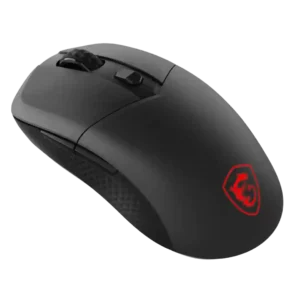
SteelSeries Aerox 3 Wireless Review
Bottom Line
Choose the SteelSeries Aerox 3 Wireless for an ultra-light, comfortable mouse with accurate tracking and USB-C charging. Skip it if you need flawless 2.4GHz reliability, stronger side buttons, or consistently long battery life.
Best for gamers who want a very light, accurate wireless mouse for claw, fingertip, or smaller-hand grips, with USB-C charging and flexible Bluetooth plus 2.4GHz use.
Not for buyers who need flawless connection stability, premium side buttons, consistently long battery life, or a heavier, more traditional shell feel.
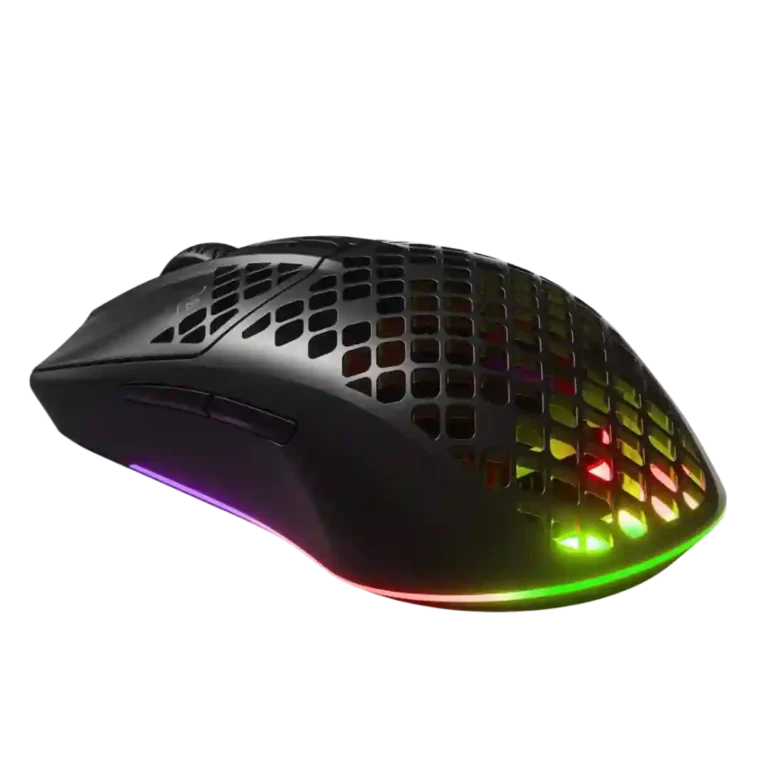
The SteelSeries Aerox 3 Wireless earns its appeal through a very light shell, easy movement, accurate sensor performance, and broad connection options. Across the reviews, comfort is strongest for smaller hands, claw, fingertip, and lighter grips, while USB-C charging and the SteelSeries software add useful customization. The tradeoff is that the mouse is not consistently polished: several reviewers raised concerns about 2.4GHz disconnects, wake behavior, battery life below marketing claims, mushy or slim side buttons, and divisive skates. It works best as a lightweight wireless mouse for players who value mobility and shape more than premium-feeling controls or set-and-forget reliability.
What Reviewers Agree On
The clearest pattern across the reviews is that the Aerox 3 Wireless succeeds first as a lightweight, easy-moving gaming mouse. Reviewers repeatedly point to its 66g to 68g weight, honeycomb shell, smooth movement, and accurate sensor as the reasons it feels quick in games and comfortable for everyday use. Several reviewers also liked the shape, especially for smaller hands, claw grip, fingertip grip, and lighter handling styles. USB-C charging, Bluetooth support, 2.4GHz wireless, RGB lighting, and SteelSeries GG customization give it more flexibility than a simple lightweight shell would suggest.
The mixed feedback centers on polish and reliability rather than the core idea. Battery life is a recurring caveat: some reviewers found it good enough or close to the 80-hour wireless claim, while others said the 200-hour figure depends heavily on Bluetooth, lighting, and power-saving settings. Wireless performance also split reviewers. Some had no lag, no tracking issues, and strong 2.4GHz performance, but others reported disconnects, wake delays, or dongle-related problems. Button quality drew similar disagreement. Main clicks were often described as tactile or crisp, yet side buttons were criticized for being slim, mushy, low, or less precise.
The biggest buying tradeoff is that the Aerox 3 Wireless can feel excellent in motion while still showing compromises around the details that matter to picky mouse users. It is most likely to satisfy someone who prioritizes low weight, comfortable shape, accurate tracking, USB-C charging, and dual wireless flexibility. It is less convincing for buyers who want premium side buttons, flawless connection stability, clearly predictable battery life, or top-tier feet out of the box.
Scored Features
Pros
-
Reviewers praised the Aerox 3 Wireless for precise tracking and high-precision aim, with the TrueMove implementation described as accurate and exact in gameplay.
-
Click latency was rated favorably where measured or discussed, with reviewers citing true 1-to-1 tracking and very low click latency.
-
Ergonomic design is supported by one review that specifically praised the smaller, more ergonomic design for comfort.
-
Long-session comfort was positive in the scored reviews, with reviewers saying it remained comfortable for hours or longer gaming sessions.
-
Charging convenience was a strong point, with repeated praise for USB-C charging, fast charging, use while wired, and compatibility with common USB-C chargers.
-
Switch durability is supported by references to Golden Micro or 80-million-click switches, including dust and water resistance claims.
-
Low weight is one of the strongest points, with reviewers repeatedly citing 66g to 68g weight and describing the mouse as ultra-light or lightweight.
-
Cross-platform or cross-device usefulness is supported by multi-device use, cross-device compatibility, and Bluetooth connectivity to many devices.
-
Button responsiveness was praised in the positive reviews, with reviewers describing tactile buttons, satisfying clicks, and short travel.
-
Balance evidence is limited but positive, with one reviewer saying the weight felt well balanced.
-
RGB was frequently praised or at least recognized as a visible design feature, with reviewers mentioning bottom trim, diffusers, internal lighting, and software control.
-
FPS suitability is supported by reviewers discussing sniper play, twitch shooters, Warzone, and high-precision shooting.
-
Polling-rate support is treated as a gaming-strength feature, with reviewers pointing to 1000Hz operation while noting settings can be adjusted in software.
-
Ecosystem integration is lightly supported through SteelSeries GG being described as the software layer that completes the mouse setup.
-
Only limited direct evidence supports onboard profile behavior, with reviewers focusing more on software configuration than stored profiles.
-
Premium feel is supported by one positive review that said the mouse felt premium despite plastic construction.
-
The mouse offers a wide sensitivity range, with reviewers referencing 18,000 CPI or 18,000 DPI and configurable DPI/CPI settings through software or the top button.
-
Shape comfort was generally favorable for users who match the shape, especially smaller hands and claw-oriented use, though not every reviewer found it ideal.
-
Click noise was treated positively in the scored reviews, with quieter main buttons and quiet scroll-wheel movement mentioned.
-
Grip texture was viewed positively where discussed, with reviewers describing a grainy or micro-textured surface that improved grip.
-
Claw grip comfort is one of the better-supported grip areas, with reviewers repeatedly saying the shape suits claw grip or that claw felt natural.
-
Sensor feedback was mostly positive, with many reviews citing the TrueMove Air or PixArt-based sensor as accurate and responsive; one review noted jumpy movement on lift-off.
-
Materials were generally viewed as solid, with reviewers citing textured bodies, ABS plastic, IP54 protection, and high-quality feel.
-
Surface compatibility was supported by reviews saying the mouse glided across many surfaces or along most surfaces.
-
Build quality was broadly positive but not perfect, with praise for rigidity and passing tests alongside some concerns about bottom flex.
-
Bluetooth is consistently treated as a useful secondary connection option for laptops, travel, or casual use, though some reviewers prefer 2.4GHz for gaming responsiveness.
-
The included cable was often described favorably, with braided, light, flexible, or generally good characteristics for charging or wired use.
-
Portability is a strong fit for laptop or on-the-go users because reviews describe the mouse as travel-friendly, slim, and useful away from a desk.
-
Fingertip grip comfort is supported by several reviews that describe the shape as suitable for fingertip or lighter grip styles.
-
Switch feel was generally positive in the scored reviews, with descriptions of tactile feedback, satisfying clicks, firm crisp action, and strong switch technology.
-
Button customization is supported through the custom buttons, CPI/sensitivity control, and SteelSeries software for presets and button behavior.
-
Profile-related evidence is limited and mostly tied to software settings and configuration rather than frequent hardware-level profile switching.
-
One reviewer reported no tracking, spinout, or latency issues in use, supporting a positive motion-consistency score.
-
Palm grip support exists but is narrower than claw or fingertip support, with reviewers noting palm-style shaping and possible comfort for smaller hands.
-
Wireless performance was mixed but often strong in active use: several reviewers reported no lag or tracking issues, while one review flagged connectivity problems.
-
Software usability was generally adequate to strong, with reviewers citing useful customization, easy navigation, and SteelSeries GG/Engine controls.
-
Reviews describe 2.4GHz wireless as a core low-latency connection mode, with several noting it works well during active use, while some reported dongle or wake/connectivity issues.
-
Glide smoothness was mostly praised for easy movement across pads and surfaces, but one reviewer found the glide uneven.
-
Wireless latency was mostly acceptable over 2.4GHz, with low-lag or latency-free claims, while Bluetooth was repeatedly framed as less precise or more casual.
-
Software exposes acceleration-related controls, including acceleration and angle-snapping options, though these were treated as configurable rather than essential.
-
Value depends heavily on price: reviewers praised discounted pricing or affordability, but the value case is less certain at higher launch prices.
-
Durability over time was mixed: one reviewer expected long life, another worried about flex, and a long-term user reported two years of daily use.
-
Macro support is present but lightly discussed, with reviewers mentioning simple macros and key rebinding macros in the software.
-
The mouse provides limited but useful programmable control, with reviewers pointing to side buttons, six switches/buttons, and configurable secondary buttons.
-
Main click quality was mixed: some reviewers liked the clickiness and tactile feel, while others noted resistance, wobble, or unstable trigger feel.
-
Skate feedback was mixed: one review expected durable feet, another disliked performance, and another noted PTFE glide skates.
-
Battery life is praised for useful endurance and quick charging, but multiple reviews say real-world 2.4GHz/RGB use falls short of the highest advertised Bluetooth figures.
Cons
-
Scroll wheel feedback varied: one review found firmer scrolling useful, another called it disappointing, and another called it excellent and quiet.
-
Lift-off behavior was mixed: one review complained of jumpy movement when lifting, while another praised the low lift-off distance.
-
Connection stability was inconsistent across reviews, ranging from automatic pairing and no trouble to frequent disconnects or random dropout issues.
-
Software stability was mixed, with one review reporting hangs and another finding the driver suite acceptable.
-
Side button quality was one of the weaker areas, with multiple reviewers calling the side buttons less precise, slim, low, awkward, or difficult to use.
-
Handedness is limited: the mouse has an ambidextrous-style shape but reviewers noted right-handed use only or no lefty support because of side-button placement.
-
Dock compatibility is weak because one reviewer specifically noted that a charging dock or wireless charging feature would have been welcome.
-
Firmware reliability was a weakness in the evidence, with one review reporting problematic firmware updating.
FAQ
Is the SteelSeries Aerox 3 Wireless worth buying?
It is worth considering if you want a very light wireless gaming mouse with accurate tracking, USB-C charging, and flexible Bluetooth plus 2.4GHz use. The value is stronger at discounted prices than at the higher launch price.
What is the main drawback of the SteelSeries Aerox 3 Wireless?
The main drawback is inconsistency in the details: reviewers reported mixed battery life, occasional connection or wake issues, and side buttons that can feel slim, mushy, or less precise.
Is the Aerox 3 Wireless good for FPS games?
Yes, several reviewers found the sensor accurate and the low weight helpful for quick aiming in shooters. It is strongest for players who like a light, fast mouse and use 2.4GHz rather than Bluetooth for competitive play.
How long does the battery last?
Reviewers were mixed. Some found the battery good enough, but others said real-world life was far below the 200-hour marketing figure, especially with 2.4GHz wireless and RGB enabled.
Is Bluetooth good enough for gaming?
Bluetooth is useful for casual use, travel, and saving battery, but reviewers generally treated 2.4GHz as the better choice for accuracy and low latency in games.
Who is the Aerox 3 Wireless best for?
It best fits users who want an ultra-light mouse for claw, fingertip, or smaller-hand grips, and who value easy movement, USB-C charging, and wireless flexibility.
Who should avoid the Aerox 3 Wireless?
Skip it if you need premium side buttons, a flawless scroll wheel, predictable battery life, or rock-solid connection behavior with no wake or dongle quirks.
Video Reviews
Article Reviews
Best Gaming Mouse Alternatives
Choose the Model D3 for flexible wireless gaming, comfort, and precise control. Skip it if the high price or shorter high-polling battery life matters more.
Pros: Accuracy and tracking precision, switch durability, FPS gaming suitability, charging convenience, sensor performance, click latency, wireless latency
Cons: none
Choose the Harpe II Ace for ultralight FPS control, 8K wireless, and easy web setup. Skip it if you need many buttons or steady long battery life in...
Pros: polling rate, weight, wireless performance, DPI range, switch durability, sensor performance, motion consistency
Cons: onboard memory, MMO gaming suitability, software stability, profile switching
Choose the Razer Basilisk V3 Pro 35K for ergonomic comfort, precise tracking, and feature-rich wireless control. Skip it if you want an ultralight FPS mouse or better value...
Pros: motion consistency, sensor performance, DPI range, build quality, macro support, click latency, acceleration control
Cons: handedness options, value for money, weight, fingertip grip comfort
Choose the Turtle Beach Kone II Air if you want a large, ergonomic wireless mouse with long battery life and deep controls. Skip it if you prefer small,...
Pros: ergonomic design, programmable buttons, 2.4GHz connectivity, switch durability, onboard memory, Accuracy and tracking precision, long-session comfort
Cons: dock compatibility, weight